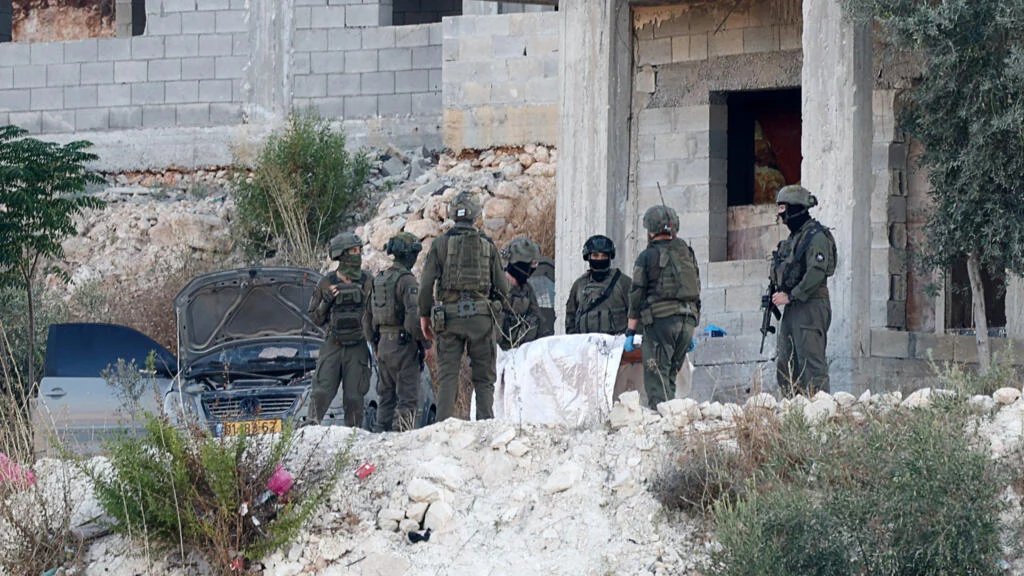
In a rare and significant escalation of military activity within the occupied West Bank, the Israeli military confirmed on Friday that it had conducted an air strike, resulting in the deaths of three Palestinian militants. The operation, which took place on the outskirts of the northern West Bank city of Jenin, represents a departure from the traditional ground-based raid tactics typically employed in the territory, signaling a hardening of Israel’s security posture amid a protracted period of regional instability.
The Operation: A Targeted Strike
The Israeli military identified the primary target of the strike as Qais Bitawi, a figure they described as a high-ranking operative involved in orchestrating militant activity. According to the Israel Defense Forces (IDF), Bitawi had been actively directing, funding, and executing attacks against both Israeli civilians and security personnel. Furthermore, the IDF alleged that Bitawi maintained deep-seated operational ties with Hamas leadership in the Gaza Strip and overseas, framing him as a critical node in a network attempting to destabilize the region.
The strike, which occurred at a construction site on the periphery of Jenin, also resulted in the deaths of two other individuals whom the military labeled as accomplices. The IDF stated that weapons were recovered from a vehicle at the scene, characterizing the event as a successful, proactive elimination of a threat.
The narrative surrounding the identities of the deceased has become a point of contention. While Israel classified Bitawi as a Hamas operative, the Al-Quds Brigades—the armed wing of the Palestinian Islamic Jihad (PIJ)—issued a statement claiming all three men were their fighters. They specifically honored Bitawi as a "prominent leader" of their organization in the West Bank, highlighting the complex and often overlapping nature of militant factions operating within the territory’s refugee camps.
Chronology of the Escalation
To understand the significance of this strike, one must view it within the broader timeline of the ongoing conflict that has gripped the region since October 7, 2023.
- October 2023: The landscape of the Israeli-Palestinian conflict shifted fundamentally following the Hamas-led attacks on southern Israel. The West Bank, while not the primary theater of war, saw a sharp rise in military raids and settler violence.
- Early 2025: The Israeli military launched "Operation Iron Wall," a large-scale, systematic campaign targeting militant strongholds, particularly in the northern West Bank. This campaign utilized heavy armor, including tanks, and resulted in the displacement of approximately 40,000 residents from refugee camps.
- February 2025: Israel conducted a previous air strike in the West Bank, signaling a willingness to use aerial assets in what is traditionally a counter-insurgency environment dominated by ground infantry.
- Present Day: The Friday strike in Jenin serves as the latest manifestation of the "Iron Wall" operational doctrine, which aims to dismantle local militant cells before they can launch coordinated attacks.
Official Responses and Tactical Justification
The operation received immediate endorsement from the highest levels of the Israeli government. Prime Minister Benjamin Netanyahu and Defence Minister Israel Katz both praised the precision and proactive nature of the military’s work.
"These are the fruits of the aggressive and proactive policy we are leading in the West Bank," Defense Minister Katz stated on the social media platform X. "We do not wait for terror—we pursue it, conquer its strongholds, and thwart its people."
Conversely, the reaction from Palestinian factions was one of condemnation and warning. Hamas issued a statement denouncing the incident as a "massacre" perpetrated by "occupation forces." The group warned that such actions would not suppress resistance but would instead fuel "further anger and confrontation," suggesting that the cycle of violence is likely to deepen rather than subside.
The humanitarian response was fraught with friction. The Palestinian Red Crescent reported that their medical crews were briefly detained by Israeli soldiers upon arriving at the scene. According to the organization, their equipment was confiscated, and personnel were ordered to leave the site before they could evacuate any potential casualties, adding another layer of controversy to the military operation.
Supporting Data: The Cost of the Conflict
The statistics surrounding the West Bank underscore the severity of the current security environment. Since the onset of the war in Gaza, the death toll in the West Bank has reached unprecedented levels.
- Palestinian Fatalities: According to an AFP tally based on data from the Palestinian Authority, at least 1,100 Palestinians have been killed in the West Bank since October 7, 2023. This figure includes both active militants and civilians caught in the crossfire of raids and skirmishes.
- Israeli Fatalities: Official Israeli data indicates that at least 48 Israelis—comprising both civilians and security forces—have been killed in the West Bank during the same period, either in direct attacks or during complex military operations.
- Displacement: The UN agency for Palestinian refugees (UNRWA) has documented the displacement of nearly 40,000 people from northern West Bank camps as a direct consequence of the "Iron Wall" operation, creating a significant humanitarian challenge for the region.
Implications: The Future of the West Bank
The use of air power in the West Bank, while still rare, suggests a tactical evolution in how Israel manages its security interests in the territory. By employing aerial surveillance and strike capabilities, the IDF is attempting to minimize the risk to its ground forces while maximizing the speed at which it can neutralize perceived threats.
However, this strategy carries profound political and social implications. Jenin has long been considered a hotbed of Palestinian resistance. By escalating the technological and lethal threshold of their operations, Israeli forces risk further alienating the local population and eroding the legitimacy of the Palestinian Authority (PA). The PA, which was granted limited self-rule under the 1990s Oslo Accords, finds itself in an increasingly precarious position. As a rival to Hamas but often viewed with suspicion by the Palestinian public due to its security coordination with Israel, the PA is struggling to maintain order as its influence over the northern West Bank wanes.
Furthermore, the involvement of diverse militant groups like the Al-Quds Brigades and Hamas suggests that the "Iron Wall" operation is facing a decentralized, albeit resilient, opposition. As these groups continue to reorganize and adapt to Israeli tactics, the prospect of a long-term stabilization of the West Bank remains elusive.
The international community, already strained by the humanitarian crisis in the Gaza Strip, now faces the reality of a "second front" that is growing in intensity. With the civilian toll rising and the diplomatic avenues for a two-state solution appearing increasingly narrow, the strike in Jenin is not merely a tactical victory for the Israeli military; it is a symptom of a broader, systemic collapse in the security architecture of the region.
As the "Iron Wall" campaign continues, the central question remains: can military force alone resolve a conflict that is deeply rooted in competing historical, national, and political narratives? For the residents of Jenin and the broader West Bank, the events of this Friday serve as a grim indicator that the volatility of the region is far from reaching its conclusion. The coming weeks will likely see an intensification of the rhetoric on both sides, potentially leading to a wider cycle of violence that complicates any future efforts toward de-escalation.