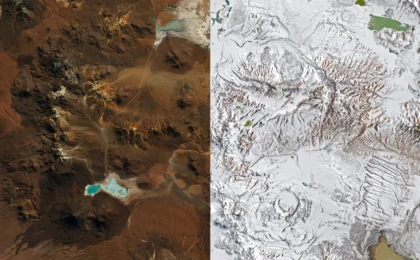
For decades, paleoclimatologists have been haunted by a singular, persistent mystery: How did Antarctica transform into a frozen fortress 34 million years ago when the Earth was still basking in a climate roughly 5°C warmer than today? While atmospheric carbon dioxide (CO₂) levels were undeniably shifting, they were not low enough to explain such a drastic, asymmetrical transition—especially when the Arctic remained largely ice-free for another 30 million years.
A groundbreaking international study, published in the journal Science, has finally provided the missing piece of the puzzle. The research suggests that the answer does not lie solely in the atmosphere, but deep beneath our feet. Through a sophisticated blend of computational modeling and geological analysis, scientists have revealed that the gradual uplift of the East Antarctic landmass—driven by mysterious "mantle waves"—created the high-altitude stage necessary for ice to gain a permanent foothold.
The Geological Genesis: A Hundred-Million-Year Evolution
The story of the Antarctic ice sheet begins long before the ice itself. Following the breakup of the supercontinent Gondwana, during the Jurassic Period between 201 and 143 million years ago, Antarctica began its slow drift into isolation.
However, simple continental drift does not account for the sheer verticality of the Antarctic interior. The study, led by the University of Southampton in collaboration with researchers from Durham University, the GFZ Helmholtz Centre for Geosciences (Germany), the University of Potsdam, Utrecht University, and the University of Florence, identifies a powerful mechanism: mantle waves.
These slow-moving, deep-seated waves travel beneath continents after tectonic plates begin to separate. Previously linked to the formation of diamond-bearing volcanoes, these waves acted as a geological elevator, gradually lifting the East Antarctic landmass over a period of 100 million years. By 45 million years ago, this process had pushed significant portions of the continent above the critical 2-kilometer elevation threshold.
Chronology of the Deep Freeze
- 201–143 Million Years Ago: Antarctica begins its separation from Africa during the Jurassic Period, setting the stage for subsequent tectonic instability.
- 100 Million Years Ago: Mantle waves begin to pass beneath East Antarctica, initiating a multi-million-year process of gradual continental uplift.
- 50 Million Years Ago: Most of the Gamburtsev Mountains—a range hidden beneath the modern ice sheet—stand at elevations below 1.5 km.
- 45 Million Years Ago: Large swaths of East Antarctica surpass the 2 km "critical elevation" required to support persistent snow and ice.
- 34 Million Years Ago: Glaciers spanning the elevated plateau and mountain ranges coalesce, marking the official birth of the East Antarctic Ice Sheet.
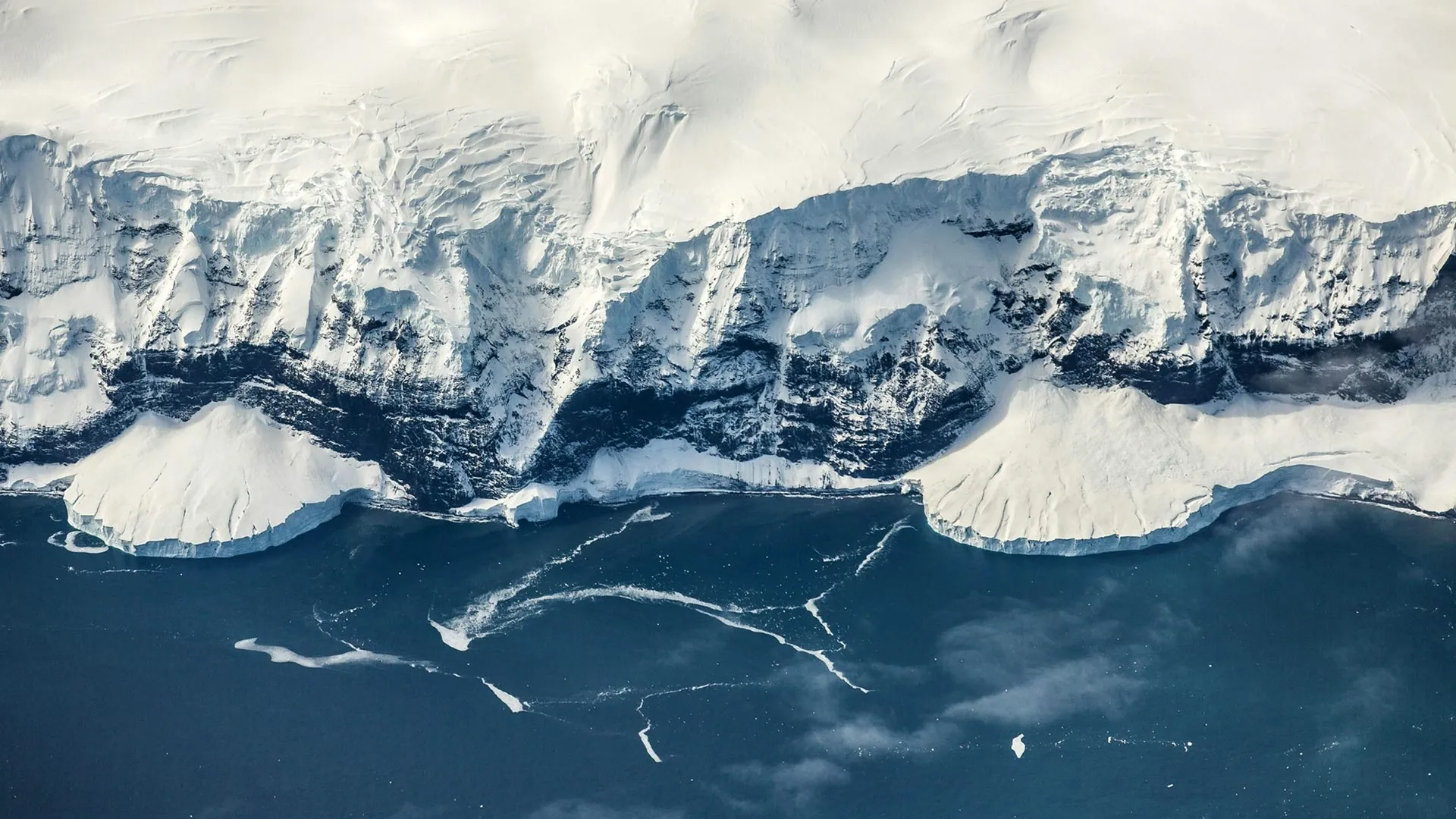
- Present Day: The East Antarctic Ice Sheet stands as the largest ice reservoir on the planet, holding enough frozen water to raise global sea levels by approximately 52 meters.
Topography as a Climate Determinant
The findings underscore a fundamental principle of meteorology: air temperature drops by approximately 1°C for every 100 meters of altitude gained. Before the uplift, the Gamburtsev Mountains were simply too low to prevent seasonal snow melt. Once the mountains rose above the 2-kilometer mark, the environment shifted from one that allowed for summer thawing to one that facilitated year-round accumulation.
"Topography is fundamentally important for glaciation," explains Dr. Guy Paxman of Durham University, a co-author of the study. "By reaching those heights, the land surface entered a temperature regime where snow and ice could survive through the summer and eventually accumulate from one year to the next."
This topographical "preconditioning" explains the profound asymmetry between the two poles. While falling CO₂ levels provided a cooling trend, the Northern Hemisphere’s landmasses remained at lower elevations during that period. Consequently, they lacked the high-altitude "seedbeds" necessary for glaciation, leaving the Arctic largely ice-free until approximately five million years ago.
Supporting Data: Feedbacks and the ‘Ice-Albedo’ Effect
Once the ice began to gain a foothold, it triggered a series of self-reinforcing climate feedbacks that accelerated the continent’s transition into a frozen wilderness.
Central to this was the ice-albedo effect. As the ice sheet expanded, its brilliant white surface reflected an increasing amount of incoming solar radiation back into space. This reduction in solar absorption led to further regional cooling. Researchers estimate this effect alone reduced global temperatures by roughly 1°C.
Furthermore, as the region cooled, the moisture content of the atmosphere decreased. Because colder air holds less water vapor—a potent greenhouse gas that acts as an insulating blanket—the atmosphere became progressively drier. This reduction in insulation created a secondary feedback loop, trapping less heat near the surface and allowing the ice sheet to spread from the mountainous interior toward the coast.
Perspectives from the Research Team
The complexity of these interactions required a multi-disciplinary approach. Using advanced computational models, the team successfully reconstructed 100 million years of surface evolution.
"We found that our models can realistically capture the evolution of the two-kilometer-high coastal escarpment, elevated plateau, and inland mountains," says Dr. Thea Hincks, Senior Research Fellow at the University of Southampton. "These features were the essential ingredients for seeding the East Antarctic Ice Sheet."
Professor Thomas Gernon, the study’s lead author, emphasizes that the findings challenge the traditional, atmosphere-centric view of ice sheet formation. "Antarctica’s land surface was gradually lifted to the point where ice could gain a permanent foothold, even while the surrounding polar oceans and global temperatures remained surprisingly warm," Gernon states. "If falling levels of CO₂ acted alone, you would expect the poles to respond more symmetrically. Instead, Antarctica gained a major head start because geological processes had raised the land to higher elevations, making it inherently colder."
Implications: A New Framework for Climate History
The implications of this research extend far beyond the history of Antarctica. By demonstrating that the Earth’s interior can "precondition" landscapes for climate change, the study provides a new lens through which scientists must view major climate transitions throughout Earth’s history.
"Our findings reveal that the Earth’s interior determines when and where major climate transitions—like the glaciation of Antarctica—become possible," Prof. Gernon adds. "That is incredibly important for understanding Earth’s ancient ice ages as well as identifying potential future tipping points in the climate system."
This study suggests that geological forces act as the "gatekeepers" for climate shifts. For policy makers and climate scientists modeling the future, this underscores the necessity of considering deep-earth geological processes when predicting how regional environments might respond to atmospheric change.
As the global community faces the challenges of modern climate change, the story of Antarctica’s birth serves as a humbling reminder of the interconnectedness of our planet. The ice that sits atop the South Pole today is not merely a product of the atmosphere; it is the culmination of a 100-million-year tectonic dance—a reminder that the ground beneath our feet is just as influential as the air above our heads in shaping the destiny of the world’s climate.
The research was supported by the WoodNext Foundation, a fund of a donor-advised fund program, and represents a significant leap forward in our understanding of paleoclimatology.