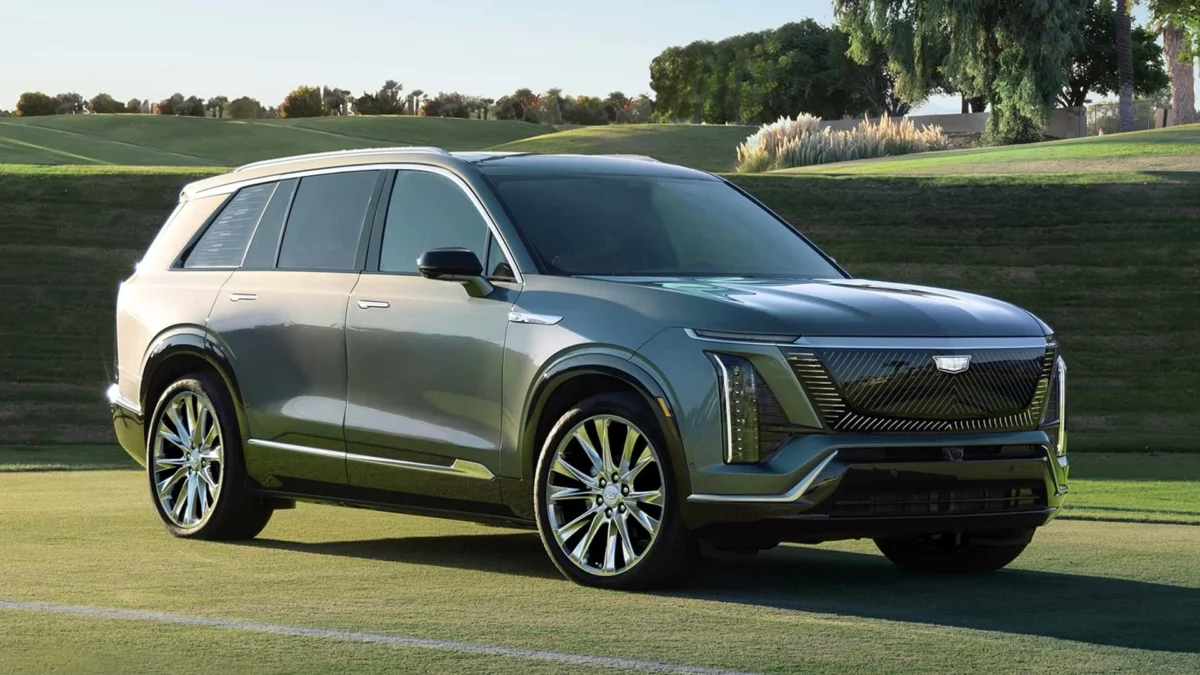
In a significant blow to its luxury electric vehicle rollout, Cadillac has issued a mandatory recall for every single unit of the Vistiq three-row SUV produced to date. The recall, filed with the National Highway Traffic Safety Administration (NHTSA), encompasses the entirety of the model’s production run for the 2026 and 2027 model years—an estimated 14,540 vehicles. This sweeping action follows reports and internal testing confirming a failure in the power-folding mechanism of the third-row seats, which poses a potential entrapment risk for passengers.
The Nature of the Defect: A Failure in Safety Logic
The Cadillac Vistiq, a premium addition to the brand’s growing electric portfolio, features power-operated third-row seating designed for maximum convenience. These seats are engineered to fold down at the touch of a button, located either within the cargo area or on the side pillar. However, the system contains a critical flaw: when the seatback encounters an obstacle during its folding motion, the motor fails to perform an automatic safety reversal.
In automotive safety parlance, "anti-pinch" or "obstacle detection" systems are standard requirements to prevent injury. In the case of the Vistiq, the seatback simply stalls upon contact with an obstruction. While this avoids the crushing force seen in some other automotive failures, it creates a dangerous "trap" scenario. The NHTSA report highlights that smaller occupants—most notably children—could become physically pinned under the seatback. Because the system does not automatically retract or stop with enough clearance to allow for an easy exit, the risk of injury is deemed significant.
Chronology of the Discovery
The path to this recall began with a proactive internal review by General Motors, Cadillac’s parent company. The timeline of the discovery underscores the manufacturer’s commitment to the "Speak Up For Safety" (SUFS) program, which encourages employees to flag potential hazards before they manifest as customer incidents.
- March 31, 2026: A GM engineer, prompted by broader industry discussions regarding power-seat safety, initiated a formal report through the SUFS program.
- April 2026: During rigorous testing, engineers placed a 33-to-40-pound test weight on the seatback. Upon activation, the seat motor stalled upon contact, and the weight became effectively wedged, proving that the mechanism was incapable of clearing the object or releasing it.
- May 2026: Further investigation confirmed that the defect was present across the production timeline, which spans from November 12, 2024, to June 15, 2026.
- June 8, 2026: Cadillac officially placed a hold on all shipments of the 2027 Vistiq to ensure that no further vehicles with the defect reached dealer lots or consumers.
- June 2026: The formal filing with the NHTSA was finalized, triggering the recall process for all 14,540 units currently in existence.
Supporting Data and Technical Implications
The scope of this recall is total, affecting 100 percent of the Vistiq vehicles produced since the model’s debut. Cadillac has acknowledged six specific customer complaints related to the seat functionality. While none of these reports have resulted in confirmed physical injuries, the potential for harm necessitated an immediate response.
The technical complexity of this issue lies in the software logic governing the seat motors. Unlike traditional mechanical seats that rely on spring tension or manual locks, the Vistiq’s seats are entirely digitized. The current software fails to differentiate between a soft obstruction (like a child’s arm or a backpack) and the end-of-travel stop, causing the motor to lock the seat in a "stalled" state.
Comparison to Industry Precedents
This recall is being closely compared to the high-profile case involving the Hyundai Palisade. In that instance, the defect was more severe: the seats would continue to exert force even after detecting an obstruction, leading to tragic, high-profile accidents. Cadillac’s situation, while serious, differs in that the Vistiq’s seats cease movement entirely. However, as safety advocates point out, a stalled seat that cannot be manually bypassed remains a liability, especially if a child is unable to reach the release controls to free themselves.
Official Response and Dealer Directives
Cadillac is currently working to finalize a software update that will recalibrate the obstacle detection sensors. When the fix is implemented, the system will be programmed to immediately reverse the seat direction if any resistance is met, effectively eliminating the entrapment risk.

In the interim, Cadillac has issued clear, albeit restrictive, instructions to its dealership network. Because there is currently no manual override to raise or lower the third row, dealerships are authorized to disable the power-folding feature entirely upon request.
"We are prioritizing the safety of our customers above all else," a Cadillac spokesperson stated. "Until the permanent software remedy is deployed, we are providing our dealers with the tools to ensure these vehicles can be used safely. We advise all Vistiq owners to consult with their local Cadillac service center to have the seat mechanism temporarily disabled if they have concerns."
For owners, this creates a temporary functional limitation: the third-row seats will remain locked in their current position (either fully upright or fully stowed) until the service bulletin is completed. Owners are urged to decide on their preferred seating configuration before visiting the dealership, as the manual manipulation of the seats is not possible.
Implications for Cadillac and the EV Market
This recall arrives at a delicate time for Cadillac, which is in the midst of an aggressive transition to an all-electric lineup. The Vistiq is intended to be a flagship vehicle for families, and the brand’s reputation for safety is a primary selling point for the luxury SUV demographic.
The Cost of Quality
For General Motors, the financial impact of recalling 14,540 vehicles is substantial, involving logistics, dealer labor hours, and potential reputational damage. However, industry analysts suggest that the proactive nature of this recall may serve to insulate the brand from long-term negative sentiment. By halting shipments voluntarily and acknowledging the issue before a child was injured, Cadillac is following a "safety-first" playbook that has become essential in the age of complex, software-defined vehicles.
The Growing Challenge of Power-Folding Seats
The Vistiq recall is part of a broader, concerning trend in the automotive industry. As manufacturers cram more luxury features into SUVs, the complexity of interior components has increased exponentially. From Ford’s recent issues with seat bolts to Toyota’s massive recalls regarding headrest and seating components, the "power-convenience" features are becoming a primary source of recall activity.
What Owners Should Do Next
Cadillac has committed to notifying owners of affected vehicles via first-class mail starting in the coming weeks. However, owners do not need to wait for the letter to take action.
- Check Your VIN: Owners can visit the NHTSA recall website and enter their Vehicle Identification Number (VIN) to confirm if their specific Vistiq is included in the recall.
- Contact the Dealer: Contact your local Cadillac dealership to schedule a service appointment. Even if the permanent fix (the software patch) is not yet available, the dealer can perform the temporary "disable" procedure to ensure the seats cannot move unexpectedly.
- Exercise Caution: If you own a Vistiq and have not yet visited a dealer, ensure that no children are left unattended in the rear of the vehicle, particularly when the seat-folding buttons are within reach.
As the industry moves toward more automated interior configurations, the Vistiq recall serves as a sobering reminder that even the most advanced luxury features must undergo rigorous real-world validation. Cadillac’s rapid, transparent response to this issue will be the standard by which its commitment to customer safety is measured in the coming year. As the company works to restore confidence, the focus remains on finalizing the software update that will return the Vistiq to full functionality—without the risk.