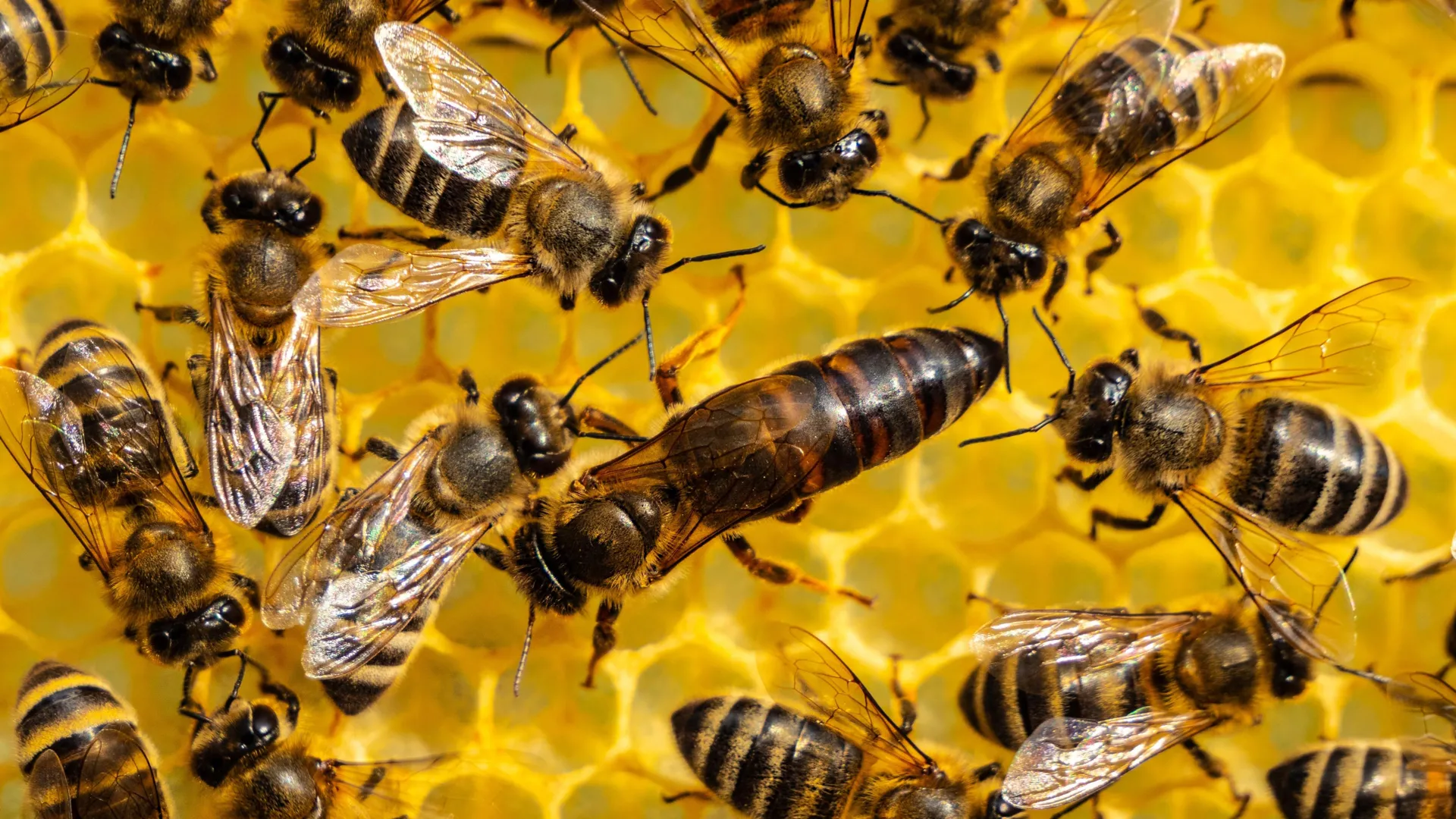
For generations, the prevailing wisdom in entomology was deceptively simple: the secret to monarchical power in a honeybee colony was found at the tip of a spoon. Scientists long believed that if a developing larva was fed a steady, abundant diet of royal jelly, it was biologically destined to transcend its status as a worker bee and emerge as a queen. It was a narrative of nutritional determinism—a "you are what you eat" scenario played out in the dark, hexagonal confines of the hive.
However, a groundbreaking new study published in the journal Nature has shattered this long-held paradigm. Researchers have revealed that the creation of a queen is not merely a dietary upgrade, but a masterpiece of collective engineering. The process involves specialized construction, thermal regulation, and a dedicated caste of "royal contractors" who work in tandem to craft a sovereign from the exact same genetic material as a common laborer.
The Architecture of Sovereignty: Beyond the Royal Jelly
Honeybee queens and workers begin their lives as virtually identical eggs. Yet, through a process of rapid development, the queen emerges as a larger, longer-lived, and uniquely fertile individual capable of sustaining the entire colony’s lineage. For decades, the focus remained almost exclusively on the chemical composition of royal jelly. While nutrition remains a critical component, the new research indicates that it is merely one variable in a far more complex equation.
The study, which utilized an interdisciplinary approach including thermal imaging, materials science, and chemical analysis, suggests that the environment surrounding the larva is just as vital as the food it consumes. Central to this discovery are the "queen cells"—the peanut-shaped structures that house developing queens. These are not merely passive containers; they are sophisticated, climate-controlled nurseries.
The Physics of the "Royal Crib"
The research team found that the wax used to build queen cells is fundamentally different from the standard wax used for the hive’s worker brood chambers. This specialized material is less dense, more flexible, and exhibits superior thermal and moisture-retaining properties.
By analyzing the chemical signature of this wax, researchers identified distinct fatty acids and signaling molecules that are absent in the standard hexagonal cells. To test the importance of these structures, scientists conducted a controlled experiment: they raised queen larvae in both specialized queen wax and standard worker wax. Even when both groups were fed identical, high-quality diets, the larvae raised in standard worker wax suffered higher mortality rates and grew into significantly smaller, less robust queens. The conclusion was stark: the architecture itself acts as a biological catalyst.
Chronology of a Royal Transformation
The transition from a standard larva to a queen is a high-stakes race against time. A queen must reach maturity in approximately 16 days, significantly faster than the 21 days required for a worker bee. This accelerated timeline is essential for a colony that may be facing an urgent need for a new leader due to swarming, illness, or the death of a predecessor.
The Role of the "Queen Cell Builders"
Perhaps the most surprising finding of the study is the discovery of a specific demographic of worker bees tasked with the construction and maintenance of these nurseries. These "queen cell builders," typically the younger members of the hive, undergo physiological shifts that allow them to perform their duties with surgical precision.
- Selection and Preparation: Young workers are recruited to become royal builders. Their bodies begin to activate specific biological pathways associated with high-grade wax production.
- Material Sourcing: These builders do not simply recycle old wax. Researchers tracked the process by introducing trace amounts of graphite into the hive; they observed that the builders selectively collected and modified materials from various parts of the hive to "enrich" the composition of the queen cell.
- Thermal Regulation: The builders do more than build; they regulate. Throughout the development of the queen, these workers maintain higher body temperatures within the nursery, effectively acting as living, breathing incubators.
- Maturation: Under the constant vigilance of the builders, the larva undergoes a rapid metamorphosis, culminating in the emergence of a queen.
Supporting Data and Collaborative Methodology
The study was led by former University of California, Riverside (UCR) postdoctoral researchers Yu Fang and Yahya Al Naggar. The project was a massive undertaking, blending the expertise of behaviorists, physiologists, chemists, and genomics experts.
The use of graphite tracking provided the "smoking gun" for the theory that workers actively manipulate materials. By observing that the darkened, graphite-laden wax was preferentially moved and refined into the queen cells, the team proved that the colony exercises intentional control over the building process. Furthermore, the observation of these behaviors across both European and Asian honeybee species suggests that this sophisticated "royal engineering" is an evolutionary trait that has been honed over millions of years.
Official Perspectives: The "Buckingham Palace" Model
Boris Baer, an entomologist and director of the Center for Integrative Bee Research (CIBER) at UC Riverside, believes the findings force a reevaluation of how we view insect societies.
"The old idea was relatively simple: take an egg, move it into a queen cell, feed it royal jelly, and you get a queen," said Baer. "What we found is that there’s an entire machinery behind this process. It’s much more sophisticated than we imagined. You can think of it as something like Buckingham Palace. There is a dedicated group of bees focused entirely on raising the queen, and if they don’t get it right, the colony cannot reproduce."
Baer emphasizes that the study serves as a testament to the collaborative, interdisciplinary spirit of modern science. By bringing together experts who would rarely interact, the team was able to see the colony not as a collection of autonomous insects, but as a singular, integrated biological system capable of environmental engineering.
Implications for Biology and Beyond
The implications of this discovery reach far beyond the field of apiculture. For decades, the honeybee queen was touted as one of biology’s most straightforward examples of developmental plasticity—the idea that a single genome could produce two wildly different phenotypes based on a simple "on/off" switch triggered by diet.
This new research complicates that narrative. It suggests that development is not merely a response to nutrients or genetics, but a deeply social and physical process. The environment—the temperature, the chemical signals of the wax, the proximity of the "cell builders"—is an active participant in shaping the organism.
A New Understanding of Social Complexity
This discovery challenges our understanding of how complex organisms develop in social settings. If honeybees can engineer the physical environment to dictate the biological outcome of their offspring, it raises questions about how other social species—and perhaps even humans—are shaped by the "cradles" they are born into.
Furthermore, the study provides a critical lens through which to view colony health. If the success of a queen is dependent on the specialized labor of young workers and the quality of the wax they construct, then environmental stressors that affect worker behavior or wax-secretion capabilities could have catastrophic, long-term effects on the colony’s ability to replace its queen.
As we look to the future, this "royal blueprint" offers a profound lesson in biological cooperation. The honeybee colony does not leave the future of its lineage to chance; it builds it, warms it, and feeds it with a level of coordination that borders on the architectural. In the tiny, peanut-shaped cells of the hive, we have discovered that the power of a queen is not just given—it is meticulously, collectively constructed.