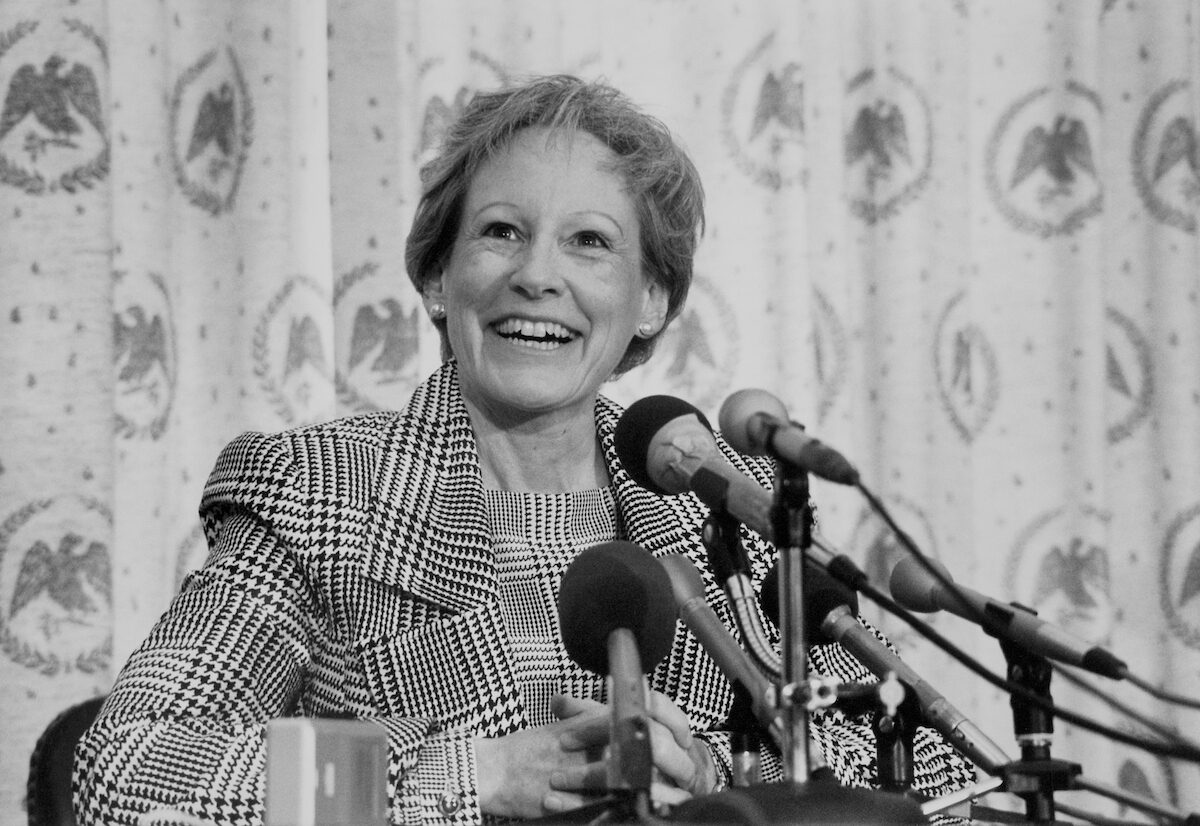
Former U.S. Senator Nancy Kassebaum Baker, a pioneering Kansas Republican who redefined the role of women in national politics and served as a crucial bridge-builder in the Capitol for nearly two decades, has died at the age of 94.
Kassebaum died of natural causes while in hospice care on August 21, her son, Bill Kassebaum, confirmed. Her passing marks the end of an era for both Kansas political history and the United States Senate, where she forged a distinct legacy characterized by fiscal conservatism, social moderation, and an unyielding independent streak.
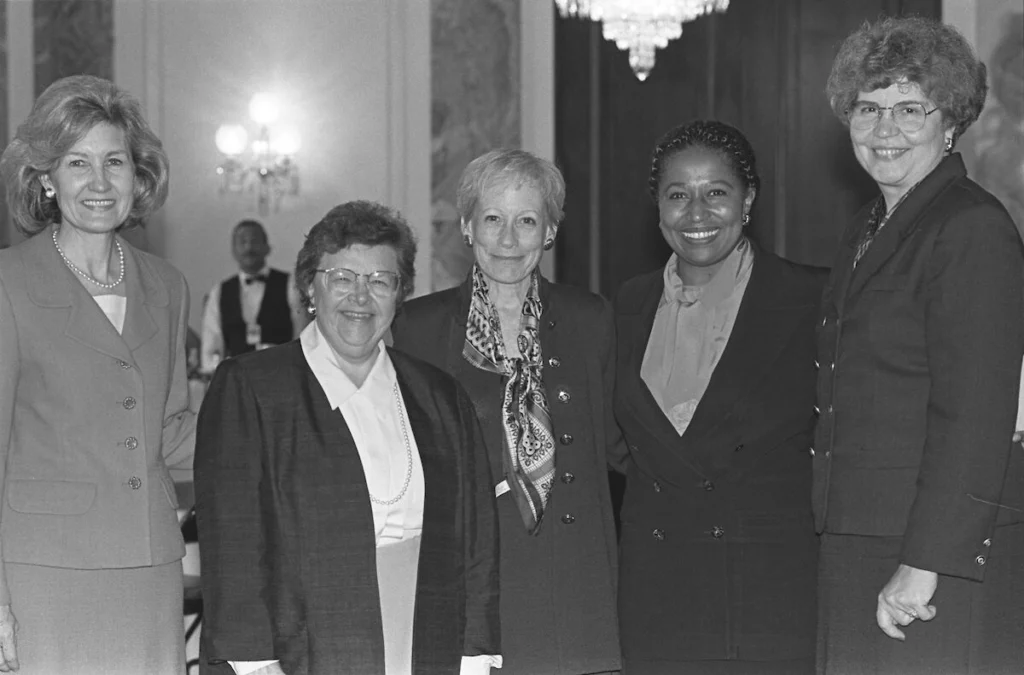
As the first woman elected to a full Senate term without succeeding her husband in office, and later the first woman to chair a major standing Senate committee, Kassebaum shattered long-standing institutional barriers. Throughout her three terms from 1978 to 1997, she navigated a male-dominated legislative landscape with a quiet determination that earned her cross-party respect and lasting influence over American healthcare and labor policy.
Main Facts: A Historic Legacy in the United States Senate
Nancy Kassebaum’s political career was defined by a series of historic firsts that reshaped female representation in federal government:
- Pioneering Representation: She was the first woman to represent the state of Kansas in the U.S. Senate and the first woman in American history to win a full Senate term without having first been appointed or elected to fill an unexpired term left by a deceased husband.
- Institutional Leadership: In 1995, during the 104th Congress, Kassebaum became the first woman to chair a major Senate committee when she assumed leadership of the Senate Labor and Human Resources Committee (now the Health, Education, Labor, and Pensions Committee).
- Solitary Status: Upon taking her oath of office in late December 1978, Kassebaum served as the only woman in the 100-member U.S. Senate until early 1981, when Florida Republican Paula Hawkins was sworn in.
- Bipartisan Legislative Achievement: Alongside Massachusetts Democratic Senator Edward M. Kennedy, she co-authored the landmark Health Insurance Portability and Accountability Act (HIPAA) of 1996, transforming modern healthcare access by preventing insurers from denying coverage due to pre-existing conditions.
- Independent Ideology: Known for defying party orthodoxies, Kassebaum supported abortion rights and gun control measures while maintaining a strong stance against federal business mandates and government spending.
Chronology: The Journey from Local Governance to Washington Power
1932: Born Nancy Landon in Topeka, Kansas
  │
1970s: Serves on Maize, KS School Board & as staff aide to Sen. James B. Pearson
  │
1978: Wins U.S. Senate election; sworn in Dec 23 following Pearson’s early resignation
  │
1978–1981: Serves as the lone female member of the U.S. Senate
  │
1984 & 1990: Re-elected comfortably to second and third terms
  │
1993: Leads "Pantsuit Protest" with Sen. Barbara Mikulski to challenge Senate dress codes
  │
1994–1995: GOP wins Senate majority; Kassebaum becomes Chair of Labor & Human Resources Committee
  │
1996: Co-authors HIPAA; marries former Senate GOP Leader Howard Baker Jr.; retires from Senate
  │
2001–2005: Resides in Japan while husband serves as U.S. Ambassador
  │
2020s: Endorses moderate Democrats, calls for Trump's impeachment after Jan. 6
  │
Aug 21: Passes away at age 94 in hospice care
Deep Roots in Kansas Governance
Nancy Landon was born in Topeka, Kansas, in 1932 into one of the state’s most prominent political families. Her father, Alfred M. Landon, served as Governor of Kansas from 1933 to 1937 and was the 1936 Republican presidential nominee who famously lost to Franklin D. Roosevelt in a landslide victory.
Despite her family background, Kassebaum’s personal entry into public service was modest. Prior to her 1978 Senate campaign, her elected experience was limited to a seat on the school board of Maize, Kansas—a town with a population of just 785 at the time—and a one-year stint working as a legislative assistant in Washington for Kansas Republican Senator James B. Pearson.
The 1978 Breakthrough Campaign
When Senator Pearson announced his retirement in 1978, Kassebaum—then Nancy Landon Kassebaum—entered a crowded Republican primary. Leveraging high name recognition and political heritage, aided by television campaign advertisements featuring her father, she secured the nomination. In the general election, she comfortably defeated former Democratic Representative William R. Roy.
Pearson resigned a few days early on December 23, 1978, allowing Governor Robert Bennett to appoint Kassebaum to fill out the remaining days of the term, giving her seniority over other incoming freshman senators. When she was officially sworn in for her full term, she stood alone as the sole woman in the upper chamber of the U.S. Congress.
Ascension to Committee Leadership
Over her 18-year career, Kassebaum built a reputation for pragmatic conservatism. Her rise within the Senate GOP caucus culminated in 1995 following the "Republican Revolution" of the 1994 midterm elections. With Republicans capturing the Senate majority, Kassebaum assumed the chairmanship of the Senate Labor and Human Resources Committee.
Her leadership marked a turning point for women in Congress, demonstrating that female legislators could command powerful, policy-shaping committees dealing with vast domestic priorities, from public health to national labor law.
Post-Senate Life and Marriage
In 1996, Kassebaum announced she would not seek a fourth term, citing a desire to pursue other life chapters, including spending time with her growing family and grandchildren. That same year, she married former Senate Republican Leader Howard H. Baker Jr. of Tennessee, creating one of Washington’s most respected political unions.
When President George W. Bush appointed Baker as the U.S. Ambassador to Japan in 2001, Kassebaum relocated to Tokyo with him, serving as an informal diplomatic ambassador until their return to the United States.
Supporting Data: Legislative Impact and Voting Record
Throughout her legislative career, Kassebaum was difficult to categorize within strict partisan boundaries. Her voting record reflected a blend of traditional Midwestern fiscal discipline and socially moderate pragmatism.
                  Nancy Kassebaum's Policy Spectrum
┌──────────────────────────────────────┬──────────────────────────────────────┐
│        Socially Moderate /           │           Fiscally & Policy          │
│          Bipartisan Focus            │             Conservative             │
├──────────────────────────────────────┼──────────────────────────────────────┤
│ • Co-authored HIPAA (1996)           │ • Opposed federal minimum wage hikes │
│ • Supported abortion rights (Roe)    │ • Opposed mandated Family Leave (FMLA)│
│ • Favored commonsense gun control    │ • Advocated fiscal restraint         │
│ • Moderated 1994 welfare overhauls   │ • Resistant to federal overregulation│
└──────────────────────────────────────┴──────────────────────────────────────┘
The Landmark Kassebaum-Kennedy Act (HIPAA)
Kassebaum’s most enduring legislative achievement came in 1996 through her partnership with liberal icon Sen. Edward M. Kennedy (D-Mass.). Together, they drafted the Health Insurance Portability and Accountability Act (HIPAA).
At a time when workers frequently lost health coverage upon changing or losing jobs, the Kassebaum-Kennedy legislation established key federal protections:
- Portability: Guaranteed that workers could maintain health coverage when transitioning between jobs.
- Pre-existing Conditions: Restricted the ability of group health plans to deny coverage based on pre-existing medical conditions.
- Privacy Standards: Created the framework for national data privacy and security rules surrounding personal health information.
Moderating the "Contract with America"
Following the 1994 elections, House Republicans introduced the "Contract with America," an aggressive conservative agenda. When provisions reached the Senate that sought to overhaul welfare by denying federal benefits to unmarried teenage mothers and children on welfare, Kassebaum intervened. She successfully led efforts to strip those specific punitive measures from the Senate version, arguing that policy should support family stability rather than penalize vulnerable children.
Moderate Social Views vs. Business Mandates
While Kassebaum frequently broke with her party on social issues—supporting access to legal abortion and voting for gun control measures—she remained staunchly conservative on economic regulation.
She consistently voted against federal mandates imposed on private businesses, opposing increases to the federal minimum wage and fighting against the Family and Medical Leave Act (FMLA), which required employers to grant unpaid leave for family emergencies. Recognizing the tension between her social moderation and economic votes, Kassebaum once wryly remarked during a debate over federal mandates:
"I always feel like the skunk at the picnic on this issue."
Breaking Gender Norms on the Senate Floor
Beyond policy, Kassebaum actively challenged institutional traditions. In the early 1990s, an unwritten Senate dress code required female members and staff to wear dresses or skirts on the Senate floor.
Irked by the outdated rule, Kassebaum joined forces with Senator Barbara A. Mikulski (D-Md.) in 1993 to stage a "pantsuit protest." The two senators deliberately wore trousers to a weekend Senate session and encouraged female staffers to do the same. The quiet rebellion effectively dismantled the unwritten dress code, paving the way for pantsuits to become standard professional attire in the chamber.
Official Responses and Tributes
News of Kassebaum’s passing brought tributes from state and national leaders across the political spectrum, reflecting her stature as an elder statesman of Kansas politics.
Kansas State Leadership
Kansas Democratic Governor Laura Kelly issued a statement praising Kassebaum’s dedication to her home state and public service:
"Kansas lost part of its soul with Senator Kassebaum’s passing. She represented the very best of Kansas values—integrity, independence, and an unshakeable commitment to civil discourse. Nancy paved the way for generations of women in leadership, showing us that soft-spoken civility should never be mistaken for a lack of strength."
Congressional Colleagues and Former Staff
Members of the current Kansas congressional delegation highlighted her role as a mentor and institution builder.
Republican Senator Jerry Moran recalled campaigning for Kassebaum during his early years in politics, praising her dedication to the Senate as an institution:
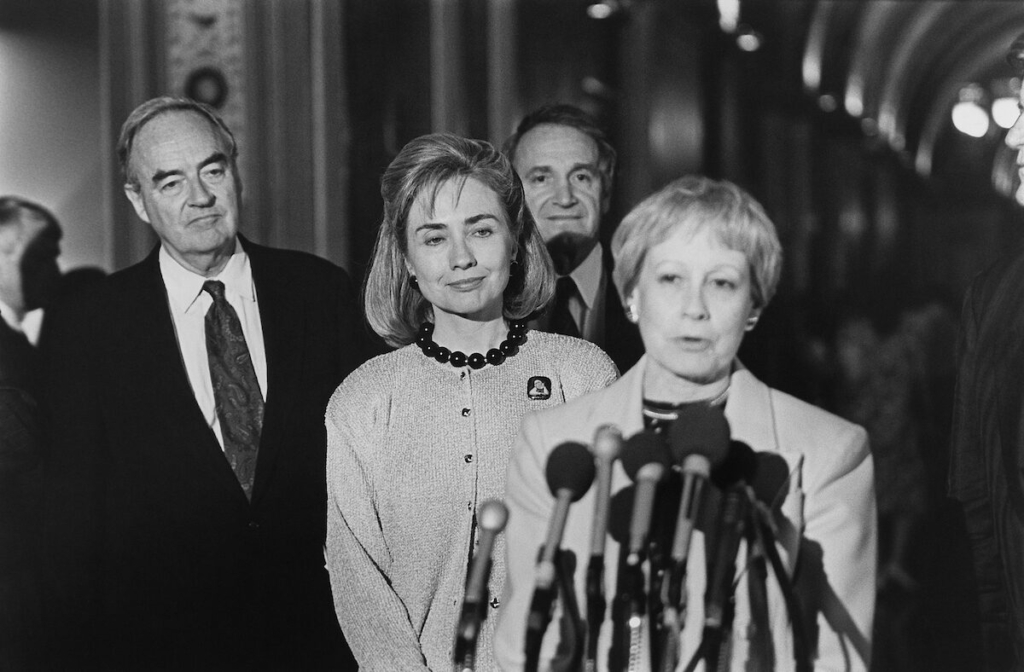
"Senator Kassebaum’s time in public service embodied the institution of the U.S. Senate at its best. She was a friend, a mentor, and an encourager who was never afraid to challenge me in our conversations. She set a standard for integrity and independence that every public servant should strive to reach."
Republican Representative Derek Schmidt, who served on Kassebaum’s Capitol Hill staff for five years early in his career, shared his gratitude for her mentorship:
"Senator Kassebaum introduced this kid from a small Southeast Kansas town to opportunities for public service I had not known possible," Schmidt stated. "She taught everyone who worked for her that public policy was about helping people, listening carefully, and governing with humility."
Implications: The Evolution of Moderate Republicanism and Her Legacy
Nancy Kassebaum Baker’s passing highlights a significant shift in the landscape of American politics and the Republican Party over the last several decades.
               Evolution of Kassebaum's Political Context

  1970s–1990s Era                        Modern Era
┌────────────────────────────────┐     ┌────────────────────────────────┐
│ • Bipartisan consensus-building│     │ • Deep partisan polarization   │
│ • Cross-aisle policy work      │ vs. │ • Shifting party orthodoxies   │
│ • Moderate Republican influence│     │ • Eclipse of centrist bloc     │
└────────────────────────────────┘     └────────────────────────────────┘
The Fraying Tie with Modern Republicanism
In the final decade of her life, Kassebaum grew increasingly alienated from the populist evolution of the Republican Party under Donald Trump. A traditional institutionalist, she voiced concern over the erosion of democratic norms, public civility, and bipartisan cooperation.
Following the January 6, 2021 attack on the U.S. Capitol, Kassebaum publicly called for the impeachment of President Trump, arguing that accountability was necessary to protect constitutional governance.
Her independence extended to her endorsement choices in late life. She crossed party lines to endorse Democratic candidates whom she viewed as pragmatic centrists, including Kansas Governor Laura Kelly during her gubernatorial campaigns and Vice President Kamala Harris for president in 2024.
These actions underscored her lifelong commitment to placing country and personal principle above strict party loyalty—a trait that earned her both respect from political opponents and criticism from party ideologues.
An Enduring Blueprint for Female Leadership
Kassebaum’s legacy remains deeply etched in the history of female political empowerment. When she entered the Senate in 1978, female representation was an anomaly; today, dozens of women serve in the upper chamber, holding key committee chairmanships and leadership positions.
Though often described by contemporaries as mild-mannered, Kassebaum pushed back against shallow characterizations of her style. Addressing her public image, she once famously noted:
"Someday I’m going to hit someone over the head for calling me diminutive and soft-spoken. But I am."
Her career proved that quiet diplomacy, willingness to compromise, and principled independence could achieve lasting policy success. As the nation reflects on her 94 years, Nancy Kassebaum Baker stands as a monument to a transformative era of American governance—a leader who broke barriers for women, shaped national health policy, and consistently put pragmatic public service ahead of partisan politics.