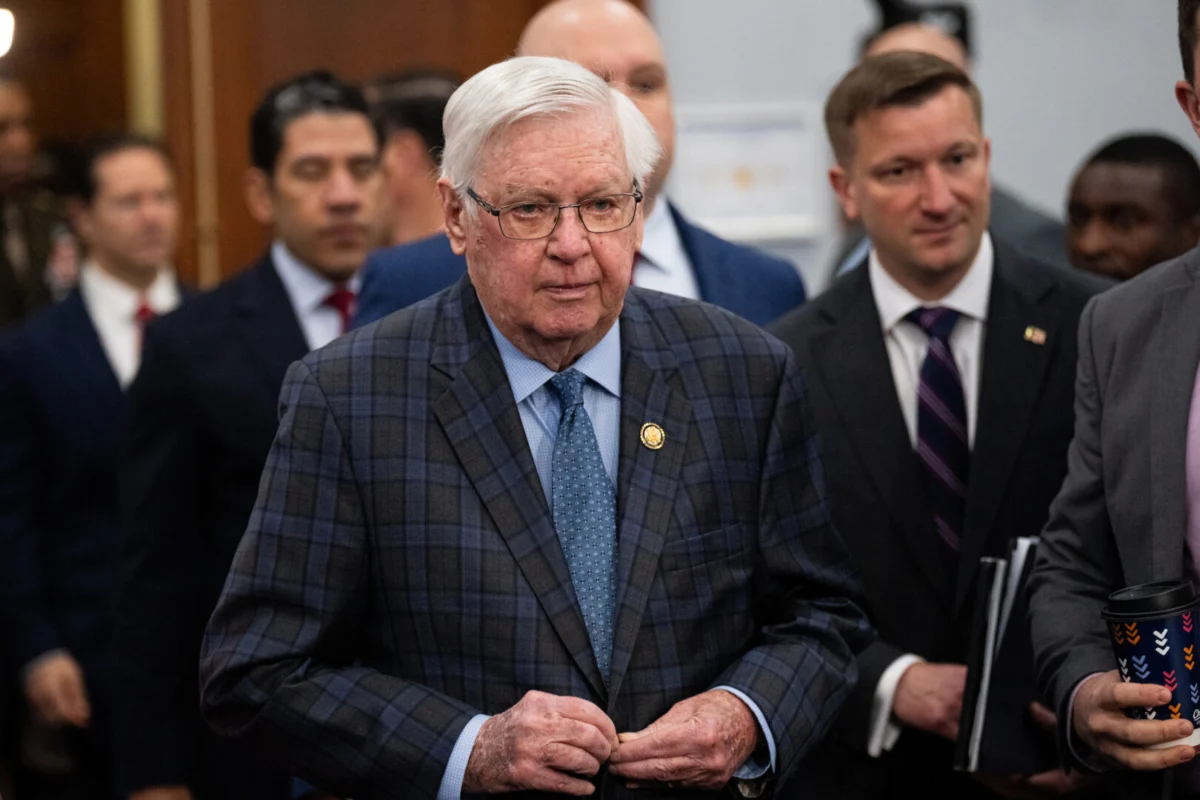
WASHINGTON D.C. – In the halls of Congress, where legislative priorities often clash and the allocation of taxpayer dollars is a perennial battleground, one figure stands as a testament to the enduring power of congressional earmarks: Republican Rep. Harold Rogers of Kentucky. Known by some critics as the "Prince of Pork" long before the practice was temporarily banned, the 88-year-old lawmaker appears to have resurrected his old ways with renewed vigor since earmarks made their controversial return in 2021.
A review by CQ Roll Call has unveiled a pattern of significant funding directed by Rogers to three non-profit organizations he helped establish, raising questions about transparency, fairness, and the inherent flaws in the current earmark system. Since the decade-long ban on earmarks was lifted, Rogers has channeled more than $30 million in funding to these entities. The veteran appropriator has further requested an additional $22.5 million for two of these organizations for fiscal year 2027, signaling a sustained commitment to what critics argue are "legacy projects."
While there is no indication that Rogers’ approach explicitly violates House restrictions governing earmark funding, the practice has ignited a fresh wave of criticism from government watchdog groups. These organizations contend that the situation underscores a fundamental shortcoming in the existing rules, highlighting how the system still allows individual lawmakers, particularly those with significant seniority and influence, to steer substantial taxpayer money towards projects closely associated with their own political legacies and personal connections.
Rogers, a stalwart defender of his spending decisions, maintains that the work undertaken by these non-profits is vital for addressing the pervasive challenges faced by eastern Kentucky. In a written statement, he emphasized his long tenure as a House appropriator, asserting that he has consistently secured crucial funding for southern and eastern Kentucky – regions he believes "otherwise, had no chance of getting the attention of bureaucrats in Washington." This defense posits earmarks as a necessary tool for local empowerment, a direct conduit for federal resources to communities often overlooked by broader federal programs.
However, this perspective is sharply contrasted by critics like Joshua Sewell, director of research and policy at Taxpayers for Common Sense. Sewell directly challenges the premise, asking, "Are they getting funding because this is what’s familiar or because they are what’s most effective?" He argues that such directed funding raises critical questions about opportunity cost: "It brings up the question of: What are you not funding because they received funding?" Sewell suggests that countless other projects might offer a greater impact on communities or a superior return on investment for taxpayers. "But we don’t even give them a chance because we’re funneling money to this favored nonprofit of one of the most senior folks writing the bills," he lamented, pointing to the inherent bias in a system that allows such discretion.
A Divisive Comeback: The Return of Earmarks
To understand the current controversy, it’s essential to revisit the tumultuous history of earmarks in American politics. Earmarks, also known as "congressionally directed spending," are provisions added to appropriations bills that direct federal funds to specific projects, programs, or organizations, usually within a lawmaker’s home district or state. For decades, they were a common, albeit often contentious, feature of the legislative process. Proponents argued that earmarks allowed Congress to reclaim its constitutional power of the purse from the executive branch, enabling representatives to directly address the unique needs of their constituents and "bring home the bacon." They were also seen as a crucial lubricant for the legislative machinery, facilitating bipartisan compromise and the passage of complex bills by providing incentives for members to vote in favor.
However, the practice became increasingly synonymous with waste, cronyism, and corruption. High-profile scandals, such as the "Bridge to Nowhere" in Alaska and the Jack Abramoff lobbying scandal in the mid-2000s, fueled public outrage and painted earmarks as symbols of federal profligacy and backroom deals. Critics decried them as "pork barrel spending" that prioritized political gain over sound fiscal policy, leading to inefficient allocation of resources and a lack of accountability.
The mounting pressure culminated in 2011 when, in a rare moment of bipartisan agreement, Congress imposed a decadelong moratorium on earmarks. This ban, largely championed by incoming Republican majorities promising fiscal discipline and an end to perceived government waste, aimed to restore public trust and streamline the appropriations process. For ten years, individual lawmakers were prevented from directly earmarking funds, shifting greater discretion over federal spending to executive agencies.
The political pendulum, however, swung back in 2021. Citing a desire to reassert congressional authority, encourage bipartisan cooperation, and ensure that federal dollars were directed to truly local needs rather than agency-driven priorities, House Democrats, with some Republican support, voted to bring earmarks back. The revived practice came with a new set of rules designed to enhance transparency and accountability. Lawmakers are now required to publicly disclose their earmark requests, certify that they and their immediate families have no financial interest in the projects, and limit the number of requests they can make. The House Committee on Appropriations also stipulated that only governmental entities and 501(c)(3) non-profits are eligible for community project funding.
Despite these new guardrails, the return of earmarks has reignited the perennial debate about their utility versus their potential for abuse. For seasoned appropriators like Rep. Harold Rogers, the lifting of the ban was an opportunity to return to a long-practiced method of delivering federal resources to his district, albeit under a new, supposedly more transparent, framework.
A Familiar Playbook: Rogers’ Long History of Directed Spending
Rep. Harold Rogers is not just any member of Congress. As one of the oldest serving lawmakers, a perennial figure on the powerful House Appropriations Committee, and the "Dean of the House" – a designation given to the chamber’s longest continuously serving member – he wields immense influence. His longevity and strategic committee assignments have afforded him unparalleled opportunities to shape federal spending priorities for decades.
Long before the 2011 ban, Rogers had already cemented his reputation for "bringing largesse" to his Kentucky district. Critics, particularly groups like Citizens Against Government Waste, meticulously tracked his earmarking activities, which frequently involved funneling millions of dollars to entities with which he had close, personal ties. According to data compiled by Citizens Against Government Waste, Rogers was responsible for stipulating over $20 million for the very same three non-profits now under scrutiny, even before the prohibition took effect. This historical context underscores that his current activities are not a new venture but rather a continuation of a well-established pattern of leveraging his position to support organizations he helped bring into existence.
Upon the return of earmarks, Rogers wasted no time in re-engaging with the funding practice. Indeed, his enthusiasm has been notable. A CQ Roll Call tally found that Rogers has come in third among House lawmakers for solo project requests in proposed fiscal year 2027 funding bills, a clear indication of his active and extensive use of the revived system. This prolific rate of requests, especially directed towards his self-founded non-profits, has intensified the scrutiny and amplified the concerns of watchdog organizations.
The Current Controversy: Millions to Homegrown Nonprofits
The core of the current controversy lies in the substantial earmarks Rogers has secured for three specific non-profits: The Center for Rural Development, Operation UNITE, and Eastern Kentucky PRIDE. These organizations share a common thread: Rep. Rogers played a foundational role in their creation.
The Center for Rural Development
Of the earmarks secured by Rogers since the return of the funding practice, the largest by far has been directed to The Center for Rural Development. In the fiscal year 2026 budget, a staggering $20 million earmark was allocated to the Center. Rogers has already requested an additional $20 million in funding for the non-profit for fiscal year 2027, demonstrating a consistent and significant commitment of federal resources.
In a letter last year to key appropriators, Rogers stated that the funding would be utilized "to administer grants to local city and county law enforcement agencies to upgrade their technology equipment." This approach, however, has drawn particular attention. Many lawmakers, when earmarking money for law enforcement technology, typically identify a specific local government or a particular law enforcement agency as the direct recipient. Rogers’ choice to channel these funds through a non-profit entity like The Center for Rural Development, rather than directly to the benefiting agencies, raises questions about administrative layers and potential overhead.
Rogers defended this method in his written statement, explaining that members are limited in the number of earmark requests they can make each year. He argued that funneling funds through the Center provides an opportunity "to funnel federal funding to multiple law enforcement agencies through a grant process." He elaborated, stating, "This earmark provides the opportunity to reach the greater equipment needs that many of our rural police departments and first responders share, rather than only being able to help one or two of them." This suggests a strategic use of the Center as a centralized grant administrator, maximizing the impact of a single earmark request across a broader region.
The Center for Rural Development has long been intricately associated with Rep. Rogers. Its website dedicates a portion to Rogers and his public service career, proudly stating that the Center was created in the 1990s "through the vision" of Rogers and others. The non-profit’s flagship youth program, "Rogers Scholars," is explicitly named after the congressman, as are other initiatives like the "Rogers Explorers" and "Rogers LEADS" programs. This deep personal and institutional connection is further highlighted by the Center’s past informal moniker, the "Taj Ma-Hal," suggesting a lavish facility, and a 2005 report by The Washington Post noting the presence of a "Harold ‘Hal’ Rogers Leadership Award," an "etched-glass bust" of the Republican, displayed prominently in the Center’s lobby. These details paint a picture of an organization inextricably linked to its congressional founder, blurring the lines between public service and personal legacy.
Operation UNITE
Another significant recipient of Rogers’ earmarks since the practice’s return is Operation UNITE (Unlawful Narcotics Investigations, Treatment, and Education). The congressman has earmarked at least $5.9 million for this non-profit, which he launched in 2003. The organization’s website details its origins in response to harrowing reports in a Kentucky newspaper detailing the devastating effects of drug abuse within Kentucky communities.
The ties between Rogers’ congressional office and Operation UNITE are also notably close. Karen Kelly, who assumed the role of Rogers’ chief of staff in 2024, previously served as the "founding President/CEO" of the organization, according to a press release from Rogers’ office. This direct employment pipeline further underscores the deep-seated connections between the lawmaker, his staff, and the non-profit.
The latest round of funding, included in the fiscal year 2026 budget, provided a $2 million earmark for Operation UNITE. Rogers specified in a letter to appropriators that this money would support prevention and treatment efforts through "school-based drug prevention clubs and their community anti-drug coalitions." He has requested an additional $2.5 million in funding for the non-profit in fiscal year 2027, continuing the pattern of consistent financial support.
Tom Vicini, president and CEO of Operation UNITE, defended the use of earmark money, stating that it has been instrumental in funding staff to conduct in-school drug prevention programming. "We’re interacting with the kids, and they’ll see us several times during the year, so that they know that we really value them and we care about their future," Vicini explained. When asked about concerns regarding Rogers favoring the non-profit through earmark funds, Vicini asserted that the congressman understands the pressing need to combat the drug problem in the area. He also emphasized oversight: "He really wants us to use this money wisely," Vicini said of Rogers. "And he does check, and we do talk to some of his liaison[s] at times, and they keep a close watch on what we’re doing so that we are responsible stewards of the funding." Rogers, in his written statement, likewise declared the earmark for Operation UNITE to be "money well-spent."
Despite these assurances, critics point to Rogers’ consistent pattern of requesting earmark funding for Operation UNITE in every fiscal year since 2022 as further evidence that it is a "favored nonprofit," potentially receiving funds that might otherwise go to other deserving programs or agencies.
Eastern Kentucky PRIDE
The third non-profit benefiting from Rogers’ earmarks is Eastern Kentucky PRIDE (Personal Responsibility In a Desirable Environment). Since the return of congressionally directed spending, Rogers has earmarked at least $4.3 million for this organization. In one fiscal year, a $1 million earmark was secured, which, according to Rogers’ request letter, would be used to install septic tanks and connect low-income households to sewer lines – a crucial infrastructure need in many rural areas.
Eastern Kentucky PRIDE coordinates an initiative that Rogers, alongside James Bickford, the past secretary of the Kentucky Natural Resources and Environmental Protection Cabinet, launched in the 1990s. This again highlights the long-standing relationship between the congressman and the organization. Karen Kelly, Rogers’ current chief of staff, also previously led Eastern Kentucky PRIDE, although the earmarks in question were announced well before her tenure as chief of staff began in 2024. Efforts to reach the non-profit for comment were unsuccessful.
Voices of Scrutiny: Critics Weigh In
The extensive earmarking activities of Rep. Rogers, particularly their concentration on organizations he helped found, have drawn sharp rebukes from watchdogs dedicated to government accountability.
Joshua Sewell of Taxpayers for Common Sense articulated a core concern about the fairness and effectiveness of such directed funding. He questioned whether these organizations receive funds based on genuine merit and impact or simply because they are familiar and accessible to the powerful lawmaker. "What are you not funding because they received funding?" is a potent question that underscores the concept of opportunity cost. In a constrained budgetary environment, every dollar allocated to one project is a dollar not available for another. Sewell suggests that there might be "more deserving projects, ones that might have a greater impact on the community or a greater return on investment for taxpayers" that are overlooked simply because they lack a champion with the clout of Rep. Rogers.
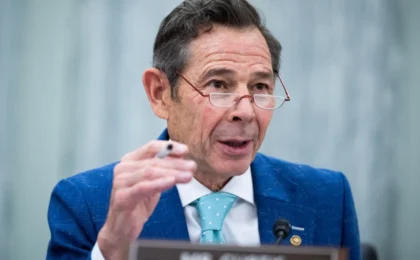
Thomas Aiello, vice president of federal affairs at the National Taxpayers Union, echoed these concerns, arguing that if a particular issue, such as drug prevention or rural development, is truly a national or regional priority, funding should ideally flow through established federal agencies that have competitive grant processes and broader oversight mechanisms. Relying on the discretion of a single lawmaker to pick beneficiaries, Aiello contends, can lead to significant inequities. "There might be hundreds of other communities that could benefit from that similar amount, but because they don’t have a champion on the House or Senate appropriations committee, their concerns might be pushed aside," he stated. This highlights the imbalance of power inherent in a system where congressional seniority and committee assignments can dictate resource allocation more than a nationwide, merit-based assessment.
These criticisms are not aimed solely at Rep. Rogers but at the systemic vulnerabilities of earmarks, even with the new transparency rules. Watchdog groups argue that while the rules prevent direct financial benefit to the lawmaker, they do not adequately address the potential for "legacy projects" – where a member uses public funds to bolster organizations tied to their personal history, political brand, or former staff, thereby creating a perception of self-serving rather than purely public-serving allocations.
Broader Implications: The Earmark Debate Continues
The case of Rep. Harold Rogers and his earmarks for self-founded non-profits encapsulates the enduring, complex, and often contentious debate surrounding congressionally directed spending. On one hand, Rogers’ defense resonates with a fundamental argument for earmarks: that they empower local communities by allowing their elected representatives to directly address specific, often overlooked, needs. His assertion that these non-profits tackle "pervasive challenges" and capture the "attention of bureaucrats in Washington" speaks to a genuine frustration in many rural districts that feel ignored by distant federal agencies. The ability to channel funds to initiatives like drug prevention in schools or connecting low-income households to sewer lines can indeed have tangible, positive impacts on people’s lives.
However, the counterarguments raised by watchdog groups are equally compelling and speak to the broader implications for governance and public trust. The primary concern is the potential for blurring the lines between public service and personal legacy. When a lawmaker directs millions of dollars to organizations they helped launch, named programs after, or employed former staff members, it creates an undeniable appearance of favoritism, regardless of the stated good intentions. This raises fundamental questions about whether the best projects are being funded, or simply the most familiar ones to the appropriator.
The debate also touches upon the inherent tension between efficiency and political expediency. While Rogers argues that funneling funds through a single non-profit allows for broader reach within his limited earmark requests, critics argue that such an approach bypasses the more rigorous, competitive vetting processes typically employed by federal agencies. This could lead to a less efficient use of taxpayer dollars, with less accountability and potentially higher administrative costs.
Ultimately, the situation surrounding Rep. Rogers’ earmarks highlights that the "new" earmark rules, while certainly an improvement in transparency over previous iterations, still contain significant loopholes and shortcomings. They prevent direct financial corruption but do not fully address the perception of undue influence, the potential for "legacy project" funding, or the opportunity cost of bypassing alternative, potentially more impactful, projects.
The controversy will likely continue to fuel calls for even stricter regulations, greater independent oversight, and a more robust mechanism for ensuring that federal funds are allocated based on objective merit and broad public good, rather than the personal connections or historical ties of powerful individual lawmakers. As Congress continues to navigate the complexities of its re-embraced earmarking power, the actions of members like Rep. Harold Rogers will remain a critical test case for the system’s integrity and its ability to serve the American taxpayer effectively and equitably.