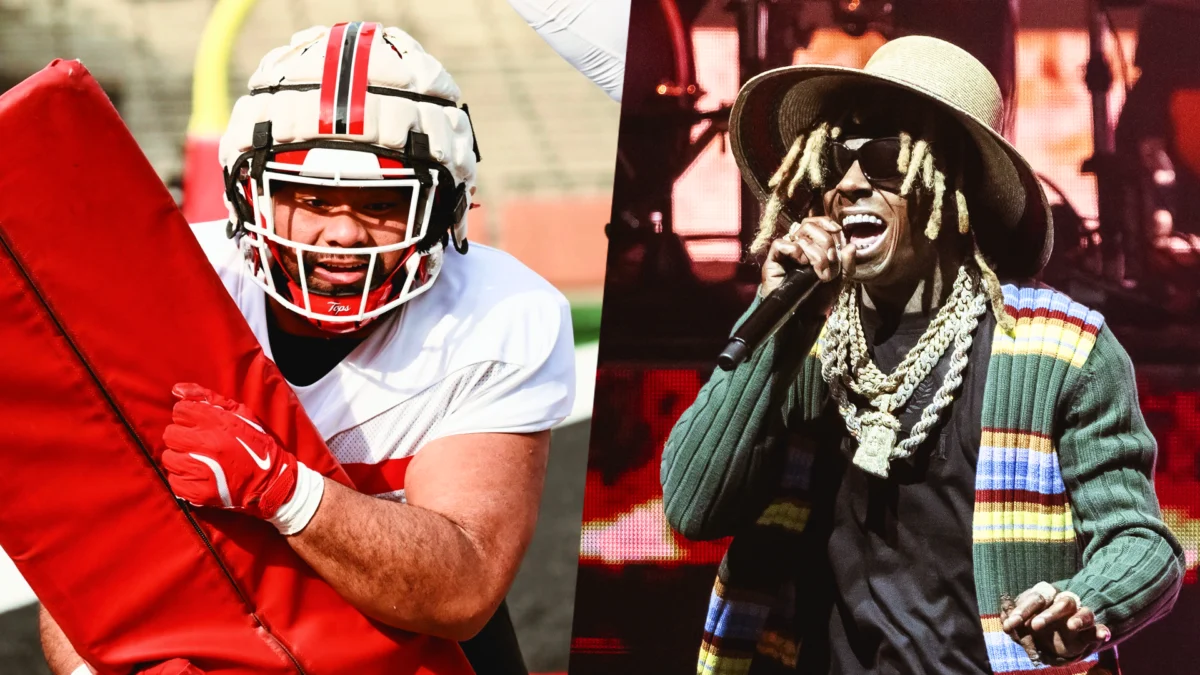
In the high-stakes world of modern collegiate athletics, the line between institutional policy and personal tragedy is often blurred. For Victory Vaka, a redshirt senior defensive tackle, that line became a barrier that threatened to end his football career prematurely. However, following a landmark legal challenge and an unlikely alliance with hip-hop icon Lil Wayne, Vaka has successfully navigated the complexities of the NCAA transfer portal, signing with Middle Tennessee State University on August 24, 2026.
This development comes less than a week after a federal court granted Vaka an injunction against the NCAA, effectively stripping the governing body of its ability to enforce specific transfer restrictions that had left the athlete in professional limbo. Vaka’s journey from a grieving son to a plaintiff in a high-profile lawsuit serves as a sobering case study on the vulnerabilities of student-athletes and the systemic rigidities of the collegiate transfer system.
The Chronology of a Crisis
The conflict began in April 2026, when Vaka, then a member of the Western Kentucky Hilltoppers, returned to his home in California following the sudden and tragic death of his mother. At the time, the transition was intended to be temporary. Vaka maintained his intention to return to Bowling Green, Kentucky, to complete his degree and play out his final season of eligibility.
Throughout the spring, communication between Vaka and the Western Kentucky coaching staff remained sparse but seemingly functional. In May, just nine days before his mother’s funeral, Vaka engaged in a phone call with an assistant strength coach. According to Vaka, he was provided with a summer workout regimen and was given clear expectations to report back to campus in June.
However, the situation deteriorated rapidly on May 27. Without prior warning, Vaka was informed that his scholarship had been canceled due to an alleged "failure to report." By labeling the absence as a disciplinary matter rather than a compassionate leave, Western Kentucky effectively triggered a bureaucratic trap. Under current NCAA bylaws, this "failure to report" designation prohibited Vaka from utilizing the aid-and-reduction-or-cancellation exception—the very mechanism designed to allow student-athletes to enter the transfer portal when their financial aid is withdrawn.
Trapped by a label, Vaka was ineligible to transfer, ineligible to return to his team, and months removed from the official closing of the transfer portal. He was left with one year of eligibility, a pending college degree, and no path forward.
The Unlikely Ally: Lil Wayne’s Intervention
Vaka’s story moved from the shadows of athletic department offices to the national stage in July 2026, following investigative reporting that highlighted the injustice of his circumstances. The narrative resonated deeply with various corners of the public, including Grammy-winning artist Lil Wayne.

According to Vaka’s agent, Jaykwon Jefferson, the rapper’s management team reached out shortly after the story went public. "Fabian Marasciullo, his manager, reached out to me saying the story touched Wayne and he wanted to help in any way possible," Jefferson stated.
The support was not merely symbolic. Lil Wayne provided the necessary capital to hire Darren Heitner, one of the most prominent attorneys specializing in collegiate sports law. Beyond the legal fees, the support extended to personal mentorship; on August 1, Wayne flew Vaka and his brother to a concert, offering the athlete a moment of reprieve during an incredibly taxing summer. Jefferson noted that the financial and emotional backing provided by the music mogul was "a major lifesaver," providing the momentum needed to force the NCAA’s hand.
Legal Battle and the Injunction
When initial attempts at a negotiated settlement between Heitner and the NCAA failed, the situation escalated into a formal lawsuit filed on August 5. The suit challenged the NCAA’s authority to restrict the mobility of athletes whose scholarships are revoked under questionable disciplinary justifications.
The speed at which the legal system acted was unprecedented. By mid-August, a judge granted an injunction preventing the NCAA from enforcing its transfer rules against Vaka. This ruling effectively opened the door for Vaka to enter the portal on August 20. Five days later, he committed to Middle Tennessee.
Vaka, a 6-foot-3, 335-pound interior force who has previously suited up for Texas Southern, is now eligible to play immediately for the Blue Raiders. He is expected to bolster the defensive line in time for the team’s season opener against Murray State on September 5.
The Institutional Dilemma: A "Rock and a Hard Place"
The role of Western Kentucky University in this saga highlights a systemic flaw within the NCAA’s legislative framework. Legal experts suggest that the university found itself in a precarious position. When Western Kentucky eventually attempted to assist Vaka by filing a legislative relief waiver, they were essentially forced to litigate against their own previous administrative decisions.
Paia LaPalombara, a partner at CCHA Law, explained the paradoxical nature of the situation: "This puts institutions between a rock and a hard place. They may want to support a student-athlete in gaining an additional 30-day transfer window, but doing so means they are essentially admitting to a Level III NCAA violation by impermissibly removing that student-athlete’s aid in the first place."

In essence, Western Kentucky likely wanted to divest themselves of the player but lacked a clean mechanism to do so without triggering regulatory scrutiny regarding the handling of scholarships. By forcing the athlete into a disciplinary "failure to report" category, the school avoided an admission of error, but at the cost of the player’s professional future.
Implications for the NCAA and Future Athletes
Victory Vaka’s case is more than a story of a player finding a new team; it is a diagnostic tool for the health of college sports governance. It exposes the "gap" in the NCAA’s current system: a space where disciplinary discretion is weaponized against student-athletes to prevent them from seeking opportunities elsewhere after their financial aid has been revoked.
As the collegiate landscape continues to grapple with NIL (Name, Image, and Likeness) rights and expanded transfer freedom, the Vaka case sets a dangerous precedent for the governing body. If schools can arbitrarily define an athlete’s absence as "disciplinary" to block a transfer, the NCAA’s transfer portal rules become little more than a tool for institutional control rather than athlete mobility.
For Vaka, the focus now returns to the gridiron. After years of bouncing between programs—a journey he hoped would end at Western Kentucky—he views his arrival at Middle Tennessee as a fresh start. While he has acknowledged that his own communication with the Western Kentucky staff could have been more proactive during his time of grief, he maintains that the subsequent administrative response was disproportionate and punitive.
As he prepares to suit up for the Blue Raiders, Vaka stands as a symbol of a shifting power dynamic in college sports. With the backing of high-profile allies and the weight of the judicial system, student-athletes are increasingly finding that when the institutions fail them, they no longer have to remain silent. The injunction granted in his case serves as a warning: the days of schools using administrative loopholes to trap players in limbo may be coming to a close.