It has been nearly a month since June 30, the day LeBron James officially declined his player option with the Los Angeles Lakers, plunging the NBA into a state of suspended animation. By becoming an unrestricted free agent, the league’s all-time leading scorer triggered a cascade of strategic maneuvering, betting market volatility, and front-office anxiety that shows no signs of abating.
As the calendar pushes deeper into the dog days of July—a period typically reserved for the quiet lull before NFL training camps dominate the sports landscape—the NBA remains inexplicably tethered to the whims of one man. While the ongoing Kawhi Leonard investigation has certainly captured the attention of league investigators and trade analysts, the LeBron saga remains the singular gravitational force in the basketball world. Whether this prolonged silence is a calculated masterstroke of personal branding or simply the result of an incredibly complex decision-making process, one thing is certain: the league is waiting, and the fallout is growing.
The Chronology of a Stalemate
The narrative began in earnest on June 30, when James signaled his departure from Los Angeles. What followed was not a swift transition to a new contender, but a slow-burn mystery that has kept fans, analysts, and even team executives guessing.
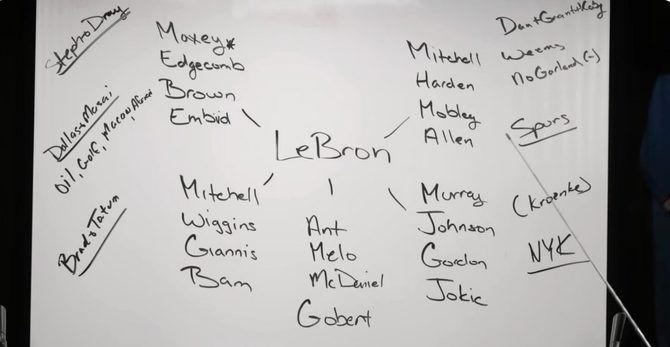
Throughout early July, speculation ran rampant. By July 3, Rich Paul, James’ agent and architect of his career moves, utilized his "Game Over" podcast to provide a glimpse into the internal deliberation process. Paul’s now-famous whiteboard session, which outlined the pros, cons, and logistical requirements of potential landing spots, served as a lightning rod for media speculation.

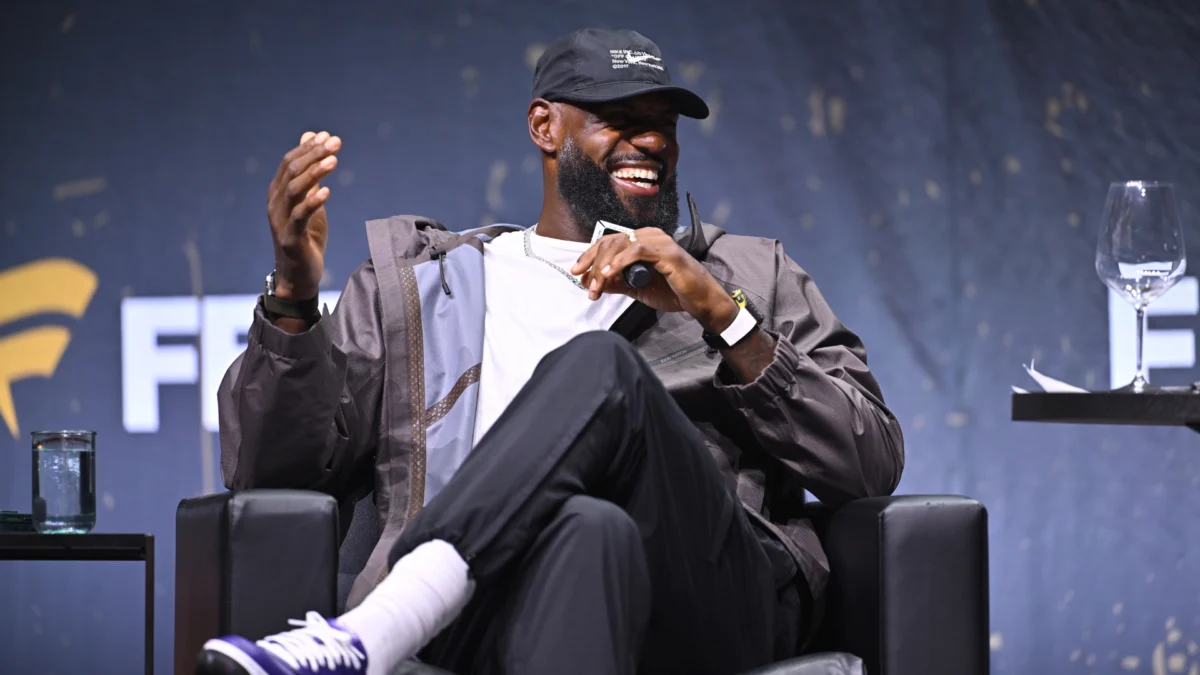
The saga hit a surreal peak during the recent Fanatics Fest in New York City. Expectations were high that a decision would be announced during the event’s flurry of appearances. Instead, the weekend resulted in an unscripted moment of friction between the league’s greatest player and its most powerful administrator. NBA Commissioner Adam Silver, facing pressure from television networks and league partners, publicly implored James to expedite his process, citing the desperate need to finalize the 2026-27 schedule.
Supporting Data: The Economics of Indecision
The financial ecosystem surrounding this free agency period is unprecedented. Prediction markets, which have become an increasingly significant barometer of public sentiment, are currently acting as a digital thermometer for James’ next destination.
At Kalshi, north of $210 million has been wagered on James’ next team, with Polymarket hovering just under $40 million. These platforms have turned James’ procrastination into a veritable cash cow. The volatility is real; when the Miami Heat’s social media team accidentally queued an introductory press conference video, the market reacted instantly. Miami’s odds surged to a 49% favorite, while the Cleveland Cavaliers, previously the betting favorite at 38%, saw their odds crater to 26%.
The ripple effects extend beyond just "where." Bettors are now deep into derivative markets: which conference will he play in (the East is a staggering 82% favorite), the total value of his next contract, and, perhaps most fascinatingly, the method of the announcement itself. With James’ own social channels, Klutch Sports Group, and major news outlets like ESPN battling for the "scoop" status, the medium of the announcement has become a high-stakes guessing game of its own.
Official Responses: The Commissioner’s Dilemma
The most notable official commentary on the delay came from Commissioner Adam Silver at Fanatics Fest. His public plea—"I would like him to make his announcement already, so we can finish the schedule"—highlighted a growing tension between the league’s star-driven culture and its operational necessities.
The NBA is currently entering the second year of a massive $76 billion television rights deal with Disney, NBC, and Amazon. These partners require certainty to build their programming blocks. James is the ultimate "anchor" for national television; his presence dictates who plays on Christmas Day, who stars in the marquee opening week, and how many prime-time slots a team is allocated.
Because James has participated in 20 consecutive Christmas Day games, his decision acts as a domino. If he lands in a specific city, that team immediately jumps to the front of the line for the league’s most profitable dates. For the league office, the delay is not merely an annoyance; it is a logistical bottleneck that threatens to compromise the marketing rollouts for the upcoming season.
The Winners: Who Benefits from the Chaos?
While the league office suffers, other entities are thriving in the vacuum created by James’ silence.

Prediction Markets
As noted, the betting industry is arguably the biggest beneficiary. The extended window of uncertainty allows for more volume, more secondary bets, and increased engagement. Every minor rumor—a leaked flight path, a social media "like," or a cryptic quote—drives a new wave of capital into these markets.
Rich Paul’s "Game Over" Podcast
Rich Paul has effectively centralized the information flow. By using his own platform to communicate, Paul has bypassed traditional media outlets, forcing fans and journalists to treat every episode of "Game Over" as a primary source. The audience metrics for his podcast are undeniably at an all-time high, cementing his status as the primary gatekeeper of the NBA’s most important narrative.
The Losers: Front Offices in Limbo
For the teams involved, this is no longer just a "wait and see" game; it is a dangerous gamble that has compromised their entire offseason strategy.
The Cleveland Cavaliers and Golden State Warriors
These two franchises are currently in the most precarious positions. Their front offices have essentially cleared their rosters and salary caps to accommodate a potential James signing.

The Cavaliers, in particular, made calculated sacrifices—such as allowing Dean Wade to sign with the 76ers—to keep space open for both James and a reunion with James Harden. With the top-tier free agent market now largely depleted, the Cavaliers find themselves staring at a thin list of Plan B options. If they strike out, they are left with a roster that has been gutted of depth to chase a ghost.
The Warriors face an even more existential crisis. After Draymond Green opted out of his contract to provide financial flexibility for a potential LeBron move, the team has remained stagnant, failing to add significant rotation pieces. The rumored pursuit of Anthony Davis as a secondary piece of a "LeBron package" has seemingly evaporated. For Warriors fans, the prospect of wasting another year of Stephen Curry’s fading window while waiting for a star who may never arrive is a source of deepening resentment.
Implications for the League
The LeBron James free agency saga serves as a microcosm of the modern NBA: a league where individual power often supersedes organizational structure. While the drama provides a constant stream of content during a quiet summer, it also exposes the fragility of the league’s scheduling and planning processes.
Ultimately, the "winner" of this free agency period may not be the team that lands James, but the team that manages to survive the fallout of his decision-making process. As we await the final word, one thing remains clear: LeBron James remains the central sun around which the entire NBA universe orbits. Whether he stays in the East, heads back to the West, or signs with a dark horse, the ripple effects will be felt for years, not just in the standings, but in the bank accounts of the networks, the betting houses, and the front offices currently holding their breath.
Until the pen hits the paper, the NBA remains in a holding pattern—a summer defined by a single, lingering question.