In an era defined by rapid technological shifts, economic uncertainty, and the relentless pursuit of financial optimization, many individuals find themselves asking a fundamental, often paralyzing question: What comes next? For J.D., the creator of the long-running personal finance platform Get Rich Slowly, the answer to that question is moving beyond mere fiscal management and into the realm of structural life design.
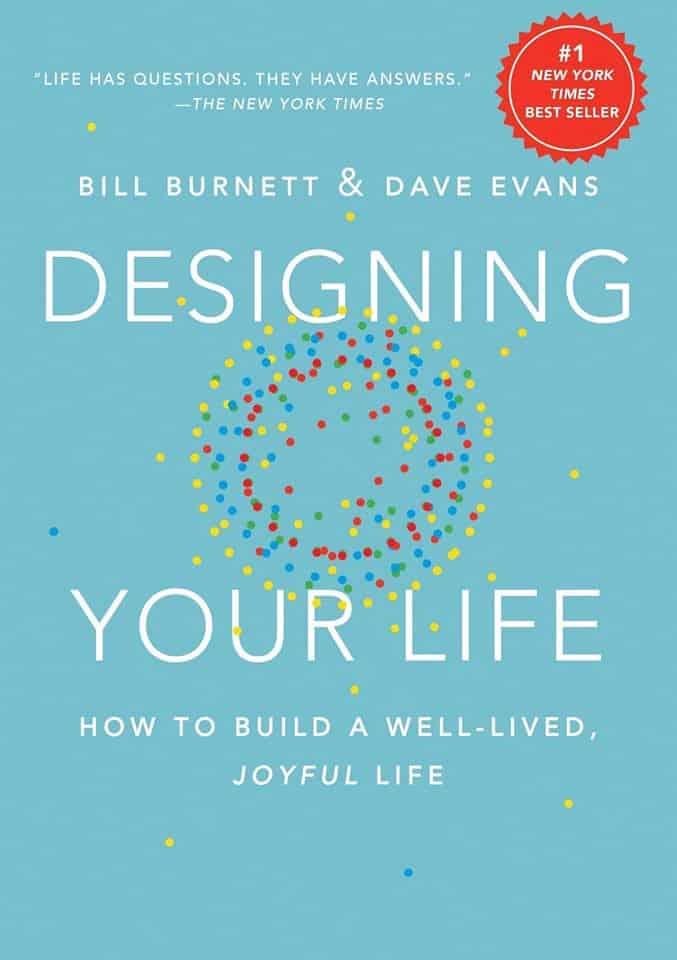
Drawing inspiration from the seminal work Designing Your Life by Stanford University professors Bill Burnett and Dave Evans, J.D. has embarked on a collaborative journey to apply rigorous design principles to the human experience. By partnering with his long-term partner, Kim, and his college classmate, Craig, J.D. is documenting a systematic approach to identifying purpose, establishing a personal "compass," and aligning daily actions with core values. This endeavor represents a significant pivot from traditional financial planning toward a holistic framework for human flourishing.
The Genesis of the Life-Design Project
The initiative began following J.D.’s enthusiastic endorsement of Burnett and Evans’ book, which posits that the same "design thinking" used to create innovative products can be applied to the messier, more ambiguous task of building a fulfilling life. The methodology moves away from the "what should I do?" paradigm and toward a "who am I, and what matters to me?" inquiry.
Recognizing that introspection is often more effective when performed in community, J.D. organized a collaborative study group. By committing to the exercises outlined in the book alongside peers, he aims to create a feedback loop that holds him accountable to his own evolving mission statement. This collaborative framework serves as a core component of the project’s structure, acknowledging that while life design is an internal process, its execution is often influenced by our social environment.
Phase One: The "Start Where You Are" Assessment
The inaugural stage of the Designing Your Life methodology is intentionally grounded. Before one can chart a path toward an idealized future, one must possess an objective understanding of the current state. Burnett and Evans mandate a four-pillar audit: health, love, play, and work.
This assessment is not intended to be a critique, but rather a diagnostic snapshot. Similar to how a financial advisor requires a balance sheet to assess solvency, the life designer requires a "status check" to identify areas of friction or stagnation. J.D. notes that this exercise is purely observational; it creates a baseline on the metaphorical map of life. Once the "you are here" pin is placed, the process transitions from assessment to navigation, moving toward the construction of a personal compass.
Building the Compass: The Intersection of Workview and Lifeview
The most intensive portion of the design process involves the drafting of two distinct, yet deeply interconnected, documents: the "Workview" and the "Lifeview." These mini-essays serve as a North Star for decision-making, ensuring that future life choices are consistent with a defined sense of purpose.
The Workview: Defining Right Livelihood
The Workview is an exercise in clarifying one’s relationship with productivity and contribution. In comparing his own Workview with that of his classmate Craig, J.D. uncovered a striking alignment of values. Both participants view work as more than a transactional necessity for capital; they view it as a vehicle for personal growth and societal contribution.
Craig, in his reflection, emphasized the concept of "right livelihood," a Buddhist tenet that prioritizes work that supports life without causing harm to natural systems. His focus on "tangible production"—the ability to see the fruits of one’s labor—mirrors a growing trend in contemporary society where workers are seeking deeper meaning in their daily tasks.
J.D.’s own Workview centers on the concept of ikigai, a Japanese term referring to one’s "reason for being." For J.D., the goal is to transform Get Rich Slowly into a resource that is both financially viable and socially beneficial. Both participants reached the same conclusion: the most satisfying work is that which achieves a win-win outcome, fostering abundance for the individual while contributing to the public good.

The Lifeview: Defining the Meaning of Existence
If the Workview addresses what we do, the Lifeview addresses why we exist. The reflections shared by J.D. and Craig reveal a shared existential perspective: the belief that meaning is not inherent in the universe, but is something that must be actively created by the individual.
Both participants rejected dogmatic approaches to morality, opting instead for a framework rooted in human connection and ethical treatment of others. J.D. articulated a "center-outward" philosophy: one must practice rational self-centeredness—meeting one’s own needs first—to create a stable foundation from which to support family, friends, and the broader community. This alignment of values—kindness, curiosity, and the cultivation of social capital—provides the structural integrity for the life-design process.
Supporting Data: The Role of Community and Social Capital
A critical implication of this project is the role of shared history in shaping worldviews. J.D. and Craig both attended Willamette University, an institution whose motto, non nobis solum nati sumus ("not unto ourselves alone are we born"), appears to have left an indelible mark on their respective philosophies.
The conversation around "social capital"—the networks of relationships among people who live and work in a particular society—is a central theme of their ongoing dialogue. Drawing from Robert Putnam’s Bowling Alone, the participants expressed concern regarding the decline of community cohesion in the digital age. They hypothesized that the loss of physical, in-person social infrastructure has contributed to a sense of isolation. By engaging in this life-design project together, they are attempting to rebuild their own local social capital, proving that personal growth is rarely a solitary pursuit.
Future Implications: Moving Toward the "Good Time Journal"
As the project enters its next phase, the focus will shift from reflection to data collection. The participants will maintain a "Good Time Journal," a tool designed to track activities and measure levels of engagement and energy. By logging daily actions and analyzing them through the lens of the previously drafted Workview and Lifeview, the participants aim to identify specific, actionable patterns.

This shift toward empirical observation marks a transition in the study. While the Workview and Lifeview provide the "map," the Good Time Journal provides the "odometer." By identifying which activities drain energy and which ones foster it, the designers hope to refine their lives through the process of prototyping—testing small changes to see what yields the highest return on their limited time and energy.
Conclusion: The Professionalization of Intentional Living
The journey undertaken by J.D. and his peers represents a maturation of the self-help movement. It moves away from the superficial "hacks" of productivity culture and toward a more profound, deliberate construction of a life. By applying the disciplined rigor of design thinking to the amorphous concept of purpose, they are creating a scalable model for anyone seeking to align their daily life with their deepest values.
Whether or not the participants reach a definitive "conclusion" is secondary to the process itself. As J.D. notes, the objective is not to arrive at a static destination, but to build a robust system for navigation. In a world that is increasingly cluttered, noisy, and disconnected, the act of pausing to define one’s Workview and Lifeview is not merely a self-indulgent exercise—it is an essential act of agency. By starting where they are, they are effectively ensuring that where they go next is, at the very least, a place of their own choosing.