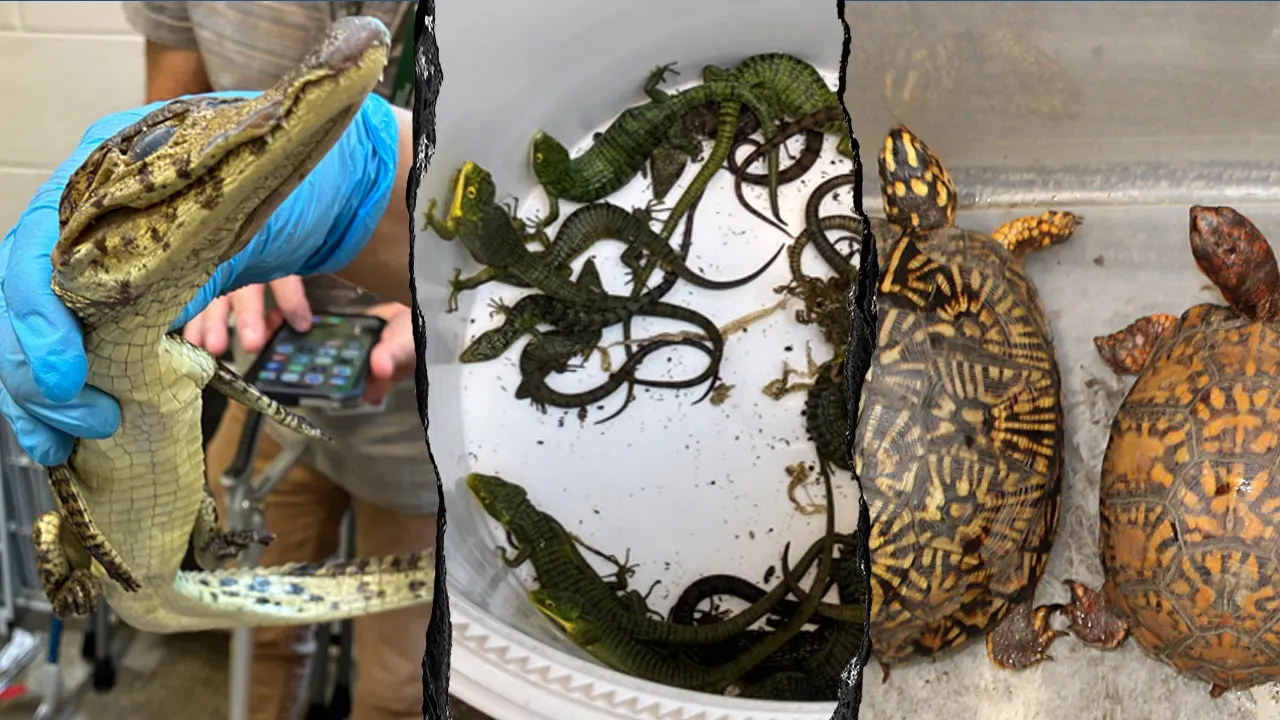
An international wildlife trafficking operation came to a crashing halt at the Western Hemisphere’s busiest land border crossing, exposing the grim and lucrative black market for exotic reptiles. What began as a routine outstanding warrant arrest at the San Ysidro Port of Entry escalated into a federal investigation involving multi-agency coordination, undercover stings, and the tragic deaths of several protected species.
Federal prosecutors in the Southern District of California have charged two individuals, Georgina Bribiesca Chavez, 66, of Tijuana, Mexico, and Salvador Pelayo, 28, of Chula Vista, California, with running a highly organized trafficking network. The network allegedly smuggled dozens of rare, venomous, and endangered animals across the U.S.-Mexico border, concealing them in hidden vehicle compartments to sell to private collectors for tens of thousands of dollars.
Main Facts: The Smuggling Scheme and the Grim Discovery
On August 10, Georgina Bribiesca Chavez attempted to drive across the U.S.-Mexico border through the San Ysidro Port of Entry in San Diego. When questioned by U.S. Customs and Border Protection (CBP) officers, Chavez claimed she had nothing to declare. However, a routine database search revealed an active federal warrant linked to an ongoing, 18-month wildlife trafficking investigation.
Chavez was immediately taken into custody, and her vehicle, a Volkswagen, was seized and moved to an impound lot.
Because the arrest occurred late in the day, the vehicle was not thoroughly searched until the following morning. On August 11, CBP officers conducted a secondary inspection of the Volkswagen. Behind the rear passenger seat, officers discovered a concealed, factory-designed compartment. Inside the dark, unventilated space were several pillowcases. The bags had been tightly knotted shut and sealed with heavy adhesive tape.
As officers inspected the bundles, they noticed one of the pillowcases was moving.
[Seized Volkswagen Compartment]
       │
       └──> Knotted & Taped Pillowcases
                 │
                 ├──> 60 Abronia Lizards (Stable)
                 ├──> 4 Yellow-Blotched Palm Pit Vipers (Stable)
                 ├──> 1 Baby Crocodile (Stable)
                 ├──> 1 Indigo Snake (Stable)
                 └──> 3 Caimans (Deceased due to extreme heat)
The sealed bags were rushed to the San Diego Zoo, where veterinary staff and herpetologists carefully opened them. Inside, they uncovered a hazardous mix of 69 live animals:
- 60 Abronia lizards (highly prized, endangered arboreal alligator lizards)
- 4 venomous yellow-blotched palm pit vipers
- 3 caimans (small crocodilians native to Central and South America)
- 1 baby crocodile
- 1 eastern indigo snake
Because Chavez did not disclose the presence of the live cargo during her arrest, the animals remained trapped in the vehicle’s hidden compartment for nearly 24 hours. Deprived of ventilation and subjected to the stifling August heat of Southern California, the three caimans perished before veterinary teams could administer life-saving care. The remaining 66 animals were stabilized and remain under professional care at the San Diego Zoo.
Chronology of the Illicit Operation
The arrests of Chavez and Pelayo were the culmination of an extensive 18-month undercover investigation led by the U.S. Fish and Wildlife Service (USFWS). Federal prosecutors allege that the duo’s illicit partnership dates back to at least 2023, during which they systematically smuggled wildlife across the border to satisfy the demands of the domestic exotic pet market.
2023: Chavez & Pelayo begin their border-smuggling partnership.
  │
2024: USFWS launches an 18-month undercover investigation.
  │
March 2025: Chavez sells 4 protected Mexican box turtles to an undercover agent for $2,600.
  │
Mid-2025: Pelayo ships protected box turtles to New York under the alias "Jose Lopez."
  │
July 2025: Salvador Pelayo is arrested in Chula Vista; pleads not guilty.
  │
Aug 10, 2025: Chavez is arrested at San Ysidro Port of Entry on an outstanding warrant.
  │
Aug 11, 2025: CBP officers search Chavez's vehicle, discovering 69 trapped reptiles.
The March 2025 Undercover Buy
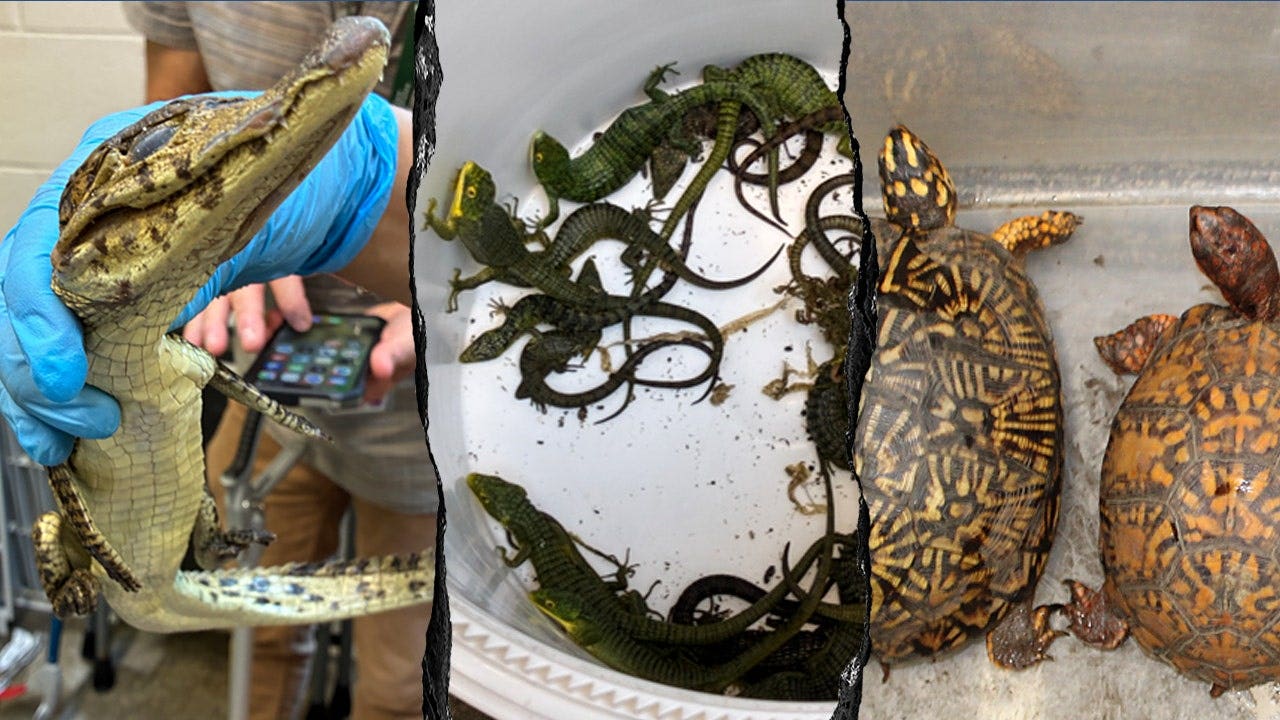
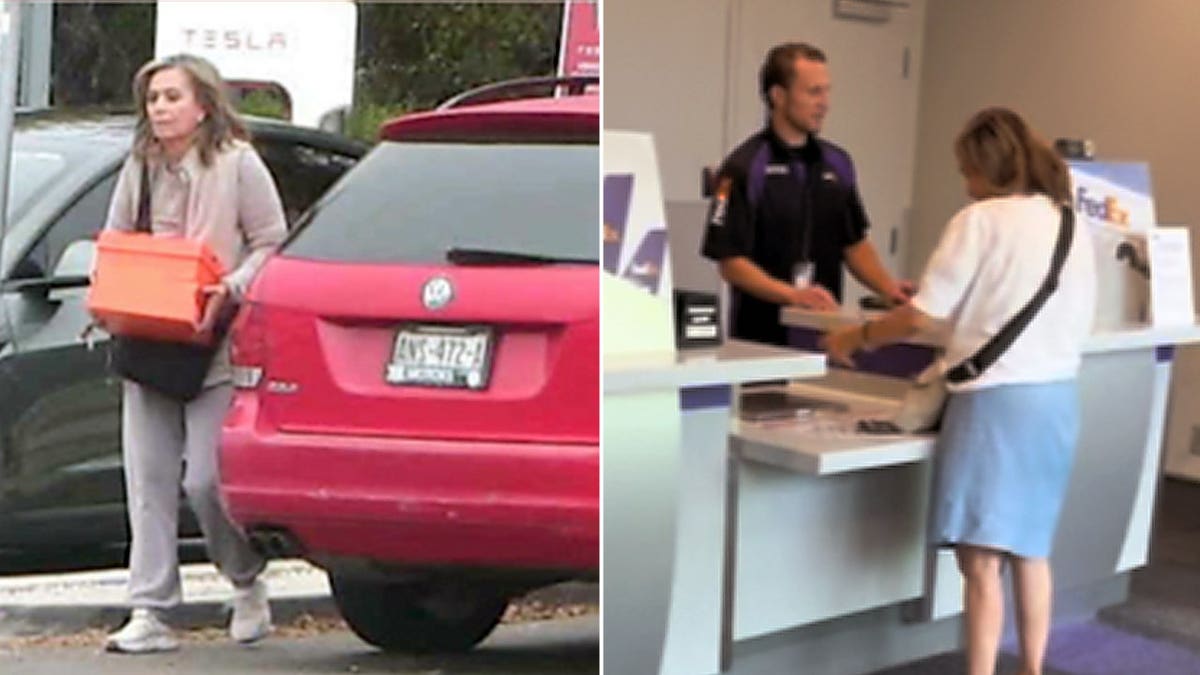
In March 2025, federal undercover agents successfully infiltrated the ring. An agent arranged to purchase protected wildlife from Chavez. Shortly after crossing the border from Mexico into California, Chavez met the undercover operative at an outlet shopping center in Carlsbad.
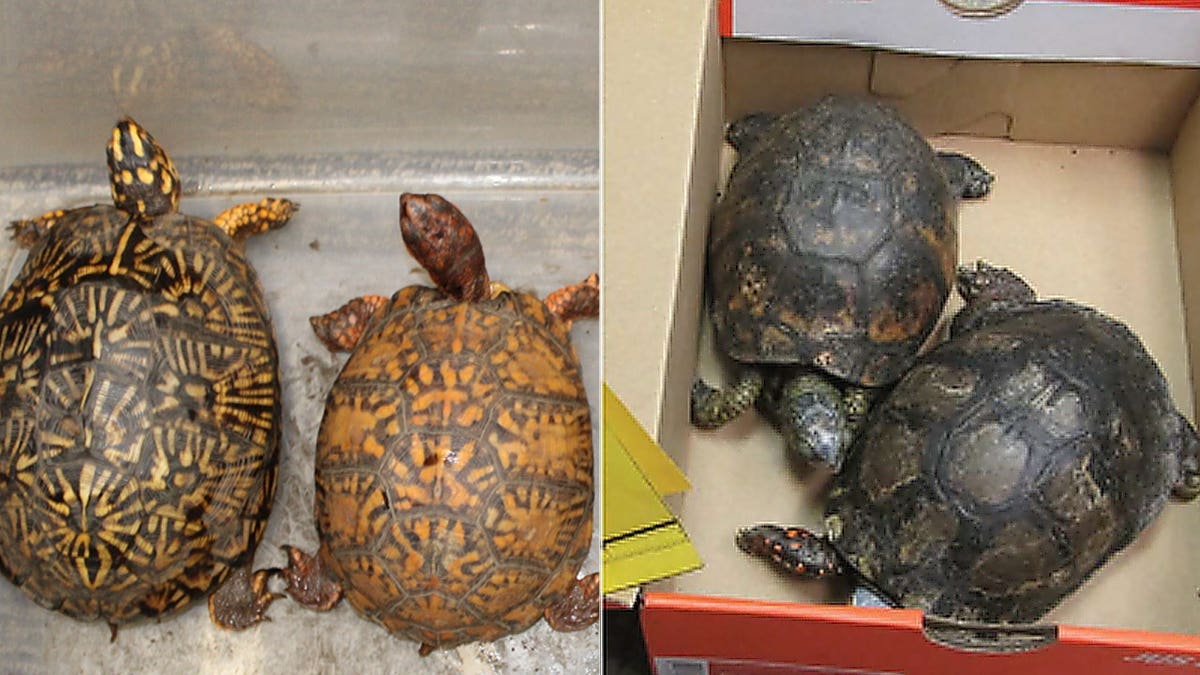
During this transaction, Chavez exchanged four protected Mexican box turtles for $2,600 in cash. The turtles, which were already in poor health from being wild-caught and improperly kept, were immediately transferred to the Oakland Zoo for emergency medical treatment. Despite intensive veterinary intervention, all four turtles died from advanced respiratory infections.
Pelayo’s Out-of-State Shipments
While Chavez managed the physical transportation of the animals across the international border, Salvador Pelayo handled distribution and logistics. Prosecutors allege that Pelayo utilized the alias "Jose Lopez" to coordinate interstate shipments of black-market reptiles. In one documented transaction, Pelayo shipped four protected Mexican and Yucatan box turtles to an undercover agent stationed in New York.
Pelayo was arrested by federal authorities in July. Following his arrest, a warrant was issued for Chavez, leading to her capture at the border on August 10.
Supporting Data: The Target Species and the Black Market Economy
The illegal wildlife trade is one of the most lucrative criminal enterprises globally, ranked alongside trafficking in drugs, arms, and humans. According to the United Nations Office on Drugs and Crime (UNODC), the global illicit wildlife market is valued between $7 billion and $23 billion annually.
The species seized from Chavez’s vehicle are highly sought after by private collectors, commanding high prices on the black market due to their rarity, striking appearance, or venom profiles.
Abronia Lizards (Abronia)
Endemic to the cloud forests of Mexico and Central America, these arboreal alligator lizards are highly threatened by habitat destruction and illegal poaching. Because of their vibrant green coloration and prehistoric appearance, they are highly coveted by reptile enthusiasts. On the black market, individual specimens can sell for anywhere from $500 to over $1,500, depending on the species and rarity.
Yellow-Blotched Palm Pit Vipers (Bothriechis aurifer)
A venomous species native to the cloud forests of Guatemala and Mexico, this viper is prized for its bright yellow-and-green patterns and its status as a high-end display animal. Because they are venomous, smuggling them presents a severe public safety hazard to border agents, postal workers, and the public.
Mexican and Yucatan Box Turtles (Terrapene)
These terrestrial turtles are heavily protected under the Convention on International Trade in Endangered Species of Wild Fauna and Flora (CITES) Appendix II. Due to slow reproductive rates and severe population declines in the wild, international trade is strictly regulated. Collectors in the U.S. and Europe pay thousands of dollars for wild-caught specimens, driving poachers to deplete natural populations.
| Species Seized/Traded | Conservation Status | Estimated Black Market Value (Per Unit) |
|---|---|---|
| Abronia Lizard | Endangered / CITES Protected | $500 – $1,500 |
| Yellow-Blotched Pit Viper | Vulnerable / Venomous | $800 – $2,000 |
| Mexican Box Turtle | Threatened / CITES Appendix II | $600 – $1,200 |
| Caiman / Crocodile | Protected / Restricted | $1,000 – $3,000 |
Official Responses and Legal Proceedings
Federal officials have condemned the actions of the smugglers, highlighting both the cruelty of the operation and the environmental damage caused by the poaching of endangered species.
The U.S. Attorney’s Office for the Southern District of California filed formal charges against both defendants under the Lacey Act. First enacted in 1900, the Lacey Act is the United States’ oldest and most powerful federal wildlife protection statute. It prohibits the import, export, transport, sale, or purchase of fish, wildlife, or plants that were taken, possessed, transported, or sold in violation of U.S., state, tribal, or foreign law.
Penalties and Court Status
Chavez and Pelayo face charges of wildlife trafficking under the Lacey Act. If convicted, each faces:
- A maximum statutory penalty of five years in federal prison.
- A fine of up to $250,000.
- Potential additional charges related to smuggling, conspiracy, and animal cruelty.
Following her arrest, Georgina Bribiesca Chavez appeared in federal court in San Diego, where she pleaded not guilty to all charges. Citing her flight risk as a resident of Tijuana and the severity of the allegations, the presiding federal judge ordered her held without bond. Salvador Pelayo also entered a plea of not guilty during his arraignment in July and is awaiting trial.
The investigation is being conducted by the U.S. Fish and Wildlife Service’s Office of Law Enforcement, with operational support from:
- U.S. Customs and Border Protection (CBP)
- The National Oceanic and Atmospheric Administration (NOAA)
- The California Department of Fish and Wildlife (CDFW)
Implications: The Conservation and Biosecurity Threat
This case highlights the broader, systemic issues associated with the illegal reptile trade, pointing to severe risks that extend far beyond individual cases of animal cruelty.
1. The Ecological Toll of Poaching
When adult breeding animals are removed from fragile, localized ecosystems—such as the cloud forests inhabited by Abronia lizards—local populations can quickly collapse. Poachers often target pregnant females or dominant males to secure premium prices, disrupting the natural reproductive cycles of species already facing extinction from habitat loss.
2. Biosecurity and Zoonotic Disease Risks
Illicitly imported animals do not undergo the mandatory quarantine procedures required for legal wildlife imports. As demonstrated by the Mexican box turtles that died of respiratory disease at the Oakland Zoo, smuggled reptiles often carry pathogens.
Unregulated imports can introduce devastating diseases to native wildlife populations and domestic livestock, or transmit zoonotic diseases—such as Salmonella or exotic parasites—to human handlers.
[Illegal Wildlife Capture]
       │
       ▼
[No Quarantine / Health Screening]
       │
       ├──> Risk of Zoonotic Diseases (e.g., Salmonella, Parasites) to Humans
       └──> Risk of Pathogen Transmission to Native Wildlife Populations
3. Public Safety Hazards
The discovery of four highly venomous yellow-blotched palm pit vipers inside taped pillowcases highlights the danger that smugglers pose to border security personnel and first responders. Had a bag torn during inspection, CBP officers would have faced a highly venomous, defensive reptile without immediate access to specific antivenom.
4. Border Enforcement Challenges
The San Ysidro Port of Entry processes tens of thousands of vehicles daily. Smugglers exploit this high volume, betting that border officers will prioritize traffic flow over meticulous, time-consuming searches of factory-hidden compartments.
This bust underscores the critical importance of intelligence-led policing and multi-agency database integration. Without the outstanding warrant generated by the 18-month USFWS investigation, Chavez and her hidden cargo would likely have passed undetected into the United States.