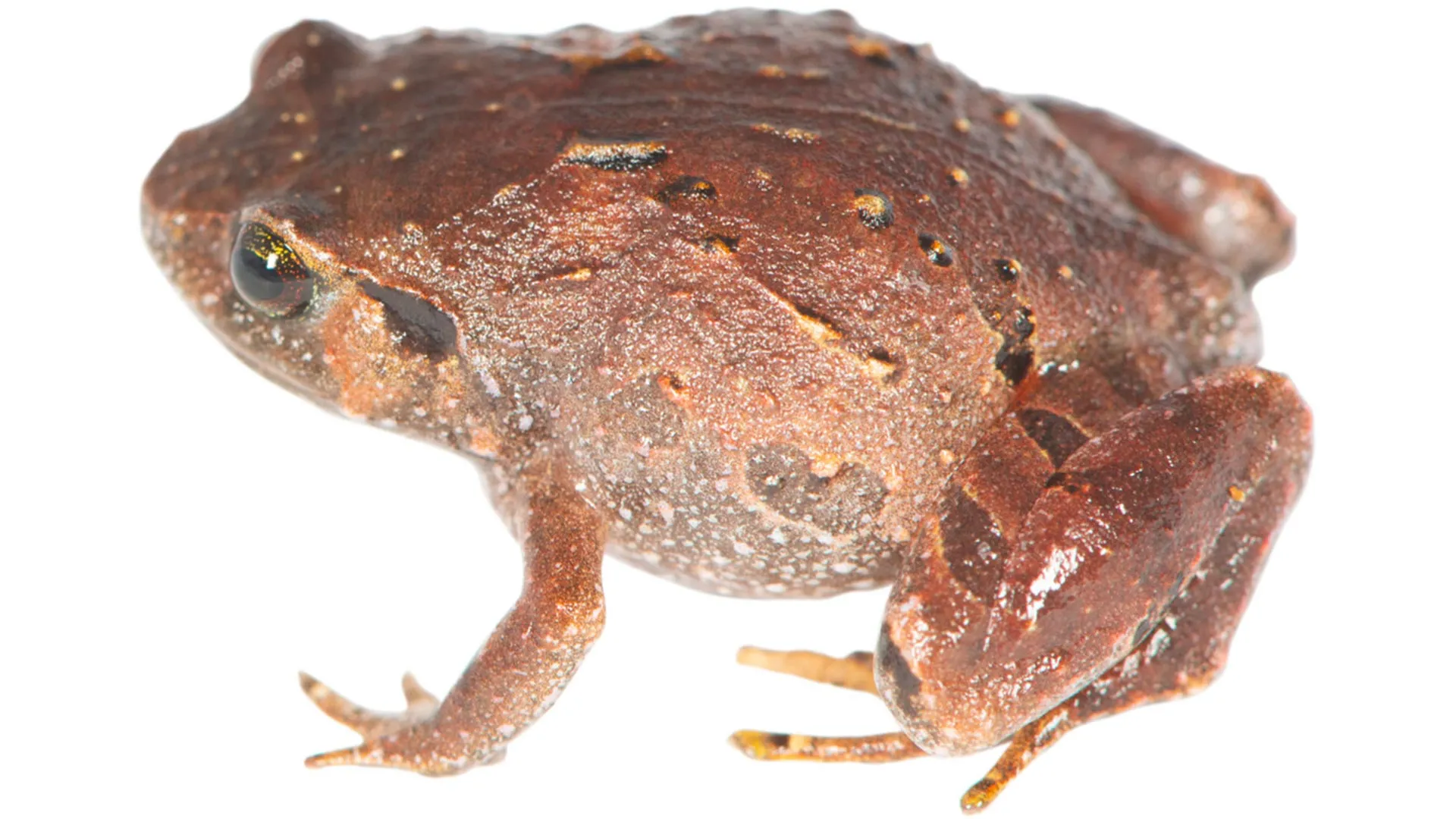
In the dense, leaf-littered understories of Madagascar’s shrinking forests, a silent revolution in taxonomy has been unfolding. An international team of herpetologists has officially identified seven previously undescribed species of the genus Rhombophryne, commonly known as "diamond frogs." This discovery, the culmination of over a decade of meticulous genetic and morphological research, fundamentally alters our understanding of Malagasy biodiversity and provides a critical blueprint for conservation in one of the world’s most threatened biological hotspots.
The findings, which bring the total number of recognized Rhombophryne species to 27, underscore a persistent truth in evolutionary biology: the most significant discoveries are often hidden in plain sight, concealed by deceptive similarity and a subterranean lifestyle.
The Master of Disguise: Understanding the Diamond Frog
To the untrained eye, the diamond frog is remarkably unassuming. Often appearing as a mottled, earth-toned ball of amphibian, these creatures have evolved to blend perfectly with the forest floor. However, beneath this dull exterior lies a complex evolutionary strategy. Some species, such as the rounder varieties, spend their entire existence buried beneath decaying leaves, while others exhibit long, spindly limbs designed for navigating mossy substrates.
The "diamond" moniker stems from their elusive nature and the vivid, hidden colors that some species display. When startled or forced to flee, these frogs reveal striking flashes of orange or intricate black-and-white patterns on their thighs and lower backs—a defensive mechanism likely intended to confuse or startle potential predators. Despite their fascinating biology, these frogs remain among the most understudied vertebrates on the island. Their cryptic behavior, combined with the extreme difficulty of locating them in the wild, has long left them in a state of taxonomic limbo.
A Twelve-Year Odyssey: The Chronology of Discovery
The journey to catalog these seven new species began over twelve years ago, when field researchers in Madagascar started encountering specimens that defied existing descriptions. It quickly became clear that the current scientific literature was insufficient to account for the diversity being observed in the field.
Phase 1: The Fieldwork Challenge (2012–2018)
During early expeditions, the sheer volume of unique specimens was overwhelming. Researchers would return from the humid, remote forests of Madagascar with frogs that possessed distinct calls and subtle anatomical differences from known species. However, every time they attempted to classify these finds, they were met with a wall of "taxonomic debt"—older species names that were poorly defined or based on specimens that had been lost or damaged in museums over the last century.
Phase 2: Resolving the Taxonomic Knot (2019–2024)
The middle phase of the research focused on the "great puzzle." Scientists realized that without a clear understanding of the original type specimens—the physical examples used to name species in the 19th and early 20th centuries—they could not accurately define the new ones. The team shifted their strategy toward "museomics," the cutting-edge application of DNA sequencing to historical specimens. By extracting minute samples of genetic material from dried, century-old museum skins, they were able to bridge the gap between historical nomenclature and modern evolutionary lineages.
Phase 3: Synthesis and Publication (2025–2026)
By combining genetic data, skeletal anatomy (using micro-CT scans), and bioacoustic analysis of their mating calls, the team successfully untangled the taxonomic web. The culmination of this effort was the formal description of seven new species, a milestone that finally allows conservationists to speak with authority about these specific populations.
Museomics: The Bridge Between Past and Future
The role of the museum in this discovery cannot be overstated. Often viewed by the public as dusty repositories of the past, natural history museums proved to be the most vital modern tools for this study.
Dr. Alice Petzold, who spearheaded the museomics effort at the University of Potsdam, emphasized that modern technology has revitalized these collections. "By sequencing historical specimens, including the original type specimens, we were able to answer questions that have persisted for generations," she explained. "We aren’t just looking at the past; we are using it to define the present."
The process involved high-throughput sequencing of degraded DNA, a technical feat that allowed researchers to compare the genomes of frogs collected in 1900 with those collected in the last decade. This genetic validation was the final piece of the puzzle, confirming that what appeared to be minor regional variations were, in fact, distinct evolutionary lineages that had diverged millions of years ago.
Official Perspectives: The Experts Speak
The lead author of the study, Dr. Mark D. Scherz, Curator of Herpetology at the Natural History Museum of Denmark, characterizes the discovery as a humbling experience. "Diamond frogs have been hiding their diversity beneath our feet," Scherz noted. "Many species spend most of their lives beneath the leaf litter, and even when they emerge, they can look deceptively similar. It was a long road, but it was necessary to ensure that our taxonomy matches the reality of the evolutionary tree."
The collaborative nature of the project was emphasized by Dr. Andolalao Rakotoarison, a co-author based at the Institut d’Enseignement Supérieur de Soavinandriana Itasy in Madagascar. She highlighted the immense gap in our knowledge regarding these animals. "For many species, we still know almost nothing about their breeding biology, population sizes, or ecological requirements," she said. "Without that knowledge, it becomes much more difficult to assess their conservation status and protect them effectively. This study is the first step toward that protection."
Implications for Global Conservation
The discovery of seven new species is not merely an academic exercise; it is a vital tool for environmental policy in Madagascar. The island is currently facing a massive biodiversity crisis, with forest fragmentation threatening the habitats of countless endemic species.
Direct Conservation Impact
The research is already being utilized in real-world policy. During the March 2026 planning workshop for Madagascar’s Biodiversity 30×30 Program—an ambitious initiative to protect 30% of the country’s territory—the new data on Rhombophryne was instrumental. Specifically, the newly described Rhombophryne quentini became a flagship species for proposals aimed at expanding protected areas in regions that were previously thought to be of lower conservation priority.
The "Hidden" Biodiversity Problem
The study highlights a dangerous paradox: we cannot save what we do not know exists. By formally naming these species, the team has provided the legal and scientific foundation for these frogs to be included in International Union for Conservation of Nature (IUCN) Red List assessments. This, in turn, can prevent development projects from destroying micro-habitats that host these rare, range-restricted species.
Conclusion: The Horizon of Discovery
While the count of known diamond frogs has risen to 27, the research team is adamant that the list is far from complete. The thick, rugged, and often impenetrable forests of Madagascar continue to harbor secrets that have remained undisturbed for millions of years.
Dr. Scherz views this study as the opening of a new chapter rather than a conclusion. "Every newly described species represents millions of years of unique evolutionary history," he concluded. "The more we learn about Madagascar’s remarkable amphibians, the clearer it becomes that there is still an enormous amount left to discover. We have only scratched the surface of what lies beneath the leaf litter."
As Madagascar moves forward with its 30×30 conservation goals, the diamond frog stands as a reminder of the island’s delicate, hidden complexity. The work of identifying these species is a race against time, but for the first time in over a decade, the scientists are beginning to win. Through the marriage of historical museum collections and modern genomic science, the "diamond" in the rough has finally been polished, bringing new hope to the future of Malagasy conservation.