By Brian Campbell
August 16, 2026
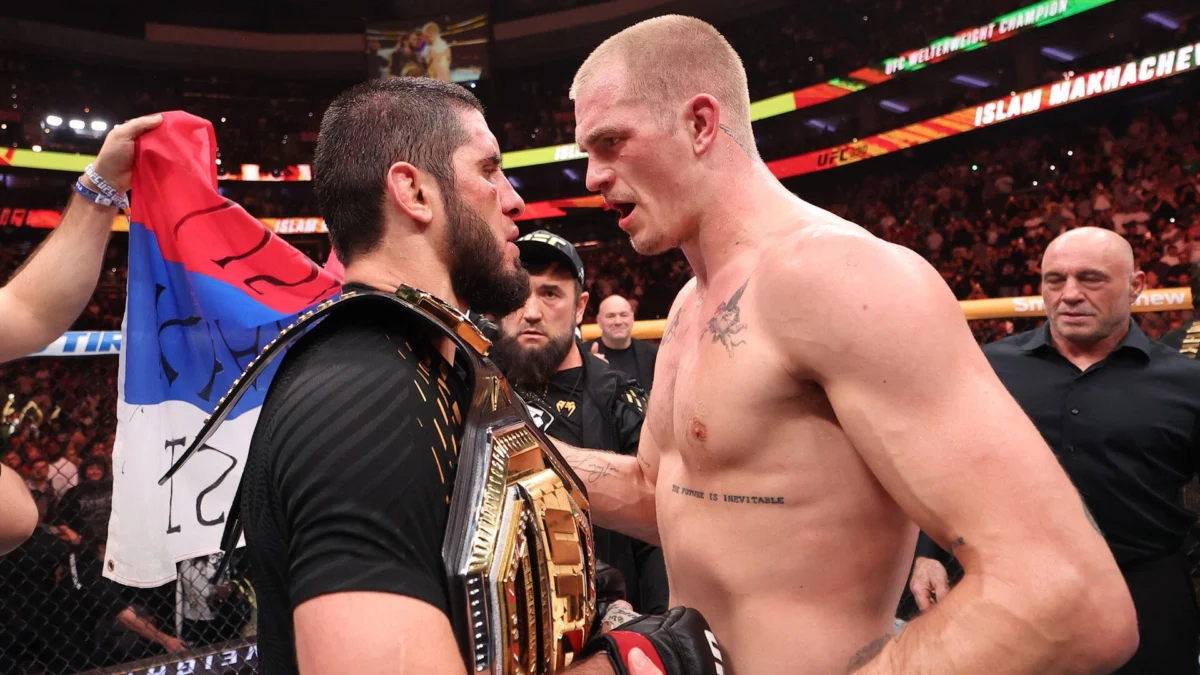
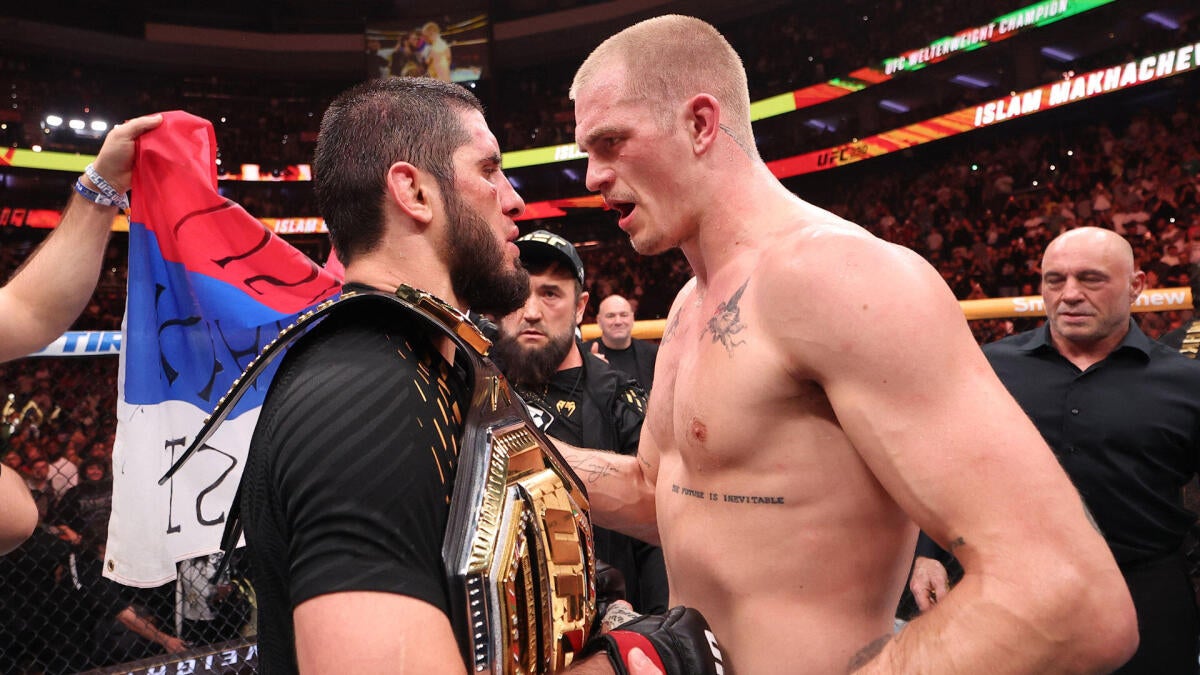
PHILADELPHIA — In the high-stakes arena of professional mixed martial arts, history is often written in the blood and sweat of the world’s most elite athletes. At UFC 330, held at the Xfinity Mobile Arena in Philadelphia, Islam Makhachev authored a new chapter in the sport’s annals, though it was perhaps the most grueling entry in his storied career. In a main event that tested his mettle and exposed the thin margins at the top of the welterweight food chain, Makhachev successfully defended his title against a defensive mastermind in Ian Machado Garry.
While the night was marred by a series of surprising upsets across the undercard, the main event provided a tactical, albeit tense, chess match that ultimately saw the champion cement his legacy with a 17th consecutive Octagon victory—surpassing the legendary Anderson Silva for the longest winning streak in UFC history.
The Record-Breaking Night: Context and Chronology
The narrative entering UFC 330 was centered on Makhachev’s pursuit of immortality. With 16 consecutive victories heading into the bout, the 34-year-old champion stood on the precipice of eclipsing Anderson Silva’s long-standing record. To achieve this, he had to navigate the precise, movement-heavy style of Ireland’s Ian Machado Garry.
A Tactical Breakdown of the Five Rounds
The fight began with a cautious pace, as both combatants seemed acutely aware of the other’s finishing potential. Makhachev, known for his relentless pressure and world-class grappling, found himself challenged by Machado Garry’s elite takedown defense. Throughout the 25-minute encounter, the challenger refused to be pinned, consistently working back to his feet and refusing to engage in the grappling exchanges that have defined Makhachev’s dominance at both lightweight and welterweight.
The pivotal moment occurred in the second round, when a perfectly timed head kick from Makhachev sent Machado Garry reeling to the canvas. In previous bouts, this sequence would have signaled the beginning of the end for the challenger. However, Machado Garry showcased incredible resilience, surviving the onslaught and forcing the champion to return to a tactical, grinding approach.
By the championship rounds, the physical toll was visible. Makhachev, whose face bore the marks of a brutal five-round war, appeared to slow down. While he controlled the cage and dictated the pace, his offensive output was hampered by Machado Garry’s refusal to overcommit. When the final horn sounded, the judges delivered a unanimous decision—49-46, 49-46, and 48-47—in favor of the champion, securing his place in history while leaving the audience with more questions than answers about the future of the division.
Supporting Data: The Statistics of a Stalemate
To understand the nuance of the main event, one must look beyond the final scorecard. Makhachev’s victory was built on volume and control, but it lacked the clinical finish that has become his trademark.
- The Streak: Makhachev now sits alone at the top of the UFC record books with 17 consecutive wins.
- The Challenger’s Defense: Machado Garry’s performance was statistically impressive; his ability to negate Makhachev’s wrestling neutralized the champion’s primary weapon, turning the fight into a striking-dominant affair that favored the challenger’s range.
- Offensive Output: While Makhachev landed the more significant strikes, specifically the knockdown in round two, the striking differential remained tight, highlighting how effectively Machado Garry managed the distance.
The Co-Main Event: Mackenzie Dern’s Rise to Supremacy
While the main event provided the historic headline, the co-main event served as a definitive statement for the women’s strawweight division. Champion Mackenzie Dern (17-5) solidified her status as the queen of the 115-pound weight class by dismantling Gillian Robertson.
Dern, 33, displayed a level of technical evolution that suggests she is only entering her prime. Her striking was crisp and authoritative, but it was her wrestling—specifically her ability to secure takedowns in the first two rounds—that broke Robertson’s spirit. This performance was a clear message to the rest of the division: the belt is no longer a placeholder, but the property of a champion who is actively closing the skill gap on legacy fighters like Weili Zhang.
Official Responses and Post-Fight Analysis
The aftermath of the main event was characterized by a rare moment of public critique from UFC leadership. During the post-fight press conference, UFC CEO Dana White was notably blunt regarding the challenger’s approach.
"Ian [Machado Garry] fought a great defensive fight, but he lacks an ounce of killer instinct," White remarked. "When you are in the cage with a guy like Makhachev, you have to take risks. You can’t just survive and expect the judges to hand you the belt. He fought to not lose, rather than fighting to win."
Makhachev, for his part, remained humble, acknowledging the difficulty of the challenge. "Every fight in this division is a war," he said through an interpreter. "I knew Ian was prepared, but I stayed patient. My goal was to win, and I did what I had to do to keep my belt."
Implications for the Welterweight Division
The "humanizing" of Islam Makhachev at UFC 330 has sent a ripple effect through the 170-pound division. For months, the narrative was that Makhachev was an unstoppable force of nature, too big for the lightweights and too skilled for the welterweights.

Saturday night challenged that assumption. While Makhachev’s grappling remains elite, the fight proved that if his opponent can defend the takedown, the champion is susceptible to being outworked on the feet. This realization has effectively "opened the floodgates" for the division. Prospects like Carlos Prates and Michael Morales, both known for their explosive striking and significant physical advantages, are now viewed by oddsmakers and analysts as much more dangerous threats than they were 48 hours ago.
The division is no longer waiting for a miracle; it is waiting for a tactical breakthrough. The blueprint for defeating—or at least pushing—Makhachev has been laid out by Machado Garry. The question remains: who has the combination of physical gifts and the "killer instinct" to capitalize on it?
The Jalin Turner Resurgence
Finally, the card was punctuated by the remarkable resurgence of Jalin Turner. Once considered a fading prospect after a difficult 2025, Turner (now 31) has undergone a complete transformation. His 39-second knockout of Kaue Fernandes was a reminder of the volatility of the lightweight rankings. Having moved past his brief retirement, Turner now looks like a legitimate threat to re-enter the top 15, bringing a renewed sense of urgency to his fighting style that has the entire division on notice.
Conclusion: What Lies Ahead
UFC 330 was a night that defied expectations. While the record books will highlight Islam Makhachev’s 17th win, the actual content of the fight told a story of a champion who has entered the most difficult phase of his career. As the welterweight division recalibrates and the strawweight division finds its new leader in a surging Mackenzie Dern, the UFC continues to prove that no matter how dominant a king may be, the challengers are always waiting in the shadows, looking for that one crack in the armor.
The road to the next title defense will be the most scrutinized of Makhachev’s career, as the world waits to see if the king can evolve, or if the division has finally found the keys to the kingdom.