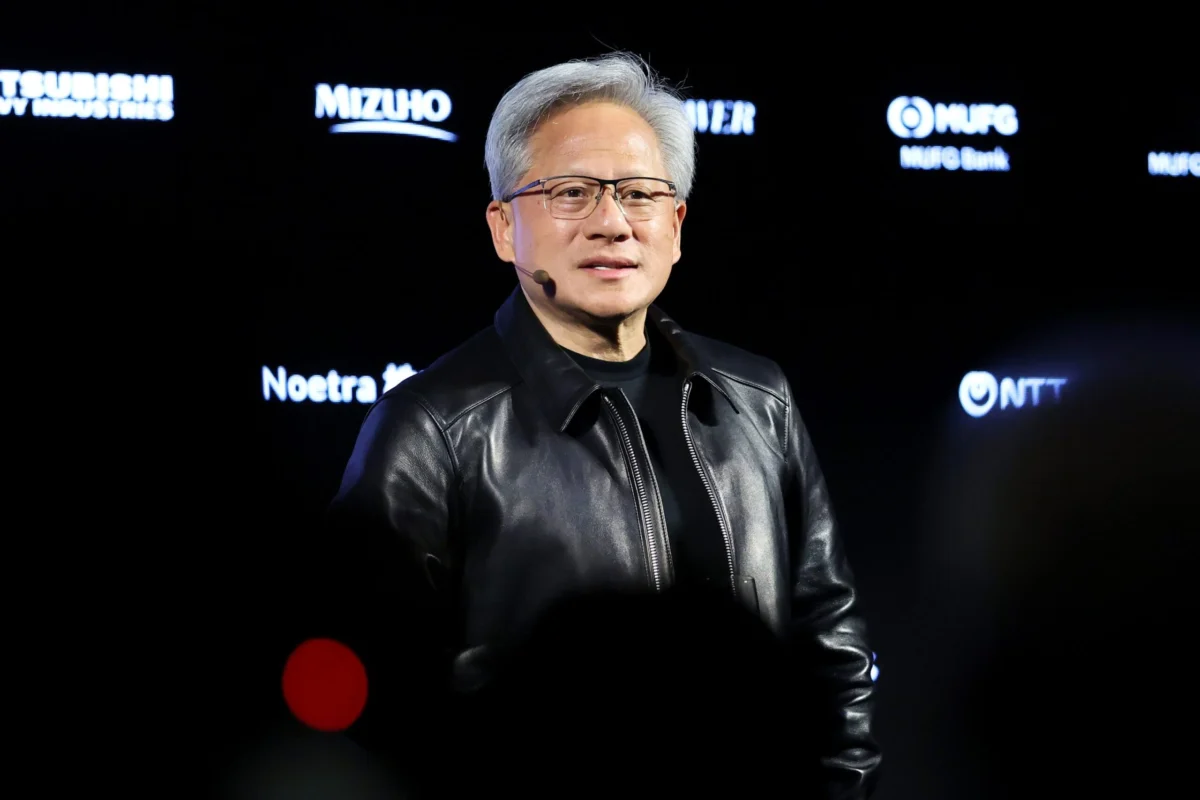
In a move that highlights the growing friction between Silicon Valley’s commercial interests and Washington’s national security imperatives, Nvidia CEO Jensen Huang has publicly urged the U.S. government to reconsider its burgeoning "panic" over Chinese open-source artificial intelligence. As highly capable and significantly cheaper models from China begin to rival the flagship products of American giants like OpenAI and Anthropic, Huang argues that restrictive measures could stifle global innovation and hinder the growth of the very infrastructure that sustains the American tech economy.
Main Facts: The Nvidia Counter-Narrative
At the heart of the current debate is the rapid proliferation of open-source Large Language Models (LLMs) originating from Chinese firms such as Moonshot AI, Alibaba, and DeepSeek. In a recent high-profile interview with Axios, Jensen Huang dismissed the prevailing narrative in Washington that these models represent a "Trojan horse" for Chinese state surveillance. Instead, he characterized them as essential tools for a diverse and healthy technological ecosystem.
Huang’s defense of Chinese open-source AI is rooted in several core assertions:
- Customizability over Vulnerability: Huang argues that because these models are downloadable and their internal "guardrails" are customizable, they do not serve as a direct backdoor for foreign governments.
- Market Complementarity: He posits that open-source models do not necessarily threaten the dominance of closed-source American leaders like OpenAI. Rather, the market requires both "closed" proprietary models for ease of use and "open" models for flexibility and data sovereignty.
- The Hardware Flywheel: From a business perspective, Huang notes that more AI usage—regardless of the model’s origin—directly correlates with increased demand for Nvidia’s computational hardware and data center services.
The tension comes at a time when U.S. startups are increasingly "defecting" to Chinese models to escape the high API costs associated with American incumbents, creating a complex geopolitical and economic puzzle for the White House.
Chronology: From Dominance to Disruption
The current state of "all-out panic" in Washington is the result of a rapid acceleration in Chinese AI capabilities over the last twelve months.
- Early 2024: American firms like OpenAI and Anthropic appeared to have an unassailable lead with the release of GPT-4 class models. U.S. policy focused largely on restricting China’s access to high-end chips to prevent them from catching up.
- Spring 2024: Chinese firms began pivoting toward open-source strategies. By releasing the "weights" of their models, they allowed global developers to run high-performance AI on their own hardware, bypassing the subscription fees of U.S. providers.
- July 10, 2024: Amazon’s CTO Werner Vogels noted a significant shift toward cheaper, open-source alternatives as companies balked at the escalating costs of American frontier models.
- July 16, 2024: Moonshot AI released Kimi K3. This event served as a catalyst for the current alarm in D.C., as the model demonstrated the ability to compete directly with Anthropic’s "Fable 5" in complex coding and reasoning benchmarks.
- Late July 2024: Reports surfaced that the White House was considering unprecedented executive actions to curb the use of Chinese AI models within U.S. borders, citing national security and the economic viability of domestic AI firms.
Supporting Data: The Economics of the AI Price War
The primary driver behind the adoption of Chinese models is not necessarily political ideology, but cold, hard economics. The cost disparity between American proprietary models and Chinese open-source alternatives has become too wide for many startups to ignore.
The Token Cost Comparison
Data from recent industry reports highlights a stark pricing divide. When measuring the cost per 1 million output tokens (the standard unit of AI processing), the figures are telling:
- Anthropic Fable 5: $50.00
- Moonshot AI Kimi K3: $15.00
- DeepSeek V4: $0.87
For a high-growth startup like the AI coding assistant Cursor, which processes billions of tokens daily, switching from a $50 model to an 87-cent model represents a transformative shift in their bottom-line.
Performance Parity
While cheaper models used to mean lower quality, the gap has narrowed significantly. In standard coding tests, Moonshot’s Kimi K3 has shown performance metrics nearly identical to Anthropic’s most advanced publicly available models. This "performance-per-dollar" ratio is what Huang refers to when he calls these Chinese models "excellent."
Infrastructure Requirements
While open-source models offer lower per-token costs, they require higher upfront investment. Unlike closed models (which are hosted by the provider), open-source models must be "self-hosted." This requires:
- Hardware Acquisition: Buying Nvidia GPUs or renting cloud instances.
- Maintenance: Employing engineers to manage the model’s deployment.
- Data Security: Taking full responsibility for the model’s outputs and vulnerabilities.
Official Responses and Regulatory Pressure
The White House and various regulatory bodies have viewed the rise of Chinese AI through a lens of risk management rather than market opportunity.
The White House Position
While the White House did not officially respond to requests for comment regarding Huang’s latest statements, internal reports suggest a strategy of "containment through liability." The administration is reportedly considering an executive order that would:
- Force U.S. companies to provide security guarantees if they use Chinese-originated models.
- Mandate that companies accept full legal liability for any data breaches or "hallucinations" stemming from the use of foreign AI.
- Impose strict reporting requirements on any American firm integrating models from DeepSeek, Alibaba, or Moonshot.
The National Security Argument
The primary concern cited by D.C. officials is that open-source models, while customizable, could contain hidden vulnerabilities or "poisoned" datasets that might allow the Chinese government to monitor the queries of American developers. Furthermore, there is a fear of "market hollowing"—that if American startups stop paying OpenAI and Anthropic, the U.S. AI giants will lose the R&D funding necessary to maintain their lead over China.
Nvidia’s Corporate Stance
Nvidia’s position, as articulated by Huang, is one of strategic pragmatism. By advocating for the use of all high-quality AI, Nvidia ensures that it remains the "arms dealer" for the entire world. "Whenever there’s more use, you’ll have to sell a lot more Nvidia computers," Huang stated. For Nvidia, a world of fragmented, open-source models is more profitable than a world dominated by a few closed-source American giants who might eventually develop their own custom silicon to replace Nvidia’s chips.
Implications: A New Era of "Sovereign AI"
The clash between Huang and Washington signals a broader shift in the global technology landscape. The implications of this debate will shape the next decade of the digital economy.
1. The Rise of "Sovereign AI"
Huang has frequently championed the concept of "Sovereign AI"—the idea that every nation and every large corporation should own and operate its own AI infrastructure rather than outsourcing it to a foreign cloud provider. If the U.S. restricts Chinese open-source models, it may inadvertently encourage other nations to do the same to American models, leading to a "Splinternet" of AI where models are restricted by geographic borders.
2. Innovation vs. Security
The U.S. faces a classic "innovator’s dilemma." By allowing companies to use cheap Chinese models, the U.S. boosts its own startup ecosystem and maintains its lead in AI application. However, by doing so, it may weaken its lead in AI foundational research. Restricting these models might protect domestic giants like OpenAI, but it could also drive American startups to move their operations offshore to access the most cost-effective tools.
3. The Democratization of Intelligence
Open-source AI represents the democratization of high-level intelligence. When a model like Kimi K3 or DeepSeek V4 becomes available for download, it levels the playing field for developers in emerging markets. Huang’s insistence that "excellent models should be used" regardless of origin reflects a belief that AI is a utility, similar to electricity or the internet, that should not be hoarded by a handful of corporations.
4. The Future of the AI Supply Chain
If Washington moves forward with restrictions, it could complicate Nvidia’s business model. Nvidia’s growth is currently fueled by a global demand for data centers. If the U.S. government begins to dictate which software can run on that hardware based on the software’s country of origin, it adds a layer of geopolitical risk to the hardware industry that has not existed since the height of the Cold War.
Conclusion: The Path Forward
The debate sparked by Jensen Huang’s comments is more than a disagreement over software licenses; it is a fundamental question about the nature of American competitiveness in the 21st century. Should the U.S. maintain its lead through protectionism and the subsidization of its domestic giants, or should it embrace the chaotic, low-cost world of global open-source innovation?
For Huang, the answer is clear: the technology will diffuse into every industry, and the U.S. should lead that diffusion by having the best infrastructure and the most open environment. As Washington weighs its next move, the global tech community remains on edge, watching to see if the "panic" over Chinese AI will result in a more secure America or a more isolated one.