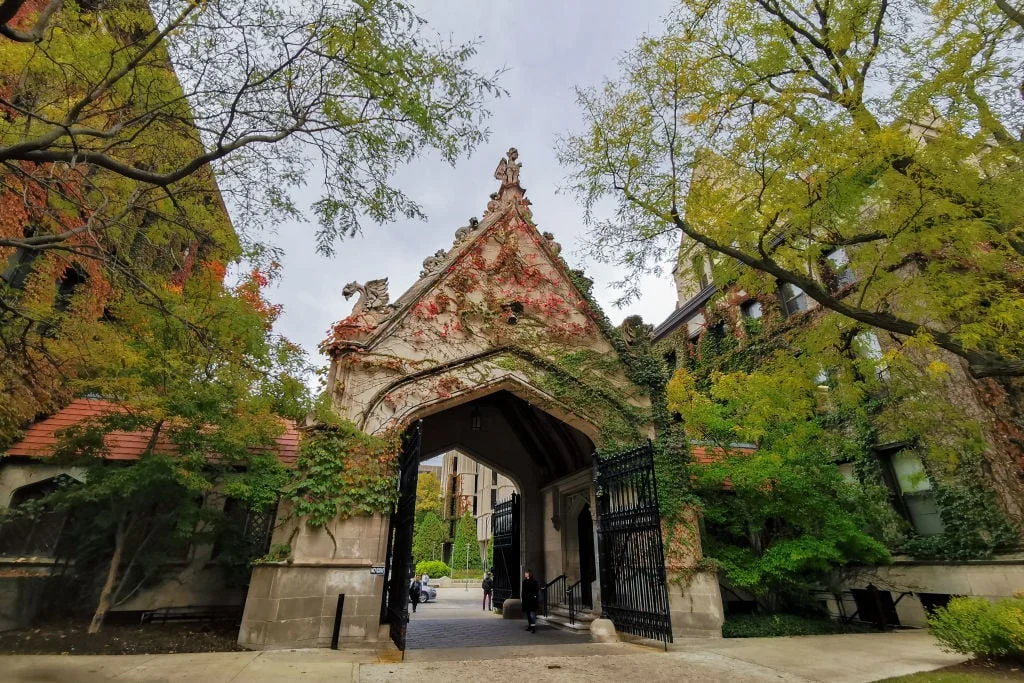
In an era defined by the frantic integration of generative artificial intelligence into every facet of the collegiate experience, one of the nation’s most prestigious institutions has opted for a starkly different trajectory. The University of Chicago, known for its rigorous intellectual culture and foundational Core Curriculum, has officially moved to wall off its social sciences general education courses from the influence of AI.
Beginning this fall, the university’s Social Sciences Collegiate Division (SOSC) will implement a strict prohibition on the use of artificial intelligence tools within its core sequences. This decision represents more than a simple policy change; it is a pedagogical statement—a deliberate effort to prioritize "analog" critical thinking, deep reading, and face-to-face discourse in a digital age increasingly dominated by automated shortcuts.
The Core Mandate: A Return to Intellectual Roots
The policy, outlined in an August 1 memo authored by Jenny Trinitapoli, the master of the university’s Social Sciences Collegiate Division, signals a decisive shift. The memorandum, addressed to program chairs, clarifies that the move was not a top-down administrative decree but the result of a "strong consensus" among faculty members.
The rationale is rooted in the university’s long-standing philosophy: that the Core Curriculum is designed to equip students with the cognitive tools necessary for independent thought. By removing AI, the department aims to create an environment where the struggle to understand complex texts—from Durkheim to Foucault—is a human endeavor, unmediated by algorithms that promise convenience at the expense of intellectual rigor.
"In the SOSC Core, we first equip students to read, write, and think without dependence on AI," Trinitapoli wrote. "Just as we equip students to read, write, and think beyond the bounds of conventional views or leading ideologies, we believe these sequences are best understood as a pedagogical setting without AI."
Chronology of a Curricular Shift
The path to this "analog" mandate did not happen overnight. It is the culmination of months of deliberation regarding the role of technology in the classroom.
- Early 2024: Faculty committees across the University of Chicago begin internal reviews regarding the impact of Large Language Models (LLMs) on student writing and conceptual mastery.
- July 2024: The University of Chicago Law School makes national headlines by announcing a ban on laptops, tablets, and smartphones in classrooms. The policy, designed to foster "AI-proof" legal training, emphasizes the primacy of Socratic dialogue over digital note-taking.
- August 1, 2024: Jenny Trinitapoli issues the memo to the Social Sciences Collegiate Division, formalizing the ban on AI in SOSC core courses and mandating an "analog" classroom environment.
- Fall 2024 Semester: The policy officially takes effect, marking the start of a campus-wide experiment in low-tech education for first- and second-year undergraduates.
Defining the "Analog" Classroom
The University of Chicago’s approach goes beyond merely banning software; it seeks to restructure the physical and mental environment of the classroom. To support the "no-AI" mandate, the university is actively promoting an analog-first approach to learning.
This shift involves several key components:
- Physical Textual Engagement: Students are encouraged to use hard-copy books and printed articles. The tactile experience of working with physical texts is viewed as a deterrent to the "copy-paste" culture encouraged by digital screens.
- Device-Free Discussion: In many SOSC sections, the use of laptops or tablets will be discouraged or prohibited during seminars. The goal is to force a "confrontation" with the material and with peers, rather than a distraction-filled experience where a student might be tempted to use an LLM to summarize a reading during class.
- In-Person Assessment: The curriculum shifts focus toward in-class writing and oral participation, ensuring that the work produced by students is demonstrably their own.
Academic Integrity in the Age of Generative AI
The move by UChicago is a direct response to the existential crisis facing higher education: the erosion of authorship. Since the release of tools like ChatGPT, Claude, and Gemini, universities have struggled to maintain the integrity of take-home essays and research assignments.
While many peer institutions are scrambling to develop "AI-literacy" courses or software to detect AI-generated text, UChicago is taking the opposite path. By treating AI as a potential inhibitor of intellectual development rather than a tool to be "managed," the university is positioning itself as a bastion of traditional scholarship.
Supporting data from recent surveys conducted by the university’s internal pedagogical task forces suggests that faculty are increasingly concerned about the "flattening" of student writing—a phenomenon where student submissions lose their unique voice, depth of argument, and logical complexity when filtered through AI tools. The SOSC faculty argues that if students cannot learn to synthesize, critique, and articulate ideas without the assistance of a machine, they will never develop the foundational autonomy required for advanced research.
Official Responses and Philosophical Justification
The university’s stance is perhaps best summarized by Trinitapoli’s memo, which frames the debate not as a rejection of technology, but as a commitment to the student’s future.
"At UChicago, we train students to use both reason and specialized knowledge in preparation for life as a free person, as well as for further scholarly pursuit," Trinitapoli stated. "Both pursuits require a confrontation with rapid social change in the global world of the 21st century, and AI is one such instance of rapid social change."
For the faculty, the "analog" requirement is a form of discipline. By removing the digital crutch, the university forces the student to grapple with their own ignorance—a necessary precursor to true learning. The university suggests that the "easy" answer provided by AI is a false friend that obscures the difficult, messy process of intellectual growth.
Implications for the Future of Higher Education
The University of Chicago’s decision creates a fascinating divergence in the higher education landscape. While universities like Arizona State and various tech-focused institutions are leaning into "AI-augmented" learning, UChicago is staking its reputation on the value of the "human-only" classroom.
The "Prestige" Factor
There is an implicit message in this policy: that a degree from the University of Chicago is valuable precisely because it refuses to conform to the tech-industry-driven trends of the moment. By labeling their courses "analog," the university is marketing a premium, artisanal educational experience. Parents and prospective students may view this as a safeguard against the "commodification" of their education.
The Debate on Accessibility
Critics, however, argue that such bans may be exclusionary. If students are expected to compete in a workforce that is increasingly AI-dependent, are they being done a disservice by being barred from using those tools in a classroom setting? The University of Chicago’s counter-argument is that one cannot effectively "master" AI until one has mastered the fundamentals of logic, rhetoric, and writing that AI is designed to mimic.
A Lasting Trend?
The policy at UChicago and its Law School suggests that the "digital classroom" movement—which saw the ubiquitous introduction of laptops and tablets over the last two decades—may have reached its peak. As AI continues to complicate the assessment of student learning, other elite institutions may follow suit, implementing "analog windows" in their curricula to ensure that foundational skills are not lost in the transition to an automated future.
Conclusion: A Counter-Cultural Stand
The University of Chicago is effectively attempting to preserve a "walled garden" of human intellect. By enforcing an analog environment in its social sciences core, the university is not ignoring the reality of the 21st century; rather, it is attempting to prepare its students for that reality by ensuring they are not dependent on the very tools that define it.
Whether this experiment will result in a more robust generation of thinkers or leave students ill-equipped for a high-tech workplace remains to be seen. However, in the immediate term, the message from the SOSC Core is clear: in the pursuit of truth and the development of the mind, some shortcuts are simply too costly to take. The "analog" classroom at UChicago is not a step backward; it is a defensive fortification for the preservation of human thought.