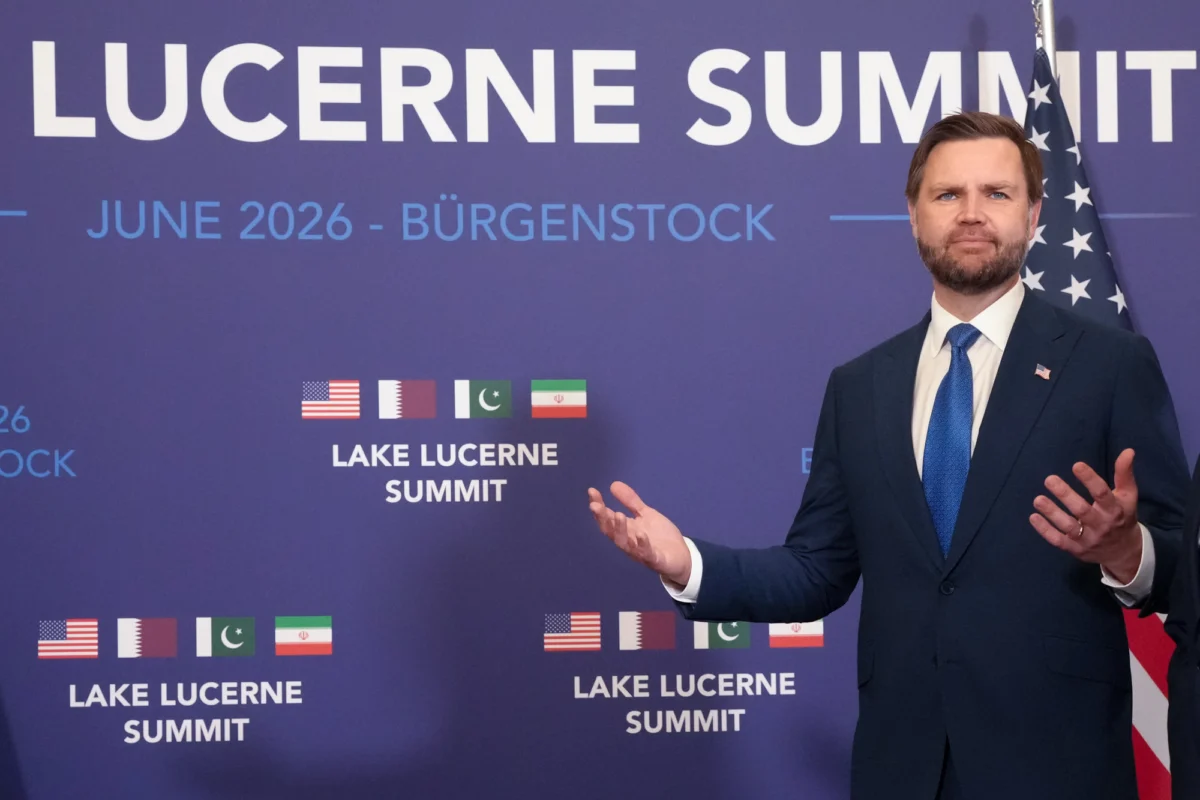
GENEVA – A high-stakes diplomatic summit intended to solidify an interim peace deal between the United States and Iran began under a cloud of volatility this Sunday. While negotiators gathered in the neutral territory of Switzerland to hammer out the technicalities of a 60-day roadmap toward regional stability, the proceedings were nearly derailed by a series of escalatory comments from President Donald Trump. The rhetoric, delivered via social media and televised interviews, sparked an immediate backlash from Tehran, highlighting the extreme fragility of an agreement that seeks to end a period of direct and indirect military conflict.
The talks, which involve high-ranking officials from both nations and mediators from Qatar and Pakistan, represent the most significant diplomatic effort in the Middle East in recent years. However, the "tense start" reported on Sunday underscores the inherent difficulty of balancing aggressive "America First" rhetoric with the delicate requirements of international mediation.
Main Facts: A Fragile Peace and the Swiss Summit
The summit in Switzerland was designed as a follow-up to the landmark interim agreement recently signed by President Donald Trump and Iranian President Masoud Pezeshkian. The primary objective of the current session is a "60-day sprint" to resolve complex technical issues that have global ramifications, ranging from nuclear proliferation to the security of international shipping lanes.
Key components of the discussions include:
- The Nuclear File: The U.S. is seeking ironclad guarantees and verification measures to ensure Iran’s nuclear program remains civilian-focused. This involves the dilution of highly enriched uranium stockpiles.
- Maritime Security: Ensuring the continued openness of the Strait of Hormuz, a vital chokepoint for 20% of the world’s oil supply.
- Economic Relief: The unfreezing of billions of dollars in Iranian assets currently held in international banks and the restoration of Tehran’s ability to sell crude oil on the global market.
- Regional De-escalation: A cessation of hostilities involving Iranian-backed proxies, specifically Hezbollah in Lebanon, and a halt to Israeli strikes in the region.
The U.S. delegation is led by Vice President JD Vance, whose presence signals both the administration’s commitment and the high domestic political stakes involved. Joining Vance are key Trump confidants, including Steve Witkoff and Jared Kushner. On the Iranian side, lead negotiator Mohammad Bagher Qalibaf and Foreign Minister Abbas Araghchi head a delegation that remains deeply skeptical of Washington’s long-term reliability.
Chronology: From Opening Salvos to a "Difficult Phase"
The timeline of Sunday’s events reveals how quickly digital rhetoric can translate into diplomatic paralysis.
09:00 AM (CET): Opening Statements
The day began with a semblance of optimism. Vice President JD Vance opened the session with a call for a fundamental shift in Middle Eastern relations. "The question before us now is how much more can we accomplish together? Can we turn over a new leaf?" Vance asked, framed by the presence of Qatari and Pakistani mediators. The initial meeting between Vance, Witkoff, Kushner, and the Iranian team lasted approximately 80 minutes.
11:30 AM (CET): The Social Media Firestorm
As the negotiators moved into breakout sessions, President Trump issued a series of posts on social media targeting Iran’s influence in Lebanon. He demanded that Iran "immediately stop their highly paid PROXIES," threatening that the U.S. would "hit Iran very hard again" if compliance was not met. This was followed by a telephone interview with Fox News, in which the President warned President Pezeshkian to "watch what he says" and alluded to the possibility of further military action.
01:00 PM (CET): The Iranian Recess
News of the President’s comments reached the Iranian delegation via state media and social monitoring. The atmosphere turned cold. Iranian state media reported that the talks had entered a "difficult phase" due to the "publication of an insulting message by the U.S. President."
02:30 PM (CET): Mediation and Withdrawal
The Iranian delegation officially requested a recess. They held a private meeting with Qatari mediators before leaving the primary negotiating site. While initial reports suggested a total collapse, an official close to the talks later clarified to the press that the Iranians remained in Switzerland and had not yet indicated a formal withdrawal from the 60-day process.
05:00 PM (CET): The Retort
Mohammad Bagher Qalibaf took to social media to respond directly to Trump, stating that Iran’s armed forces were prepared to respond "in a different manner" and concluding with the pointed remark: "They may keep talking, it is we who act."
Supporting Data: Nuclear Stockpiles and Market Volatility
The stakes of these talks are backed by hard data that illustrates the consequences of success or failure.
The Nuclear Threshold
According to international monitors, Iran possesses a significant stockpile of uranium enriched to 60% purity—a short technical step from weapons-grade (90%). The interim deal requires Iran to dilute this stockpile. This uranium is largely stored in fortified underground facilities, some of which were targeted by U.S. precision strikes a year ago. The U.S. objective is to move Iran back toward a 3.67% enrichment limit, the standard for commercial power generation.
The Oil Market Impact
Global markets have reacted with extreme sensitivity to the U.S.-Iran thaw. Following the announcement of the interim deal, oil futures plummeted by nearly 8%. This drop is a crucial victory for the Trump administration, which is facing domestic pressure over high gasoline prices ahead of the summer travel season. However, analysts warn that any collapse of the Swiss talks could see prices surge back above $90 a barrel overnight.
The Financial Lever
The deal hinges on the "unfreezing" of approximately $10 billion to $12 billion in Iranian assets held in South Korean and European banks. Access to these funds is the primary incentive for Tehran to remain at the table, despite the rhetorical hostilities.
Official Responses: A War of Words
The rhetoric from both capitals reflects a strategy of "maximum pressure" clashing with "strategic patience."
President Donald Trump: "If they don’t [stop proxies], we’ll hit Iran very hard again, just like we did last week, only harder!!! They would do better to be careful about their statements."
President Masoud Pezeshkian: Speaking via state media on Sunday, Pezeshkian maintained a firm line on domestic sovereignty: "We will never back down from the right to enrich uranium, and the other side is also forced to accept it."
Vice President JD Vance: Attempting to maintain the diplomatic track, Vance focused on the long-term potential of the deal, asking if the two nations could "change relations in the Middle East permanently."
GOP Opposition: Back in Washington, the deal faces a "searing" reception from Republican hard-liners. Critics, including figures like Pete Hegseth and various Congressional leaders, have compared the agreement to the 2015 JCPOA, arguing it provides Iran with a financial lifeline without dismantling its nuclear infrastructure or its "proxy army" in Lebanon and Yemen.
Implications: The Lebanon Powder Keg and the 60-Day Clock
The most immediate threat to the deal is the ongoing conflict in Lebanon. While a ceasefire between Israel and Hezbollah was brokered on Saturday and appeared to be holding on Sunday, the situation remains precarious.
The Proxy Dilemma
Iran has insisted that the Lebanon conflict be the first priority of the Swiss talks. However, neither Israel nor Hezbollah are signatories to the U.S.-Iran interim deal. Prime Minister Benjamin Netanyahu has been vocal about his intention to maintain Israeli military presence in southern Lebanon to ensure the safety of northern Israeli communities. If Hezbollah resumes rocket fire, or if Israel continues targeted assassinations of Hezbollah leadership, the U.S.-Iran deal could be rendered moot.
The Strait of Hormuz
The 60-day agreement allows for free passage of commercial vessels through the Strait of Hormuz, but it leaves a loophole regarding "future fees" that Iran may impose. Trump’s counter-threat—to levy U.S. tolls on Middle Eastern shipping as a "Guardian Angel" fee—adds a layer of commercial uncertainty that could disrupt global supply chains if a permanent agreement is not reached by the end of the 60-day window.
The 2028 U.S. Presidential Race
The presence of JD Vance as a lead negotiator is being viewed through the lens of domestic politics. As Vance eyes a potential 2028 presidential run, his success or failure in Switzerland will likely become a cornerstone of his political identity. A successful deal would cast him as a master statesman capable of "finishing" Trump’s foreign policy goals; a failure would provide ammunition for his rivals within the GOP.
Global Security Outlook
As markets prepare to open on Monday, the world remains on edge. The 60-day sprint has begun not with a stride, but with a stumble. The coming days in Switzerland will determine whether the "Art of the Deal" can survive the "Art of War" in the Middle East, or if the region is merely experiencing a brief pause before a larger conflagration. For now, the mediators from Qatar and Pakistan face the unenviable task of keeping two deeply distrustful adversaries in the same room while their leaders trade threats across the digital ether.