In the landscape of modern cinema, few directors possess the intellectual tenacity of Christopher Nolan. When he sets his sights on a historical or mythological concept, he does not merely adapt it; he deconstructs it, reassembles it, and subjects it to the rigorous pressures of his own cinematic philosophy. His latest opus, The Odyssey—a sweeping, psychologically dense retelling of Homer’s epic—is currently dominating the box office. Yet, the film’s most haunting image, a towering, derelict wooden horse abandoned on a desolate beach, is not a product of recent creative development. It is the culmination of a visual obsession that has simmered in the back of Nolan’s mind for over twenty years.
The Genesis of a Mythic Image
The Trojan Horse is, perhaps, the most recognizable trope in Western literature. It represents the ultimate intersection of military strategy, hubris, and betrayal. However, in The Odyssey, Nolan moves beyond the well-worn narrative of a clever trick that ended the ten-year siege of Troy. Instead, he presents the horse as a decaying, monolithic relic of a war that destroyed the soul of its participants.
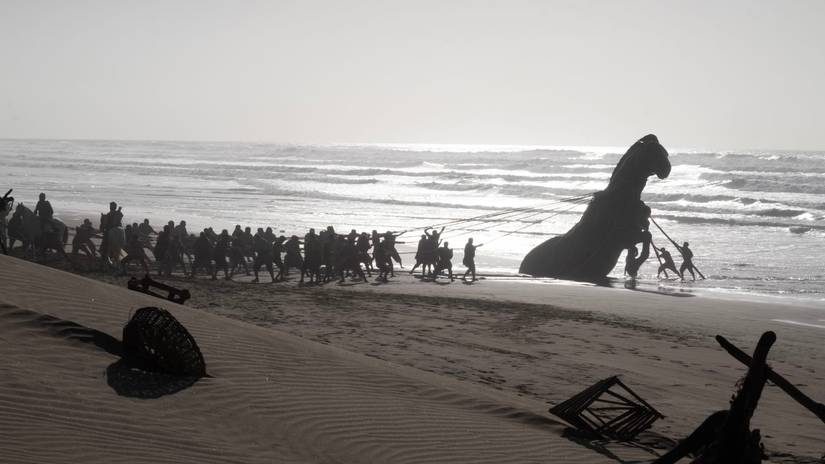
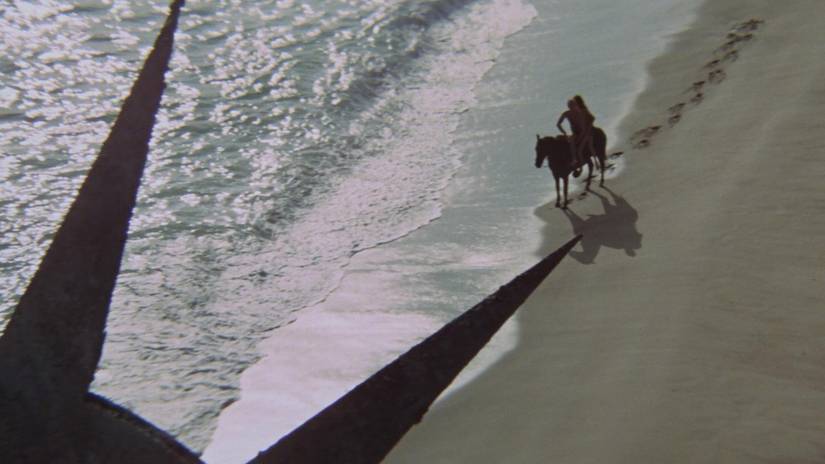
The vision of the horse—looming over the sand, battered by the tide—is the film’s visual anchor. It is a haunting, static reminder of the "peace offering" that became a tomb for both the Trojan defenders and the Greek attackers’ morality. According to insights shared by the director on the TikTok channel Stepping Through Film, the inspiration for this stark, beach-bound imagery traces back to his childhood fascination with the 1968 science fiction classic, The Planet of the Apes.
"As part of the early development process for a project I was looking at in 2004, I had to work out how I wanted to treat the Trojan Horse," Nolan explained. "I was very influenced by seeing The Planet of the Apes when I was a kid. We had the Statue of Liberty half-destroyed. That idea of a fallen monument—something that represents the pinnacle of a civilization, now lying in the sand, discarded and eroded by the very nature it sought to conquer—that was the feeling I wanted to capture."

A Chronology of Vision: From Troy to The Odyssey
To understand the weight of this image, one must look at the timeline of Nolan’s career. In 2004, Nolan was famously in talks to direct Troy, the blockbuster epic that would eventually be helmed by Wolfgang Petersen. Nolan’s pivot toward Batman Begins redirected his path, but the concepts he developed during that period remained locked in his creative vault.
- 2004: Nolan engages in pre-production discussions for a Trojan War project. He begins sketching the narrative arc of the war, focusing specifically on the psychological toll of the final deception.
- 2005–2023: As Nolan redefined the blockbuster with the Dark Knight trilogy, Inception, and Oppenheimer, the "fallen monument" motif continued to evolve. He sought a narrative framework that would justify the presence of such a monument not as a historical footnote, but as a catalyst for the protagonist’s unraveling.
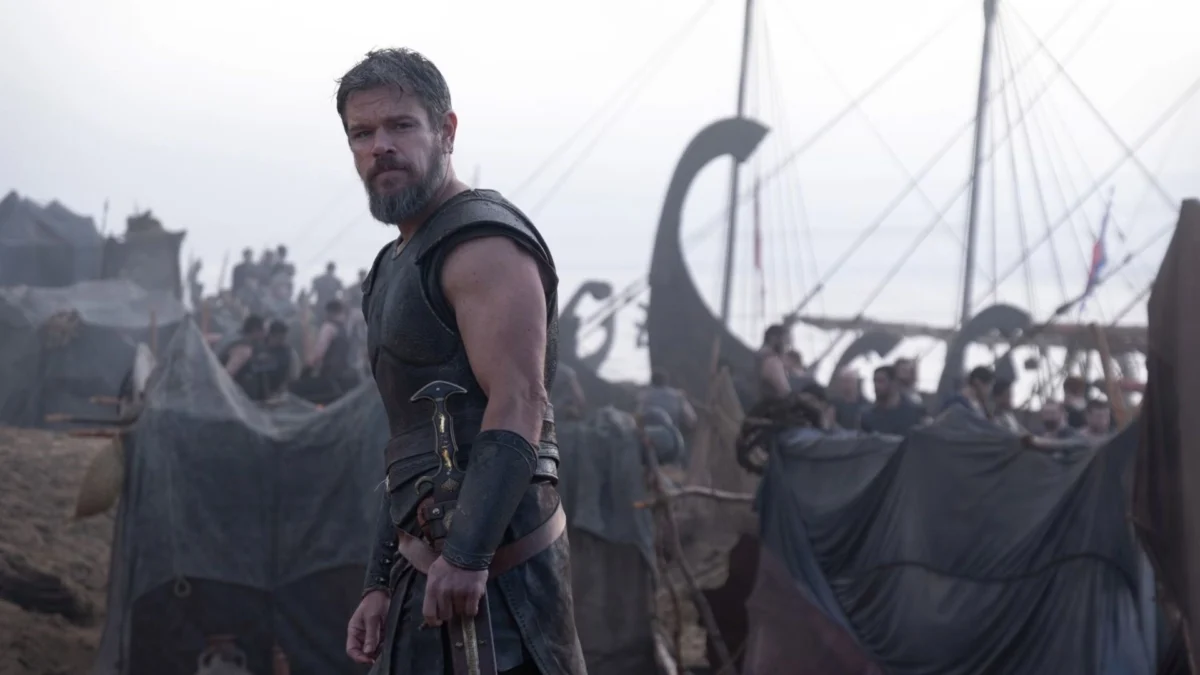
- 2024: Production officially begins on The Odyssey. With Matt Damon cast as the titular hero, Nolan finally has the canvas to explore the moral decay inherent in the Trojan victory.
- 2026: The Odyssey hits theaters, featuring the culmination of a two-decade-long visual investigation into the cost of war.
The Structural Implications of "Xenia"
The film’s brilliance lies in its thematic pivot. Most adaptations focus on Odysseus (Matt Damon) as a master tactician—the man of many turns. Nolan, however, focuses on the breach of Xenia.
In Greek culture, Xenia is the sacred law of hospitality, a mandatory code that dictates how strangers and guests must be treated. The Trojan Horse, by its very nature, is a perversion of Xenia. The Greeks entered the city under the guise of an offering, violating the sanctity of the host-guest relationship. Nolan treats this not as a military masterstroke, but as a theological and civilizational "original sin."
By the time the audience reaches the film’s final act, the horse has been re-contextualized. In the dialogue between Odysseus and Queen Penelope (Anne Hathaway), the tone shifts from the boastful accounts of the bard Phemius (A$AP Rocky) and the strategic justifications of Menelaus (Jon Bernthal). Odysseus, now a broken man haunted by the slaughter of innocents, recognizes the horse as the tomb of his own humanity.

Cinematic Parallels: The Ape and the Hero
The comparison to The Planet of the Apes is not merely an aesthetic nod; it is a structural blueprint. In the 1968 film, the revelation of the ruined Statue of Liberty serves as a brutal twist that forces the audience to reconcile with the fact that they have been watching a future version of their own history.
In The Odyssey, the horse serves a similar function. It marks the transition from the "glory" of the war to the "curse" of the return journey. Just as Charlton Heston’s George Taylor realizes the futility of his struggle upon seeing the sunken monument, Odysseus realizes that his homecoming is impossible because the world he left behind has been fundamentally poisoned by the violence he unleashed at Troy. The "lawless" world he returns to—plagued by sea raiders and entitled suitors—is the direct result of the chaos he helped sow.
Official Perspectives and Critical Reception
Critics have lauded the film for its technical precision, particularly the practical effects used to construct the horse on a remote coastal location. The production design team, working under Nolan’s strict mandate for "physicality," ensured that the structure looked as if it had been exposed to the elements for years, mirroring the decay of the Greek empire itself.
"Christopher didn’t want a CGI model that looked perfect," noted a crew member involved in the film’s production. "He wanted something that looked like it had been forgotten by God. He wanted the wood to feel splintered, the rope to be frayed, and the sand to be burying it. It was about capturing that specific melancholy of a dream turned into a nightmare."
The Implications of Civilizational Collapse
Nolan’s The Odyssey serves as a cautionary tale about the arrogance of power. By linking the destruction of Troy to the subsequent instability of the Greek world, the film posits that the collapse of society begins the moment we decide that "the ends justify the means."
The Trojan Horse, once an object of triumph, becomes a symbol of the end of the Age of Heroes. As the film progresses, the viewer is forced to watch as the very structures that define civilization—hospitality, law, and morality—are dismantled, leaving behind only the cold, indifferent sea and the rotting carcass of a wooden horse.
In the final, poignant scene, when the camera pans away from the beach, the viewer is left with the same existential dread that defined the final frames of The Planet of the Apes. As the echoes of the war fade, the message is clear: when we destroy the foundations of our world to win a victory, we ensure that there will be no home left to return to.
Conclusion: A Masterpiece of Memory
Christopher Nolan has achieved what few directors could: he has taken a foundational text of human history and turned it into a deeply personal, haunting character study. By leaning into the imagery of the "fallen monument" for twenty years, he has imbued The Odyssey with a weight that transcends traditional storytelling.
Whether one views the film as an action epic or a meditation on the cyclical nature of human violence, the image of that wooden horse remains: a silent witness to a hero’s hubris and the inevitable collapse of all things. The Odyssey is currently in theaters, and for those who have spent decades waiting for Nolan’s take on the classics, it is a journey well worth taking.