
For over half a century, Charles M. Schulz’s Peanuts served as a mirror for the American experience. Its characters—the anxious Charlie Brown, the philosophical Linus, the cynical Lucy—became cultural archetypes. Yet, tucked away within the quiet, suburban landscape of the Peanuts neighborhood, there existed a character who defied the strip’s generally grounded, dialogue-driven reality. Schroeder, the piano-playing prodigy, stands as the quintessential outlier of the Peanuts universe. While the rest of the cast navigated the existential dread of childhood, Schroeder occupied a different plane of existence, one defined by classical obsession, surrealist visual gags, and a unique detachment from the mundane concerns of his peers.
The Genesis of a Prodigy: Early Installment Weirdness
To understand the anomaly that is Schroeder, one must look back to his introduction. Peanuts in its infancy was a vastly different creature than the polished, iconic strip it became by the 1970s. Modern readers familiar with the "classic" era often overlook the "early installment weirdness" that defined the 1950s.
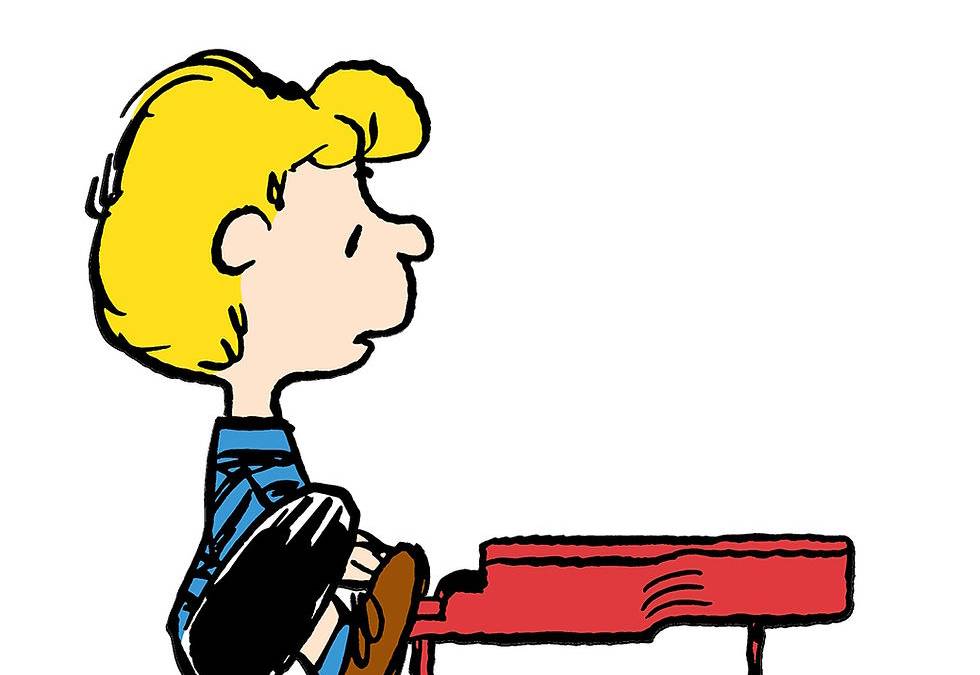
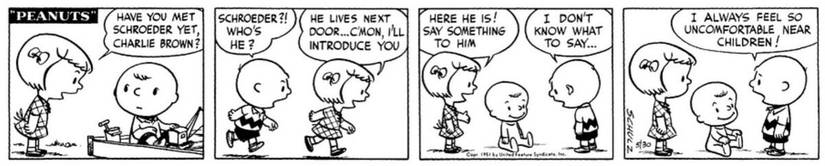
Schroeder made his first appearance on May 30, 1951, as an infant. Unlike the later iterations of the character, he was a blank slate, a baby in a crib. However, Schulz’s penchant for subverting expectations manifested almost immediately. By September of that same year, the character had undergone a rapid, unexplained transition. Charlie Brown, in a moment of neighborly outreach, attempted to teach the infant how to play the piano. In a narrative turn that established the character’s lifelong identity, it was revealed that the baby was not a student, but a master. He was already a musical prodigy, possessing an innate, sophisticated grasp of the instrument.
This rapid aging—a common trope in long-running strips of the era—allowed Schulz to integrate Schroeder into the core ensemble. By the 1960s, Schroeder had settled into his role as a staple of the neighborhood, occupying a physical and metaphorical space distinct from the others: the space behind his toy piano.
A Chronology of Obsession
Schroeder’s development can be categorized into distinct phases of characterization. From 1951 to 1960, he functioned primarily as a foil. His primary interaction was with his toy piano and the inescapable, one-sided romantic pursuit of Lucy Van Pelt. This era established the "Beethoven fixation," which would become the cornerstone of his personality for the next four decades.
As the 1960s progressed, Schroeder became a fixture in the Peanuts baseball team, though he was almost exclusively utilized as the catcher. This position served as a clever narrative device; it kept Schroeder in the background, reinforcing his status as an observer—a character who was physically present but emotionally distant, tethered to his music even in the middle of a ballgame.
By the 1980s and early 1990s, Schulz began to experiment with the character in ways that deviated from the standard gag-a-day format. It was during this period that Schroeder became the protagonist of a series of surrealist visual experiments. Unlike the rest of the cast, who were defined by their verbal neuroses, Schroeder’s world became increasingly visual. His sheet music began to take on a life of its own, turning into physical objects or landscapes, effectively breaking the fourth wall of the comic strip format.
The Music is the Message: A Shift Toward Surrealism
Charles Schulz was notoriously skeptical of "cartoonish" surrealism. He famously preferred the humor of silence, social anxiety, and the dry wit of childhood. While Snoopy’s imagination allowed for flights of fancy—the World War I Flying Ace, the novelist—those were framed as conscious daydreams.

Schroeder, however, was different. His "weirdness" wasn’t a product of an active imagination; it was a byproduct of his devotion to music. Between 1981 and 1991, Schulz produced a series of strips where the music Schroeder played seemed to manifest physically. Notes would emerge from the piano like birds; melodies would weave through the panels, dictating the physical movement of the other characters.
This was a departure from the strip’s established rules. For a moment, the Peanuts world—a place of dirt mounds and brick walls—became a canvas for abstract expressionism. These strips, often overlooked in collections, represent some of the most sophisticated visual storytelling in the history of the medium. They elevated Schroeder from a simple "music kid" to an artist whose inner world was so potent it could literally warp the reality of the strip.
Supporting Data: The Anatomy of a Gag
The durability of the Schroeder character lies in his consistency. According to archival data from the Peanuts syndication records, Schroeder appeared in approximately 18% of all strips published during his tenure. Of those appearances, roughly 65% involved the piano, 25% involved Lucy, and the remaining 10% were dedicated to the "surrealist" musical sequences.
The dynamic with Lucy serves as a fascinating study in psychological contrast. While Lucy represents the intrusion of reality—the demanding, sometimes harsh nature of interpersonal relationships—Schroeder represents the sanctity of the aesthetic. His rejection of her is never mean-spirited; it is simply the rejection of the mundane. For Schroeder, a Beethoven sonata is a tangible, living reality that takes precedence over the social hierarchies of childhood.
Official Responses and Creator Intent
Throughout his life, Charles Schulz was often asked about the "strangeness" of his characters. In a 1994 interview, Schulz noted, "Schroeder is the only character who is truly happy, because he has something that doesn’t rely on other people."
This comment provides a key to understanding the character’s trajectory. While Charlie Brown sought validation, and Lucy sought power, Schroeder sought beauty. Schulz’s intent was never to make Schroeder "weird" in the sense of being an alien or an outcast; rather, he was an embodiment of the singular focus that defines the artist. His detachment was a survival mechanism. In a world of baseball losses and kite-eating trees, the music provided a sanctuary.
Implications for the ‘Peanuts’ Legacy
The legacy of Schroeder is one of quiet subversion. He proved that a character did not need to be the loudest or the most central to the plot to be the most compelling. By allowing Schroeder to inhabit a space of intellectual and musical superiority, Schulz created a character who taught generations of readers about the value of high culture, the importance of boundaries, and the reality that one’s passions can indeed be a world unto themselves.
Furthermore, the surrealist sequences of the 1980s paved the way for modern comic artists to play with the architecture of the page. By allowing the music to literally "break" the borders of the panels, Schulz signaled that the medium of the newspaper strip was capable of far more than simple jokes.

As we look back at the nearly 50-year run of Peanuts, it is clear that while Charlie Brown may have been the face of the strip, Schroeder was its soul. He was the reminder that even in a world of gloom, there is always a symphony playing, if only we are willing to sit at the piano and listen. He remains, arguably, the most enigmatic member of the gang, a small boy with a small piano who, for a few fleeting moments every decade, transformed the mundane into the miraculous.