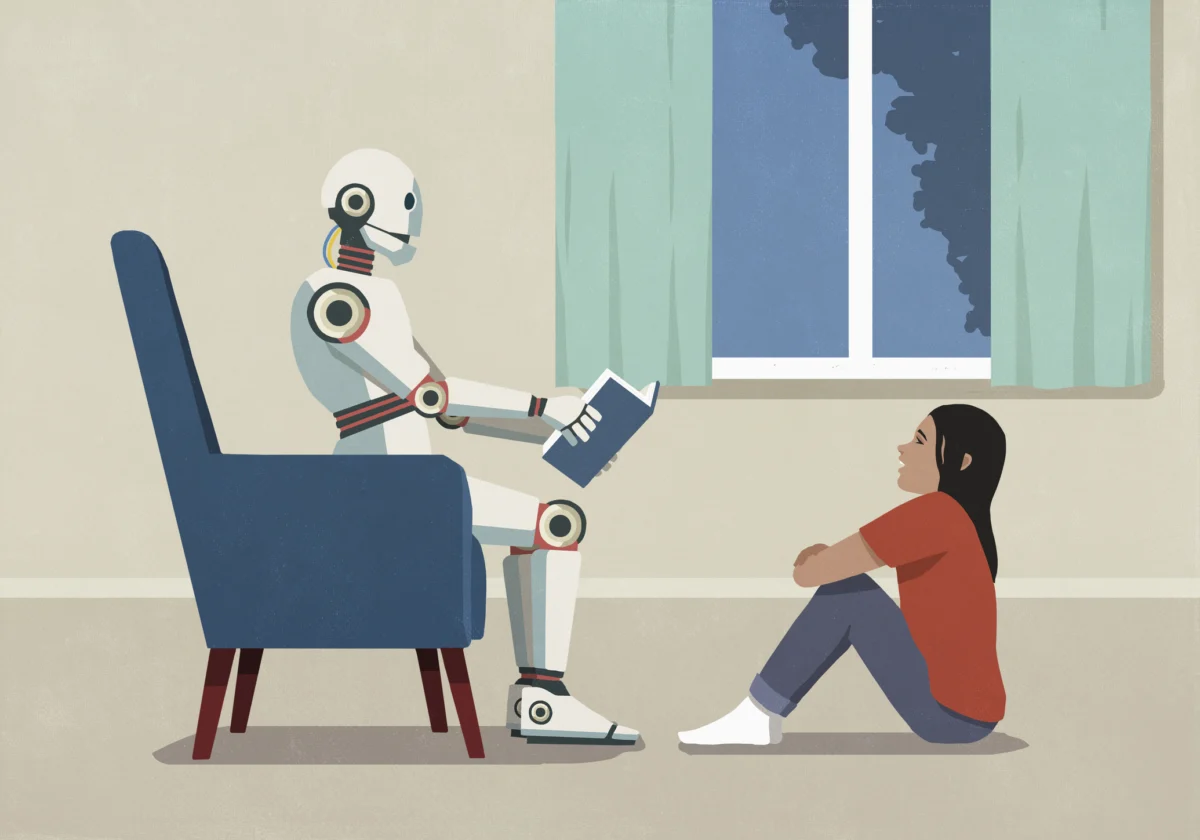
In an era where artificial intelligence is rapidly encroaching on everything from professional graphic design to software engineering, it was perhaps inevitable that the technology would eventually set its sights on the most intimate of human rituals: the bedtime story. Meta, the parent company of Facebook, Instagram, and WhatsApp, has recently begun piloting a new application dubbed StoryKit. The app promises to transform the way parents engage with their children by using generative AI to create bespoke, personalized fairy tales complete with custom characters, settings, and integrated music—all without the parent needing to "write a single word."
While the app is currently being positioned as a creative tool for busy parents, its introduction has ignited a broader cultural debate regarding the necessity of human creativity in child-rearing and the ethical implications of allowing large language models (LLMs) to curate the narratives that shape a child’s worldview.
The Genesis of StoryKit: A Chronology of Discovery
The existence of StoryKit first came to public light via a discovery by 9to5Mac, which spotted the application in the Apple App Store. The discovery arrived at a time when Meta is under intense scrutiny for its aggressive pursuit of AI-integrated features across its ecosystem.
- Initial Discovery: Analysts and tech observers identified the app listing in mid-July 2026, noting its distinct focus on generative storytelling for a younger audience.
- The Soft Launch: Following the public leak, Meta confirmed to TechCrunch that it had initiated a pilot program for the app in select, undisclosed global markets.
- Targeting the Demographic: Unlike many of Meta’s social-first products, StoryKit is explicitly gated. The company has restricted access to users over the age of 18, presumably to comply with child safety regulations and data protection laws like COPPA (Children’s Online Privacy Protection Act).
- Current Status: The app is currently in a "testing phase," where Meta is gathering qualitative data on user engagement and parent satisfaction before deciding on a wider, global rollout.
How It Works: The "Plug-and-Play" Narrative
StoryKit’s functionality is built around the simplicity of the "prompt-to-story" pipeline. Meta’s marketing for the app emphasizes ease of use, effectively stripping away the barrier to entry that might prevent a tired parent from crafting an elaborate tale.
The Workflow
- Character Synthesis: Parents can snap a photo of a child’s favorite toy or a family member. The AI then processes these images to "bring them to life," rendering them as consistent characters within the app’s digital storybooks.
- World-Building: Users provide a brief text prompt describing the setting—be it a lunar colony, an enchanted forest, or a city built of candy.
- Values Integration: A central feature of StoryKit is the "lesson selector." Parents can choose to embed specific virtues into the narrative, such as kindness, empathy, or courage, ensuring the story functions as both entertainment and a soft moral teaching tool.
- Audio-Visual Output: Once the parameters are set, the app generates a cohesive story accompanied by synthesized music and illustrations, providing a complete, multimedia experience for the child.
Official Responses and Meta’s Stance
In a statement provided to TechCrunch, a Meta spokesperson framed the app as a "creative storytelling tool" designed to assist parents in crafting high-quality, personalized content for their children.
"We are piloting StoryKit in select countries to better understand how parents utilize generative technology to foster engagement and creativity in their homes," the spokesperson noted.
Meta has been careful to emphasize the "guardrails" surrounding the product. The company maintains that the app utilizes robust AI safety filters designed to strip out inappropriate content, ensuring the stories remain wholesome and age-appropriate. Furthermore, in an attempt to distance the app from the company’s broader social media controversies, Meta explicitly stated that StoryKit features no social networking capabilities. By keeping it a siloed, offline experience, Meta hopes to avoid the privacy pitfalls that have historically plagued its other platforms.
Implications: The Death of the "Imperfect" Story
The rise of StoryKit poses a profound question: what happens when we replace the organic, messy, and deeply personal act of storytelling with the polished, algorithmic predictability of an LLM?

The Loss of Human Whimsy
Storytelling is humanity’s oldest pastime. It is a fundamental method by which we pass down values, culture, and, perhaps most importantly, our unique, human flaws. When a parent tells a child an improvised story—even one that is poorly paced or logically inconsistent—they are providing a moment of authentic connection.
The danger of StoryKit lies in its efficiency. It provides a "perfect" output, but one that is inherently uncreative. By definition, an LLM predicts the most likely next word or sequence based on a vast dataset of existing stories. It is a derivative process. When we outsource the bedtime story to an algorithm, we trade the possibility of genuine, spontaneous whimsy for a calculation.
The "Trojan Horse" of AI Integration
Critics argue that tools like StoryKit are part of a broader "Trojan Horse" strategy by Big Tech. By introducing AI into the most tender, low-stakes moments of family life, companies like Meta are normalizing the presence of synthetic media. If we accept AI as the narrator of our children’s dreams, we are more likely to accept AI as the narrator of our news, our political discourse, and our personal relationships.
This follows a long line of "boneheaded" ideas from the Silicon Valley giant, ranging from controversial Instagram deepfake filters to the much-maligned "smart glasses" that sparked privacy protests. Unlike those products, which were openly criticized for their social impact, StoryKit is a "soft" product—harder to attack because it seems, on the surface, to be a helpful utility for exhausted parents.
Supporting Data and Ethical Concerns
The reliance on generative AI for child-centric content raises significant ethical questions regarding data collection and development.
- Algorithmic Bias: LLMs are trained on massive corpuses of text that contain inherent biases. If an AI is tasked with teaching "values" like kindness or courage, whose definition of those values is it using? Are we embedding a Western-centric, corporate-sanctioned moral framework into the stories our children grow up with?
- The "Convenience" Trap: We live in an era where parents are increasingly time-poor. The temptation to reach for a phone that can instantly generate a narrative is high. However, developmental psychologists have long argued that the process of storytelling—the back-and-forth between parent and child, the questions asked, the pauses taken—is as important for cognitive development as the content of the story itself.
- The Erosion of Oral Tradition: By digitizing the bedtime story, we remove the element of oral tradition. When a child learns to tell their own stories by watching their parents, they are learning how to conceptualize their own experiences. When they learn from an app, they are merely consuming a product.
Conclusion: Reclaiming the Narrative
Perhaps the most significant moral of this story is not found within the app’s output, but in our choice to use it. Meta’s vision of the future is, by many accounts, remarkably bleak—a landscape of virtual meetings, synthetic companionship, and algorithmic mediation.
However, technology is not a mandate; it is a choice. While the lure of a personalized, AI-generated intergalactic space mystery might be high, the value of a parent—even a tired one—improvising a clumsy, silly, and entirely human story cannot be understated.
As we move forward, society must decide whether it wants to live in a world where our children are raised on scripts generated by large language models, or if we will continue to exercise our own imaginations. The technology exists to replace the storyteller, but it does not have the capacity to replace the meaning of the story. For now, the power to reject the convenience of the algorithm in favor of the messiness of humanity remains firmly in our hands. We simply have to choose to use it.