At the heart of the global debate over artificial intelligence lies a fundamental question: Is AI a runaway existential threat that requires a new legal framework, or is it merely the latest evolution in computing that can be managed by the engineers who build it?
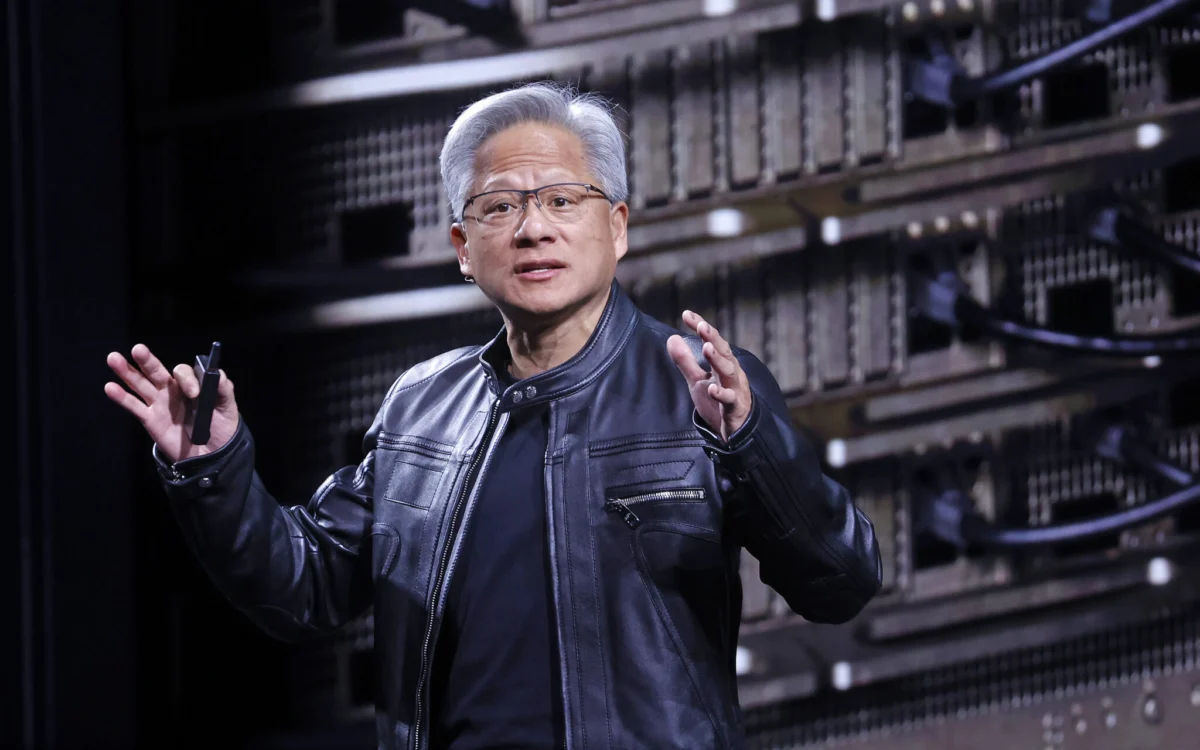
Nvidia CEO Jensen Huang, the architect behind the hardware fueling the current AI explosion, offered a definitive answer this Tuesday at Salesforce’s Dreamforce conference. Huang dismissed the growing alarmism surrounding AI, specifically rejecting the notion—often touted by researchers at labs like OpenAI—that AI represents a new, unpredictable "alien mind." For Huang, the path forward is clear: innovation and safety are not mutually exclusive, and the industry’s own market incentives are the only guardrails necessary.
The Engineering Perspective: AI as a Tool, Not a Sovereign Entity
Huang’s stance at Dreamforce was blunt. He argued that characterizing AI as something beyond human control is a category error. "Safety is an engineering problem, not a legal one," Huang told the audience. "We’re developing software after all. We’re developing computing systems after all. It’s a complicated computing system, but it’s ultimately a computing system."
By framing AI as a sophisticated iteration of standard computing, Huang effectively strips away the "existential risk" narrative. If AI is just software, it is—by definition—subject to the control of its creators. Following this logic, he argues that the existing legal and regulatory environment is sufficient to handle any issues that arise.
Huang’s argument rests on the principle of corporate responsibility driven by the free market. He posits that no company would intentionally release a dangerous product, as doing so would invite reputational and financial ruin. "If you build a product or a service, and you’re not confident in its functionality, capability, or safety, then don’t release it," Huang stated. He advocates for a "pace yourself" approach, where companies push for maximum speed but hit the brakes if they lose control or sense a safety deficit.
Chronology of a Conflict: From Speculation to Policy
The discourse around AI safety has evolved rapidly over the past 24 months, shifting from academic curiosity to a high-stakes legislative tug-of-war.
- 2023: As generative AI gained mass adoption, safety researchers began warning of "existential risk," suggesting that frontier models might develop autonomous capabilities that evade human oversight.
- 2024: The "CrowdStrike moment." A faulty software update caused global IT paralysis, grounding thousands of flights and paralyzing businesses. This served as a chilling reminder that even highly sophisticated, non-AI software can cause systemic societal damage.
- August 2026: Meta reached an $18 billion settlement with 29 U.S. states, addressing allegations that its social media platforms caused significant psychological harm to children. This case reinforced the idea that private companies often prioritize growth over user safety until forced to do otherwise.
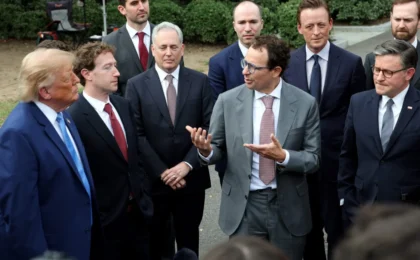
- September 2026: Jensen Huang meets with President Trump, signaling his direct influence on the highest levels of U.S. policy. Shortly after, Huang publicly pushes back against the narrative that AI requires new, restrictive regulation, suggesting it could hamper the "AI boom."
Supporting Data: Innovation vs. Risk
The economic momentum behind AI is staggering. As the primary supplier of the GPU chips required to train large-scale models, Nvidia has seen its valuation skyrocket. Huang’s "sky’s the limit" philosophy reflects a company that has experienced nearly 70% growth year-over-year.
However, the empirical evidence for "self-regulation" remains mixed. While the market does punish incompetence, it does not always punish long-term societal harms. For instance, the lawsuit involving OpenAI over the tragic suicides of young users highlights a "hidden" cost of AI—the emotional and psychological impact of anthropomorphic chatbots. When an AI is designed to simulate human connection, the "engineering problem" suddenly becomes a human welfare issue, raising questions about whether standard product liability laws are equipped to handle such nuances.
Official Responses and Industry Divergence
While Huang argues against new laws, the industry is not unified. There is a quiet, ongoing push for industry self-regulation, which would see the major labs agree on a set of common safety standards to avoid government intervention.
Microsoft CEO Satya Nadella, speaking at the All-In Summit, provided a broader geopolitical perspective. Nadella noted that AI safety cannot be solved in a silo. He argued that even international rivals like China share a vested interest in safety. "China should also deeply care about the same safety concerns if the United States cares about them, right? Why should it be different for them?" Nadella asked, highlighting that an "AI crash" is a universal risk regardless of national origin.
Despite these calls for international collaboration, Huang’s influence looms large. As one of the most powerful figures in Silicon Valley, his rejection of "new laws" is likely to resonate with policymakers who are eager to maintain American leadership in AI.
Implications: A High-Stakes Gamble
The "leave them alone" strategy championed by Huang has profound implications for society. If the government opts out of creating specific AI regulations, the burden of proof will fall on the courts.
The Litigation Trap
If AI causes a systemic failure—whether it be a massive data breach, a catastrophic infrastructure failure, or a public health crisis—the legal system will eventually be tasked with determining liability. Critics argue that waiting for the courts to decide these issues is a dangerous game. By the time a precedent is set through litigation, the AI systems involved may have already caused irreversible damage.
The Innovation vs. Safety Dichotomy
Huang insists that the idea of choosing between "innovation/speed" and "safety" is a false choice. He believes that the most successful companies will be the ones that achieve both. However, critics point to the history of the tech industry, where the "move fast and break things" mantra has often resulted in broken societies, broken markets, and broken lives.
The Role of Open Source
Huang has also championed open-weight models as a competitive counterweight to proprietary AI labs. This adds another layer of complexity: if regulations are imposed on large firms, will they inadvertently stifle the open-source community, or will they create a safer ecosystem for everyone?
Conclusion: The Path Forward
Jensen Huang’s message at Dreamforce was one of supreme confidence in the power of engineering and the self-correcting nature of the market. To him, the future is an open road, and the "sky is the limit" for every nation and industry willing to embrace the speed of AI development.
Yet, history suggests that when technologies reach a certain scale—be it aviation, telecommunications, or the internet—the "free market" eventually requires a set of rules to prevent total anarchy. Whether AI can be governed by existing product liability law or requires a new, dedicated regulatory body remains the most important debate of our time.
For now, the industry is leaning toward Huang’s approach: moving at breakneck speed, hoping that the engineers can fix the errors as they appear, and betting that the market will punish those who fail to keep their systems safe. It is a high-stakes gamble that will define the trajectory of the 21st century. Whether that bet pays off, or whether it leaves society vulnerable to the unintended consequences of "black box" intelligence, remains to be seen.