Washington D.C. – A growing wave of skepticism among independent voters regarding Donald Trump’s unsubstantiated claims about the 2020 presidential election and his assertions of insecure American electoral processes is contributing to a significant shift in the crucial voting bloc. This erosion of support poses a substantial challenge for Republican candidates as the nation approaches the critical November midterm elections. Recent polling data consistently reveals a deep and widening chasm between Trump’s narrative and the sentiments of independent voters, who are increasingly frustrated with his performance and unconvinced by his allegations of a "rigged" election.
This trend is not merely a statistical anomaly but reflects a profound re-evaluation by a demographic essential for electoral success. As the former president continues to center his public messaging around unproven fraud, the data suggests he is alienating the very voters who often determine the outcome of closely contested races.
The Shifting Sands of Independent Opinion: A Chronology of Disenchantment
Donald Trump’s consistent questioning of election integrity is not a new phenomenon, but its sustained emphasis following the 2020 election appears to be reaching a critical inflection point with independent voters. His claims of widespread fraud, which have been repeatedly debunked by election officials, courts, and even his own administration’s cybersecurity experts, are increasingly viewed with skepticism outside his core base.
The trajectory of independent sentiment reveals a stark decline in Trump’s favorability. At the commencement of his second term, YouGov’s weekly tracker placed his favorable rating among independents at 40.7 percent, with an unfavorable rating of 56.3 percent. This initial snapshot, while not overwhelmingly positive, marked a baseline. However, by the most recent iteration of the poll, released on July 13, a significant downturn had occurred. His favorable rating among this key demographic plummeted to 28.7 percent, while his unfavorable rating soared to 69.3 percent. This represents a substantial 12-point drop in favorability and a 13-point increase in unfavorability, underscoring a rapid and profound shift in perception.
Further illustrating this disconnect, a survey conducted last month by YouGov and The Economist found that a majority of independents, 59 percent, expressed either "very confident" or "somewhat confident" sentiments regarding the fairness of the upcoming congressional elections. This confidence directly contradicts Trump’s narrative of systemic electoral vulnerabilities and fraud, suggesting that his message is failing to resonate with those outside his committed base.
Perhaps most telling is the response to a specific question posed in the same poll: whether participants believed Trump possessed "concrete evidence" to substantiate his 2020 claims or was merely attempting to "sow doubt." Among independents, a striking 77 percent concluded that he was primarily trying to plant doubts in voters’ minds. This stands in stark contrast to the 72 percent of Republicans who believed he did indeed possess hard evidence. This wide divergence highlights the partisan chasm on the issue and underscores the difficulty Trump faces in broadening his appeal.
Reinforcing these findings, a Washington Post-Ipsos poll released last week presented an equally challenging picture for Trump. It revealed that only 26 percent of independents approved of his job performance, with a mere 6 percent expressing strong approval. Conversely, a staggering 71 percent of independents disapproved of his performance. These cumulative data points paint a clear and consistent picture: independent voters are not only disengaging from Trump but are actively rejecting the core tenets of his post-presidency political messaging.
The Alarming Statistical Reality: Supporting Data Unveils Unprecedented Disapproval
The quantitative evidence supporting the exodus of independent voters from Donald Trump’s sphere of influence is compelling and, according to expert analysis, historically significant. These numbers raise serious questions about the potential for "presidential coattails" – the ability of a popular leader to boost the electoral fortunes of fellow party members – as the midterm elections intensify.
CNN’s chief data analyst, Harry Enten, provided a particularly stark assessment of Trump’s standing among independents. Speaking on air, Enten declared, "Donald John Trump is in fact holding the record for the lowest net approval rating for a president in a second term, at this point in the second term of any president in the 21st century." This pronouncement immediately places Trump in an unenviable historical position, surpassing even those presidents who faced severe political crises.
Enten went on to elaborate on the driving force behind this unprecedented low: "What is driving this number? It’s independents, baby." He emphasized the magnitude of Trump’s negative standing within this demographic, stating, "He takes the cake at minus 45 [percentage] points among independents." To contextualize this figure, Enten drew comparisons to other presidents who faced significant independent disapproval during challenging periods. Richard Nixon, on the brink of resignation due to the Watergate scandal, had previously held the record at minus 37 percentage points among independents. George W. Bush, navigating the complexities of his second term, registered at minus 31 percentage points. Trump’s current minus 45 points not only surpasses these figures but does so by a substantial margin, solidifying his status as having "the worst ever net approval rating with independents, at this point in a second term."
This historical context is crucial. It indicates that the current level of independent disapproval for Trump is not merely a dip but a profound rejection, exceeding even the extreme political liabilities faced by other presidents at comparable stages of their second terms. For Republican candidates hoping to leverage party loyalty or capitalize on national political currents, this data suggests a significant headwind rather than a tailwind from the party’s de facto leader. The traditional concept of a president’s popularity benefiting down-ballot candidates appears severely undermined by these unprecedented numbers.
The consistent message across multiple reputable polls – from YouGov’s trackers to combined surveys with The Economist and the Washington Post-Ipsos collaboration – paints a coherent picture of independent voters’ deep dissatisfaction. Their skepticism of election fraud claims and their overall disapproval of Trump’s performance are not isolated incidents but a widespread and deeply entrenched sentiment. This statistical reality is poised to play a decisive role in shaping the political landscape of the upcoming midterm elections, particularly in swing districts and competitive statewide races where independent voters often hold the balance of power.
Official Responses and Conflicting Narratives
Amidst the backdrop of declining independent support, official responses from both sides of the political spectrum reveal contrasting strategies and deeply held convictions regarding the legitimacy of election integrity claims. The narrative surrounding these claims has become a central battleground, influencing party messaging and voter engagement.
Speaker Mike Johnson’s Endorsement and Strategic Focus:
House Speaker Mike Johnson, a prominent figure within the Republican leadership, has publicly aligned himself with Trump’s assertions. On Tuesday, he told reporters that the former president was merely stressing "basic stuff" and that Trump’s allegations should "concern every American." Johnson framed Trump’s efforts as a necessary spotlight on fundamental issues, indicating a strategic decision by elements of the Republican party to embrace and amplify these concerns.
Furthermore, Johnson credited Trump with "showing you the receipts," implying that verifiable evidence supports the claims of election irregularities. He pledged, "We’ll continue to hammer this" going into the midterms, asserting that "in my mind, there’s almost nothing more important than this." This statement signals a clear intent to make election integrity, as defined by Trump’s unproven claims, a central theme of the Republican midterm campaign. For Johnson and his allies, the issue transcends typical policy debates, positioning it as a foundational concern for the health of American democracy.
Trump’s Primetime Address: A Message to the Base:
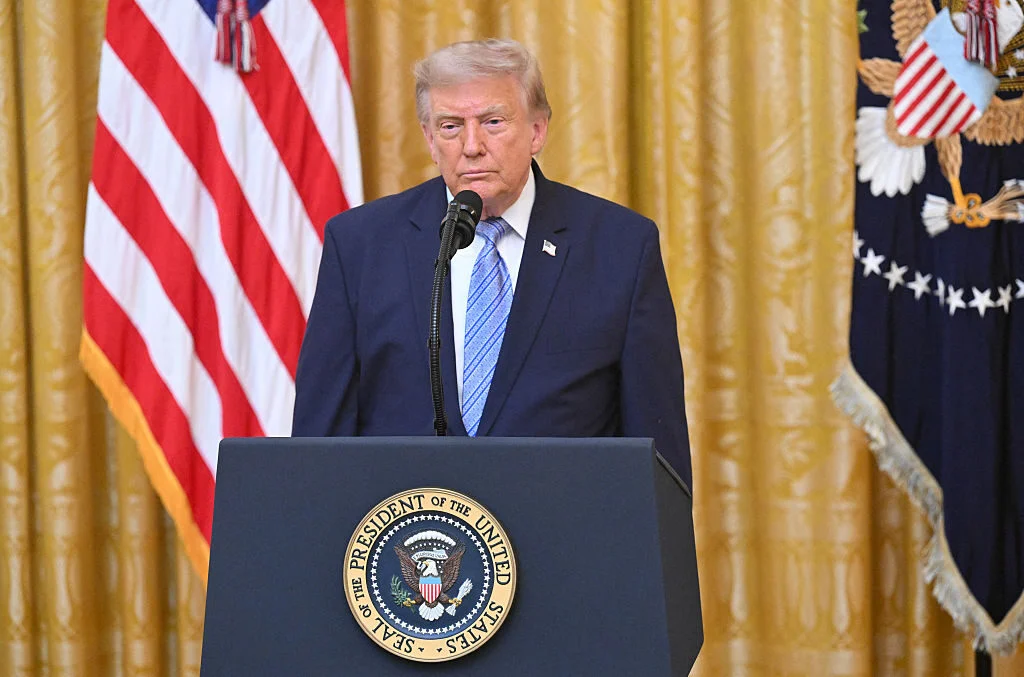
The former president himself underscored this strategic focus with an unprecedented primetime address from the White House on Thursday night. The setting alone – a rare presidential address from the Oval Office, typically reserved for moments of national crisis – elevated the gravity of his message. However, the content and perceived audience for this address revealed a deliberate targeting of his loyal "Make America Great Again" base.
Historically, during his first term, Trump often reverted to issues like immigration and border security when seeking to energize his supporters. Yet, during this second term, his messaging has increasingly gravitated towards the 2020 election and his persistent, unproven claims of widespread voting fraud. The primetime address served as a powerful platform for this renewed focus.
During his speech, Trump warned specifically about "cyber vulnerabilities in our electronic voting systems," labeling these alleged weak points as "bad." He articulated a plan of action, stating, "We’re in the process of informing governors, senators and members of Congress of potential issues in their states. If you look at voting today, it’s in such bad shape in so many states, and we are committing to fix it and we’re also committing to be working with those states and local jurisdictions to help them fix and patch known technical vulnerabilities before the midterm elections." He concluded by asserting, "We have very important elections coming up. We want those elections to be honest."
Despite the official tone and claims of working with state and local officials, the address did not appear to be "calibrated for the independent voters that pollsters say will help decide House and Senate control." Instead, many observers, including Democratic lawmakers, quickly warned that Trump seemed eager to cast doubt over the legitimacy of the upcoming midterms, and potentially to lay groundwork for actions intended to disqualify certain ballots or voters.
A critical "twist" in Trump’s address was noted: the only specific voting fraud allegations he presented would have occurred during his first presidential term. This chronological inconsistency further undermined the credibility of his broader claims about current election insecurity. Moreover, the very premise of a "rigged" election is challenged by his two previous electoral victories, both of which occurred while Democrats, Barack Obama and Joe Biden, occupied the Oval Office, suggesting that the system, by his own past success, was capable of delivering fair results.
Democratic Counter-Narrative and Defense of Democracy:
The Democratic response was swift and unequivocal, emphasizing the danger posed by Trump’s continued allegations. House Homeland Security Committee ranking member Bennie Thompson issued a forceful statement on Thursday night, declaring that Democrats "will not allow any speech, any executive order, or conspiracy to be used as an excuse for him to take over Federal elections." Thompson underscored the constitutional limitations of the presidency, stating unequivocally, "The President has no Constitutional role when it comes to elections and he never will."
The Mississippi Democrat did not mince words, calling Trump’s persistent claims "humiliating and beneath the office of the presidency" and, more critically, "dangerous to our elections and our democracy." He urged Congress to resist these pressures: "Congress cannot cow to this pathetic spectacle of a wannabe dictator. We must put the President in check, support State and local election officials this fall, and get back to the work of making life better for the American people." This robust defense of the electoral process highlights the deep ideological divide and the high stakes involved in the ongoing debate over election integrity.
Adding further context, Stephen Richer, an analyst at the CATO Institute, provided a historical perspective in a Friday analysis. Richer noted that "ever since Trump entered politics, he has alleged stolen elections." This pattern includes claims of widespread fraud when he lost to Ted Cruz in the 2016 Iowa caucus, allegations of fraud even in his 2016 victory against Hillary Clinton, and, of course, the extensive claims regarding the 2020 presidential election. Richer concluded, "He promised proof. His speech didn’t deliver that proof. And the documents released by the White House? They didn’t help his case." This independent analysis further corroborates the lack of substantiation for Trump’s claims, aligning with the skepticism observed among independent voters.
Implications for the Midterms and the Future of American Democracy
The unprecedented erosion of independent voter support for Donald Trump, fueled by his relentless pursuit of unproven election fraud claims, carries profound implications for the upcoming midterm elections and the broader health of American democracy. The confluence of declining approval ratings, independent skepticism, and a highly polarized political environment creates a volatile landscape for both parties.
The Fading "Coattail" Effect:
Historically, a popular president can significantly boost the electoral prospects of their party’s candidates in midterm elections, a phenomenon known as the "coattail effect." However, with Trump’s net approval rating among independents plummeting to a historic low of minus 45 percentage points, the reverse effect appears more likely. Republican candidates across the country, particularly those in swing districts and competitive statewide races, now face the unenviable task of navigating a political environment where their party’s de facto leader is deeply unpopular with a critical segment of the electorate.
This creates a significant dilemma for Republican hopefuls. To appeal to Trump’s fervent base, candidates often feel compelled to echo his claims about election integrity, endorse his "America First" agenda, and maintain a close association. Yet, doing so risks alienating the very independent voters whose support is essential for victory in general elections. The data suggests that for many independents, embracing Trump’s election claims is a deal-breaker. Candidates who fail to distance themselves from these unsubstantiated allegations may find themselves struggling to gain traction with the moderate, unaligned voters who often decide the outcomes of close contests. The traditional strategy of leveraging a popular party leader’s appeal could, in this instance, become a liability.
Erosion of Trust in Democratic Institutions:
Beyond the immediate electoral concerns, the sustained and high-profile questioning of election results by a former president and prominent political figures poses a serious long-term threat to the integrity of American democratic institutions. When a significant portion of the electorate is constantly told that their elections are "rigged" or "stolen" without credible evidence, it erodes fundamental trust in the electoral process itself.
This erosion of trust can manifest in several dangerous ways:
- Decreased Voter Participation: If citizens believe their vote doesn’t count or that the system is inherently corrupt, they may become disengaged and less likely to participate in future elections.
- Increased Political Polarization and Violence: Baseless claims of fraud can inflame partisan tensions, leading to heightened anger, distrust, and, in extreme cases, political violence, as witnessed during the January 6th Capitol riot.
- Challenges for Election Officials: State and local election officials, who often operate with limited resources, are increasingly subjected to threats, harassment, and intense scrutiny, making their crucial work more difficult and dangerous. The constant need to defend the integrity of their processes diverts resources and attention from the efficient administration of elections.
The Republican Party’s Internal Struggle:
The ongoing debate over election integrity also exposes deep fault lines within the Republican Party. While a segment of the party, exemplified by Speaker Johnson, actively embraces and promotes Trump’s claims, others privately express concerns about the long-term damage to the party’s brand and its ability to appeal to a broader electorate. The challenge for the GOP is how to reconcile the demands of Trump’s loyal base with the necessity of winning over independent and swing voters. This internal struggle will likely continue to define the party’s direction and strategy in the coming years.
The Decisive Role of Independents:
Ultimately, the data underscores the pivotal role of independent voters as a swing bloc in American politics. Their collective shift away from Donald Trump, specifically driven by their rejection of his election fraud narrative, serves as a powerful signal. In a political landscape often characterized by intense partisan loyalty, independents represent the segment of the electorate most amenable to persuasion based on performance, policy, and perceived integrity. Their current disaffection with Trump’s messaging suggests that focusing on unsubstantiated claims of past electoral malfeasance may be a losing strategy for Republicans in the upcoming midterms.
As the November elections draw closer, the ability of Republican candidates to either effectively embrace or skillfully distance themselves from Donald Trump’s rhetoric on election integrity will likely be a defining factor in their success or failure. The implications extend far beyond individual races, touching upon the very foundations of trust in America’s democratic process. The challenge is clear: convince independent voters that the system works, or risk further alienating a demographic vital to securing political power.