Introduction: A Fractured Policy Under Scrutiny
In a significant escalation of international pressure, a coalition of 31 prominent civil society organizations issued a formal demand on Friday, calling upon the European Union (EU) and its member states to immediately terminate all migration-control cooperation with Libyan authorities. The statement serves as a damning indictment of a multi-year strategy that critics argue has effectively outsourced the EU’s border management to entities characterized by systemic human rights abuses.
For years, the EU has sought to stem the flow of irregular migration across the Mediterranean by partnering with various factions in Libya. However, the latest expansion of this cooperation—specifically involving Eastern Libyan forces—has pushed human rights advocates to the breaking point. The coalition, which includes heavyweights such as Amnesty International, Human Rights Watch, and Sea-Watch, argues that by providing training, equipment, and surveillance infrastructure to Libyan actors, the EU is directly complicit in the entrapment, torture, and exploitation of thousands of refugees and migrants.
Chronology: From Cooperation to Complicity
The current diplomatic standoff is the culmination of nearly a decade of shifting policies in the Mediterranean.
2011–2016: The Post-Gaddafi Power Vacuum
Following the NATO-led intervention in 2011 and the fall of Muammar Gaddafi, Libya fractured into competing governance structures. The resulting security vacuum transformed the nation into a primary transit hub for human trafficking networks. During this period, the EU struggled to formulate a cohesive response, as the Mediterranean became the world’s deadliest migration route.
2017: The Western Model
The blueprint for the current controversial policy was established in 2017 through a Memorandum of Understanding between Italy—with the backing of the EU—and the Tripoli-based Government of National Accord (GNA). This deal provided the Libyan Coast Guard with patrol boats, training, and operational coordination. While the EU framed this as a humanitarian mission to prevent drownings, human rights groups documented a sharp increase in illegal pushbacks and the subsequent detention of migrants in inhumane facilities.
2026: The Eastern Expansion
Tensions peaked in May 2026 when investigative NGO Statewatch leaked documents revealing that the EU was negotiating a similar, expanded agreement with authorities in Eastern Libya. The documents outlined plans for a Maritime Rescue Coordination Centre in Benghazi and a surveillance radar tower in Tobruk, both under the control of the Libyan Arab Armed Forces (LAAF). Despite the documented track record of these forces, the EU proceeded with plans to integrate them into a broader regional migration management framework, prompting the collective outcry witnessed today.
Supporting Data: The Cost of "Border Security"
The coalition’s report provides a harrowing look at the human cost of EU-funded policies. The statistics are not merely bureaucratic figures but markers of a humanitarian catastrophe.
The Cycle of Abuse
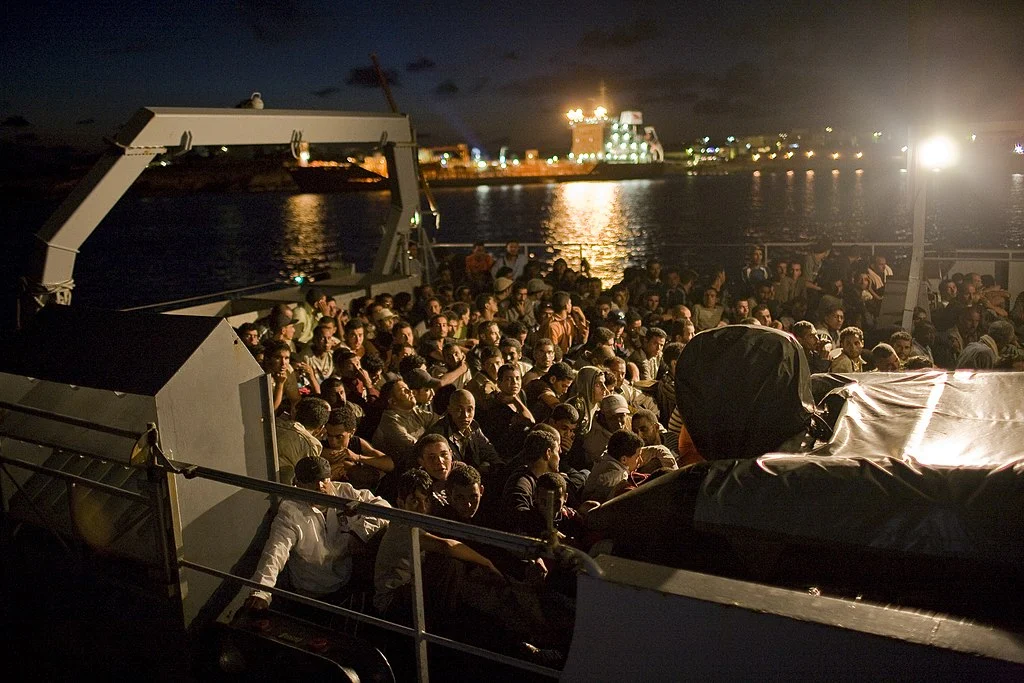
Under the guise of "search and rescue," EU-funded interceptions are frequently followed by the immediate detention of returnees. Reports from the UN and various NGOs confirm that once returned to Libyan soil, migrants are held indefinitely in facilities where:
- Arbitrary Detention: Individuals are held without charge or legal recourse in overcrowded, unsanitary cells.
- Systemic Torture: Documented cases of beatings, electric shocks, and psychological torment are commonplace.
- Sexual Violence: Human rights reports indicate that sexual exploitation is used as a tool of control and extortion by militia-run detention centers.
- Forced Labor: Many migrants are subjected to modern slavery, forced to work for their captors under the threat of violence.
The Evidence in the Ground
The landscape of Libya has become a literal graveyard for those attempting to flee. In February 2025, authorities discovered nearly 50 bodies in two mass graves, a grim reminder of the risks involved in the migrant journey. This was followed in January 2026 by the discovery of another mass grave containing 21 victims. These sites, often located along the routes controlled by the very forces the EU is now engaging, serve as a testament to the lack of safety for those intercepted at sea.
The Global Trafficking Network
The crisis is not confined to the Mediterranean. Libya has become an air-bridge for human trafficking. Intelligence reports have identified organized flight paths that transport migrants from Libya to Nicaragua, with the ultimate intent of reaching the United States. This indicates that the EU’s failure to secure human rights in Libya has consequences that ripple across the Atlantic, feeding global criminal networks.
Official Responses and Diplomatic Friction
The European Union’s stance has remained largely consistent: it maintains that working with Libyan authorities is necessary to save lives at sea and combat the smugglers who profit from dangerous crossings. EU officials have frequently pointed to the necessity of a functioning Maritime Rescue Coordination Centre (MRCC) to organize search and rescue efforts effectively.
However, the UN and international humanitarian bodies have challenged this narrative. The UN has repeatedly urged the EU to suspend these interceptions, arguing that there is no such thing as a "safe port" in Libya. They emphasize that any assistance provided to Libyan authorities must be conditional on the immediate release of detained migrants and the closure of abusive detention centers—conditions that the EU has thus far been unable or unwilling to enforce effectively.
The NGOs’ statement is a direct rejection of the EU’s "partnership" logic. As the signatories noted in their joint release, "Assistance from the EU has facilitated the interception and forced return of tens of thousands… to a country where they face life-threatening abuses."
Implications: The Legal and Moral Quagmire
The demands made by the 31 civil society organizations raise profound questions about the future of European foreign policy and international law.
Legal Complicity
By providing the technical infrastructure—such as radar towers and training—that allows for the interception of vessels, the EU may be opening itself to legal challenges. International law prohibits refoulement, or the return of individuals to a country where they are likely to face persecution or torture. Critics argue that by knowingly providing the means for such returns, EU member states are violating their own foundational human rights obligations.
The Erosion of EU Values
The "externalization" of borders—shifting the burden of migration management to third countries—has become a hallmark of European policy. However, this strategy is increasingly viewed as a betrayal of the democratic values the EU claims to uphold. When the EU prioritizes the reduction of migration numbers over the protection of human life, it risks undermining its moral authority on the global stage.
A Call for Alternative Solutions
The coalition’s demand is not merely a call for inaction; it is a call for a paradigm shift. They argue that the focus should be moved away from:
- Surveillance and Interception: Ending the support for forces that engage in human rights abuses.
- Investment in Human Rights: Redirecting funds toward safe, legal pathways for asylum seekers and genuine, independent search and rescue operations that bring migrants to safe European ports rather than back to detention.
- Accountability: Establishing an independent mechanism to oversee the conduct of Libyan partners and holding them accountable for the treatment of migrants.
Conclusion
The call by 31 civil society organizations marks a critical juncture in the EU-Libya relationship. As the leaked documents from May 2026 continue to fuel public and political debate, the European Union faces a stark choice: continue down a path of "abusive collaboration" that risks further human tragedy, or pivot toward a policy that prioritizes the dignity and protection of the most vulnerable. For the thousands currently trapped in Libyan detention centers, the urgency of this decision cannot be overstated. The world is watching to see if the EU will continue to prioritize borders over lives, or if it will finally heed the call for a more humane, rights-based approach to the global migration crisis.