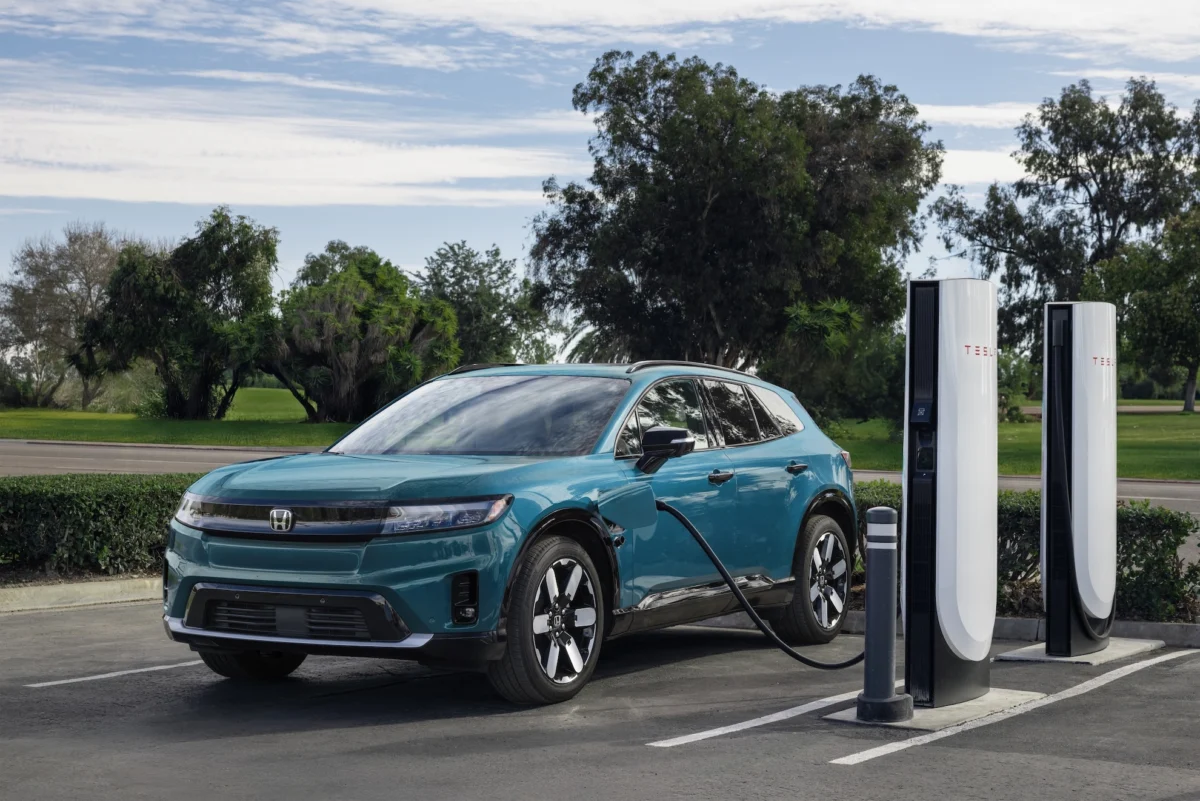
The U.S. electric vehicle (EV) landscape has undergone a seismic shift in 2026. What was once heralded as an unstoppable transition toward an electrified future has, in the span of just a few months, morphed into a strategic withdrawal. The most recent casualty in this trend is the Honda Prologue, an SUV that served as the automaker’s primary electric offering in the U.S. Its confirmed departure signals more than just a localized product cancellation; it serves as a bellwether for a broader retreat from the North American EV market—a move that stands in stark, K-shaped contrast to the accelerating adoption rates seen across Europe and Asia.
From shifting regulatory frameworks to the expiration of critical federal incentives and the looming threat of protectionist tariffs, the reasons behind this industry-wide pivot are as complex as they are impactful. As automakers recalibrate their portfolios to align with cooling consumer demand and rising production costs, a significant number of nameplates have been sent to the chopping block.
The Catalyst: Why the U.S. EV Market Is Cooling
The automotive industry is currently grappling with a "triple-punch" scenario. The expiration of the $7,500 federal tax credit in late 2025 acted as a profound shock to the system, stripping away the artificial price parity that had allowed many EVs to compete with their internal combustion engine (ICE) counterparts.

Data from Kelley Blue Book and Cox Automotive paints a sobering picture of this transition. In the second quarter of 2026, EV sales totaled 247,226 units, capturing approximately 5.8% of the total U.S. automotive market. While this represented a modest quarter-over-quarter increase, the year-over-year comparison reveals the depth of the current malaise: sales in Q2 2026 were 20.5% lower than the same period in 2025. This downward trajectory follows a dismal fourth quarter in 2025, which saw sales plummet 36% compared to the prior year.
Beyond the tax credit, the "winnowing" of choices is driven by a volatile mix of factors:
- Protectionist Tariffs: Ongoing trade tensions have made the import of foreign-made EVs prohibitively expensive, forcing companies to re-evaluate regional production strategies.
- Changing Consumer Tastes: The initial wave of "early adopters" has been satisfied, and the current market is dominated by more pragmatic, cost-conscious buyers who remain wary of charging infrastructure limitations and higher upfront prices.
- Company Priorities: Automakers are increasingly diverting capital away from unprofitable EV projects to shore up their margins through proven, high-volume ICE and hybrid vehicles.
A Chronology of Retrenchment: Who Is Leaving?
The following list outlines the key models that have been discontinued or paused as of July 2026. This list remains fluid as manufacturers continue to navigate the precarious U.S. regulatory environment.

Honda: From the 0 Series to the Prologue
Honda’s retreat is perhaps the most symbolic. Just two years ago, the company unveiled its ambitious "0 Series" at CES, showcasing a futuristic vision of thin, light, and hyper-efficient electric vehicles. That vision was intended to culminate in the production of a mid-sized SUV at Honda’s dedicated "EV Hub" in Ohio. By March 2026, those plans were dead.
The cancellation of the Acura RDX EV and the 0 Series sedan and SUV was explicitly linked by Honda to the hostile regulatory environment and fierce competition from lower-cost Chinese rivals. The final nail in the coffin was the July confirmation that the Honda Prologue—a vehicle that had actually seen moderate success with roughly 72,000 combined units sold across 2024 and 2025—would cease production. The Prologue’s failure highlights the fragility of EVs that depend on thin margins and external partnerships, such as the company’s reliance on GM’s platform.
The Afeela "Ghost"
Perhaps the most notable non-starter is the Afeela. Born from a high-profile joint venture between Sony and Honda, the project promised to fuse automotive engineering with consumer electronics mastery. Despite constant marketing buzz, appearances at CES, and even a showing at TechCrunch Disrupt, the Afeela never reached the assembly line. In March 2026, the joint venture officially folded the project, serving as a cautionary tale about the difficulties of merging two distinct industrial cultures in an increasingly difficult economic environment.

Hyundai’s Strategic Pivot
While Hyundai remains a strong player in the EV space, it has opted for a surgical approach to its lineup. In March 2026, the company discontinued the standard Ioniq 6 for the U.S. market. The decision is widely believed to be a reaction to import tariffs, as the vehicle was produced in South Korea. Hyundai is signaling that it will only import the low-volume, high-margin "N" performance model, while focusing its U.S. assembly capacity on the Ioniq 5 and Ioniq 9, which are built locally in Georgia.
The Nissan Ariya and the End of an Era
Nissan, once a pioneer of the EV movement with the Leaf, has decided that the Ariya SUV will not see a 2026 model year in the United States. Having unveiled the vehicle in 2020 as a bridge to the future, the company’s decision to effectively shelve the project underscores how quickly market sentiment has shifted against mid-tier electric crossovers.
Polestar: Caught in the Crosshairs
The Swedish automaker Polestar has faced an existential threat due to the U.S. government’s recent ban on vehicles containing certain "Chinese-connected" technologies. Because Polestar is owned by the Chinese automotive giant Geely, it was barred from selling new vehicles in the U.S. unless granted specific exemptions. While its sibling company, Volvo, secured the necessary permissions, Polestar did not. The result is an effective ban that limits the company to selling existing stock while it struggles to navigate the regulatory blockade.

Tesla: The Shift to Autonomy
Tesla’s decision to end production of the Model S and Model X in early 2026 is a unique case of corporate evolution. Rather than retreating due to market weakness, Tesla is cannibalizing its own legacy products to pivot toward a future defined by AI, robotics, and the "Cybercab." By clearing the Fremont assembly lines of the S and X, Tesla has signaled that its future is no longer in premium luxury EVs, but in the gamble of autonomous service fleets.
Volkswagen’s "Hiatus" and Re-tooling
Volkswagen has adopted a "wait and see" approach. The ID.4 has been pulled from production at the Chattanooga plant to prioritize higher-margin gas-powered SUVs like the Atlas. Similarly, the highly anticipated ID. Buzz is currently on hiatus for the 2026 model year, though the company claims it will return in 2027. Volkswagen is currently using the ID. Buzz platform for autonomous vehicle testing in Los Angeles, indicating that their near-term U.S. strategy is focused on robotaxi development rather than consumer sales.
Volvo: Narrowing the Focus
Volvo has streamlined its U.S. portfolio by pulling the subcompact EX30. While the vehicle was initially touted as a budget-friendly entry point for the brand, Volvo has decided to consolidate its resources on its larger, more profitable electric offerings, the EX60 and EX90.

The Economic and Regulatory Implications
The common thread running through these cancellations is the realization that the "EV for everyone" model is currently unsustainable in the United States. Without federal subsidies, the cost of ownership remains a significant barrier for the average American consumer.
Furthermore, the "K-shaped" global recovery means that while automakers are slowing down in the U.S., they are often doubling down in regions where the infrastructure is more mature and the regulatory environment is more stable. This creates a dangerous scenario for the U.S. automotive industry: by retreating now, domestic manufacturers risk falling years behind their international counterparts in battery chemistry, software integration, and manufacturing efficiency.
Looking Ahead: Is Recovery Possible?
Despite the gloom, the market is not dead; it is merely undergoing a painful correction. New entrants, such as the Rivian R2, suggest that there is still a path to success for companies that can balance production costs with consumer desire for utility and range.

The decline in sales that characterized late 2025 and early 2026 is showing early signs of bottoming out. However, the next phase of the U.S. EV market will likely be defined by a shift away from high-end, experimental concepts and toward vehicles that offer tangible, everyday value. The era of the "compliance car" or the "tech-heavy prototype" is ending, replaced by a demand for vehicles that must survive on their own economic merits in a landscape that no longer offers a helping hand from Washington.
As manufacturers move toward 2027, the focus will likely shift toward hybrid technology—a segment that has seen a surge in popularity—as a bridge, while the pure EV market waits for a stabilization in costs and a renewed alignment between policy and consumer demand. For now, the U.S. remains a cautionary tale in the global race for electrification.