Washington D.C. – A monumental revelation concerning former President Donald Trump’s personal cryptocurrency-related profits has sent shockwaves through Capitol Hill, landing squarely in the middle of sensitive Senate negotiations for a comprehensive digital assets bill. Disclosed just as Republican leaders push for a floor vote this month, the staggering scale of Trump’s crypto earnings – totaling over $1.4 billion in the past year alone – has amplified Democratic demands for robust ethics provisions, threatening to derail bipartisan efforts to regulate the burgeoning digital economy.
The timing of the disclosure, detailed in Trump’s annual financial filing with the Office of Government Ethics, couldn’t be more critical. Lawmakers on both sides of the aisle have been working for nearly a year to establish clear "rules of the road" for the crypto industry, an endeavor seen as vital for market stability and innovation. However, the revelation that Trump’s ventures into digital assets yielded more than half of his reported $2.2 billion income in 2025 has turned a complex legislative debate into a fiery political battleground, spotlighting profound questions of public ethics and potential conflicts of interest.
The Revelation: A Billion-Dollar Crypto Haul
Donald Trump’s latest annual financial disclosure paints an extraordinary picture of his foray into the cryptocurrency market, revealing profits that dwarf many traditional business ventures. The former president reported earning a colossal $1.425 billion from various crypto-related enterprises in the past year, a sum that underscores the rapid and often opaque growth of the digital asset space, particularly when intertwined with high-profile public figures.
Unpacking Trump’s Digital Portfolio
The reported $1.425 billion in crypto earnings for 2025 is meticulously broken down in the official filing, illustrating a diverse and lucrative engagement with the digital asset ecosystem:
-
"Celebration Coins" and Memecoin Business: The largest component of Trump’s crypto income, a staggering $635 million, originated from royalties linked to "Celebration Coins" and his broader memecoin business. Memecoins, often characterized by their viral nature and community-driven appeal rather than inherent utility, have seen explosive growth and volatility. The term "Celebration Coins" likely refers to specific branded tokens or NFTs associated with his public image, leveraging his personal brand to generate significant digital asset revenue. This segment highlights the powerful synergy between celebrity endorsement and the speculative nature of certain cryptocurrencies.
-
World Liberty Financial (WLF) Proceeds: An additional $527 million stemmed from the sales of tokens distributed by World Liberty Financial (WLF), a crypto firm explicitly identified as being owned by the Trump family. This figure indicates a direct and substantial involvement in the creation and distribution of proprietary digital tokens. The nature of these tokens and their specific use cases within WLF’s ecosystem are not fully detailed in the summary, but the sheer volume of proceeds suggests a large-scale operation that successfully monetized digital assets under the family’s direct control.
-
Stakes in Holding Companies: The remaining approximately $263 million came from stakes in various holding companies. These entities, according to the disclosure, own WLF and its associated stablecoin business. Stablecoins are a crucial segment of the crypto market, designed to maintain a stable value, typically pegged to a fiat currency like the U.S. dollar, or to a commodity. They are often used for trading, lending, and as a bridge between traditional finance and the volatile crypto world. Ownership stakes in a stablecoin operation indicate a deeper, more structural involvement in the foundational elements of the digital asset economy, beyond just speculative tokens.
Cumulatively, these crypto ventures generated more than half of Trump’s total reported income of $2.2 billion in 2025, an extraordinary proportion that elevates digital assets from a peripheral investment to a core pillar of his financial portfolio. This unprecedented scale of personal crypto profit for a former president, especially one who remains a potent political force, has instantly become a focal point for critics and a complicating factor for legislators attempting to draw clear lines in the sand for a rapidly evolving market.
Senate at a Crossroads: Ethics vs. Urgency
The revelation of Trump’s substantial crypto earnings couldn’t have come at a more delicate juncture for the Senate, which is grappling with a landmark digital assets bill. The push for legislation to regulate the cryptocurrency market has been a bipartisan priority, driven by the industry’s insistent demand for regulatory clarity and lawmakers’ concerns about investor protection and financial stability. However, the shadow of potential conflicts of interest now looms large, threatening to derail an already complex legislative process.
The Legislative Landscape
For nearly a year, the Senate Banking Committee has been meticulously crafting a crypto market structure bill. This legislation aims to establish comprehensive rules for the operation and oversight of digital asset markets, addressing a regulatory vacuum that has left many crypto firms operating in legal grey areas. The industry has vociferously advocated for such a framework, arguing that clear "rules of the road" are essential for fostering innovation, attracting investment, and ensuring the responsible growth of the digital economy within the United States. Without it, many fear the U.S. will fall behind other nations in the global race for crypto leadership.
The urgency to pass this bill has intensified. Senate Banking Chairman Tim Scott (R-S.C.) has publicly expressed his desire for a full Senate vote this month, highlighting the legislative momentum and the perceived need to act swiftly. His enthusiasm is mirrored by House Financial Services Committee Chairman French Hill (R-Ark.), who added his encouragement, stating, "I would hope the Senate can complete their work before the August recess. I think in an election year that’s very, very important." The House, for its part, already passed its own market structure bill a year ago, underscoring the duration of this legislative effort and the growing impatience to finalize a federal approach.
The Sticking Point: Ethics Provisions
While there is broad agreement on the need for crypto regulation, the specific details of the Senate bill have been a source of intense negotiation, particularly concerning ethics. Democrats, increasingly wary of the potential for public officials to leverage their positions for private gain in the burgeoning and often speculative crypto market, have consistently pushed for robust ethics provisions. These clauses aim to curb the ability of presidents, vice presidents, senior administration officials, members of Congress, and their immediate families to profit from sponsoring, endorsing, or otherwise influencing cryptocurrencies.
The core of the dispute lies in how to word such language without alienating key stakeholders, including elements within the Trump administration who have expressed strong, albeit conditional, support for the bill. Before the recent disclosure, the challenge was already significant. Now, with the revelation of Trump’s multi-billion-dollar crypto earnings, the Democratic insistence on stringent ethics rules has gained considerable new leverage and urgency. The direct link between the legislative debate and the former president’s personal financial interests has transformed what was a policy disagreement into a highly charged ethical battle, making compromise even more elusive. The question is no longer just about regulating an industry, but about safeguarding the integrity of public service in the face of unprecedented private financial opportunities.
Congressional Reactions and Demands for Accountability
The disclosure of Donald Trump’s substantial cryptocurrency profits has provoked a swift and strong backlash from Democratic lawmakers, who view it as further evidence of potential corruption and a direct challenge to the integrity of public office. Their reactions underscore the deep partisan divide over the ethics of public officials profiting from emerging markets, especially one as volatile and influential as digital assets.
Voices from the Senate Banking Committee
Among the most vocal critics were members of the Senate Banking Committee, which has been at the forefront of crafting the digital assets bill.
-
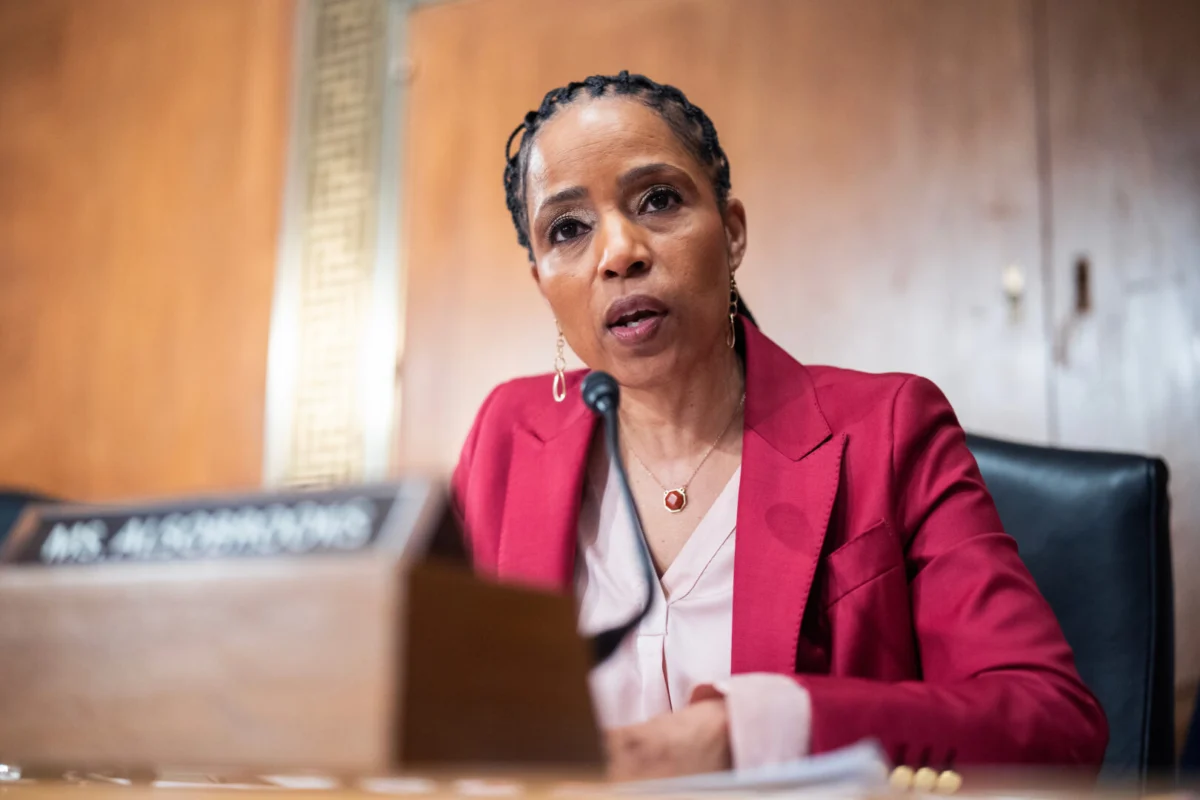
Senator Angela Alsobrooks (D-MD): Expressed profound alarm following the disclosure, issuing a sharply worded statement on Wednesday. She declared, "Trump and his family are the most corrupt we’ve ever seen in the White House," drawing a stark connection between his past controversies and his newfound crypto wealth. Alsobrooks cited a litany of alleged ethical breaches, including "planes, pardons, falsifying business records, and now crypto," painting a picture of systemic corruption. Her statement directly linked the disclosure to the ongoing legislative debate, emphasizing, "We desperately need legislation that includes an agreement on ethics – that would apply to the president, vice president, and all of us." This sentiment highlights her conditional support for the market structure bill, indicating that meaningful ethics provisions are non-negotiable for her final vote.
-
Senator Ruben Gallego (D-AZ): Also reacted negatively, taking to X (formerly Twitter) on Wednesday to voice his indignation. "Trump is using the presidency to profit off the American people," Gallego asserted, framing the crypto earnings as an abuse of power. He vowed, "I’ll keep doing everything I can to crack down on his corrupt crypto dealings." Gallego’s frustration with ethics negotiations is not new; he had previously fumed last month about the White House backing away from a potential agreement on such provisions, suggesting a pattern of resistance to transparency. His current stance reinforces the Democratic caucus’s resolve to push for robust ethical safeguards.
-
Senator Elizabeth Warren (D-MA): A leading and consistent opponent of the current crypto market structure bill, Senator Warren seized on the revelation to bolster her arguments. She warned that the proposed legislation, if passed without adequate safeguards, "could exacerbate Trump’s crypto conflicts." Warren’s position is clear and uncompromising: "The crypto legislation heading to the Senate floor must prevent the president, vice president, senior administration officials, members of Congress, and their families from profiting off the crypto industry." Her statement underscores the broader concern that without strict ethical firewalls, the digital assets market could become a vehicle for self-enrichment at the expense of public trust.
The White House’s Silence
In the immediate aftermath of the financial disclosure and the ensuing congressional uproar, a White House spokesperson did not immediately respond to requests for comment. This silence, while perhaps strategic, further amplifies the concerns raised by Democrats, leaving many questions unanswered regarding the administration’s stance on the ethical implications of such vast crypto profits for public officials, particularly in the context of ongoing legislative efforts. The lack of an official response at such a critical juncture only serves to underscore the sensitivity and political volatility of the issue.
Navigating the Legislative Labyrinth
The path forward for the digital assets bill in the Senate is now fraught with increased complexity, intensified by the ethical storm surrounding Donald Trump’s crypto profits. What was already a challenging legislative endeavor, requiring the delicate balancing of various interests and jurisdictions, has become a high-stakes test of political will and ethical resolve.
Committee Action and Bipartisan Splits
The journey of the market structure bill through the Senate has been a long and winding one. On May 14, the Senate Banking Committee adopted a substitute amendment to the bill by a vote of 15-9. This vote was significant, not just for its passage, but for the bipartisan, albeit conditional, support it received from two Democrats: Senators Ruben Gallego of Arizona and Angela Alsobrooks of Maryland.
However, their votes came with a clear caveat. Both Gallego and Alsobrooks explicitly stated that their markup votes did not guarantee their support for the bill on the full Senate floor. They stressed that further changes would be necessary, with a particular emphasis on the crucial need for a robust ethics provision. Their conditional support highlights the precarious nature of the bipartisan coalition and signals that the bill, in its current form, faces significant headwinds if it doesn’t adequately address these ethical concerns.
Adding another layer of complexity, the Senate Agriculture Committee also shares jurisdiction over parts of the digital assets market, particularly regarding commodities. This means that the Banking Committee’s bill would eventually have to be melded with a similar substitute amendment from the Agriculture Committee. This combined bill would then need to pass the full Senate before being reconciled with the version passed by the House of Representatives a year ago. Each step in this process presents an opportunity for amendments, further negotiations, and potential roadblocks.
The Path to Passage: Hurdles and Hopes
The legislative calendar is unforgiving, with the number of legislative days dwindling rapidly, especially in an election year. Accomplishing all these steps – reconciling two Senate committee bills, passing a combined Senate bill, and then reconciling it with the House measure – is a monumental task. The ongoing negotiations are not limited to ethics; lawmakers are still squabbling over other critical provisions within the Banking bill, such as anti-money laundering (AML) protocols and the oversight of decentralized financial (DeFi) networks. These are intricate issues, each capable of derailing consensus.
Despite these formidable challenges, there is a palpable and growing desire among some lawmakers to forge ahead. A Senate Republican aide, speaking anonymously, articulated this sentiment, stating, "We want to give these bipartisan negotiations a chance to play out, but if they’re going to drag on forever, we will try to bring [the market structure bill] to the floor and get it moving." This suggests a willingness to push the bill forward, even if it means addressing contentious disputes through floor debate and amendments, rather than allowing the legislative process to stagnate indefinitely.
The impetus behind this drive is multifaceted. The crypto industry’s persistent lobbying for regulatory clarity is a significant factor. Furthermore, the political optics of appearing to address an innovative, if sometimes volatile, sector before a major election could be appealing to certain factions. However, the newly ignited ethical debate surrounding Trump’s crypto earnings has fundamentally altered the landscape, ensuring that any forward movement will be met with intense scrutiny and likely fierce debate over the integrity of public service in the digital age.
The Broader Implications: Trust, Transparency, and the Digital Economy
The intertwining of a former president’s vast cryptocurrency profits with critical legislative efforts carries profound implications, extending far beyond the immediate political skirmish. It raises fundamental questions about public trust, the future of digital asset governance, and the ethical boundaries of public service in an era of rapidly evolving financial technologies.
Erosion of Public Trust
The scale of Donald Trump’s crypto haul, particularly from ventures like "Celebration Coins" and family-owned firms, risks further eroding public trust in government and potentially, in the nascent crypto industry itself. When public officials, or those closely associated with them, are perceived to be leveraging their influence or public profile for massive private gain in an unregulated or under-regulated market, it fuels cynicism about the motives behind policy decisions. For an industry already battling perceptions of volatility, scams, and illicit activity, this kind of headline can be damaging, making it harder to convince the public and skeptical lawmakers of its legitimacy and beneficial potential. The impression that "insiders" can profit handsomely while ordinary citizens face market risks or regulatory uncertainty undermines the foundational principle of equitable governance.
Precedent and Future Governance
The current debate over ethics provisions in the digital assets bill is not merely about Donald Trump; it’s about setting a precedent for future governance. Failure to implement robust safeguards against conflicts of interest in the crypto space could establish a dangerous template for future administrations and lawmakers. As digital assets become more integrated into the global economy, the potential for public officials to influence markets and policy for personal financial benefit will only grow. Clear, enforceable rules are essential to maintain the integrity of legislative processes and ensure that laws are crafted in the public interest, not for private enrichment. The challenge lies in defining these lines without stifling legitimate innovation or penalizing individuals for private enterprise unrelated to public duty.
Industry’s Dilemma
For the cryptocurrency industry, which has been ardently pushing for regulatory clarity to legitimize its operations and foster growth, the ethical storm presents a complex dilemma. While the industry desperately wants the "rules of the road" to be established, the current controversy risks politicizing the entire legislative effort. The focus might shift from sound policy and market structure to ethical grievances, potentially delaying or even derailing the passage of a much-needed bill. The industry needs to navigate this carefully, demonstrating its commitment to transparency and ethical practices to avoid being tarred by the brush of perceived political opportunism. The delicate balance between encouraging innovation and ensuring stringent oversight has become even more precarious.
An Election Year Wildcard
Finally, the entire saga unfolds in a critical election year, turning what might have been a niche policy debate into a potent political wildcard. Democrats are likely to weaponize Trump’s crypto profits as an example of alleged corruption and self-dealing, aiming to sway public opinion and mobilize voters. Republicans, while eager to pass a bill that could be seen as pro-innovation and pro-business, must now contend with the ethical optics of doing so without adequate safeguards. This issue could become a recurring talking point on the campaign trail, influencing voter sentiment and potentially impacting the outcomes of key races. The stakes are undeniably high, not just for the future of digital assets, but for the political landscape itself.
In conclusion, the revelation of Donald Trump’s extraordinary crypto earnings has injected an unprecedented level of political and ethical tension into the already arduous process of crafting digital asset regulation. The Senate now faces a stark choice: push through a bill that might be perceived as lacking ethical rigor, or risk further delays and potential legislative gridlock in pursuit of comprehensive safeguards. The outcome will not only shape the future of the digital economy but also send a powerful message about the standards of integrity expected from public officials in a rapidly evolving financial world.