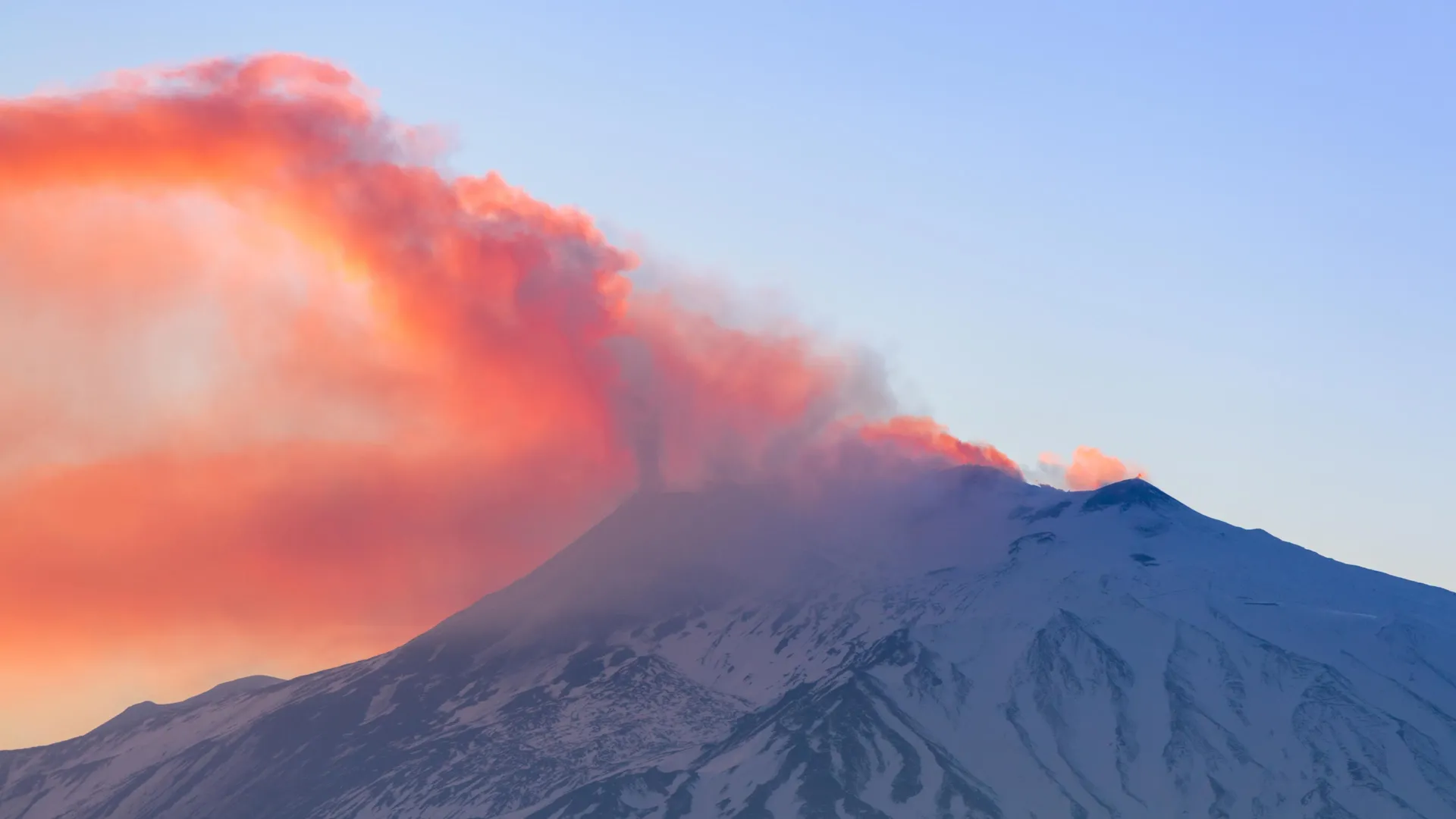
For over half a century, Mount Etna has stood as one of the most enigmatic geological features on the planet. Rising more than 3,000 meters (9,800 feet) above the sun-drenched landscape of Sicily, the volcano is not merely a tourist attraction or a source of frequent, fiery spectacle; it is a profound scientific puzzle. While Europe’s most active volcano has been studied extensively, geologists have long struggled to reconcile its existence with established models of plate tectonics.
Now, a groundbreaking study led by the University of Lausanne (UNIL) has proposed a radical explanation: Mount Etna may be a "petit-spot" volcano—a category previously thought to be reserved for tiny, submarine features. If this hypothesis holds, it would challenge the fundamental geological classification of large volcanoes, effectively rewriting the textbooks on how the Earth’s mantle interacts with its crust.
The Geological Misfit: Why Etna Defies Classification
To understand the magnitude of this discovery, one must first understand the rigid framework of traditional volcanology. For decades, scientists have categorized volcanoes based on the tectonic environment in which they are born. Typically, magma generation is attributed to one of three primary drivers:
- Subduction Zones: Where one tectonic plate slides beneath another, carrying water and sediments into the mantle, which lowers the melting point of the rock and creates magma (e.g., the Pacific "Ring of Fire").
- Divergent Boundaries: Where tectonic plates pull apart, allowing mantle material to rise and melt due to decompression (e.g., the Mid-Atlantic Ridge).
- Hotspots: Where a stationary plume of exceptionally hot mantle material burns through the Earth’s crust, creating a chain of volcanoes as the plate moves over it (e.g., Hawaii).
Mount Etna, however, refuses to fit into these boxes. Located near a complex subduction zone where the African plate is being forced beneath the Eurasian plate, it should theoretically behave like other subduction-related volcanoes. Yet, its chemical signature tells a different story. The composition of Etna’s lava is strikingly similar to that of hotspot volcanoes—despite the fact that there is no thermal plume, or "hotspot," beneath Sicily. This geographical and chemical dissonance has left geologists searching for a "fourth way" that the Earth produces such massive volcanic structures.
Chronology of a Discovery: Unraveling 500,000 Years of History
The mystery of Etna is deeply rooted in its ancient past. The volcano began its life approximately 500,000 years ago, evolving from a series of submarine eruptions into the towering stratovolcano we see today.
The Methodology of Deep Time
To investigate the origins of the volcano, researchers from the University of Lausanne, in collaboration with Anna Rosa Corsaro of the Istituto Nazionale di Geofisica e Vulcanologia (INGV) in Catania, performed an exhaustive analysis of rock samples. By collecting and dating samples that span the entirety of the volcano’s half-million-year history, the team was able to reconstruct the chemical evolution of the lava.
The results were unexpected. Throughout 500,000 years of activity, despite the shifting tectonic landscape and the changing intensity of the subduction process occurring beneath the Mediterranean, the chemical "fingerprint" of the magma remained remarkably stable. This stability is the smoking gun: it suggests that the magma is not being created "on the fly" by the subduction process itself, but rather is sourced from pre-existing pockets of molten material stored deep within the upper mantle, roughly 80 kilometers (50 miles) below the surface.
The "Petit-Spot" Hypothesis: A Giant in Disguise
The most startling conclusion of the UNIL study is the comparison between Mount Etna and "petit-spot" volcanoes. First identified by Japanese geologists in 2006, petit-spot volcanoes are small, submarine structures that erupt through the crust on the outer rise of a subducting plate.
According to the theory proposed by Professor Sébastien Pilet and his team, the tectonic collision between the African and Eurasian plates creates intense pressure on the Earth’s lithosphere. As the plate bends before descending into the mantle, it develops deep fractures. These fractures act as conduits, allowing the pre-existing pockets of magma in the upper mantle to be "squeezed" toward the surface—much like liquid being pressed out of a kitchen sponge.
A Discrepancy of Scale
"Our study suggests that Etna may have formed through a mechanism similar to the one that generates petit-spot submarine volcanoes," explains Professor Pilet. "This is unexpected, as such processes had previously only been observed in very small volcanic structures, typically rising no more than a few hundred meters. Mount Etna, by contrast, is a large stratovolcano… which now towers more than 3,000 meters above sea level."
This shift in scale—from a few hundred meters to over three kilometers—is what makes this finding so significant. It suggests that the "petit-spot" mechanism is not a minor geological quirk, but a powerful, latent process capable of sustaining one of the most prolific volcanic systems on Earth.
Supporting Data: The Chemical Evidence
The strength of the Lausanne team’s argument lies in the fusion of geochemical analysis and experimental petrology. By simulating the pressure and temperature conditions of the mantle in the laboratory, the researchers demonstrated that the mantle rock beneath Sicily is capable of producing the specific chemistry found in Etna’s lava without the need for a deep-seated thermal plume.
The data indicates that the supply of magma is controlled primarily by the mechanical movement of the plates rather than the chemical flux of subduction. This explains why Etna’s activity is so frequent and long-lived: the "sponge" is constantly being squeezed by the ongoing tectonic collision, ensuring a steady, reliable supply of magma that has been stored in the mantle for eons.
Official Responses and Scientific Implications
The implications of this study reach far beyond the borders of Italy. For the scientific community, the validation of this model would fundamentally change how we assess volcanic hazards.
Improving Hazard Assessments
Researchers at the INGV in Catania are already looking at how these findings might refine their hazard modeling. If the magma is stored in long-term, stable reservoirs in the mantle rather than being generated through temporary, fluctuating subduction processes, it may allow for more accurate predictions regarding the long-term behavior of the volcano. Understanding the source depth and the mechanics of the "squeeze" could provide early indicators of changes in magma volume, potentially saving lives in the densely populated regions surrounding Etna.
A New Category of Global Volcanism
Beyond Italy, the discovery opens a new frontier for geological exploration. If one of the world’s largest volcanoes is a "petit-spot" structure, it is highly probable that other volcanoes currently categorized as "anomalous" are actually part of this same, previously misunderstood class.
"If the hypothesis is correct, it could expand scientists’ understanding of how volcanoes form and encourage researchers to look for similar geological processes elsewhere in the world," the research team noted in their publication in the Journal of Geophysical Research: Solid Earth.
Geologists are now expected to re-examine other volcanoes that sit near subduction zones but exhibit "hotspot-like" chemistry. Sites in the Mediterranean, the Caribbean, and parts of the Pacific may soon undergo rigorous re-evaluation, as the hunt for more "petit-spot" giants begins in earnest.
Conclusion: A New Chapter for Etna
Mount Etna has long served as a sentinel for the Mediterranean, a constant reminder of the volatile forces churning beneath our feet. For centuries, its chemistry remained a mystery that defied the neat, orderly models of tectonic theory. By proposing that this iconic mountain is, in fact, a massive manifestation of a petit-spot process, researchers have bridged the gap between tiny submarine vents and one of the most powerful volcanoes on Earth.
This study does not just provide a new name for an old mountain; it highlights the complexity of the Earth’s mantle and the ingenuity of the processes that shape our planet’s surface. As scientists continue to peer deeper into the mantle, the story of Mount Etna serves as a humbling reminder: even the most familiar landscapes can still harbor secrets that challenge everything we think we know. Through the lens of this new research, Mount Etna is no longer just a stubborn exception to the rule—it is the herald of a new understanding of how the Earth breathes, fractures, and erupts.