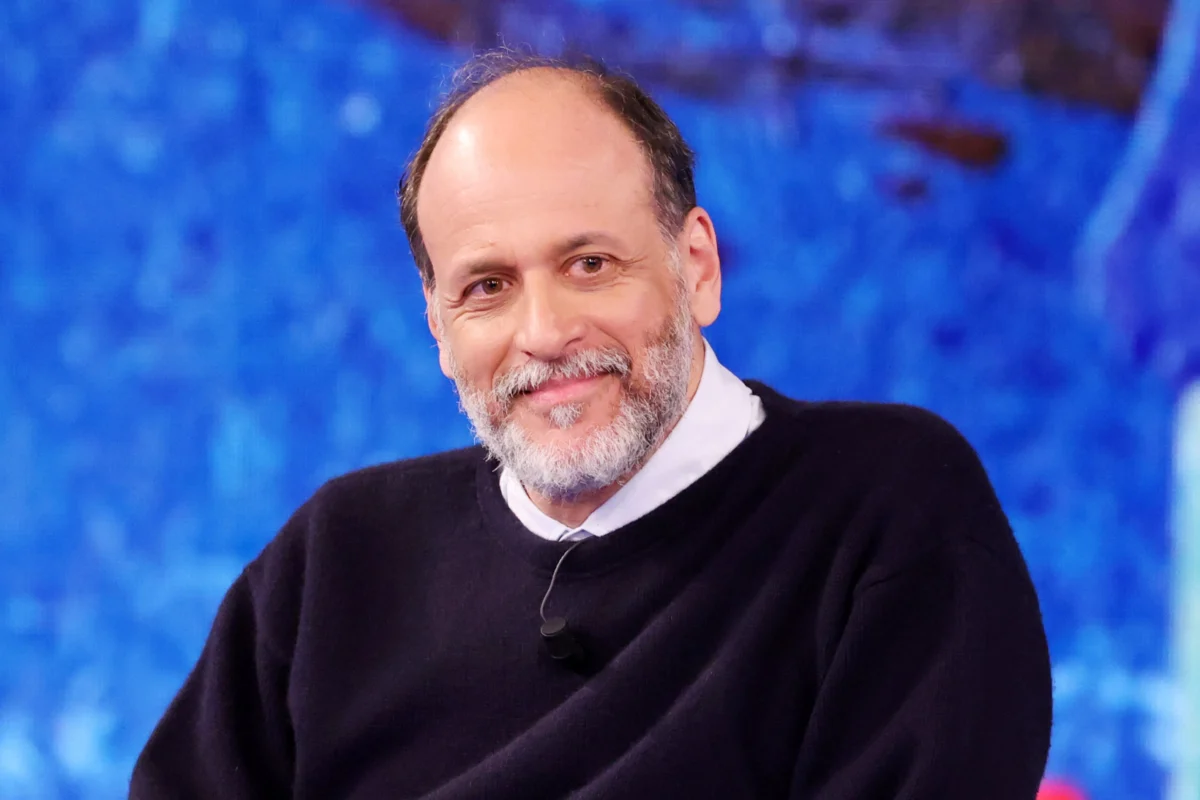
The intersection of Hollywood’s creative machinery and the burgeoning power of Silicon Valley has reached a volatile flashpoint. Luca Guadagnino, the acclaimed Italian visionary behind Challengers and Call Me by Your Name, finds himself at the center of a complex geopolitical and corporate drama following Amazon MGM Studios’ decision to drop his latest project, Artificial. The film, a high-stakes biographical drama centered on OpenAI CEO Sam Altman, has become a lightning rod for concerns regarding censorship, corporate influence, and the ethical implications of the AI revolution.
The Fallout: Amazon MGM Abandons the Project
The decision by Amazon MGM to walk away from Artificial—a $40 million production starring Andrew Garfield as Sam Altman and Ike Barinholtz as Elon Musk—did not occur in a vacuum. Industry insiders suggest the move was intrinsically linked to Amazon’s massive, multi-billion-dollar partnership with OpenAI.
Amazon’s strategic alignment with the artificial intelligence giant, which includes a reported $50 billion commitment to integrate custom AI models and utilize Amazon Web Services (AWS) infrastructure, created an untenable conflict of interest for the studio. By greenlighting a film that could potentially cast a critical eye on the architect of the technology Amazon is betting its future on, the studio faced a dilemma: prioritize artistic autonomy or protect a transformative corporate alliance. Ultimately, the studio chose the latter, leaving the finished, or near-finished, film in a state of distribution purgatory.
A Chronology of Artistic Conflict
The controversy surrounding Artificial is not merely about a film being shelved; it is a case study in how modern corporate conglomerates exert control over cultural narratives.
- Development Phase: Luca Guadagnino began development on the project with a vision to capture the seismic shift occurring in Silicon Valley, centering on the enigmatic personality of Sam Altman.
- Production: The film’s shoot took place in San Francisco, an environment that provided the backdrop for what Guadagnino describes as a study in stark societal contrasts.
- The Amazon/OpenAI Deal: As Amazon deepened its financial commitment to OpenAI, the internal friction within the studio regarding the film’s tone and subject matter reportedly intensified.
- The Exit: Months after cementing its partnership with the AI firm, Amazon MGM officially dropped the film, sending shockwaves through the industry.
- The "Pass" Phenomenon: Recent reports indicate that other major players, including Netflix, A24, and Focus Features, have opted not to pick up the title, raising questions about whether the film has become "radioactive" in the eyes of major distributors wary of alienating the tech giants.
Guadagnino Speaks: A Perspective on the "Disturbing Image"
During a recent appearance on the Italian news program Otto e Mezzo, hosted by Lilli Gruber, Guadagnino broke his silence on the climate surrounding the film. While he declined to discuss the specific legal or contractual nuances of the studio’s departure, he offered a scathing assessment of the environment that created the film.
"I was reading a great article yesterday recalling how, back in 2003, CBS cancelled a major drama series about the Reagans due to pressure from Republicans," Guadagnino noted, drawing a parallel between his current plight and historical instances of political censorship. "It was actually cancelled, though it later aired on a smaller channel."
For Guadagnino, the true story is not the film’s distribution woes, but the visual metaphor he encountered on the streets of San Francisco. He described the "perfect image" of the modern era: "We shot part of the film in San Francisco—a wonderful city, one of the great, distinguished U.S. cities, Alfred Hitchcock’s city—a place of great beauty but also great despair, with so many homeless people, so many people living under the influence of fentanyl, while these wonderful, silent, self-driving cars glided past them."
He characterized this juxtaposition as "more than just disturbing," positioning it as the thematic heart of his project.
The AI Debate: Beyond the Code
Guadagnino’s commentary on the film provided a window into his broader philosophy regarding artificial intelligence. He is careful to distinguish between the technology itself and the way it is being weaponized as a cultural and economic tool.
"To me, the issue isn’t artificial intelligence itself," he stated. "The application—or whatever we want to call it—the tool used to generate ‘products of knowledge’ or creative works, such as a research paper, a video, or an image… from one perspective, it’s a technological gadget—and not a particularly sophisticated one, at that—full of flaws, though it will likely improve over time."
The director’s skepticism is rooted in the human cost. He pointed to the massive resource consumption required to sustain current Large Language Models (LLMs)—specifically the vast amounts of electricity and water required to power data centers—as evidence of a systemic imbalance. He remains wary of the grand promises of "Artificial General Intelligence" (AGI), suggesting that the industry is currently fueled by a mix of technological hubris and data scraping.
Implications for Creative Freedom
The struggle to distribute Artificial highlights a growing crisis in independent and high-concept filmmaking. When a project is deemed "dangerous" or "inconvenient" to the corporate masters of the digital age, the pathways for audience access narrow significantly.
The Concentration of Media Power
The fact that major distributors like Netflix and A24 have reportedly passed on the film signals a chilling effect. If a $40 million production featuring an A-list cast like Andrew Garfield cannot find a home, it suggests that the "streaming wars" have given way to a new era of risk-aversion. In this climate, films that challenge the corporate status quo—or the entities that underpin the current digital economy—may find themselves increasingly marginalized.
The Identity of the Globalized World
Guadagnino’s most profound point concerns how these technologies are reshaping the identity of nations. "What matters most to me," he told the audience, "is how people are completely changing the face, not just of society—in terms of consumption habits and how we interact with these tools—but the very face of the identity of a place like the United States and the entire world."
He argues that the integration of AI is not merely a change in efficiency but a fundamental shift in how humanity defines itself. When a city like San Francisco—the cradle of modern innovation—becomes a site of extreme wealth disparity, where the residents of the streets are ignored by the silent, automated machines of the elite, the moral vacuum becomes impossible to ignore.
What Lies Ahead for ‘Artificial’?
As Mubi continues to circle the film, the industry watches with bated breath. The saga of Artificial serves as a litmus test for the future of cinema. Will the film eventually find a home on a platform willing to weather the corporate friction, or will it remain an "unseen" artifact of the early AI age?
The irony is not lost on observers: a film about the man who brought AI to the mainstream is struggling to exist because of the very corporate structure he helped build. For Luca Guadagnino, the project has already succeeded in its primary goal—not necessarily by being released in theaters, but by exposing the raw, uncomfortable nerves of our current reality.
As the world continues to grapple with the promises and perils of the digital revolution, the story of Artificial will likely be cited as a seminal moment in the collision between the humanistic tradition of cinema and the cold, calculated logic of the algorithm. Whether the film reaches the screen remains to be seen, but the debate it has ignited is far from over.