Introduction: A Preventable Tragedy
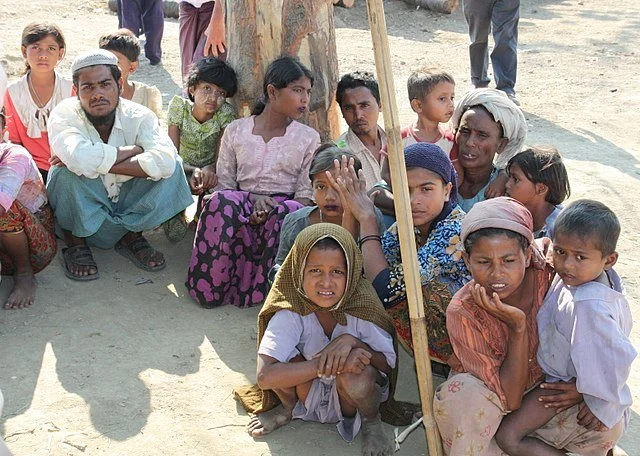
As the monsoon rains batter the fragile, deforested hillsides of southeastern Bangladesh, the Rohingya refugee population—already one of the world’s most vulnerable groups—is facing a mounting catastrophe. A damning new report released this Monday by Human Rights Watch (HRW) has shed light on the deadly toll of recent landslides in the Cox’s Bazar settlement. With at least 17 lives lost and over 3,000 people displaced in a matter of days, the tragedy has transcended the definition of a "natural disaster." Experts and human rights advocates argue that these deaths are the direct, foreseeable consequence of restrictive government policies and a devastating decline in international humanitarian funding.
The settlement at Cox’s Bazar, home to over one million refugees who fled systemic persecution in Myanmar, has become a site of recurring horror. As the hillsides give way, the international community is being forced to confront a reality that has been brewing for nearly a decade: the refusal to permit permanent, resilient infrastructure is literally burying the refugee population alive.
Chronology: A Week of Destruction
The scale of the current crisis is best understood through the rapid succession of weather-related incidents that have plagued the region since the beginning of July 2026. According to data provided by the Rohingya Coordination Platform, the period between July 4 and July 9 was marked by a relentless series of climatic events that decimated the camps’ already fragile defenses.
- July 4–6: Initial heavy rainfall triggers localized slope collapses, damaging vital access roads and isolating several blocks within the Kutupalong expansion site.
- July 7: The intensity of the monsoon increases, leading to a surge in landslide frequency. The Rohingya Coordination Platform records a total of 95 distinct landslide events within a 72-hour window.
- July 8: The death toll rises to 17, as makeshift shelters constructed from bamboo and plastic tarps are swept away by mudflows. The humanitarian response is hampered by destroyed infrastructure and flooded drainage channels.
- July 9: Displacement figures reach 4,307, with thousands of families left without shelter or access to clean water.
- July 13: Human Rights Watch releases its investigative report, formally condemning the lack of structural investment and government restrictions as the primary drivers of the loss of life.
Supporting Data: The Anatomy of a Vulnerable Settlement
The geography of Cox’s Bazar has always been ill-suited for a population of this magnitude. The camps are situated on steep, denuded hillsides that were cleared of vegetation to make room for the rapid influx of refugees starting in 2017. Without the root systems of trees to stabilize the soil, the earth turns into a lethal slurry during the monsoon.
According to the Rohingya Coordination Platform’s latest flash update, the damage extends beyond residential structures. Crucial facilities—including schools, community centers, and water filtration hubs—have been crippled. The technical challenges are immense: the camps lack proper drainage, and the steep topography means that once a landslide begins, it often triggers a domino effect, destroying homes further down the slope.
A water, sanitation, and hygiene (WASH) civil engineer, who spoke to HRW on the condition of anonymity, provided a stark technical assessment:
"The soil composition here is highly susceptible to liquefaction. We have the technical knowledge to build gabion walls and reinforced terraces, but we are prohibited from using permanent materials like bricks or concrete. Because of current funding cuts, even the temporary earth-stabilization work has been stalled. We are essentially trying to stop a landslide with bamboo sticks."
The data is clear: the current "emergency response" model is no longer fit for purpose. With 286 weather-related incidents reported in less than a week, the frequency and intensity of these events are outpacing the capacity of humanitarian aid agencies to provide reactive relief.
Official Responses and the Policy Standoff
The tension between humanitarian necessity and political policy remains the central obstacle to survival. The Bangladesh government, citing concerns over the long-term settlement of refugees, has consistently denied requests to allow the construction of semi-permanent or permanent housing. The official stance holds that the Rohingya are temporary guests who must be repatriated to Myanmar; therefore, "permanent" structures are viewed as a signal of integration that the state is unwilling to facilitate.
Meenakshi Ganguly, the deputy Asia director at Human Rights Watch, argues that this policy is dangerously out of step with the reality of the situation.
"Every monsoon is becoming increasingly deadly for Rohingya refugees in Bangladesh, with denuded hills sliding away under makeshift structures, as the funding to buttress the camps has dried up. These are not simply natural disasters, but a predictable outcome of policies that put refugees’ lives at risk," Ganguly stated.
The humanitarian sector, meanwhile, is paralyzed by a "funding cliff." In 2025, an ambitious plan was proposed to upgrade thousands of shelters to semi-permanent models capable of withstanding cyclonic winds and heavy rain. However, as global attention shifts to other conflicts, funding for the Rohingya response has seen drastic cuts. The Guardian and other outlets have previously reported that these budgetary shortfalls are directly leading to malnutrition and health crises, even before the current landslide emergency.
The Historical Context: A Decade of Persecution
To understand why the Rohingya remain in these precarious conditions, one must look back at the 1982 Citizenship Law in Myanmar. This legislation effectively stripped the Rohingya of their nationality, rendering them the world’s largest stateless population. For decades, they have faced state-sponsored violence, including the destruction of villages, arbitrary detention, and systemic discrimination.
The 2017 crackdown in Rakhine State—characterized by the United Nations as a "textbook example of ethnic cleansing"—forced nearly one million people to flee across the border into Bangladesh. They arrived with nothing and have spent nearly a decade in a state of limbo.
The situation has been extensively documented by international monitors, who note that the camps in Rakhine State, where those who stayed are held, are essentially open-air prisons. The legal and social exclusion of the Rohingya has been absolute, leaving them without rights in their homeland and without protection in their country of refuge. In January 2026, the International Court of Justice (ICJ) began formal hearings to investigate these acts of persecution as genocide, a legal process that, while historic, offers little immediate protection to those currently dodging landslides in Cox’s Bazar.
Implications: A Call for Urgent Reform
The implications of this week’s tragedy are profound. First, there is the immediate humanitarian imperative: if the international community does not provide the capital for slope stabilization and drainage infrastructure, the next major monsoon event will inevitably result in a higher death toll.
Second, there is the question of political courage. Ganguly and other advocates are calling on donor governments—including the United States, the European Union, and regional powers—to exert pressure on the Bangladeshi authorities to allow for safer, more resilient infrastructure. The refusal to permit brickwork or concrete, while intended to prevent permanent settlement, has morphed into a policy that sacrifices lives in the name of political optics.
"Concerned governments need to act instead of waiting for the next landslide to sweep away another Rohingya family," Ganguly emphasized.
As the monsoon continues, the fate of the Rohingya refugees hangs in a delicate balance. They remain trapped between the genocidal policies of the state they fled and the restrictive, underfunded realities of the land where they sought safety. Without a shift in international funding priorities and a pragmatic evolution in local building policies, the tragedy in Cox’s Bazar will continue to be a repetitive, man-made disaster, leaving the world to witness the slow erosion of a displaced population.