The landscape of personal technology is undergoing its most significant transformation since the advent of the smartphone. As artificial intelligence models become increasingly sophisticated, the industry’s focus has shifted from "how do we build better models?" to "how do we actually interact with them?" In this rapidly expanding theater of human-computer interface (HCI) devices, a new player has emerged from the intersection of Bengaluru and San Francisco: Aina.
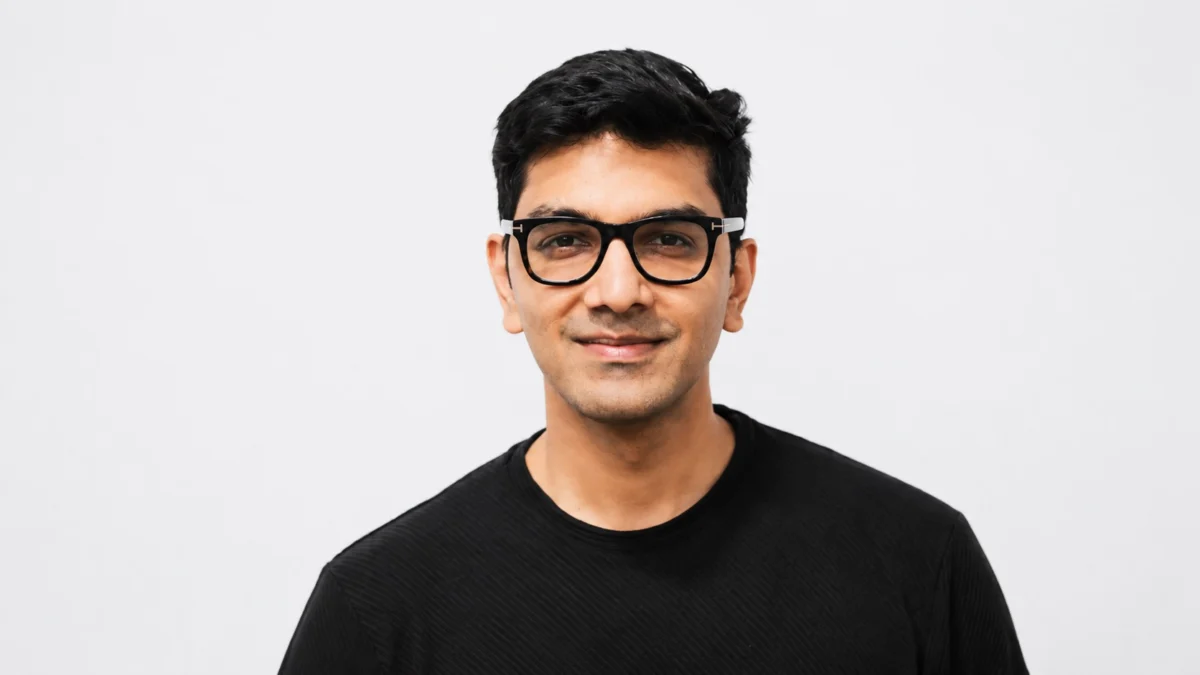
Translating to "mirror" in Hindi, Aina has officially stepped into the limelight, announcing a $5.5 million funding round. The startup, led by founder Apoorv Shankar, is aiming to solve a fundamental problem in the AI era: the friction between human intent and machine execution. While competitors race to capture data, Aina is betting on a future where hardware is designed not just to listen, but to act.
The Crowded Arena: A Search for Form Factor
The current market is saturated with experimental hardware, each vying to become the definitive interface for the AI-powered life. The "AI wearable" gold rush is fragmented across a dizzying array of form factors. Startups like Sandbar are betting on the smart ring; Plaud has captured attention with its AI pins and desktop notetakers; and Pocket is pushing credit card-sized "pucks" designed to bridge the gap between physical reality and digital capture.
Beyond these niche devices, the industry is seeing major players double down on smart eyewear. Meta’s Ray-Bans have set a high bar for accessible, fashionable AI-integrated glasses, while startups like Even Realities have surged to a $1 billion valuation, signaling massive investor confidence in the "face-worn" interface. Meanwhile, companies like Bee and Friend are iterating on the concept of the AI companion—a wearable device that lives on the periphery of the user’s life, constantly observing and, theoretically, assisting.
Aina enters this fray not by creating yet another passive recording device, but by focusing on the "macro"—a concept that prioritizes user agency over constant surveillance.
Chronology of a Startup: From Project Mirage to Aina
The genesis of Aina is deeply rooted in the hardware engineering lineage of its founder. Apoorv Shankar is no stranger to the complexities of wearable technology. Formerly the VP of Hardware at the popular smart ring maker Ultrahuman, Shankar has spent years refining the balance between aesthetic design and functional utility.
His previous venture, LazyCo, was a hardware interface design firm that pioneered gadgets—including a ring designed to act as a remote control for smartphones—that were eventually acquired by Ultrahuman. This acquisition brought Shankar into the fold of the health-tech giant, where he gained invaluable insights into what users actually want from their wearable devices.

However, the rapid-fire launch of AI-centric hardware like the Rabbit R1 and the Humane Pin served as a turning point for Shankar. Despite the technical ambition behind these projects, they left him wanting more. He recognized that while these devices were good at "context capture," they were often poor at "context execution." In late 2024, he departed from his established role at Ultrahuman to launch "Project Mirage," which would eventually evolve into the company now known as Aina.
The Aina Portfolio: Dune, Radiance, and Shift
Aina’s initial development phase resulted in three distinct hardware products, each tackling a specific facet of human-computer interaction:
- Dune: A three-key, context-aware macro keypad. It serves as the company’s flagship product, designed to provide granular control over meetings, app-specific shortcuts, and complex software scripts.
- Radiance: A tabletop remote for video conferencing. It features a tactile dial for volume control and dedicated physical buttons to manage microphones, cameras, and AI notetakers, as well as voice modulation.
- Shift: A single-tap "agentic" button. This small device connects to a smartphone to trigger pre-set AI agents, allowing users to automate repetitive tasks with a single physical interaction.
Through early, rigorous user testing, the team at Aina discovered that the "Dune" keypad resonated most strongly with the target audience. Users valued the ability to control their digital environment through tactile, deliberate inputs. Consequently, Aina has pivoted its roadmap to prioritize the launch of Dune, viewing it as a learning vessel that will allow the company to observe, in real-world conditions, how users actually want to delegate tasks to AI.
Financial Backing and Strategic Vision
The $5.5 million funding round is a testament to the venture capital community’s belief in the necessity of new hardware interfaces. The round was led by Redstart Labs (a division of Info Edge India) and 360 ONE, with significant participation from MIXI Global Investments, Antler, and the Blume Founders Fund.
The cap table also reads like a "who’s who" of the tech ecosystem, featuring high-profile individual investors including WhatsApp head Kunal Shah, Razorpay co-founders Harshil Mathur and Shashank Kumar, and Scribd founder Tikhon Bernstam. This caliber of support underscores a shared industry sentiment: the current interaction model—taps and swipes on flat glass—is reaching its limit.
Implications: Moving Beyond "Always-Listening"
The defining difference between Aina’s strategy and that of its competitors lies in its rejection of the "passive capture" philosophy. Most current AI hardware relies on the premise that if you record everything, the AI can eventually provide value. Shankar argues that this is a fundamentally flawed approach.
"I think you have enough context—you have it in your phone and your laptop all the time—and we haven’t even started using that well," Shankar remarked in a recent interview. Aina’s philosophy is that the missing piece is not more data, but more control. By creating an "action-oriented" device, Aina intends to empower users to trigger workflows, control agents, and manage their digital ecosystem with physical precision.

This shift mirrors the broader trend among developers and power users who are increasingly adopting AI coding tools like Claude Code and OpenAI’s Codex. As these AI agents become more capable, the need for specialized hardware to "command" them is growing. We are seeing a renaissance of the macro-controller, with keyboard manufacturers and DIY enthusiasts alike building custom hardware to bridge the gap between human intent and machine execution.
The Path Forward: What Does "Controlling AI" Look Like?
The industry is currently in a state of architectural discovery. Qualcomm has publicly stated it is experimenting with over 40 different devices for AI interaction, and rumors continue to swirl regarding OpenAI’s potential entry into the smart speaker market. With no clear winner in terms of form factor—be it ring, pin, glasses, or keypad—the coming years will be defined by an intense, competitive iteration.
Aina is already looking toward its next product, which will synthesize the lessons learned from the Dune, Radiance, and Shift prototypes. While the company remains tight-lipped about the specifics of its next device, Shankar has confirmed that it will move away from the "always-listening" paradigm. Instead, it will be designed as a bridge between the user and the growing swarm of AI agents that are beginning to inhabit our laptops and smartphones.
The race to build the next AI interface is not just about miniaturization or clever packaging; it is a battle to define the "command language" of the next century. Whether that language is spoken, swiped, or clicked via a physical macro-key, companies like Aina are banking on the idea that the future of computing will be defined by how effectively we can tell our machines what to do.
As the noise in the AI hardware market increases, Aina’s deliberate, engineering-first approach provides a compelling counter-narrative. By focusing on utility over spectacle, and agency over surveillance, they are asking the most important question in the industry: When the machines finally have the capability to do everything, how will we choose to direct them? The answer, it seems, may be found in the tactile, satisfying click of a well-designed button.