Main Facts: The Cedeño Emergency
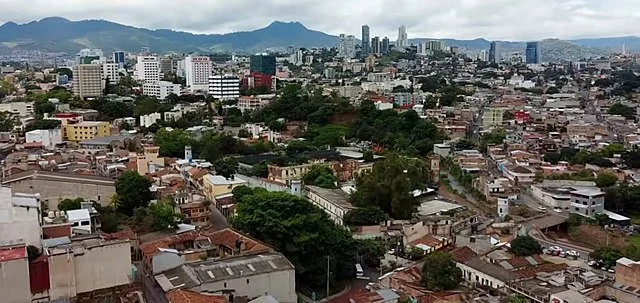
The coastal village of Cedeño, situated along the Gulf of Fonseca in southern Honduras, has become a harrowing symbol of the global climate crisis. Once a bustling hub of artisanal fishing and tourism, the community is currently witnessing the systematic erasure of its geography. Amnesty International, in a landmark report released this week, has formally declared that the environmental degradation in Cedeño is no longer merely a matter of ecological shifts; it is a profound human rights emergency.
The impacts of climate change—characterized by rising sea levels, aggressive coastal erosion, and an increase in the intensity of tropical storms—have stripped the residents of their most fundamental rights. Access to clean, potable water, the right to adequate housing, and the right to a sustainable livelihood have been systematically compromised. The report underscores a bitter irony: while Honduras is responsible for a negligible fraction of global greenhouse gas emissions, its citizens are paying the highest price in terms of displacement and loss of life-sustaining infrastructure.
Chronology of a Disappearing Landscape
The transformation of the Honduran Pacific coast has been a slow-motion catastrophe spanning over two decades.
- 2004–2014: Early signs of coastal erosion were dismissed as cyclical weather patterns. However, local satellite monitoring began to show a consistent retreat of the shoreline, with several meters of land lost annually.
- 2015–2020: Increased frequency of storm surges began to breach residential areas. The salt-water intrusion began to contaminate local aquifers, rendering traditional wells useless.
- 2024: Following the devastation caused by Tropical Storm Cristina, the situation reached a breaking point. The storm acted as a catalyst, accelerating the destruction of what remained of the local water distribution network.
- 2026 (Present): Amnesty International’s current investigation confirms that the erosion has reached a critical threshold. The "re-location" of Cedeño is no longer a policy debate; it is a forced reality for families whose homes have been reclaimed by the Pacific Ocean.
Supporting Data: An Anatomy of Vulnerability
The data provided by Amnesty International paints a grim picture of systemic failure and environmental decay.
The Erosion Metrics
Over the past 22 years, the Pacific coast of Honduras has seen a significant, measurable loss of territory. Coastal erosion in the Gulf of Fonseca is currently outpacing natural recovery processes. The loss of land is not just geographic; it is an economic eviction of the population.
Water and Food Security
The collapse of the water distribution network has forced residents to rely on self-dug, shallow wells. Scientific analysis of these sources shows high levels of salinity and biological contamination, making the water entirely unsuitable for human consumption. This has led to a spike in water-borne illnesses among the most vulnerable demographics, specifically children and the elderly.
Furthermore, the degradation of the marine ecosystem has devastated the local economy. Artisanal fishermen report a massive decline in catch sizes. As the coastal shelf changes shape and mangrove forests—the nurseries of the sea—are destroyed by rising tides and storm surges, the fish populations have migrated to deeper, inaccessible waters. This cycle leaves the community without food security and, crucially, without any alternative income streams, trapping them in a cycle of poverty and environmental peril.
Official Responses and Institutional Inaction
The response—or lack thereof—from both the Honduran state and the international community remains the focal point of the rights group’s criticism.
The Stance of Amnesty International
Ana Piquer, Amnesty International’s Americas director, was unequivocal in her condemnation of the status quo. "The heartbreaking situation facing the people of Cedeño today is the result of years of climate inaction," Piquer stated. She emphasized that the rights to water, food, and housing are not merely aspirational; they are legal obligations that the state is currently failing to uphold.
The Institutional Vacuum in Honduras
The report highlights a critical legislative gap: Honduras currently possesses no comprehensive national framework to address the needs of climate-displaced persons. While the state has engaged in sporadic disaster relief, there is no long-term policy for the permanent relocation of communities that are effectively being erased from the map. This lack of institutional capacity has left families in a state of perpetual instability, unable to plan for a future that is quite literally washing away.
International Climate Finance
The report points to a broader, global failure: the inadequacy of international climate finance. The funds currently being funneled to developing nations are often structured as loans rather than grants, further indebting nations already struggling with the costs of climate adaptation. Amnesty International is calling on major emitting nations to pivot their support toward grants, arguing that the financial burden of a crisis caused by the Global North should not be borne by the vulnerable populations of the Global South.
Implications: A Precedent for Future Conflict
The situation in Cedeño serves as a localized preview of a looming global reality. The implications of this crisis are far-reaching and touch upon international law, human rights, and regional stability.
Internal and External Displacement
The lack of viable adaptation strategies has forced a two-tiered displacement. Internally, families are moving to informal settlements in urban centers, putting immense pressure on already strained public services. Externally, the climate crisis has become a primary driver of migration toward neighboring countries and the North. Climate displacement, as noted by the Berkeley-affiliated research highlighted in the report, is becoming a primary catalyst for regional instability.
The Legal Obligation to Act
The UN’s recent resolutions confirming the state’s obligation to combat climate change provide a new legal lens through which the Honduran government’s inaction can be viewed. As the health of the world’s oceans continues to deteriorate, the legal precedent for "climate litigation"—holding states accountable for failing to protect their citizens from foreseeable environmental disasters—is gaining traction. The Cedeño case is a prime candidate for such legal scrutiny.
A Call for Global Solidarity
The Amnesty International report concludes with a stern warning: unless there is a radical shift in how the international community approaches climate finance and local adaptation, the tragedy of Cedeño will be repeated across hundreds of coastal communities worldwide.
The urgency of the situation cannot be overstated. With climate projections indicating that hurricanes and floods will only grow in intensity, the window for effective intervention is closing. The protection of human rights in the age of climate change requires more than just rhetoric; it requires the mobilization of significant financial resources and a political commitment to prioritize human life over institutional inertia.
As the tide continues to rise in the Gulf of Fonseca, the people of Cedeño remain at the vanguard of a battle they did not start, waiting for a world that has, until now, failed to provide the lifeboats they so desperately need.