WASHINGTON D.C. — In a significant escalation of Middle Eastern hostilities that threatens to dismantle months of fragile diplomacy, the United States has launched a fresh wave of military strikes against Iranian targets. The military action follows a sweeping policy declaration by President Donald Trump, who announced on Monday that Washington is "reinstating" a total naval blockade on Iran within the Strait of Hormuz.
In a move that has sent shockwaves through international markets and diplomatic circles, the Trump administration also signaled a radical departure from decades of maritime doctrine by suggesting the U.S. will begin charging commercial vessels a fee for safe passage through the critical waterway. The convergence of military force and the proposed monetization of maritime security marks a volatile new chapter in a conflict that many observers fear is sliding toward all-out war.
Main Facts: A Dual Strategy of Kinetic Force and Economic Pressure
The current crisis centers on the Strait of Hormuz, a narrow chokepoint through which approximately 20% of the world’s petroleum liquids pass. Following a weekend of renewed skirmishes, the U.S. government has pivoted from a posture of "interim peace" back to active containment and aggressive interdiction.
Resumption of Air and Sea Strikes
U.S. Central Command (CENTCOM) confirmed via social media that the American military has initiated a comprehensive campaign to degrade Iranian offensive capabilities. These strikes targeted dozens of strategic sites, including sophisticated air defense systems, radar installations, missile silos, drone command centers, and the "mosquito fleet" of small, fast-attack boats frequently used by the Islamic Revolutionary Guard Corps (IRGC) to harass commercial shipping.
"These strikes will continue imposing a heavy cost on Iranian forces," a CENTCOM spokesperson stated. "Our objective is to degrade their ability to attack innocent civilians and commercial shipping in the Strait of Hormuz."
The Return of the Blockade
President Trump, speaking from the Oval Office, characterized the military action as "another major attack" intended to neutralize Iran’s regional reach. He explicitly declared the end of the recent ceasefire, stating that the U.S. is "reinstating the Iranian blockade" effective Tuesday at 4:00 p.m. EDT. This move effectively closes Iranian ports to international trade and seeks to choke off the country’s remaining economic lifelines.
The "Protection Reimbursement" Policy
Perhaps the most controversial aspect of the Monday announcement was the President’s proposal to levy a 20% "protection fee" on the value of cargo transiting the Strait. Trump argued that the U.S. military provides a global service by securing the waterway and should no longer bear the financial burden alone. "We’re protecting a very rich portion of the world," Trump told reporters. "We’re spending money. And so, what we’ve done is, we are going to be reimbursed for protection."
Chronology: The Road to the Current Escalation
The current hostilities are the latest peak in a timeline of conflict that began earlier this year, characterized by a cycle of "maximum pressure" and violent retaliation.
- February 28: A massive military exchange occurs involving U.S. and Israeli forces against Iranian infrastructure, effectively marking the start of the current "war" footing.
- Mid-April: The United States imposes its first comprehensive naval blockade on Iranian ports, leading to a near-total halt of Iranian oil exports and a spike in global energy prices.
- June 2026 (Interim Deal): Negotiated by mediators from Pakistan, Qatar, and Egypt, an interim peace deal is reached. The U.S. agrees to lift the blockade in exchange for a ceasefire and the reopening of the Strait of Hormuz to all traffic. A 60-day window is established to negotiate a permanent settlement, including resolutions regarding Iran’s nuclear program.
- Late June: Secretary of State Marco Rubio meets with Gulf leaders in Bahrain, reassuring them that the Strait remains an international waterway and that the U.S. would never support tolls or fees for passage.
- July 5-6: The ceasefire begins to crumble. Iran allegedly attacks a container ship, prompting the U.S. to deploy drone ships—used in combat for the first time—to strike an Iranian maintenance facility and a submarine.
- July 13 (Monday): President Trump declares the interim deal "over," citing Iran’s failure to "honor the test." CENTCOM launches a new round of strikes, and the blockade is officially reinstated.
Supporting Data: Economic and Military Indicators
The instability in the Strait of Hormuz has immediate and profound implications for the global economy, specifically regarding energy security and shipping costs.
Market Volatility
Following the President’s announcement on Monday, the price of Brent crude oil—the global benchmark—surged by 7.8%, closing at $81.92 per barrel. While this remains significantly lower than the $120 peak seen at the height of the February conflict, analysts warn that a prolonged blockade and the introduction of a 20% "toll" could push prices into uncharted territory.
The Toll Impact
A 20% fee on cargo value would be unprecedented in modern maritime history. For a Very Large Crude Carrier (VLCC) carrying 2 million barrels of oil at current prices, a 20% fee could equate to a charge of over $30 million for a single transit. Such costs would likely be passed directly to consumers, potentially fueling a global inflationary spike in energy, fertilizer, and manufactured goods.
Military Engagement Metrics
The U.S. military reported striking "dozens" of sites on Monday. Key to this new phase of the conflict is the use of unmanned systems. The deployment of "drone ships" to neutralize Iranian naval assets suggests a shift toward high-tech, low-risk (for U.S. personnel) attrition warfare. Conversely, Iran has demonstrated its reach by launching missiles that required interception by neighboring Jordan, indicating a multi-front regional capability.
Official Responses: A Divided International Community
The reactions to the U.S. policy shift have been polarized, reflecting the deep geopolitical fault lines in the region.
The Iranian Perspective
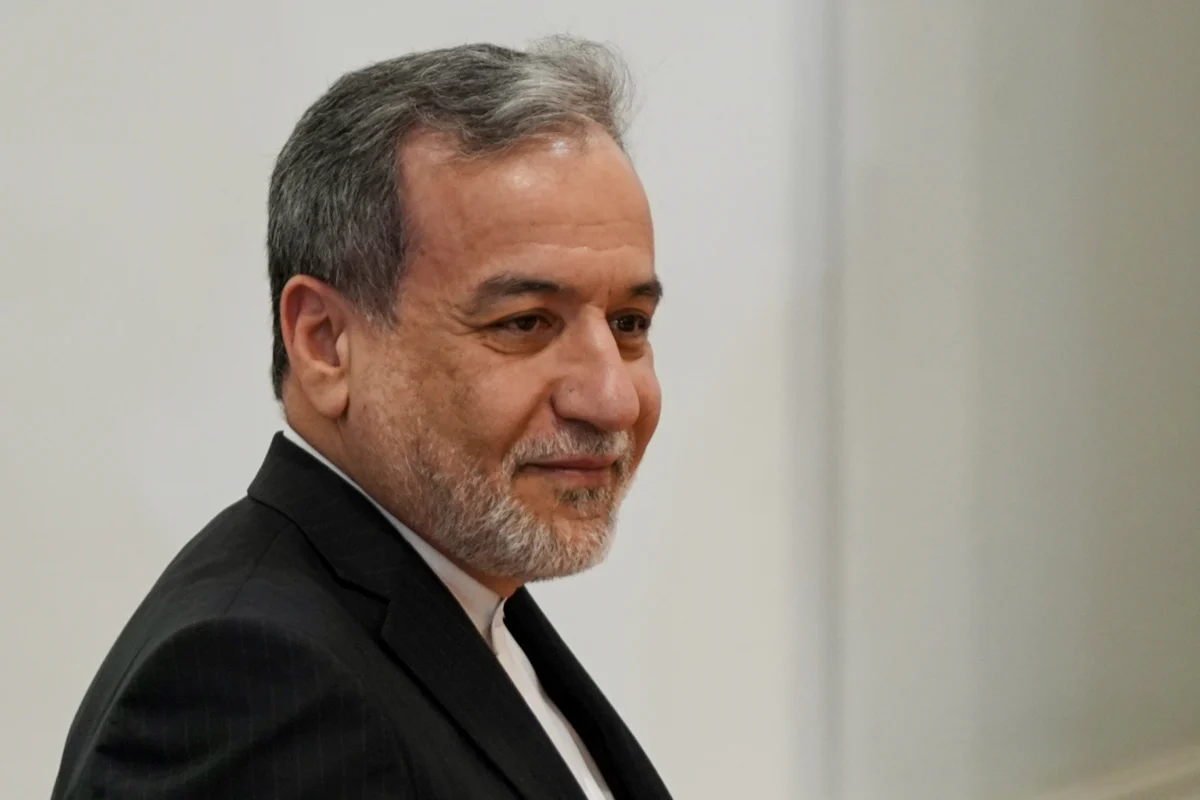
Iranian Foreign Minister Abbas Araghchi responded to Trump’s toll proposal with a mixture of mockery and opportunism. In a post on X (formerly Twitter), Araghchi suggested that if the U.S. legitimizes the concept of charging for passage, Iran—as the historical "guardian" of the Strait—has a better claim to those funds.
"POTUS is absolutely right," Araghchi wrote. "Whoever provides secure and safe passage… should be compensated. Iran has always been the GUARDIAN of the Strait and will remain so FOREVER. 20% is of course too much. We will be fair."
The International Maritime Organization (IMO)
The United Nations agency overseeing international shipping issued a stern rebuke of the proposal. The IMO stated there is "no legal basis" for mandatory tolls in international straits, emphasizing that such a move would violate the UN Convention on the Law of the Sea (UNCLOS), which guarantees the right of "transit passage" through straits used for international navigation.
Regional Allies
The situation for U.S. allies in the region is increasingly precarious.
- Kuwait: The Foreign Ministry reported an attack on its consulate in Iraq and condemned Iranian-aligned militias for strikes on a maritime oil drilling platform belonging to the Kuwait Petroleum Corporation.
- Jordan: The Jordanian military confirmed shooting down four Iranian missiles on Monday. While there were no casualties, the incident underscores the danger posed to states hosting U.S. military assets.
- Bahrain: Home to the U.S. Navy’s 5th Fleet, Bahrain saw missile alert sirens sound multiple times on Monday, though no damage was immediately reported.
Implications: A New Era of Maritime Hegemony?
The reinstatement of the blockade and the introduction of a protection fee carry implications that extend far beyond the current conflict with Tehran.
1. Erosion of "Freedom of Navigation"
For nearly a century, the U.S. Navy has acted as the primary guarantor of the "Freedom of Navigation" (FON) principle, ensuring that international waters remain open to all nations without tribute. By suggesting a 20% reimbursement fee, the Trump administration is effectively transitioning the U.S. Navy from a global security provider to a "protection service." This could encourage other nations (such as China in the South China Sea or Russia in the Northern Sea Route) to implement their own toll systems, leading to a fragmentation of global trade.
2. The Risk of Total War
With the interim ceasefire declared "over," the 60-day negotiation window has effectively slammed shut. Iran’s Foreign Ministry has already signaled a hardening of its stance, stating it will no longer permit International Atomic Energy Agency (IAEA) visits to nuclear sites. As the U.S. continues to "knock out" offensive capabilities, Tehran may feel pressured to use its remaining assets—including its "entombed" enriched uranium or its proxy networks in Iraq, Lebanon, and Yemen—before they are destroyed.
3. Economic Decoupling and Alternative Routes
The U.S. military’s attempt to establish a secondary route along the coast of Oman has so far been met with Iranian aggression. If the Strait remains a combat zone, the global economy may be forced into an accelerated "de-risking" from Middle Eastern energy, potentially leading to long-term structural changes in how the world consumes and transports power.
4. Diplomatic Isolation
The reversal of Secretary Rubio’s previous assurances regarding tolls has created a diplomatic rift with Gulf allies. If the U.S. begins demanding 20% of the value of oil exports from countries like Saudi Arabia, the UAE, and Kuwait to "protect" their own goods, the traditional security-for-oil alliances that have defined the region since 1945 could collapse.
As the U.S. military resumes its blockade on Tuesday, the world watches with bated breath. The Strait of Hormuz, long a barometer for global stability, has once again become the epicenter of a confrontation that could redefine the rules of international commerce and the nature of 21st-century warfare.