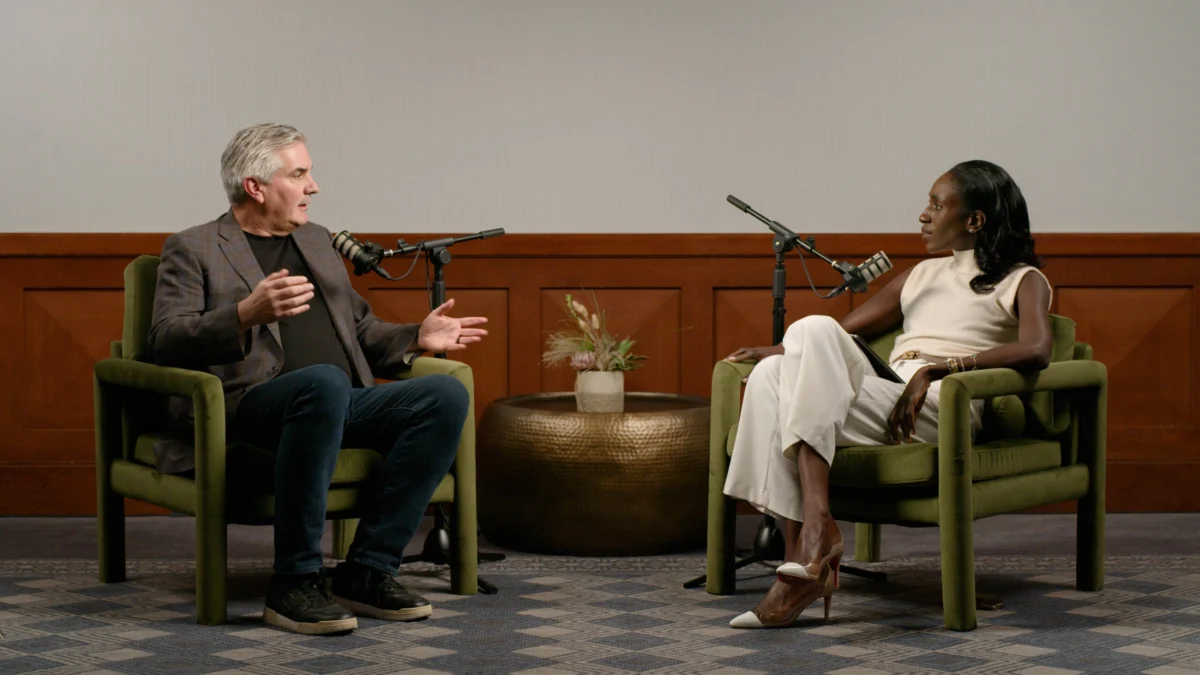
In the modern corporate landscape, the traditional silos of the C-suite are rapidly dissolving. Perhaps nowhere is this more evident than at Tapestry, Inc., the fashion powerhouse behind Coach and Kate Spade. At the center of this evolution is Scott Roe, an executive who occupies the rare and increasingly influential dual role of Chief Financial Officer and Chief Operating Officer.
Roe’s position at the intersection of capital allocation and day-to-day operations offers a masterclass in how modern multi-brand conglomerates must pivot to survive. In an era where "scale for scale’s sake" is no longer a viable strategy, Roe’s philosophy focuses on a singular, rigorous question: What can Tapestry uniquely bring to an asset that no other owner can?
This deep dive explores the strategic maneuvers of Tapestry under Roe’s guidance, the shifting dynamics of the accessible luxury market, and the personal leadership philosophy that Roe believes is essential for the next generation of corporate titans.
I. Main Facts: The Strategic Reorientation of Tapestry
Tapestry’s recent corporate history has been defined by two massive moves that, on the surface, appeared to contradict one another: a multi-billion dollar attempt at expansion followed by a swift divestiture. However, through the lens of Scott Roe’s "Value-Add" framework, these moves are perfectly aligned.
The Failed Capri Acquisition
In 2023, Tapestry sent shockwaves through the retail sector by announcing an $8.5 billion bid to acquire Capri Holdings. The deal would have brought Michael Kors, Versace, and Jimmy Choo under the Tapestry umbrella, creating an American fashion titan capable of competing more directly with European behemoths like LVMH and Kering. The logic was clear: Michael Kors and Coach share a similar "accessible luxury" DNA, offering massive potential for back-end synergies in leather goods sourcing, supply chain logistics, and digital customer insights.
The FTC Intervention and Strategic Pivot
The deal was ultimately derailed in late 2024 when the Federal Trade Commission (FTC) successfully blocked the acquisition on antitrust grounds, arguing it would eliminate competition in the "accessible luxury" handbag market. Following the termination of the deal, Tapestry did not double down on another massive acquisition. Instead, it turned inward, focusing on its core portfolio and making the difficult decision to sell Stuart Weitzman, a premium footwear brand it had owned since 2015.
The Core Philosophy: "Uniquely Positioned"
The central fact of Roe’s leadership is the rejection of the conglomerate discount. He argues that Tapestry should only own brands where its specific institutional strengths—namely, expertise in leather goods and customer data—can create a "differentiated value" that a standalone company or a different parent company could not achieve.
II. Chronology: From Aggressive Expansion to Disciplined Refinement
To understand Tapestry’s current position, one must look at the timeline of its portfolio management over the last decade.
- 2015–2017: The Era of Acquisition. Under previous leadership, the company (then known as Coach, Inc.) rebranded to Tapestry to reflect its multi-brand ambitions. It acquired Stuart Weitzman in 2015 for approximately $574 million and Kate Spade in 2017 for $2.4 billion. The goal was to build a "house of brands."
- 2021: Scott Roe Joins the Fold. Roe joined Tapestry as CFO, bringing a reputation for disciplined financial management from his long tenure at VF Corp. His role soon expanded to include COO responsibilities, signaling a shift toward integrating financial strategy with operational execution.
- August 2023: The Capri Announcement. Tapestry announced its intent to buy Capri Holdings for $8.5 billion. This was intended to be the crowning achievement of the multi-brand strategy, creating a massive data-sharing ecosystem across six major brands.
- April–October 2024: The Legal Battle. The FTC sued to block the Capri deal. Despite Tapestry’s arguments that the "accessible luxury" market is highly fragmented and includes competition from hundreds of smaller brands and resellers, the courts sided with the regulators.
- Late 2024: Divestiture and Focus. Following the collapse of the Capri deal, Tapestry announced the sale of Stuart Weitzman. This marked a significant turning point: the company was no longer just a "buyer," but a disciplined "curator" of assets.
III. Supporting Data: The "Leather Goods" North Star
The decision to sell Stuart Weitzman while maintaining a fierce commitment to Kate Spade—despite the latter’s recent performance struggles—is backed by a data-driven understanding of Tapestry’s core competencies.
The Footwear vs. Handbag Equation
While Stuart Weitzman is a globally recognized name in premium footwear, Roe notes that footwear has never been Tapestry’s deepest institutional strength. The margins and supply chain requirements for high-end shoes differ significantly from the leather goods (handbags and wallets) that form the bedrock of Coach’s success.
Data from the luxury sector suggests that handbags remain the most resilient and profitable category in accessible luxury. Coach’s continued outperformance—often cited as one of the most successful brand turnarounds in recent retail history—is built on a foundation of "expressive luxury" and a mastery of the leather supply chain.
The Kate Spade Transition
Critics have pointed to Kate Spade’s "softer" performance as a potential weakness. However, Roe views the data through the lens of a "customer transition."
- The Shift: More price-sensitive, discount-reliant shoppers are exiting the brand.
- The Target: Younger, Gen Z and Millennial consumers with higher lifetime value (LTV) are entering.
- The Rationale: Because Kate Spade operates in the same leather goods ecosystem as Coach, Tapestry can apply its decades of expertise in design-to-delivery to help Kate Spade navigate this transition. Roe’s confidence is rooted in the fact that the brand’s issues are about "positioning," not a lack of "capability" within the parent company.
IV. Official Responses: The Roe Doctrine on Leadership
In a revealing series of insights, Scott Roe has articulated a philosophy that transcends balance sheets. He argues that the modern executive must be as focused on "internal branding" as they are on "consumer branding."
The "Professional Brand" Mandate
One of Roe’s most significant pieces of professional advice involves the concept of self-advocacy. He notes that many leaders pride themselves on being "low ego," but he warns that this can often be a mask for a lack of clarity.
"In a corporate environment, you have to build your brand," Roe stated. "What are you known for? What do you stand for?" When Roe joined Tapestry, he did not simply assume the title of CFO; he intentionally defined his contribution around three pillars:
- Strategic M&A: Identifying assets that fit the "unique value" framework.
- International Growth: Scaling the brands in emerging markets.
- Talent Development: Building the next generation of executive leaders.
Reputation as a Deliberate Asset
Roe clarifies that this is not about self-promotion or vanity. Rather, it is about making one’s contribution visible and predictable. In a world where careers are no longer spent at a single company, a leader’s reputation is their most portable and valuable asset. By defining what he stands for, Roe ensures that the organization knows exactly what to expect from his leadership—and how to measure his success.
V. Implications: The Future of Corporate Strategy and Leadership
The story of Tapestry and Scott Roe reflects several broader trends that are currently reshaping the global business landscape.
1. The Death of the Generalist Conglomerate
The failure of the Capri acquisition and the sale of Stuart Weitzman suggest that the days of the "unfocused conglomerate" are over. Investors are increasingly demanding that management teams explain their "right to own" an asset. If a parent company cannot prove it adds more value than the market, the asset is better off as a standalone entity or in different hands.
2. The Rise of the CFO/COO Hybrid
Roe’s dual role represents a shift in how companies think about strategy. By putting the person in charge of "where the money goes" (CFO) also in charge of "how the work gets done" (COO), Tapestry ensures that financial discipline is baked into every operational decision. This prevents the "strategy-execution gap" that often plagues large corporations.
3. Macro-Leadership Shifts
Tapestry’s focus on clear leadership branding comes at a time when leadership across the Fortune 500 is in flux. From Apple’s upcoming CEO succession—where the next leader will oversee a $4 trillion giant while potentially eschewing social media—to JPMorgan’s unravelling female successor pipeline, the definition of a "successful leader" is being rewritten.
Roe’s emphasis on "self-advocacy" and "professional branding" may become the new standard for executives navigating these volatile waters. In an AI-driven world where even technical roles are being automated (evidenced by AI labs now hiring philosophy majors for ethical reasoning), the "human" element of leadership—reputation, vision, and the ability to communicate value—becomes the ultimate competitive advantage.
4. The Resilience of "Last Mile" Expertise
Finally, Roe’s strategy reinforces the importance of "the last mile." Whether it is Tapestry’s expertise in the physical craftsmanship of leather or the CEO of West Shore using AI to double revenue while maintaining a human touch in the "last mile" of home improvement, the message is clear: technology and scale are tools, but specialized, differentiated expertise is the only true moat.
As Tapestry moves forward, its success will depend on whether Roe’s "unique value" framework can continue to drive Coach’s dominance and finally unlock Kate Spade’s full potential. In the high-stakes world of accessible luxury, the line between success and stagnation is thin, but with a clear brand and a disciplined strategy, Scott Roe is betting that Tapestry can bridge the gap.