The week of July 10, 2026, will be remembered by historians as a period of profound geopolitical tectonic shifts. In a span of just seven days, the stability of the transatlantic alliance was tested in Turkey, the Middle East entered a new phase of uncertainty following the death of Iran’s Supreme Leader, and the French political landscape underwent a seismic transformation. Simultaneously, the global stage was captivated by the intersection of sports and social justice, as Kylian Mbappé became the focal point of a burgeoning international controversy.
I. Main Facts: A World in Flux
The international order is currently navigating a period of unprecedented volatility. Three distinct crises dominated the headlines:
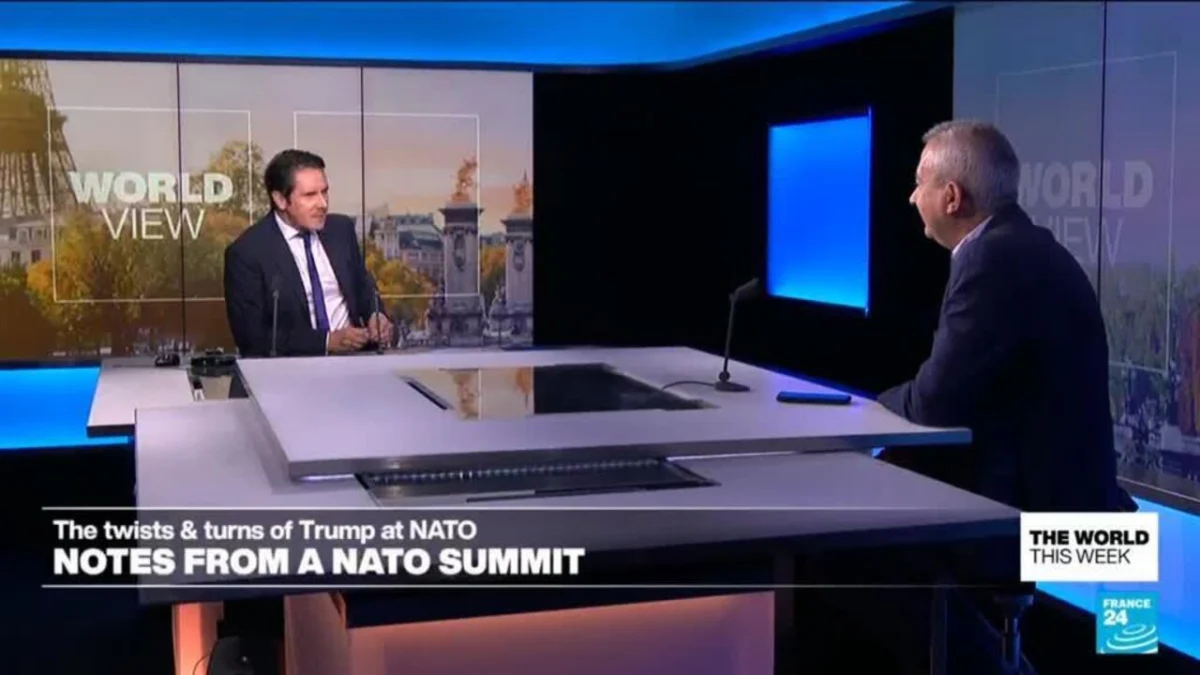
- The NATO Summit in Ankara: The alliance faced a test of cohesion as U.S. President Donald Trump arrived with aggressive rhetoric questioning the fundamental utility of the bloc. By the summit’s conclusion, however, the narrative shifted toward a fragile reconciliation, leaving observers to wonder about the long-term sustainability of the U.S.-Ukraine partnership under the current administration.
- Iran’s Leadership Transition: Following the death of its Supreme Leader, Iran has entered a state of mourning that acts as a thin veil for intense internal power struggles. Coupled with renewed military posturing against the United States, the region remains on the precipice of a broader conflict.
- The Resurgence of Marine Le Pen: In a landmark legal development, the French Court of Appeal issued a ruling that effectively cleared the path for Marine Le Pen to pursue the presidency, fundamentally altering the trajectory of the French Republic and the future of the European Union.
II. Chronology of Events
Monday, July 6: The Ankara Summit Begins
NATO leaders convened in Turkey amidst a cloud of skepticism. President Trump’s opening remarks challenged the "equitable distribution of financial burdens" within the alliance, casting doubt on the sanctity of Article 5.
Tuesday, July 7: The Iranian Mourning Period
Tehran officially commenced a week of public mourning for the late Supreme Leader. The atmosphere was charged with nationalistic fervor, even as state media reported "defensive exchanges" between Iranian proxies and U.S. naval assets in the Persian Gulf, signaling that the leadership void would not equate to a pause in regional aggression.
Wednesday, July 8: The Legal Pivot in Paris
The Paris Court of Appeal rendered a verdict that nullified previous financial and political sanctions against Marine Le Pen. Legal experts noted that the ruling effectively removed the most significant hurdle to her candidacy, triggering immediate protests and celebrations across France.
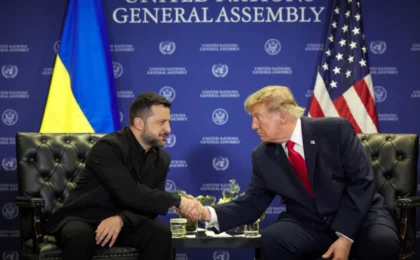
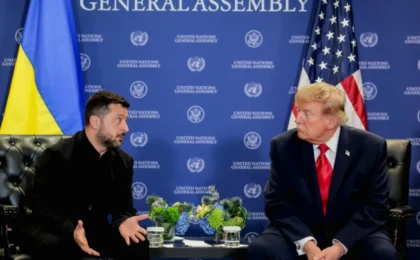
Thursday, July 9: The Zelensky-Trump Dialogue
Behind closed doors in Ankara, a private meeting between Presidents Trump and Zelensky sought to define the future of Western aid to Kyiv. While the official communique spoke of "unwavering support," anonymous sources within the U.S. delegation suggested that the administration remains lukewarm toward long-term funding commitments.
Friday, July 10: The Mbappé Incident
In a display of solidarity, Kylian Mbappé issued a blistering response to a Paraguayan senator who had directed racist slurs toward him following a World Cup match. The incident quickly transcended football, becoming a flashpoint for international discussions on racism in sport and state-sponsored bigotry.
III. Supporting Data and Context
The NATO Financial Gap
The friction at the Ankara summit was rooted in data. Currently, only 14 of the 32 NATO member states meet the agreed-upon 2% GDP defense spending threshold. President Trump’s insistence on a "pay-to-play" model has alienated traditional allies in Western Europe, particularly Germany and France, who view the alliance as a strategic necessity rather than a commercial transaction.
Middle Eastern Instability
Regional monitors have observed a 22% increase in naval "near-misses" in the Strait of Hormuz since the announcement of the Supreme Leader’s death. The absence of a clear, singular successor in Tehran has forced the Islamic Revolutionary Guard Corps (IRGC) to adopt a more aggressive posture to consolidate power, a move that the U.S. Department of Defense has characterized as "destabilizing and dangerous."

The Le Pen Surge
Public opinion polls conducted by IFOP following the court ruling show Le Pen surging to 34% in a hypothetical first-round ballot, a six-point jump in 48 hours. This shift suggests that the French electorate is increasingly disillusioned with the incumbent government’s economic policies, viewing the judiciary’s intervention as an act of political rehabilitation.
IV. Official Responses
The White House: Press Secretary Sarah Huckabee-Sanders emphasized that "the President’s skepticism is not a lack of commitment, but a call for accountability." She noted that the warming of relations by the end of the Ankara summit demonstrated that Trump’s tactics are "highly effective in extracting concessions."
The Élysée Palace: President Emmanuel Macron issued a cautious statement regarding the court ruling on Le Pen, noting, "The independence of the judiciary is a pillar of our democracy, and we must respect the law, even when it creates political friction."
Tehran’s Interim Council: The council released a defiant statement, maintaining that "the death of a leader does not change the resolve of a nation. Any aggression against our sovereignty will be met with a response that will make the enemy regret their actions."
V. Implications for the Global Order
The Transatlantic Fractures
The Ankara summit has left NATO in a state of "managed crisis." While the alliance remains intact, the internal rift between the U.S. administration and European powers regarding the war in Ukraine has created an opening for revisionist powers. If U.S. support for Kyiv wanes, the burden of defense will fall squarely on a fractured European bloc, potentially leading to a re-militarization of the continent.
The Middle East Power Vacuum
The death of the Iranian Supreme Leader is a "black swan" event. Without a clear successor, the internal competition between the hardline clergy and the military establishment could lead to a domestic crackdown. Externally, the regime is likely to engage in "diversionary conflict," escalating tensions with the U.S. and Israel to unify the Iranian public under a banner of national security.
The French Populist Wave
The rehabilitation of Marine Le Pen is a bellwether for the rest of Europe. As countries like Italy, Hungary, and now potentially France move toward nationalist-populist leadership, the structure of the European Union faces an existential threat. If the upcoming French elections mirror the current polling, we may see a significant shift in EU policy regarding immigration, trade, and internal sovereignty.
Sports as a Geopolitical Battlefield
The Mbappé incident highlights how modern athletes have become diplomats of a new, globalized society. By forcing the hand of international sporting bodies and demanding accountability from state officials, figures like Mbappé are challenging the status quo of "neutrality" in sports. The response from the Paraguayan government—a mix of half-hearted apologies and defensive rhetoric—suggests that the tension between nationalistic pride and international human rights standards is far from resolved.
Conclusion
The events of this week are inextricably linked. The uncertainty in Tehran emboldens those who seek to disrupt the existing global order; the friction in NATO weakens the shield that protects that order; and the political volatility in France threatens to tear the social fabric of the West from within. As the world watches these unfolding dramas, one thing is clear: the post-2020s era of relative stability has definitively ended, replaced by an age of high-stakes improvisation and perpetual, low-level conflict. The coming months will determine whether these trends are mere ripples in the river of history, or the beginning of a profound transformation of the global landscape.