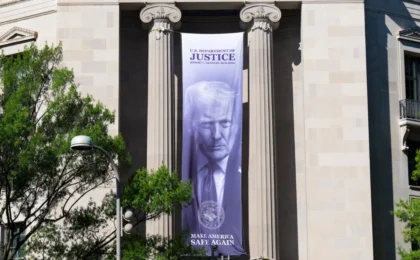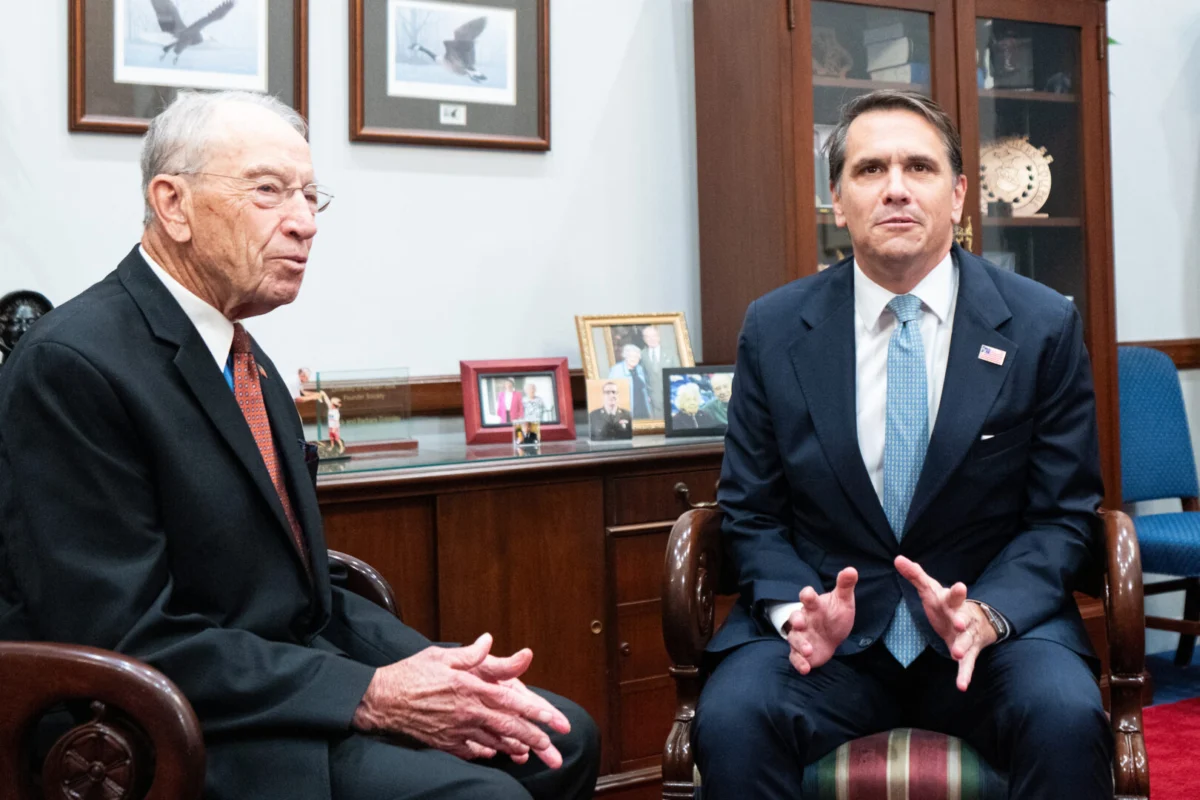
Washington D.C. — In a move signaling the opening salvo of what promises to be a highly contentious confirmation battle, Todd Blanche, President Donald Trump’s nominee for Attorney General, held his initial formal meeting with Senate Judiciary Committee Chairman Charles E. Grassley (R-Iowa) on Monday, June 15, 2026. This high-stakes encounter marks the official commencement of Blanche’s "goodwill tour" on Capitol Hill, as he seeks to secure Senate confirmation to permanently lead the Department of Justice (DOJ).
Blanche, who has served as Acting Attorney General since April following the abrupt dismissal of former Attorney General Pamela Bondi, brings a controversial track record from his time as Deputy AG and acting head of the department. His nomination has ignited a firestorm of criticism from Democrats and prompted significant questions from a handful of Republicans, setting the stage for a dramatic and potentially bruising confirmation process.
During a brief press photo opportunity preceding their private discussion, both Grassley and Blanche conspicuously sidestepped reporters’ pointed inquiries regarding several high-profile controversies. These included the now-blocked $1.8 billion "anti-weaponization" fund spearheaded by Blanche, and alarming allegations from California Governor Gavin Newsom that the DOJ is investigating him due to his political opposition to President Trump. The silence underscored the deep partisan divisions and profound policy disagreements already clouding Blanche’s path to confirmation.
Main Facts: A Contentious Nomination Takes Center Stage
The meeting between Todd Blanche and Chairman Grassley is more than a mere courtesy call; it is a critical first step in a process fraught with political peril. As the chief law enforcement officer of the United States, the Attorney General’s role demands unquestionable impartiality, a commitment to the rule of law, and independence from political influence. Critics argue that Blanche’s past actions and his close ties to President Trump, for whom he once served as a personal defense attorney, raise serious doubts about his capacity to fulfill these foundational requirements.
Blanche’s tenure as Acting Attorney General, and previously as Deputy Attorney General, has been marked by a series of decisions that have drawn intense scrutiny and accusations of politicizing the Justice Department. From controversial indictments targeting political opponents and civil liberties organizations to the creation of a politically charged "anti-weaponization" fund, his record has fueled fears that a confirmed Attorney General Blanche would further erode public trust in the DOJ’s independence.
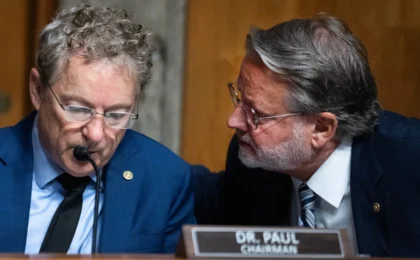
The Senate Judiciary Committee, with its narrow 12-10 partisan split, holds Blanche’s fate in its hands. The delicate balance means that the defection of even one Republican senator could effectively tank the nomination, granting significant leverage to moderate Republicans who may harbor their own reservations about Blanche’s suitability for the nation’s top legal post. Democrats, united in their opposition, are poised to challenge Blanche rigorously on issues ranging from civil liberties and prosecutorial discretion to the very independence of the Justice Department. The stakes are immense, not only for the nominee but for the perceived integrity of the American legal system.
Chronology of Events: Blanche’s Ascent Through Controversies
Todd Blanche’s journey to the Attorney General nomination has been rapid and controversial, characterized by a series of key appointments and actions that have steadily escalated concerns about the politicization of the Department of Justice.
Last Year: Confirmation as Deputy Attorney General
Blanche was confirmed as Deputy Attorney General last year, stepping into the department’s second-highest position. In this role, the Deputy AG typically oversees the day-to-day operations of the DOJ, managing its various divisions, agencies, and bureaus, and ensuring the smooth execution of its broad mandate. This position is generally understood to be one of administrative leadership and legal expertise, rather than political advocacy. However, even in this role, Blanche began to attract attention for actions that aligned closely with the President’s political agenda.
April 2026: Dismissal of Attorney General Pamela Bondi and Interim Leadership
The landscape of the Justice Department dramatically shifted in April 2026 when President Trump fired Attorney General Pamela Bondi. While the exact reasons for Bondi’s dismissal remained largely undisclosed, reports suggested growing friction between the White House and the Attorney General over certain DOJ investigations and priorities. Immediately following Bondi’s departure, Todd Blanche was appointed Acting Attorney General, elevating him to the department’s top position in an interim capacity. This sudden promotion placed him directly in the spotlight and provided him with the authority to initiate significant policy shifts and legal actions.
April to Last Week: Tenure as Acting Attorney General
During his two months as Acting Attorney General, Blanche solidified a reputation for aggressive and often politically charged actions. It was during this period that he championed the creation of the $1.8 billion "anti-weaponization" fund, an initiative that critics immediately denounced as a politically motivated attempt to target perceived adversaries of the administration. He also reportedly supervised the controversial release of records pertaining to deceased sex offender and financier Jeffrey Epstein, a move that raised questions about the timing and motivations behind the disclosure, particularly given its potential to implicate high-profile figures.
Last Week: Official Nomination for Attorney General
President Trump officially nominated Todd Blanche to be the permanent Attorney General last week. This formal announcement transformed Blanche from an interim placeholder to a permanent fixture, provided he could navigate the Senate confirmation process. The nomination was met with immediate and starkly divided reactions, praised by many Trump allies as a decisive choice, but vehemently condemned by Democrats and civil liberties advocates who viewed it as a further step towards undermining the rule of law.
June 15, 2026: The Grassley Meeting
The Monday meeting with Chairman Grassley represented Blanche’s first official step into the confirmation gauntlet. It served as an initial "meet and greet," allowing the nominee to introduce himself to the committee chairman who will ultimately preside over his confirmation hearing. However, the refusal of both men to answer press questions immediately signaled the sensitive nature of the discussions and the formidable challenges Blanche faces in convincing senators of his independence and suitability. This meeting sets the stage for weeks, possibly months, of intense scrutiny and debate over the future direction of the Department of Justice.
Supporting Data and Context: A Record Under Fire
Todd Blanche’s record, both as Deputy and Acting Attorney General, is replete with actions that underscore the concerns about his potential leadership of the Justice Department. These controversies form the bedrock of the opposition to his confirmation.
The "Anti-Weaponization" Fund:
One of the most contentious initiatives spearheaded by Blanche was the proposal for a $1.8 billion "anti-weaponization" fund. As described by the administration, the fund was ostensibly designed to combat the perceived "weaponization" of federal agencies against American citizens. However, critics, including legal scholars and congressional Democrats, viewed it as a thinly veiled attempt to politicize the Justice Department’s enforcement powers. There were widespread fears that such a fund could be used to launch investigations into political opponents, fund legal defenses for Trump allies, or suppress dissent under the guise of combating "weaponization." The fact that this fund was "now blocked" by a court highlights the serious legal and constitutional challenges it faced, suggesting that its implementation was deemed to overstep legal boundaries or violate principles of due process. Opponents argued that the very concept of an "anti-weaponization" fund, particularly when framed by an administration that frequently alleges political persecution, inherently politicizes the DOJ’s mission, transforming it from an impartial arbiter of justice into a tool for political retribution.
Controversial Indictments:
Blanche’s tenure has also been marked by two particularly high-profile and controversial indictments:
- Second Indictment Against Former FBI Director James Comey: James Comey, a figure who has long been a target of President Trump’s ire, faced a second indictment under Blanche’s watch. The charge stemmed from Comey posting a photo of seashells on a beach that allegedly spelled out "86 47," which prosecutors interpreted as a veiled threat against President Trump ("86" meaning to "get rid of" and "47" referring to Trump’s potential 47th presidency). Comey has pleaded not guilty to this charge. This indictment has drawn severe criticism for its perceived triviality and for appearing to be politically motivated. Legal experts have questioned the basis for such a charge, arguing that it could be interpreted as a direct assault on freedom of speech and a chilling precedent for political expression. The idea of the DOJ prosecuting a former high-ranking official for an ambiguous social media post raises profound concerns about selective prosecution and the use of federal power to silence critics.
- Indictment Against the Southern Poverty Law Center (SPLC): In another unprecedented move, the DOJ, under Blanche’s leadership, indicted the Southern Poverty Law Center (SPLC) for alleged fraud. The accusation centered on the organization’s practice of paying informants within extremist organizations, a common investigative tactic used by many research and advocacy groups to gather critical intelligence. The SPLC, a prominent civil rights organization known for tracking hate groups, has also pleaded not guilty. This indictment has been widely condemned as an attack on watchdog journalism and civil society organizations. Critics argue that targeting an organization for its investigative methods, particularly when those methods are designed to expose dangerous extremist groups, sends an ominous signal about the administration’s stance on civil rights and free speech. It also raises questions about whether the DOJ is being used to delegitimize organizations that are critical of certain political ideologies.
Supervision of Jeffrey Epstein Records Release:
According to testimony from former Attorney General Pamela Bondi, Blanche also supervised the controversial effort to release records pertaining to the deceased sex offender and financier Jeffrey Epstein. The Epstein case, with its connections to numerous high-profile individuals, has been a subject of intense public interest and speculation. While transparency regarding such cases can be crucial, the timing and context of this release under Blanche’s supervision have led to questions about the motivations behind it. Was it a genuine effort for transparency, or did it serve other political ends, potentially to distract from other issues or to implicate certain individuals? The involvement of the Acting AG in such a sensitive and politically charged release only adds to the narrative of a DOJ increasingly intertwined with political calculations.
Gavin Newsom’s Allegations of Political Investigation:
Adding to the litany of concerns, California Governor Gavin Newsom publicly accused the DOJ, under Blanche, of investigating him and his wife. Newsom, a prominent Democratic figure and vocal opponent of President Trump, claimed the investigation was a direct consequence of his political opposition and his potential consideration of a presidential run in 2028. He highlighted his consistent opposition to Trump’s policies, particularly regarding immigration crackdowns. Newsom’s allegations, made via a video posted to the social platform X, represent a grave accusation: that the federal government’s law enforcement arm is being weaponized for political retribution against a potential future rival. If true, such actions would constitute a severe abuse of power, undermining the very foundations of democratic governance and the principle of equal justice under the law.
Official Responses and Reactions: A Deeply Divided Electorate
The nomination of Todd Blanche has elicited sharply contrasting reactions across the political spectrum, underscoring the deep ideological chasm currently dividing Washington and the nation.
Grassley’s Measured Stance:
Senate Judiciary Committee Chairman Charles E. Grassley, known for his long-standing focus on oversight and government accountability, remained tight-lipped during the photo opportunity. His refusal to answer reporters’ questions about Blanche’s controversial moves suggests a strategic approach, likely aiming to keep the substance of their private meeting confidential and to reserve his public comments for the official confirmation hearings. As chairman, Grassley will be tasked with orchestrating a fair, albeit potentially explosive, hearing. While he has often championed the independence of the Justice Department, his position as a Republican leader also places him in a difficult balancing act between party loyalty and institutional integrity. His questions during the private meeting likely focused on Blanche’s understanding of the AG’s role, his commitment to DOJ independence, and his defense of the actions taken during his acting tenure.
Republican Praise and Reservations:
The announcement of Blanche’s nomination was met with praise from several prominent Republicans, particularly those closely aligned with President Trump. These supporters often laud Blanche’s perceived toughness, his willingness to challenge what they view as a "deep state," and his alignment with the President’s vision for a more "responsive" Justice Department. They may see his actions, such as the "anti-weaponization" fund, as necessary steps to correct perceived imbalances within federal law enforcement.
However, a significant number of Republicans have voiced concerns and indicated they have serious questions for Blanche, particularly regarding the "anti-weaponization" fund. These senators, often more moderate or institutionally focused, are likely concerned about the precedent set by such initiatives, the potential for political abuse, and the erosion of the DOJ’s non-partisan image. Names like Senators John Cornyn (R-Texas) and Thom Tillis (R-N.C.), both members of the Judiciary Committee, have been mentioned as potential "wild cards" who could challenge the nomination. Their concerns would likely center on due process, the proper scope of federal power, and the importance of maintaining a Justice Department free from political interference. For these Republicans, the institutional integrity of the DOJ might outweigh strict party loyalty.
Democratic Condemnation:
Democrats have "roundly criticized" Blanche’s nomination, presenting a united front of opposition. Their core arguments center on the perceived politicization of the Justice Department under Blanche’s watch, his history as Trump’s personal defense attorney, and what they view as a fundamental disregard for the rule of law and civil liberties. Specific concerns highlighted by Democrats include:
- Lack of Independence: His past role as Trump’s personal lawyer and his actions as Deputy and Acting AG raise doubts about his ability to serve as an impartial Attorney General, free from White House influence.
- Politicization of Justice: The "anti-weaponization" fund, the Comey and SPLC indictments, and Newsom’s allegations are cited as clear evidence of Blanche using the DOJ to target political opponents and critics of the administration.
- Erosion of Civil Rights: Critics fear that Blanche’s leadership could lead to a rollback of civil rights protections, a chilling effect on free speech, and a less vigilant approach to prosecuting hate crimes or protecting vulnerable communities.
- Protection of Whistleblowers: There are concerns that a Blanche-led DOJ would be less likely to protect whistleblowers and more inclined to pursue those who expose government wrongdoing, particularly if it implicates the administration.
Blanche’s Strategic Silence:
Blanche’s refusal to answer reporters’ questions during the photo opportunity was a deliberate strategic choice. It allows him to avoid making off-the-cuff remarks that could be used against him later and preserves his answers for the more formal and controlled environment of a confirmation hearing. While some might interpret it as evasiveness, it is a common tactic for nominees facing intense scrutiny. However, it also means that the public, and indeed many senators, remain in the dark about his direct responses to the most pressing ethical and legal questions surrounding his candidacy.
Implications and Outlook: The Future of American Justice
The confirmation of Todd Blanche as Attorney General carries profound implications for the Department of Justice, the American legal system, and the broader political landscape.
A Grueling Confirmation Battle Ahead:
Blanche faces what is widely expected to be one of the most contentious and grueling confirmation hearings in recent memory. Every controversial action from his past – the "anti-weaponization" fund, the Comey and SPLC indictments, the Epstein records release, and the Newsom allegations – will be meticulously dissected by senators. Democrats will use the hearings as a platform to highlight what they perceive as the administration’s systematic dismantling of institutional norms and the politicization of federal law enforcement. Republicans, particularly the moderate "wild cards," will also press Blanche on his commitment to independence and the rule of law, seeking assurances that he will not use the DOJ as a political cudgel. The hearings will likely be televised, attracting significant public and media scrutiny, further intensifying the pressure on Blanche and the committee members.
The Future of the Department of Justice:
If confirmed, Todd Blanche’s leadership would usher in a new era for the Department of Justice, one that many fear would be characterized by an unprecedented level of political alignment with the White House. The Attorney General sets the priorities for the entire department, from civil rights enforcement and criminal prosecutions to national security investigations. Concerns abound that a Blanche-led DOJ would:
- Further Politicize Enforcement: Prioritize investigations and prosecutions that align with the President’s political interests, potentially targeting critics or perceived enemies, while de-emphasizing issues that do not serve the administration’s agenda.
- Erode Independence: Continuously blur the lines between the White House and the DOJ, undermining the long-held tradition of the Attorney General serving as the nation’s chief law enforcement officer rather than the President’s personal attorney.
- Impact on Ongoing Investigations: Potentially influence or redirect ongoing investigations that could be politically sensitive, raising questions about justice being applied selectively.
- Shift Civil Rights Priorities: Alter the department’s focus on civil rights enforcement, potentially reducing protections for marginalized communities or prioritizing certain types of cases over others based on political considerations.
- Affect Morale: The politicization of the DOJ could severely damage the morale of career prosecutors and agents, many of whom are committed to non-partisan public service.
Precedent and the Rule of Law:
Beyond the immediate political ramifications, Blanche’s confirmation would set a significant precedent for the independence of the Attorney General and the integrity of the rule of law in America. The very foundation of the U.S. justice system rests on the principle that no one is above the law and that justice is administered fairly and impartially, without fear or favor. An Attorney General perceived as a political operative rather than an impartial guardian of justice could severely damage public trust in government institutions and the judicial process. This battle is not just about one nominee; it is about the long-term health of American democracy and the vital separation of powers.
Broader Political Ramifications:
The confirmation fight will undoubtedly become a central issue in the upcoming political cycle, influencing public opinion and potentially shaping future elections. It will serve as a litmus test for the Republican Party’s commitment to institutional independence and for the Democratic Party’s ability to articulate a clear defense of democratic norms. For President Trump, securing Blanche’s confirmation would be a major victory, cementing his influence over a critical branch of government. For his opponents, it would be a stark confirmation of their fears about the erosion of democratic safeguards. The path ahead for Todd Blanche is steep, and its outcome will resonate deeply throughout the American political and legal landscape for years to come.