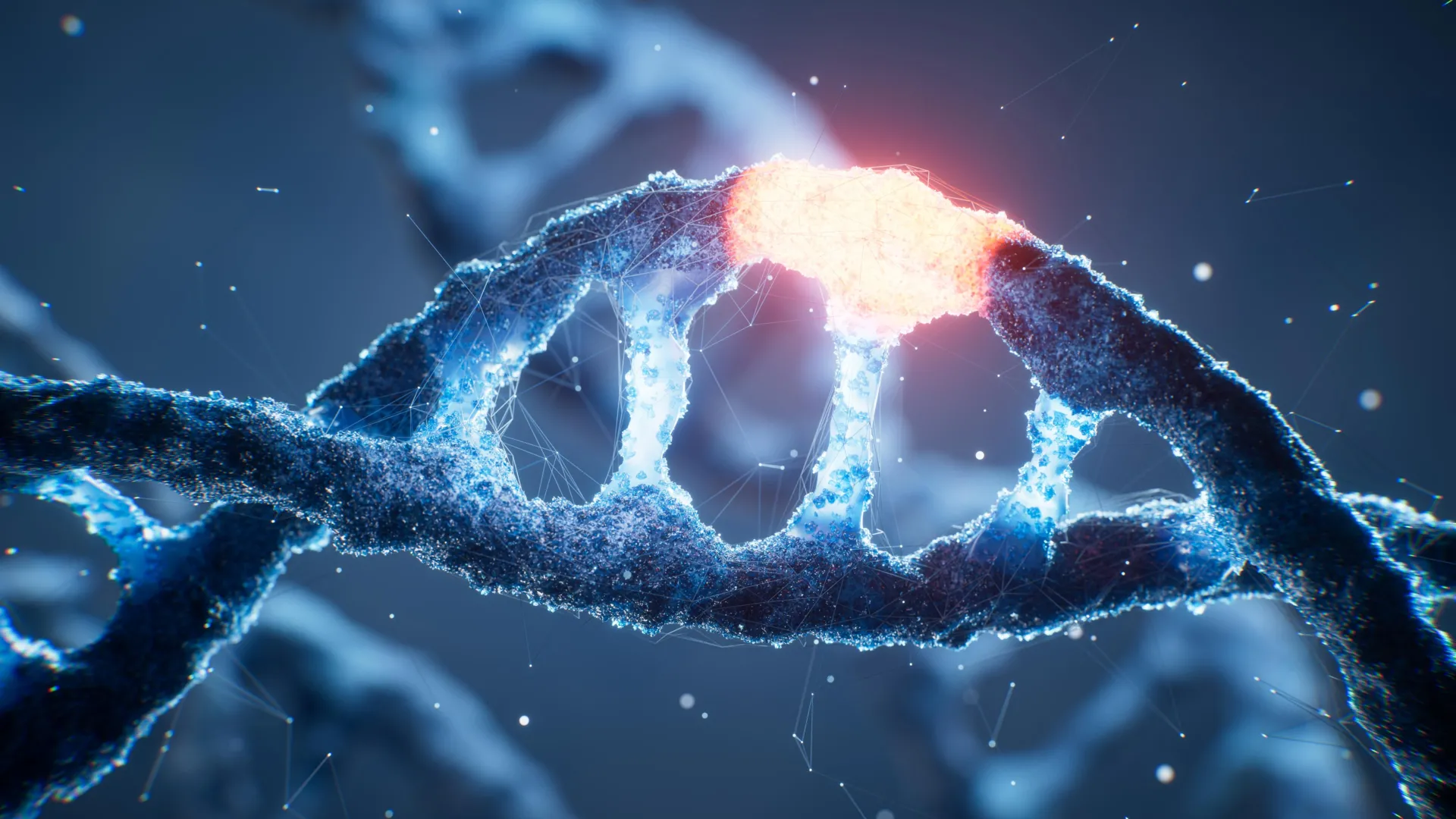
In the intricate theater of human biology, the orchestration of life is a masterclass in precision. Every second, tens of thousands of genes are toggled on and off with exacting timing and spatial accuracy, producing the enzymes, hormones, and proteins necessary for existence. When this delicate choreography falters, the consequences are profound, manifesting as cellular malfunction and systemic disease, including the development of cancer.
For decades, the "instruction manual" for this process—contained within our DNA—has been read, but not fully understood. Now, a groundbreaking study from the University of California San Diego has shed new light on the regulatory architecture of the genome. By merging high-throughput laboratory experimentation with the predictive power of artificial intelligence, researchers have successfully decoded the "initiator," a critical DNA element that dictates where the transcription of a gene begins.
The Foundation: Understanding the Initiator
To grasp the magnitude of this discovery, one must understand the role of the initiator. DNA acts as a vast library of information, but the library only functions if the reader knows exactly where a paragraph begins. The initiator is that starting marker. It is a specific sequence of DNA bases that signals the cellular machinery to begin transcribing genetic information into functional products.
For years, molecular biologists have recognized the initiator’s importance, but its structural nuances—the subtle variations in its DNA sequence that influence its efficiency—remained elusive. Professor James T. Kadonaga of the UC San Diego Department of Molecular Biology, School of Biological Sciences, has long sought to map these regulatory sequences. His laboratory’s latest effort represents a significant leap forward in understanding how these "on switches" function across the human genome.
Chronology of the Discovery
The research, spearheaded by graduate student Torrey Rhyne-Carrigg, followed a rigorous, multi-stage scientific process designed to bridge the gap between empirical observation and computational modeling.
Phase 1: High-Throughput Mapping
The team began by generating a massive dataset. Rather than analyzing a small handful of sequences, they employed high-throughput DNA sequencing to measure gene expression activity across approximately 500,000 synthetic versions of the initiator. This "brute force" approach allowed them to capture the performance of nearly every possible variation of the initiator sequence, creating a library of data that would be impossible to parse manually.
Phase 2: Training the AI Model
With this treasure trove of data, the team turned to machine learning. By feeding the results of the 500,000 experiments into a neural network, the researchers enabled the AI to identify the underlying DNA patterns—the "signature"—that correlate with high or low gene expression. The AI learned to recognize the subtle motifs that make an initiator effective, essentially "teaching" the computer the language of the genome.
Phase 3: Genome-Wide Scanning
Once the model was calibrated, the team deployed it to scan the actual human genome. The results were striking: the AI identified that approximately 60% of human genes contain this initiator sequence. This revelation provides a clearer picture of how the majority of human genes are activated, offering a definitive look at the landscape of gene transcription.
Supporting Data and Technical Nuance
The power of this research lies in its reliance on empirical verification. In the world of bioinformatics, models are only as good as the data used to train them. By focusing on 500,000 versions of the initiator, Rhyne-Carrigg and Kadonaga eliminated the "noise" that often plagues smaller studies.
The model demonstrated a high degree of predictive accuracy, successfully distinguishing between functional initiators and non-functional sequences in ways that previous, simpler algorithms could not. This provides the first robust, validated predictive model for the presence of the initiator in human biology. The data confirms that the initiator is not a static, singular sequence, but a flexible, diverse set of motifs that the cell uses to modulate gene expression levels.
Official Perspectives: Prof. James T. Kadonaga
Reflecting on the study, Professor Kadonaga emphasized that the project is more than just an academic exercise; it is a foundational step toward a complete "decoder ring" for the human genome.
"These AI models were found to provide, for the first time, strong predictions of the presence or absence of the initiator in human genes, and were thus able to decode the DNA base sequence pattern of the initiator," Kadonaga noted.
However, he views this as only the beginning. He envisions a future where the entire six-billion-base-pair human genome can be interpreted as a readable code. "Ultimately, within the six billion bases of DNA in each of our cells, there is a gene expression code that specifies when, where, and to what extent each of our genes should be turned on or off," he said. "If we had an AI model for the entire gene expression code, we would be able to predict the activity of each of the different variants of genes in different people."
Clinical and Synthetic Implications
The implications of this research are twofold, touching upon both clinical medicine and the rapidly evolving field of synthetic biology.
Predicting Pathological Mutations
One of the most immediate clinical applications involves understanding the impact of genetic mutations. Currently, if a physician identifies a mutation in a patient’s non-coding DNA, it is often difficult to determine if that mutation is benign or pathogenic. With the AI model developed by the UC San Diego team, researchers can now simulate the effect of such mutations on the initiator. If a mutation disrupts the initiator’s "signature," the AI can predict that the gene’s expression will be altered—potentially explaining the onset of complex disorders or susceptibility to certain cancers.
The Dawn of Synthetic Promoters
Beyond clinical diagnostics, the findings have immense potential for biotechnology. Scientists frequently need to engineer cells to produce specific proteins for medical or industrial use. To do this, they use "promoters"—sequences that turn genes on. Currently, synthetic promoters are often limited in their efficiency. By using the insights gained from this AI model, researchers can design "synthetic promoters" with tailored functions, allowing for the precise, tunable control of gene expression in therapeutic applications, such as gene therapy or biomanufacturing.
The Future of AI in Genomic Research
This study serves as a successful proof-of-concept for the "hybrid research" model—the synergy of wet-lab biology and dry-lab computational intelligence. In the past, these fields were often siloed, with biologists focusing on physical experiments and computer scientists focusing on theoretical models. The success of the UC San Diego team demonstrates that the next generation of breakthroughs will occur at the intersection of these disciplines.
As the team looks to the future, they plan to expand their AI models to encompass other regulatory elements beyond the initiator. The goal is to eventually build a comprehensive "regulatory atlas" of the human genome. Such a tool would revolutionize personalized medicine, allowing clinicians to predict an individual’s risk of disease based on their unique genetic sequence and how that sequence interacts with the body’s regulatory code.
Conclusion
The human genome is often compared to a complex book, but for years, we have been reading it without knowing the rules of grammar or syntax. By decoding the initiator, the researchers at UC San Diego have uncovered a fundamental grammatical rule of the genome.
"The new AI model for the initiator is a small but important part of this gene expression code," Professor Kadonaga concluded, "and I am optimistic that we will expand our AI models of the human gene expression code in the not-too-distant future."
As we stand on the precipice of a new era in genomics, the marriage of AI and molecular biology promises to turn the static sequence of DNA into a dynamic, understandable, and programmable language. Whether it is preventing disease or engineering the next generation of medical treatments, the ability to read the code of life is bringing us closer to the ultimate goal: the mastery of our own biology.