
Introduction: A New Watershed Moment in Mexican Cinema
In the high-altitude, culturally rich setting of the Morelia Film Festival, the 12th edition of Impulso Morelia—the festival’s vital "pix-in-post" industry showcase—has concluded with a resounding endorsement of one of contemporary cinema’s most formidable voices. Tatiana Huezo’s latest fiction feature, Galerna, emerged as the undisputed titan of this year’s competition, securing the prestigious José María Riba Award.
As the Morelia Film Festival wraps up its ten-day celebration of global and national film, the industry’s focus has sharpened on the projects that will likely define the coming year in international cinema. Galerna represents not merely a technical achievement in post-production, but a narrative leap for Huezo, a director who has spent years meticulously crafting a reputation as a master of both the documentary and fiction forms. With this victory, Galerna enters the final stages of its gestation with significant financial momentum, armed with $14,740 (250,000 pesos) in support from Cinépolis Distribution and Profest 2026.
The Evolution of a Master: From Documentarian to Fiction Auteur
To understand the significance of Galerna, one must look at the trajectory of Tatiana Huezo. Long before she turned her lens toward scripted narratives, Huezo was a titan of non-fiction. Her early works, The Tiniest Place and the hauntingly visceral Tempestad, solidified her status as a director capable of extracting profound, often painful truths from the fabric of reality.
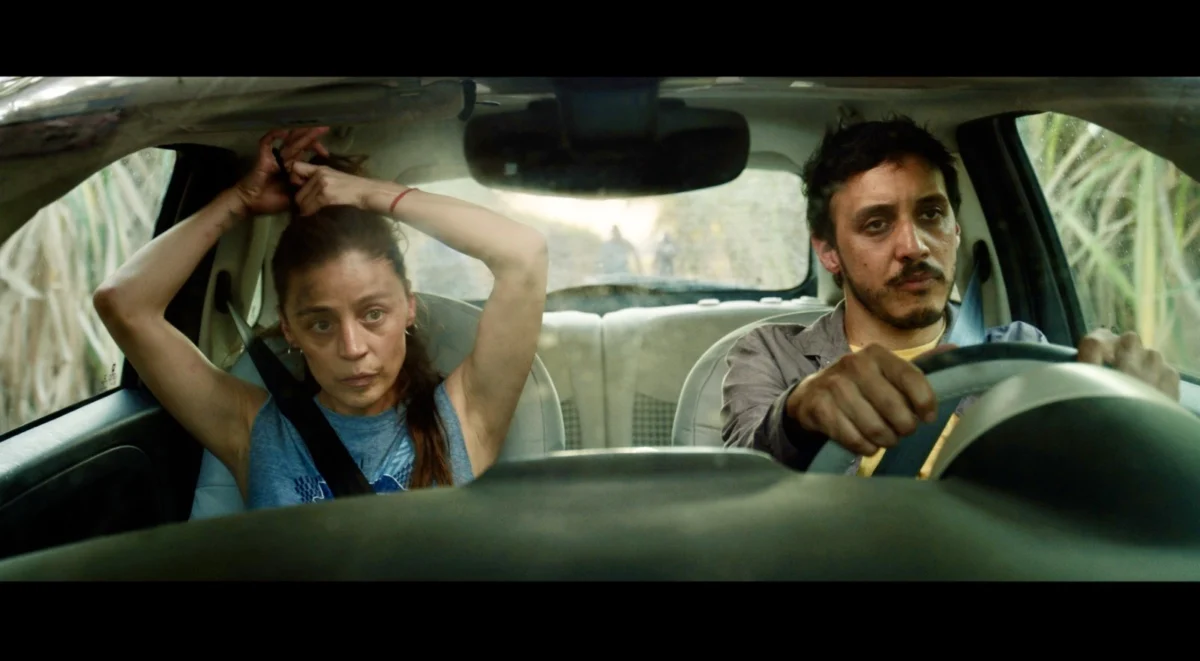
Her transition to fiction was marked by the widely acclaimed Prayers for the Stolen, a film that navigated the dangerous intersections of childhood, gender, and violence in rural Mexico. With Galerna, she continues to push boundaries. The film is a road movie that follows two casting directors into the most isolated reaches of the Mexican landscape. While on the surface it appears to be a professional endeavor—a search for natural actors for a sci-fi project—the narrative quickly dissolves into an internal odyssey. As the characters traverse the terrain, the film peels back layers of their own fears, biases, and deeply held preconceptions.
The project has already garnered significant international attention. Prior to its success at Morelia, Galerna secured the coveted Egeda Platino Industria Award at the San Sebastian Festival, where it participated in the festival’s competitive WIP (Work in Progress) Latin America showcase. It is a film that clearly demands attention, and the jury at Impulso Morelia has signaled that it is, perhaps, the most anticipated Mexican film on the horizon.
Chronology: The Road to the Prize
The 12th edition of Impulso Morelia, held from October 18 to October 20, served as the crucible for this year’s crop of emerging cinema. The three-day event is designed to bridge the gap between production and exhibition, providing filmmakers with the final financial and creative push needed to bring their works to the screen.
- October 18: The festival commenced its industry section, welcoming a diverse international panel of jurors, including industry heavyweights such as Cara Cusumano, Carlos Rodríguez Ríos, Julio Chavezmontes, Mauricio Durán, and Sandrine Dumas.
- October 19: Screenings of the work-in-progress projects took place, with Galerna and other contenders like Homeboys and All the Water in the World garnering significant buzz among delegates and distributors.
- October 20: The final deliberations were held. According to jurors, the decision for the top prize was remarkably swift. Unlike years where debate can stretch for hours, the panel reached a unanimous decision almost immediately, with Galerna standing out as the clear, peerless choice.
- October 25: The festival officially concludes, with Galerna leaving as the most decorated project, having secured the José María Riba Award, the Caffeine Post-Production Award, and the LatAm Cinema Award.
A Spotlight on Humanism: The ‘Homeboys’ Phenomenon
While Galerna dominated the top honors, the festival also shone a light on the raw, urgent storytelling of Homeboys. Directed by Alonso Garibay and Alejandro Bernal, the documentary centers on the life of Roberto Hernández, known as "Mr. Lucky."
The film explores the harrowing reality of deportation—a story of a man sent back to a country he barely recognized, only to transform his trauma into a mission by founding a shelter for others in his position. The project received a Special Mention from the jury and secured the Eugenio Polgovsky Award, a $5,340.83 (100,000 pesos) grant established to honor the memory of the late, beloved Mexican filmmaker.
Julio Chavezmontes, a juror for the international panel, noted the emotional resonance of this specific win. "On a personal note, it was deeply moving to see the inaugural Eugenio Polgovsky award go to Homeboys. This is a film that shares Eugenio’s fearless humanism, and I have no doubt he would have championed it, if he were still with us today."
Supporting Data: The Economic and Creative Impact
The awards presented at Impulso Morelia are more than just trophies; they are critical infrastructure for the Latin American film industry. In an era where funding for independent cinema remains precarious, these in-kind services and cash grants act as lifelines.
- Caffeine Post-Production Awards: This house provided over $20,000 (387,000 pesos) in services to three projects: Galerna, All the Water in the World, and Homeboys.
- Splendor Omnia Studios Award: Focusing on the technical refinement of sound and color, Fernanda Garduño selected Raká (directed by Teresa Camou) and Katechon (directed by Javier Toscano) for facilities support at the studios in Tepoztlán, Morelos.
- Churubusco Award: A significant grant for image and post-production, split between Elisa Miller’s Legit and Diego del Río’s All the Water in the World.
These awards target the most vulnerable stage of filmmaking: the final polish. As Caffeine CEO Adrian Geyer noted, these projects collectively demonstrate the incredible breadth of Mexican cinema. "Tatiana Huezo’s road movie takes us down paths that feel supernatural without ever becoming so," Geyer remarked, highlighting the technical and atmospheric mastery expected from the final product.
Official Perspectives: Jurors on the State of the Industry
The consensus among the jurors was one of optimism for the future of regional storytelling. Mauricio Durán Ortega, president of the National Film Industry Chamber (Canacine), emphasized that the process of selecting winners is a difficult one because the standard of work presented at Impulso Morelia is consistently high.
"All the projects deserved support, and having a film reach that stage is already a major achievement," Durán Ortega stated. "The award makes a real difference in helping filmmakers complete their work. Since most projects are already in post-production, our recommendations focus on what can still be refined. This year, the decision was unanimous—Galerna stood out so clearly that no further debate was needed."
Julio Chavezmontes provided the most glowing appraisal of the festival’s winner, suggesting that Galerna is not just a film, but a cultural event waiting to happen. "Tatiana’s Galerna represents a new exciting direction for one of the best filmmakers working today, and I’m certain it will be a watershed moment in Mexican cinema when it is finally released to the public."
Implications for the Future of Mexican Cinema
The success of Galerna and the recognition of projects like Homeboys, Raká, and Katechon suggest a vibrant, multi-faceted future for Mexican film. We are seeing a shift away from traditional genre tropes toward a more experimental, deeply personal form of storytelling.
Galerna promises to challenge the audience’s perception of the Mexican landscape and, by extension, their own internal landscapes. Meanwhile, the support for documentaries like Homeboys reaffirms the industry’s commitment to social realism and the amplification of forgotten voices.
As the Morelia Film Festival concludes, the message is clear: the industry is not just surviving; it is evolving. The collaborative nature of these awards—involving distributors, post-production houses, and creative consultants—highlights a unified effort to ensure that these complex, challenging, and deeply human stories reach their audience. For Tatiana Huezo, the road ahead for Galerna seems paved with expectation. If the reception at Morelia is any indication, the film is poised to make a profound impact upon its debut, solidifying Huezo’s place as a pillar of global cinema.
Summary of Prizewinners
International Panel
- José María Riba Award: Galerna, dir. Tatiana Huezo
- Special Mention: Homeboys, dir. Alonso Garibay and Alejandro Bernal
Ambulante—Eugenio Polgovsky Award
- Homeboys, dir. Alonso Garibay and Alejandro Bernal
Churubusco Award
- Legit, dir. Elisa Miller
- All the Water in the World, dir. Diego del Río
Splendor Omnia Studios Award
- Raká, dir. Teresa Camou
- Katechon, dir. Javier Toscano
Caffeine Post-Production Awards
- Galerna, All the Water in the World, Homeboys
LatAm Cinema Award
- Galerna, dir. Tatiana Huezo