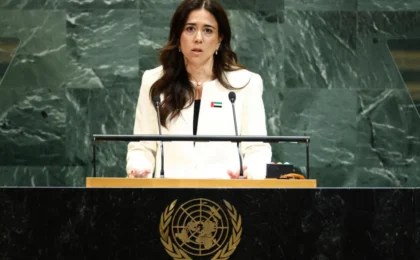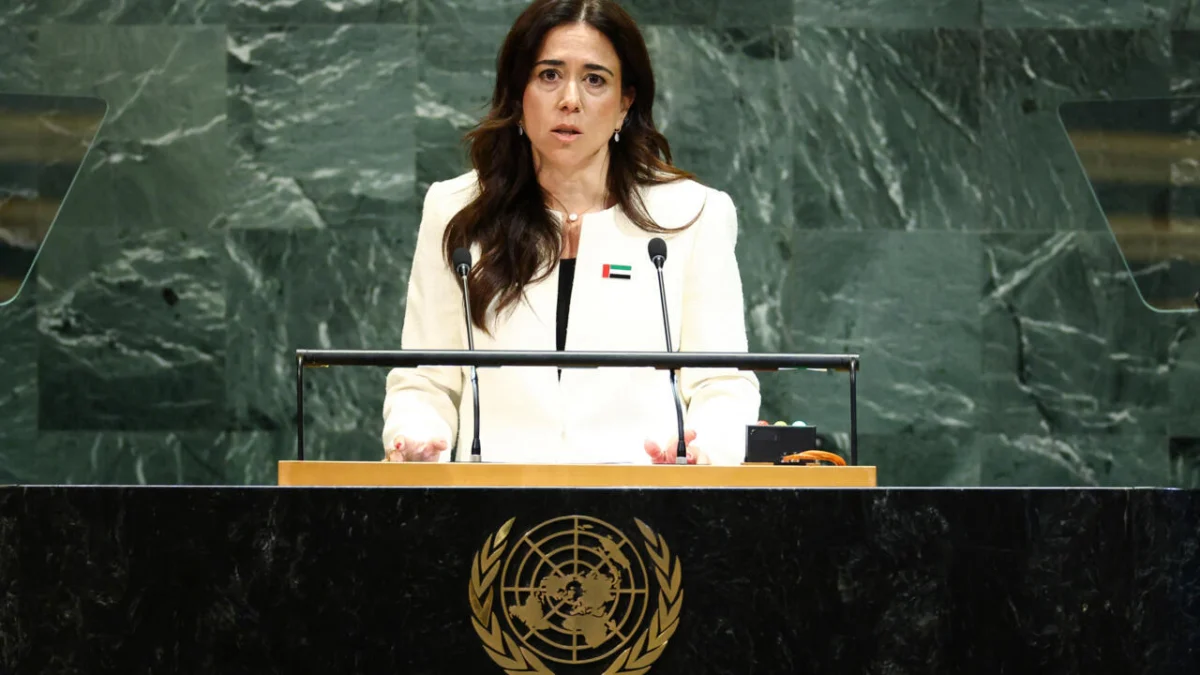
The United Nations is currently at a critical juncture in its 81-year history. As the term of Secretary-General António Guterres nears its conclusion on December 31, 2026, the global body is embroiled in an intense and increasingly complex search for his successor. Into this fray has stepped Lana Nusseibeh, the Emirati Minister of State for Foreign Affairs and a former long-serving ambassador to the UN, whose late-stage entry has sent ripples through diplomatic corridors in New York and beyond.
Nominated by UAE President Sheikh Mohammed bin Zayed al-Nahyan, Nusseibeh is positioning herself as a pragmatic, results-oriented diplomat capable of navigating the fractured geopolitical landscape of the mid-2020s. However, her path to the 38th floor of the UN Secretariat is far from certain, shadowed by intense scrutiny over her nation’s foreign policy and the broader, unresolved tensions regarding the future of the UN’s leadership.
The Nomination: A Strategic Entry
The announcement, initially reported by the Emirates News Agency (WAM), marked the formalization of a candidacy that had been the subject of speculation for months. President Sheikh Mohammed bin Zayed emphasized Nusseibeh’s "deep experience of the United Nations," citing her "judgement in addressing the ongoing international challenges" as primary qualifications for the role.
Though the office of the President of the General Assembly has remained coy regarding the status of the formal paperwork—citing the travel schedule of current president Khalilur Rahman—the nomination was independently confirmed to FRANCE 24 and PassBlue by Teneo, a New York-based public relations firm representing the UAE Ministry of Foreign Affairs.
In a personal statement accompanying her bid, Nusseibeh sought to frame her philosophy on the role: "The Charter gives the Secretary-General no army and no vote. But the position, held well, entails a different kind of power. Her independence empowers her to bring others to agreement, and that depends on trust. I will be the stubbornly optimistic, relentless diplomat I have always been in this endeavour."
To demonstrate her commitment to the race, Nusseibeh has taken a formal leave of absence from her government duties, signaling that she is treating this as a full-time, high-intensity campaign.
Chronology of a Contested Selection
The process to replace Guterres has been ongoing for over a year, governed by a set of procedures intended to provide transparency but often complicated by the opaque nature of Security Council politics.
- Late 2025 – Early 2026: The official call for candidates began, with the UN emphasizing the need for a transparent and merit-based selection. Early frontrunners, including former Chilean President Michelle Bachelet, emerged as potential candidates but struggled to maintain consensus.
- September 2026: Michelle Bachelet formally withdrew from the race following significant friction with the United States regarding her past advocacy and policy positions.
- October 16, 2026: A series of six informal straw polls conducted by the Security Council yielded no clear consensus. Candidates like Rebeca Grynspan (Costa Rica), Carolyn Rodrigues Birkett (Guyana), and Rafael Mariano Grossi (Argentina) faced "discourage" votes from permanent members (the P5), forcing them into a delicate period of diplomatic negotiation.
- October 21, 2026: The UAE formally announced the nomination of Lana Nusseibeh, prompting the postponement of a planned straw poll to allow for the inclusion of her candidacy in the review process.
Supporting Data and Geopolitical Context
Nusseibeh brings a unique profile to the race. Born in 1978, she served as the UAE’s permanent representative to the UN from 2013 to 2024. This tenure gave her a decade of experience in the "New York circuit," making her a well-known quantity to the delegates who now hold her fate in their hands.
Her supporters point to her instrumental role in humanitarian efforts. Brett McGurk, a former top national security adviser in the Biden administration, lauded her efficiency, stating, "She is a diplomat who knows everyone and works with them to GSD (Get S*** Done)." Similarly, American evangelical leader Johnnie Moore characterized her as one of the few individuals capable of navigating the current Security Council deadlock.
However, the "Latin American turn" remains a significant hurdle. There has been a long-standing, albeit unofficial, expectation that the next Secretary-General should hail from the Latin America-Caribbean region. Nusseibeh’s entry, alongside that of Ugandan candidate Olara Otunnu, challenges this regional rotation, causing frustration among diplomats from Panama and other regional blocs who feel the established "turn" is being sidelined.
The Shadow of Human Rights and Regional Conflict
Despite the praise from some quarters, Nusseibeh’s candidacy is inextricably linked to the UAE’s controversial foreign policy record. Critics, particularly from humanitarian organizations, argue that her appointment would be a fundamental contradiction of the UN’s values.
The Sudan Question
The most severe criticism stems from the ongoing civil war in Sudan. UN independent panels and reports from groups like Amnesty International have accused the UAE of providing material support—including arms—to the Rapid Support Forces (RSF), a paramilitary group implicated in atrocities in Darfur. Nathaniel Raymond, executive director of the Humanitarian Research Lab at the Yale School of Public Health, has been particularly vocal, describing her potential leadership as a "catastrophe" for the UN’s credibility.
"She has a dual loyalty, a conflict of interest, between the United Nations and a state which is credibly accused by the UN itself of directly aiding and abetting the massacre of El Fasher," Raymond noted. The Emirati government has consistently denied these allegations, and a case brought against the UAE by Sudan at the International Court of Justice was dismissed due to a lack of jurisdiction, though the underlying allegations regarding arms embargo violations remain a dark cloud over the UAE’s diplomatic reputation.
Domestic Restrictions
Beyond regional conflicts, Nusseibeh will face rigorous questioning regarding the UAE’s internal human rights record. The 2026 Human Rights Watch report highlights severe restrictions on freedom of expression, association, and assembly within the Emirates. As the face of the UN, a candidate from a country with such documented internal challenges will inevitably be required to explain how they would uphold the UN Charter’s commitment to universal human rights.
The Path Forward: Implications for the UN
For Nusseibeh to secure the position, she must navigate the 15-member Security Council and obtain the support of at least nine members, while—crucially—avoiding a veto from any of the P5 (the US, China, Russia, Britain, and France).
The "Coronation" Theory
Richard Gowan of the International Crisis Group suggests that Nusseibeh’s entry is not a impulsive act. "Her rollout has been pretty slick, and UN insiders assume that she will have squared away the veto powers before going public. It feels like it may be a coronation," Gowan noted. If true, this implies that the P5 may have already reached a backroom consensus, rendering the public, interactive dialogues largely performative.
The Gender Milestone
The UN has never had a female Secretary-General. The current contest features four women—Nusseibeh, Rodrigues Birkett, Espinosa, and A-Baki—all vying to break an 81-year-old glass ceiling. The pressure on the Council to finally appoint a woman is significant, particularly given the General Assembly’s previous resolutions calling for a more diverse and representative leadership.
What Comes Next?
The upcoming interactive dialogues will be the true test of Nusseibeh’s candidacy. General Assembly President Khalilur Rahman has indicated that he intends to implement new, more rigorous modalities for these sessions, ensuring that all candidates, including new entrants, are subjected to thorough public scrutiny.
As the October 23 straw poll was postponed to allow for Nusseibeh’s integration, the international community is waiting to see whether she can defend her record and reconcile her country’s controversial actions with the impartial, humanitarian-focused mandate of the Secretary-General. Whether she emerges as a bridge-builder or a lightning rod for criticism will define not only her career but the trajectory of the United Nations for the remainder of the decade.