For nearly a century, the standard narrative regarding Australia’s pre-colonial population was anchored in the mid-20th-century estimates of anthropologist Alfred Radcliffe-Brown. His 1930s assessment suggested that approximately 250,000 Indigenous people inhabited the continent before the arrival of the First Fleet in 1788. For decades, this figure served as the baseline for historical, sociological, and political discussions regarding the impact of European settlement.
However, a landmark study published in Nature Human Behaviour has shattered these long-held assumptions. By synthesizing cutting-edge computer modeling, genetic reconstructions, archaeological data, and environmental analysis, a team of leading researchers has concluded that the true pre-colonial population was closer to 2.22 million—nearly nine times higher than the long-accepted Radcliffe-Brown estimate and significantly higher than even the more generous historical estimates of one million.
This revelation does more than simply correct a statistical error; it forces a profound, national reckoning with the scale of the demographic collapse that followed the arrival of the British. The research indicates that within the first 73 years of colonization, Australia’s Indigenous population plummeted by a staggering 93%.
The Methodology: Reconstructing a Lost History
To arrive at these figures, the research team—a multidisciplinary cohort including experts from the Australian Research Council Centre of Excellence for Indigenous and Environmental Histories and Futures (CIEHF)—bypassed the limitations of colonial-era records.
Historical records from the 18th and 19th centuries are notoriously biased, incomplete, or written by observers who failed to comprehend the sophistication and density of Indigenous land management. Instead, the researchers utilized a "triangulation" method. They integrated ethnographic observations with modern archaeological findings and genetic mapping to determine how many people the varied Australian landscapes—from the temperate south to the tropical north—could realistically support.
By modeling the carrying capacity of the continent, the team determined that the population density before 1788 was approximately 0.29 people per square kilometer. This calculation aligns with archaeological evidence of intensive land use and complex social structures that were systematically overlooked or minimized by early colonial administrators.
A Chronology of Collapse (1788–1861)
The study provides a grim timeline of the demographic catastrophe that defined the early colonial era. The researchers identified a period of extreme loss between 1788 and 1861, during which an estimated 2.06 million excess deaths occurred.
1788: The Baseline
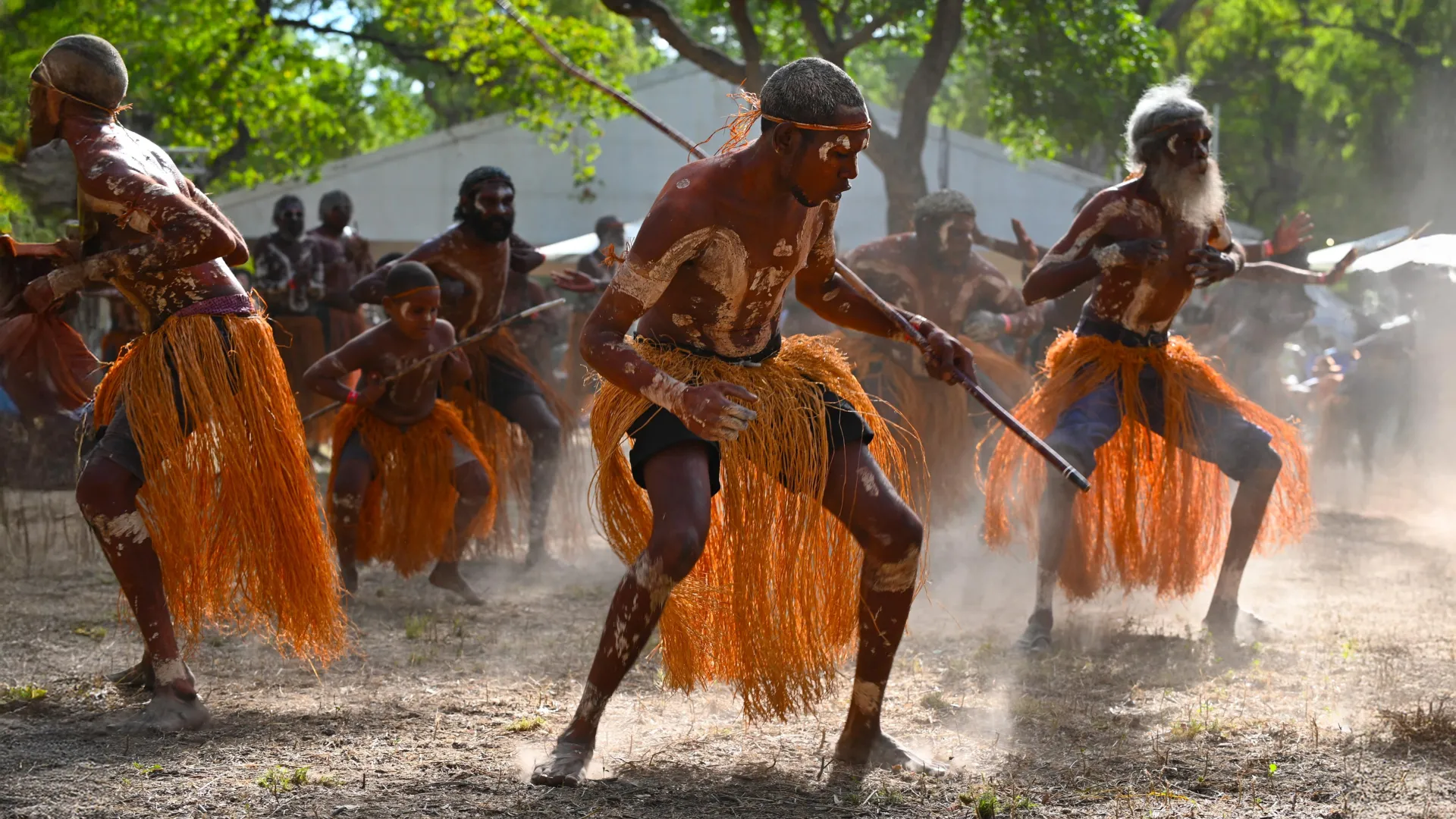
The study posits a median pre-colonial population of 2.22 million. This population was not a static, primitive society, but a network of thriving, diverse nations with complex trade routes, diplomatic protocols, and sustainable environmental management practices.
1788–1861: The Demographic Freefall
The 73-year period following the arrival of the First Fleet saw an average of 28,200 excess deaths annually. These deaths were not merely the result of "natural causes" or accidental contagion; they were the direct and indirect results of:
- Pathogens: The introduction of smallpox, influenza, and other diseases to which Indigenous Australians had no immunity caused immediate, massive mortality.
- Frontier Violence: Armed conflict between settlers and Indigenous nations, often characterized by systematic massacres and violent dispossession.
- Structural Violence: The forced removal from traditional lands, the disruption of water sources and food supplies, and the systemic oppression that prevented communities from maintaining their health and social cohesion.
1861: The Nadir
By 1861, the population had been reduced to just 7% of its pre-1788 size. This represents one of the most significant demographic collapses in human history, occurring over a span of less than a century.
Supporting Data and Comparative Analysis
The discrepancy between the new 2.22 million estimate and the older 250,000 figure is primarily explained by the biases inherent in early censuses. When the first colonial censuses were finally conducted, they were often carried out after the primary waves of disease and frontier conflict had already decimated Indigenous populations. Early anthropologists often relied on the "survivor" populations to estimate the pre-contact total, failing to account for the millions who had perished in the decades prior to the counting.
The research also highlights that while Australia’s Indigenous population has been in a period of recovery since the 1950s, the growth has not yet restored the population to its pre-colonial level. As of the 2021 census, the Indigenous population stood at approximately 37% of the 1788 median. If current growth trends continue, researchers project that it will take until approximately 2047 for the population to return to the levels recorded at the time of the First Fleet’s arrival.
Official Responses and Expert Perspectives
The academic and Indigenous community leaders involved in the study have framed these findings as a necessary catalyst for "truth-telling."
Professor Corey Bradshaw of Flinders University, a lead contributor to the research, emphasized the moral weight of the data. "Understanding the size of Indigenous populations in Australia before the European invasion in 1788 is essential to truth-telling and reconciliation," he stated.
Distinguished Professor Lynette Russell, of the Monash University Indigenous Studies Centre, added a layer of socio-political commentary to the findings. "The findings highlight the scale of demographic catastrophe experienced by Indigenous Australians due to colonization," she noted. "In addition to recognizing this intergenerational trauma and disadvantage, it is also time to recognize intergenerational privilege."
Distinguished Professor Larissa Behrendt AO, Chair of the CIEHF Centre Advisory Committee, described the research as a fundamental challenge to the Australian national identity. "We are not talking about a marginal consequence of colonization but a demographic catastrophe at the heart of the Australian story," she said. "But the research also tells us something extraordinary. Our survival is one of Australian history’s most remarkable stories."
Implications for Modern Australia
The publication of this study in Nature Human Behaviour carries profound implications for several facets of Australian life:
1. Rewriting the National Narrative
The "Terra Nullius" doctrine—the legal fiction that Australia was unoccupied or sparsely inhabited—was already dismantled by the Mabo decision. However, this study provides the quantitative evidence to show that the continent was, in fact, densely populated and managed. The historical narrative of a "quiet continent" being "settled" is now replaced by the reality of a continent experiencing a massive demographic collapse.
2. Addressing Intergenerational Trauma
The scale of the 93% population decline provides a clearer scientific basis for understanding the depth of intergenerational trauma. When a population loses more than 90% of its members in a single human lifespan, the resulting trauma—cultural, spiritual, and physical—is profound. This data provides researchers and policymakers with a more accurate framework for understanding the root causes of persistent socioeconomic disadvantages today.
3. Policy and Reconciliation
Future policy must be informed by this historical reality. If the population was significantly larger, then the systems of dispossession were more extensive and destructive than previously understood. This demands a policy shift toward reparations, genuine self-determination, and a more robust commitment to the Uluru Statement from the Heart.
4. Methodological Standards
Finally, the study serves as a masterclass in modern historiography. It proves that relying on colonial written records is insufficient for understanding the pre-colonial world. By combining independent scientific methodologies—genetics, archaeology, and environmental modeling—scientists can bypass the biases of the past to uncover a more truthful history.
As the authors conclude, the resilience of Indigenous Australians is nothing short of miraculous. Despite a 93% collapse, the oldest living culture on Earth has not only survived but is currently undergoing a significant demographic resurgence. Acknowledging the true scale of the catastrophe is the first step in honoring that survival and building a more equitable future.