In the annals of human evolution, few discoveries have been as transformative as the mastery of fire. It is the catalyst that arguably propelled Homo sapiens and our predecessors toward civilization, providing warmth, protection, and the caloric density required to fuel the growth of the human brain. For decades, the timeline of this milestone has been shrouded in uncertainty, with archaeological evidence often obscured by the ravages of time. However, a groundbreaking study from South Africa’s Wonderwerk Cave has fundamentally shifted our understanding, pushing the origins of hominin fire use back to between 1.07 and 1.79 million years ago.
The Discovery: A Light in the Dark
Deep within the subterranean reaches of the Wonderwerk Cave, located in the arid expanse of South Africa’s Kalahari Desert, an international team of researchers has uncovered evidence that early human ancestors—likely Homo erectus—were managing fire nearly two million years ago. This discovery, published in the journal PLOS One, does more than simply push back the clock; it reframes our understanding of the cognitive and behavioral sophistication of early hominins.
The research team, a multidisciplinary coalition led by Dr. Liora Kolska Horwitz of the Hebrew University of Jerusalem and Professor Michael Chazan of the University of Toronto, utilized a sophisticated, newly developed analytical technique. By examining fossilized bones through their luminescence properties, the scientists identified definitive signs of burning in archaeological layers previously thought to be devoid of human fire activity. The location of these finds—30 meters deep inside the cave—precludes the possibility of natural wildfires, which could not have reached such depths. This confirms that these ancient ancestors were not merely victims of environmental blazes, but intentional agents who brought fire into their subterranean dwellings and maintained it.
Chronology: Extending the Timeline
The narrative of human fire use has been subject to constant revision. For years, the consensus was that intentional fire mastery was a relatively late development in human history, perhaps occurring within the last 500,000 years.
The 2012 Breakthrough
The current investigation is a direct evolution of a milestone study published in 2012 in the Proceedings of the National Academy of Sciences (PNAS). That year, the Wonderwerk team identified evidence of fire dating to approximately 1 million years ago. At the time, this was heralded as the oldest definitive proof of controlled fire use globally.
The New Frontier
By expanding their excavations and applying more rigorous diagnostic tools, the team has now pushed this timeline back by an additional 700,000 to 800,000 years. The current strata, dating between 1.07 and 1.79 million years ago, are associated with the early Acheulean stone tool industry. This timeline positions Wonderwerk Cave as one of the most significant sites for understanding the "dawn of fire." It suggests that the relationship between hominins and fire was not a singular invention that happened overnight, but a protracted process of observation, experimentation, and eventual integration into daily life.
Supporting Data: The Science of Luminescence
One of the primary obstacles in identifying ancient fire use is the subtle nature of the evidence. Over millions of years, chemical leaching and geological pressure can mask the signatures of combustion. To overcome this, the research team pioneered a non-destructive luminescence technique.
How the Technique Works
When bones are exposed to intense heat, their internal mineral structure undergoes a physical change. By subjecting these fossils to specific wavelengths of light, researchers can trigger a distinctive "glow" or luminescence, which serves as a definitive marker of thermal alteration. Because this method is non-invasive, it allows scientists to analyze massive collections of fragile fossils without damaging the integrity of the specimens.
Verification Through Owls
To ensure the accuracy of their findings, the team examined thousands of tiny fossilized bones—the remnants of rodents and small animals brought into the cave by owls that roosted there millions of years ago. Because these bones accumulated through natural processes, they provided a perfect "control group." By finding burned specimens within this archaeological layer, the researchers were able to definitively rule out natural phenomena like spontaneous combustion (which would be impossible given the lack of guano in these specific layers) or wildfires, leaving human intervention as the only logical explanation.
Official Responses and Perspectives
The collaboration behind this study is as vast as the history it seeks to uncover, involving experts from Spain, Argentina, Canada, the United States, South Africa, Portugal, and Israel.
Dr. Liora Kolska Horwitz, in discussing the implications of the findings, emphasized the shift in how we view these ancient individuals. "Evidence of fire from such ancient sites is often subtle and difficult to detect," Dr. Horwitz noted. "Our study provides new tools for identifying traces of ancient burning and reveals that fire was repeatedly present deep inside Wonderwerk Cave."
She added a crucial distinction: "These discoveries show that early humans were not simply passive observers of natural fires. They were actively engaging with fire and incorporating it into their lives."
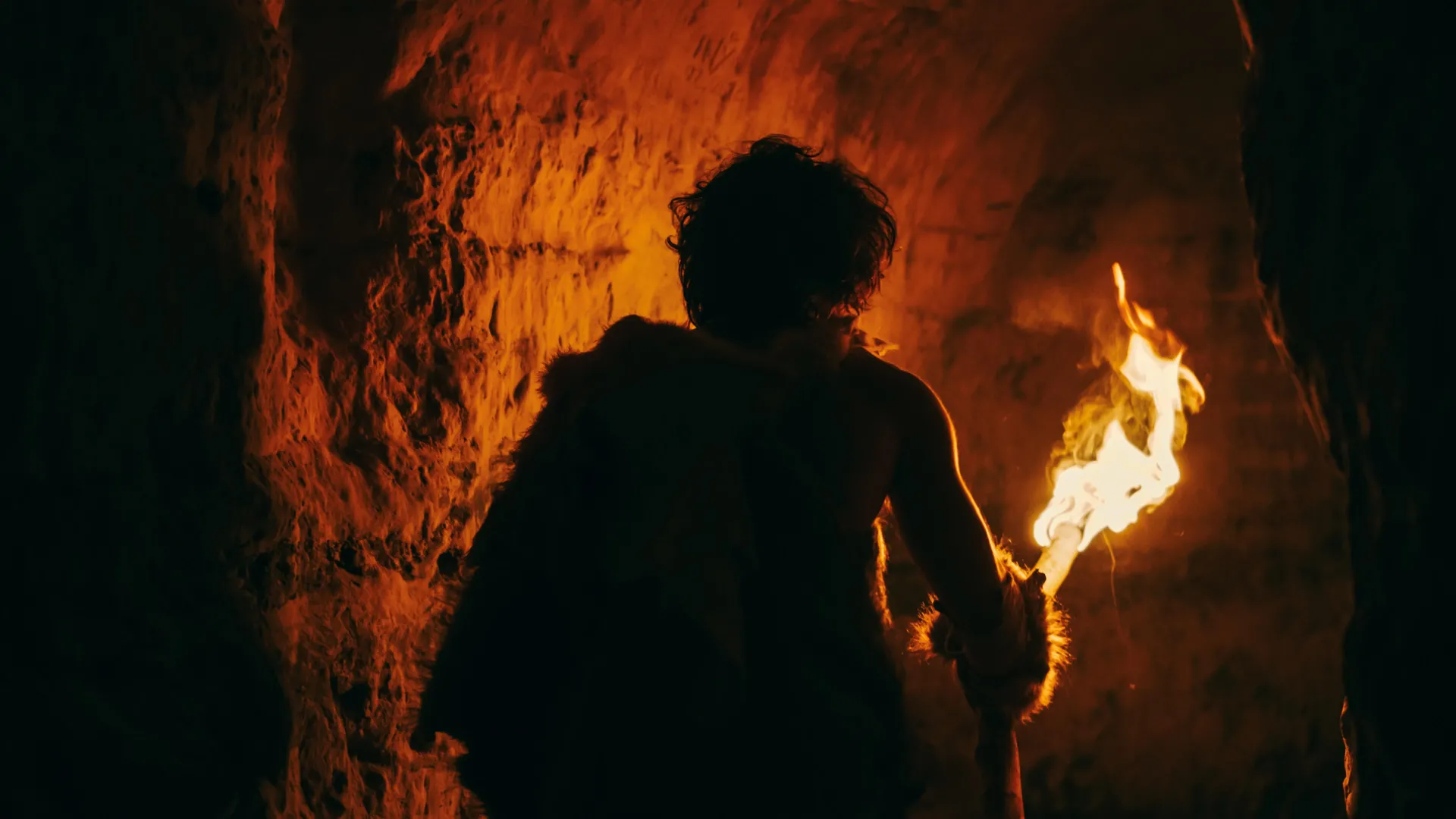
The team acknowledges that these ancestors likely did not possess the technology to create fire on demand—a skill that would come much later—but rather practiced "fire harvesting." They would have collected burning embers from lightning-struck trees or savanna wildfires and transported them to the safety of the cave, where they maintained the flame as long as possible using scavenged organic material, such as owl pellets or dry vegetation.
Implications: The Behavioral Milestone
The significance of this discovery extends far beyond the dating of the site. It offers a new window into the behavioral evolution of the genus Homo.
The Cognitive Leap
The ability to transport fire requires foresight, planning, and coordination. It implies that these ancestors had developed a sense of "future-thinking"—the realization that fire is a resource that must be protected and nurtured. This is a fundamental cognitive step that separates the hominins of the early Pleistocene from their more primate-like ancestors.
Social and Evolutionary Advantages
While the ability to cook food is often cited as the primary benefit of fire, the earliest users likely prioritized other survival mechanisms:
- Protection: The presence of fire at the cave entrance or within the cavern would have served as a powerful deterrent against large predators, allowing hominins to sleep in relative safety.
- Warmth: The Kalahari, while generally arid, experiences significant temperature drops. Fire allowed these groups to survive in environments that would have otherwise been inhospitable.
- Social Cohesion: The fire-lit cave provided a central hub, a "hearth" that encouraged social interaction, communication, and the sharing of resources after dark, fostering the early development of human culture.
- Light: By extending the hours of activity, fire likely played a role in the development of complex tool-making and social bonding.
Future Directions
The methodology pioneered at Wonderwerk Cave is poised to revolutionize the field of paleoanthropology. As researchers begin to apply these light-emitting luminescence tests to other major archaeological sites across Africa, Europe, and Asia, we may find that the use of fire was far more widespread and ancient than current records suggest.
The story of humanity is often told through the lens of our inventions—the wheel, the printing press, the microchip. Yet, the story of fire remains the most profound. It is the story of a species that, millions of years ago, stood at the entrance of a cave, looked at a dying flame, and decided to carry it inside. As this new evidence confirms, that decision was the spark that ignited the human journey.
With the continued integration of archaeology, geology, and advanced chemical imaging, the dark corners of our prehistoric past are slowly beginning to glow with the light of the fires our ancestors first learned to hold.