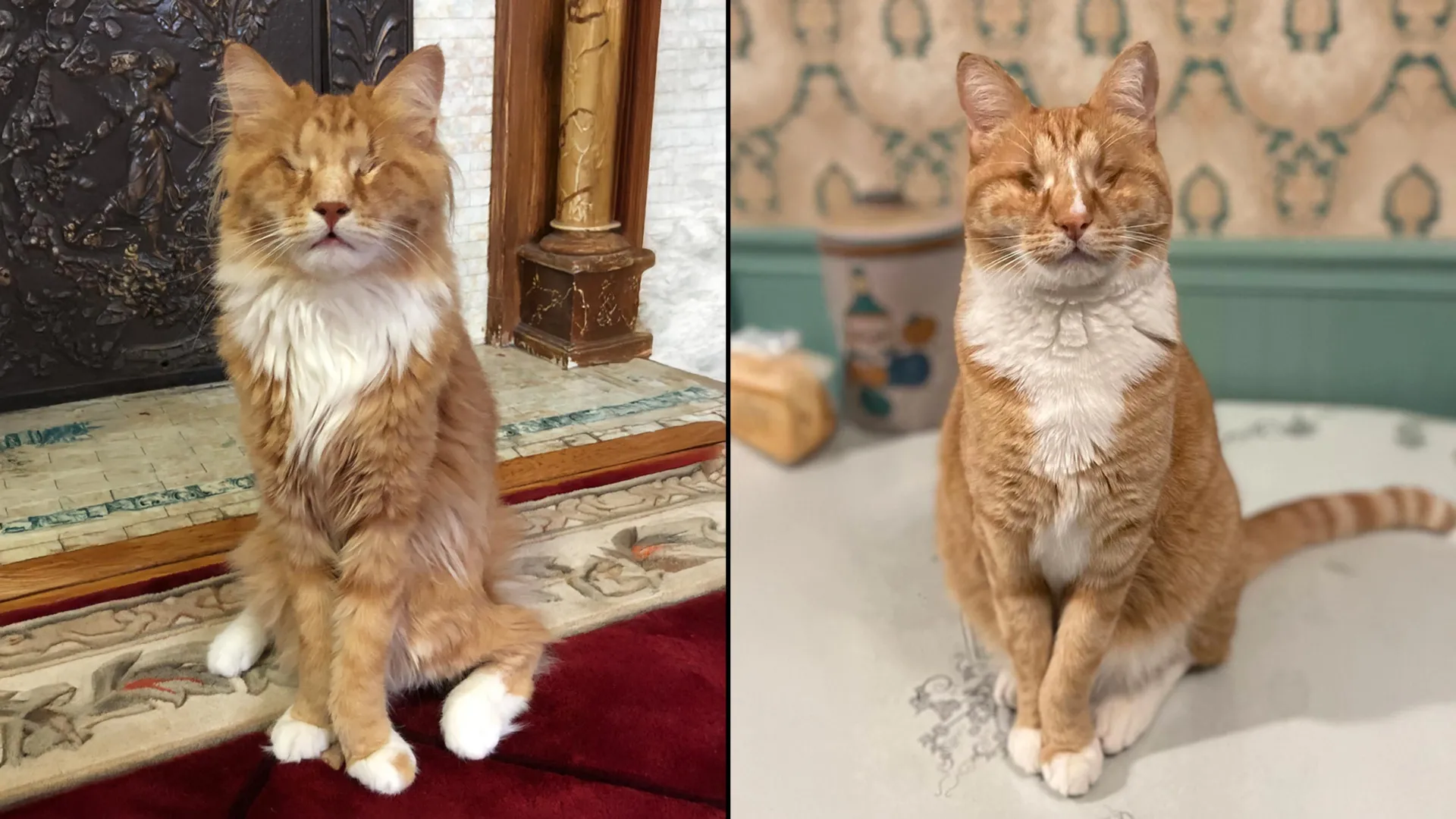
In a landmark study that bridges the gap between human medicine and veterinary science, researchers at Cornell University have unveiled the first molecular characterization of Marfan syndrome in domestic cats. The study, published in the journal Scientific Reports, centers on two feline siblings, Gary and Shaggy, whose unique physiological profiles have provided scientists with a rare window into the mechanics of connective tissue disorders.
While Marfan syndrome has been extensively studied in humans since its identification by French pediatrician Antoine Marfan in 1896, its presence in the animal kingdom has remained largely speculative. By isolating the genetic root of the condition in these two brothers, the Cornell team has not only secured a diagnostic milestone for veterinary medicine but has also offered new insights into the complexities of genetic inheritance that could eventually inform human therapeutic research.
The Clinical Presentation: A Diagnostic Puzzle
The story of Gary and Shaggy began as a routine observation that quickly evolved into a medical mystery. As kittens, the brothers exhibited physical traits that deviated significantly from the standard feline phenotype—most notably, limbs that were disproportionately long and slender.
As the brothers matured, their primary care veterinarians noted a constellation of symptoms that raised immediate red flags. Beyond their elongated skeletal structure, diagnostic imaging revealed abnormalities in their ocular development and, more alarmingly, an enlarged aorta. The aorta, the body’s primary artery responsible for transporting oxygenated blood from the heart to the rest of the body, is the most vulnerable point for patients with Marfan syndrome. In humans, aortic dilation—the weakening and stretching of the artery wall—is the leading cause of morbidity and mortality for those living with the condition.
The convergence of these specific symptoms—skeletal overgrowth, ocular irregularities, and cardiovascular compromise—mirrored the clinical diagnostic criteria used for human Marfan patients. This raised the question: could a species separated from humans by millions of years of evolution be suffering from the same genetic anomaly?
Chronology: From Observation to Genetic Breakthrough
The journey to identify the cause of Gary and Shaggy’s condition was a multidisciplinary undertaking spanning several years.
The Early Observation Phase:
The process began with the initial recognition of the brothers’ "lanky" appearance. In the veterinary world, such observations are often dismissed as simple variations in breed or growth spurts. However, the progression to cardiac and ocular issues prompted a deep-dive clinical investigation.
The Diagnostic Investigation:
Veterinary specialists at Cornell University’s College of Veterinary Medicine performed comprehensive echocardiograms, skeletal surveys, and ophthalmic examinations. Once the clinical picture of Marfan syndrome was solidified, the team pivoted to the molecular level. Using advanced genomic sequencing, researchers targeted genes known to be associated with connective tissue integrity in other species.
The Discovery:
The breakthrough came when researchers identified pathogenic variants in the FBN1 gene. In humans, the FBN1 gene provides the blueprint for fibrillin-1, a glycoprotein that acts as a structural scaffold for connective tissues. When this protein is defective, the tissues lose their elasticity and structural resilience. The study confirmed that Gary and Shaggy possessed mutations in this specific gene, marking the first time this link had been documented in a feline subject.
Supporting Data: The FBN1 Mutation and Its Impact
The genetic data yielded a surprising, if not paradoxical, finding. In human cases of Marfan syndrome, the disorder is typically inherited in an autosomal dominant pattern. This means that a mutation in just one copy of the FBN1 gene is sufficient to cause the disease, as the body cannot produce enough functional fibrillin-1 to maintain healthy connective tissues.
However, Gary and Shaggy presented a more complex genetic profile: they had inherited two altered copies of the FBN1 gene, one from each parent.
The Mechanism of Survival
Usually, the presence of two mutated copies of such a critical gene would result in a neonatal-lethal outcome. Yet, Gary and Shaggy had reached adulthood. Upon deeper analysis, the research team discovered a nuanced "genetic twist." The specific variant carried by the brothers did not result in a total "null" mutation—where the gene is rendered completely useless.
Instead, the mutation interfered with the processing of the gene’s instructions, allowing for a residual amount of normal, functional fibrillin-1 production. This "leaky" mutation provided just enough structural protein to support the brothers’ physiology, preventing the catastrophic collapse of connective tissue that would typically occur in utero. This discovery is a significant contribution to the field of genetics, demonstrating that even severe mutations can be modulated by how the cellular machinery interprets compromised genetic code.
Official Responses: Insights from the Cornell Team
The implications of this study are profound, according to the researchers involved. Dr. Jacquelyn Evans, the senior author of the study and an assistant professor at the College of Veterinary Medicine and the Baker Institute for Animal Health, emphasized that the study serves as a foundational step for future diagnostics.
"The findings provide a foundation for improved veterinary diagnostics," Dr. Evans stated. "It can help veterinarians recognize similar cases in the future and may help develop genetic tests that allow for early intervention."
The team’s official stance highlights that while this is a "rare" discovery, its rarity may be a result of under-diagnosis rather than biological impossibility. By publishing the genetic sequence and the clinical presentation of these cats, the Cornell team has provided a "map" for other veterinary practitioners to follow when faced with similar, unexplained cases in feline patients.
Implications: The One Health Perspective
The study of Gary and Shaggy falls under the umbrella of "One Health"—the concept that human, animal, and environmental health are inextricably linked. By studying how a genetic mutation manifests in a non-human species, scientists gain a broader understanding of the disease’s "phenotypic plasticity."
Advancing Veterinary Care
For the feline population, the implications are immediate. Currently, there is no standardized screening for Marfan-like disorders in cats. The Cornell study paves the way for the development of commercial genetic tests. Such tests could be invaluable for breeders and pet owners, allowing for the proactive management of cardiac health in predisposed cats through regular echocardiograms and potentially pharmacological management to stabilize the aorta.
Informing Human Genetic Research
The discovery also holds potential value for human medicine. Because the brothers’ survival was linked to the partial functionality of their mutated FBN1 gene, the study provides a natural model for studying "hypomorphic" mutations—mutations that reduce but do not eliminate gene function. Researchers studying human Marfan syndrome often look for ways to mitigate the severity of the condition; understanding how a cat’s body compensates for a dual-copy mutation could offer clues for therapeutic pathways in human patients.
A New Era of Comparative Genetics
The case of Gary and Shaggy underscores the importance of interdisciplinary research. By combining the clinical skills of veterinarians with the high-tech capabilities of geneticists, the team at Cornell has turned a singular, sad medical diagnosis into a broad-reaching scientific achievement.
As we look toward the future, this study suggests that our pets may hold the keys to understanding some of our most complex human ailments. The "genetic twist" found in these two brothers is a reminder that in the world of biology, the most important lessons often come from the exceptions to the rule. Gary and Shaggy, through their unique physical journey, have left an indelible mark on both the veterinary and medical communities, ensuring that their legacy will be one of progress, improved diagnostics, and a deeper understanding of the building blocks of life.
With this study, the curtain has been pulled back on a condition that was long thought to be a human-centric struggle, proving once again that the path to discovery is often found in the most unexpected places—in this case, in the long-limbed, spirited lives of two feline brothers.