Executive Summary: The Judicial Intervention
In a significant rebuke of executive authority, a U.S. District Court judge has issued a temporary restraining order (TRO) halting a controversial series of television advertisements commissioned by the Trump administration. The ads, which critics and legal advocacy groups argue function as thinly veiled political propaganda, were funded using money diverted from the Customs and Border Protection (CBP) budget.
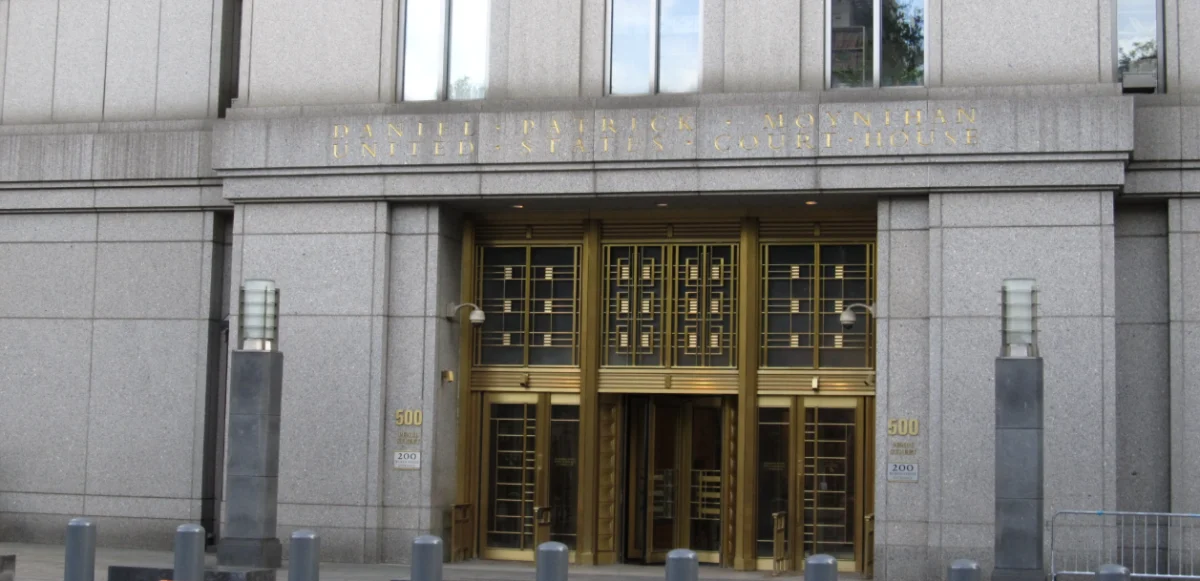
Judge Jennifer Rochon of the U.S. District Court for the Southern District of New York delivered the order on Sunday, effectively freezing the administration’s ability to further distribute or purchase airtime for the content. The ruling represents a major legal victory for plaintiffs—including the watchdog group Common Cause and the Democratic National Committee (DNC)—who argued that the use of federal coffers to influence election outcomes constitutes a gross violation of constitutional spending constraints and federal law.
The Chronology of the Dispute
The legal firestorm erupted in early October 2026, culminating in a swift judicial response that highlights the tension between executive discretion and legislative oversight.
- October 7, 2026: Common Cause and the Democratic National Committee filed separate but parallel lawsuits in the Southern District of New York. The filings alleged that the administration had unilaterally diverted $20 million from the Department of Homeland Security’s CBP budget to finance a massive national advertising campaign.
- October 8–10, 2026: Legal briefs were exchanged, with the administration defending its use of funds as falling under the broad purview of "public information" and "executive outreach."
- October 11, 2026: The administration filed a formal response to the complaint, asserting that the plaintiffs had failed to demonstrate "irreparable harm," a standard requirement for an injunction.
- October 12, 2026: Judge Jennifer Rochon heard arguments and reviewed the filings, weighing the constitutional implications of executive spending against the potential for political bias in federally funded media.
- October 13, 2026: Judge Rochon issued the TRO, finding that the plaintiffs were highly likely to succeed on the merits of their case and that the continued broadcast of the ads would cause irreversible damage to the democratic process.
Supporting Data and Legal Framework
The plaintiffs’ legal strategy was built on a multi-pronged attack, citing both constitutional provisions and specific statutes designed to prevent the misappropriation of public funds.
The Appropriations Clause
At the heart of the complaint is Article I, Section 9, Clause 7 of the U.S. Constitution, which states: "No Money shall be drawn from the Treasury, but in Consequence of Appropriations made by Law." This clause is the cornerstone of the "power of the purse," explicitly granting Congress—not the President—the sole authority to decide how tax dollars are spent. By siphoning $19 million from a department meant for border security and reallocating it to a political advertising campaign, the administration effectively bypassed congressional intent.
The "Publicity or Propaganda" Prohibition
The DNC’s complaint leaned heavily on the "Publicity or Propaganda" Prohibition, a long-standing rider attached to federal appropriations acts since 1951. This law explicitly forbids the use of public funds for "publicity or propaganda" purposes. The definition of propaganda in this legal context includes self-aggrandizement of government officials or political promotion that lacks a clear, non-partisan governmental purpose.
The Antideficiency Act and The Purpose Act
Furthermore, the legal challenge invoked:
- The Antideficiency Act: Which prohibits federal agencies from obligating or expending federal funds in excess of their actual appropriations.
- The Purpose Act (31 U.S.C. § 1301): Which dictates that appropriations must be used strictly for the objects for which they were intended. The argument follows that funds allocated for CBP’s operational needs cannot be legally repurposed for mass-media political campaigning.
Official Responses and Judicial Reasoning
The Administration’s Defense
In its response to the court, the Trump administration argued that the advertisements served a legitimate governmental function, providing the public with information regarding administration policies. They maintained that the judiciary should practice restraint in intervening in the internal budgetary allocations of the executive branch. Counsel for the administration insisted that Common Cause and the DNC had failed to prove that they suffered "irreparable harm," arguing that the court’s intervention was an overreach into the executive’s domain.
Judge Rochon’s Findings
Judge Rochon dismissed the administration’s arguments, providing a scathing analysis of the situation. In her order, she noted four critical factors that necessitated the injunction:
- Likelihood of Success on the Merits: She determined that the plaintiffs had established a compelling case that the administration violated constitutional and statutory limits.
- Irreparable Harm: The court agreed that the use of public funds to skew election results cannot be "undone" after the fact, even if the money were eventually returned, because the political impact of the ads on the electorate would be permanent.
- Balance of Equities: The court found that the harm to the public interest caused by the misuse of funds significantly outweighed any burden placed on the administration by halting the ads.
- Public Interest: Judge Rochon emphasized that the integrity of the electoral process is a core public interest, and the use of government machinery to favor one party over another is antithetical to that interest.
Implications for Governance and Election Law
A Warning Shot to Executive Overreach
This ruling serves as a vital check on the "imperial presidency." If allowed to continue, the precedent of diverting departmental funds to finance political campaigning could permanently alter the American political landscape. It would effectively allow any administration to use taxpayer dollars as an unlimited "slush fund" to bolster their own reelection chances, bypassing the transparency of campaign finance laws.
The Role of Independent Watchdogs
The case highlights the indispensable role of organizations like Common Cause. Without the vigilance of such groups and the legal mobilization of the DNC, the transfer of $19 million from border security to political promotion might have gone unnoticed or unchallenged until after the election cycle had concluded.
Potential Long-term Consequences
Legal scholars are now watching to see if the administration will attempt to appeal the decision to the Second Circuit Court of Appeals. Furthermore, there is growing pressure on Congress to hold hearings regarding the misuse of the CBP budget.
If the injunction holds, the administration will be forced to account for the $19 million already spent. This could lead to intense scrutiny of the DHS and CBP leadership, who may be required to testify as to how the decision to divert these funds was reached and who authorized the transfer.
The case of Common Cause v. Trump Administration is likely to be studied for years as a seminal example of the judiciary asserting the limits of executive power in the face of alleged constitutional violations. As the 2026 election cycle approaches its climax, this decision ensures that at least one major source of partisan influence has been effectively silenced by the rule of law.
In conclusion, Judge Rochon’s decision reinforces the foundational principle that public funds belong to the people, not to the political apparatus currently occupying the White House. By mandating a total halt to the campaign, the court has safeguarded the democratic principle that the federal government must remain a neutral arbiter in the selection of its own leaders. The coming weeks will undoubtedly see further legal maneuvering, but for now, the administration’s taxpayer-funded media blitz has been brought to a firm, decisive halt.