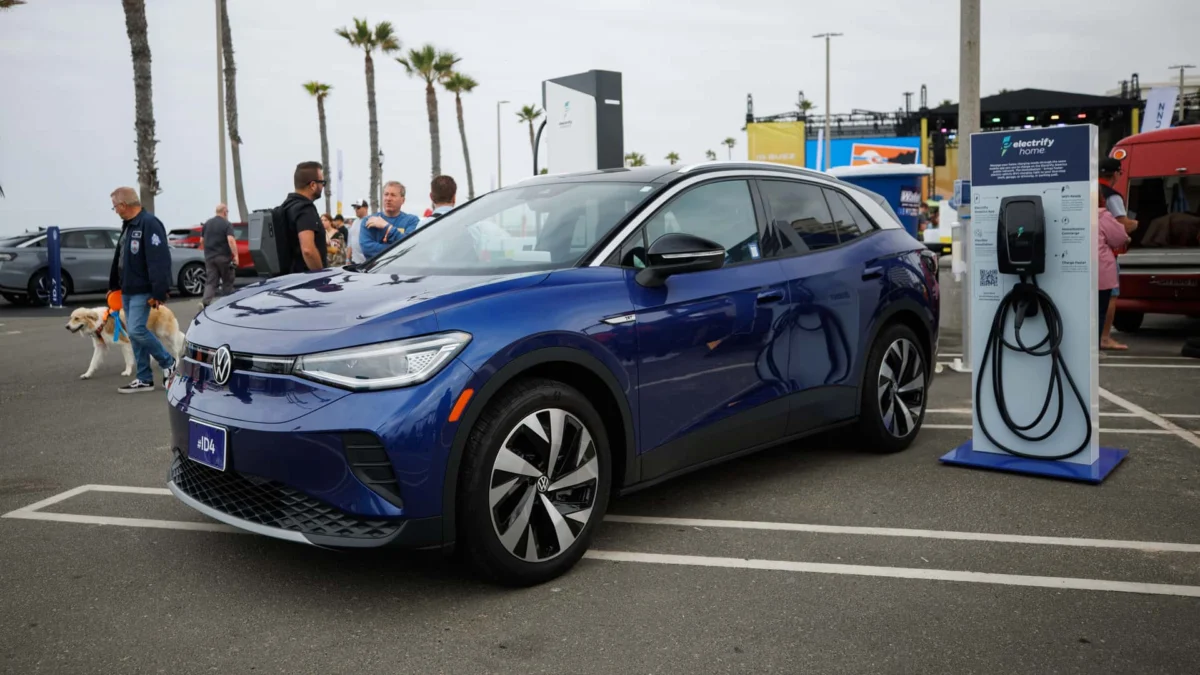
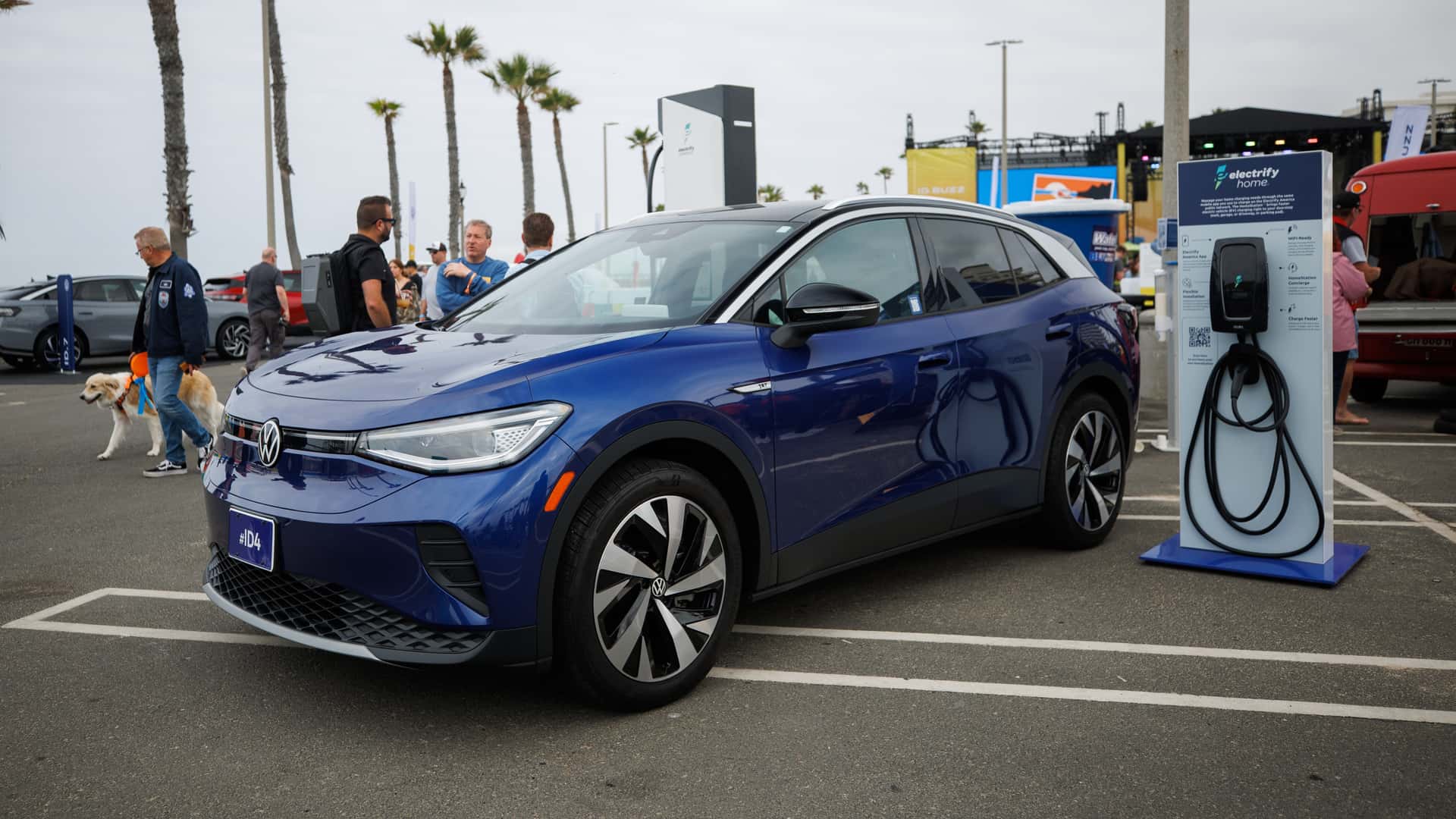
In a significant move affecting thousands of electric vehicle owners across the United States, Volkswagen has issued a recall for 22,524 units of its popular ID.4 electric crossover. The recall, prompted by a persistent and potentially dangerous defect within the vehicle’s high-voltage battery system, underscores the ongoing challenges automakers face in managing the complexities of lithium-ion battery safety and thermal management.
The recall specifically targets ID.4 models manufactured between January 1, 2023, and February 1, 2025. While Volkswagen has moved quickly to implement mitigation strategies, the company remains in a state of investigation, having not yet identified the precise root cause of the overheating events that have plagued these battery packs.
The Scope of the Crisis: Understanding the Recall
The National Highway Traffic Safety Administration (NHTSA) filed the official recall documentation—campaign 26V630—following reports of more than 20 thermal incidents linked to these specific battery assemblies. The batteries in question were manufactured by SK Battery America, a key supplier for Volkswagen’s North American electric vehicle production.
The incidents, which began surfacing in late 2024, involve a phenomenon known as "thermal propagation." This is a catastrophic failure mode in which one individual battery cell experiences an internal short or overheating event, subsequently igniting the adjacent cells. This chain reaction can lead to intense battery fires that are notoriously difficult to extinguish, posing a severe risk to vehicle occupants and property.
According to technical analysis provided to federal regulators, the defect appears to stem from manufacturing inconsistencies within the SK Battery America cell modules. Specifically, engineers have identified instances of shifted electrodes within the cells, which can trigger localized overheating and ultimately lead to a fire.
Chronology of Battery-Related Concerns
This is not the first time Volkswagen has encountered turbulence regarding the ID.4’s energy storage systems. The company has navigated a series of high-voltage battery recalls over the past two years, reflecting a broader struggle to stabilize the hardware performance of its flagship EV.
- Prior Recalls (2025-2026): Before the current 93EX campaign, Volkswagen issued two major recalls (25V836 and 26V030) covering approximately 44,000 ID.4 vehicles from the 2023–2025 model years. Those actions also involved SK-sourced battery packs and mandated similar charge-capping protocols.
- The Escalation: Despite the earlier interventions, further data analysis and field reports throughout 2026 forced the German automaker to widen the net. The latest campaign, filed in late September 2026, represents an expansion of the company’s efforts to contain the risk as more incidents were reported.
- Official Correspondence: Following the formal filing in late September, Volkswagen prepared a comprehensive notification strategy. Formal letters to regulatory bodies were finalized in early October, setting the stage for the public outreach phase.
Technical Mitigation: Why the 80 Percent Limit?
In the absence of a permanent mechanical repair, Volkswagen has opted for a software-based "stopgap" solution. The company is currently deploying an over-the-air (OTA) update designed to cap the maximum state of charge (SoC) at 80 percent.
The logic behind this limitation is grounded in electrochemistry. Lithium-ion batteries are most stable when kept within a specific range of charge. By preventing the battery from reaching its "top end"—the final 20 percent of capacity where cells are under the highest voltage stress—the company reduces the electrochemical pressure on the potentially defective electrode components. This reduces the likelihood of the thermal runaway events that have characterized the recent incidents.
For vehicles that lack the necessary connectivity to receive an OTA update, Volkswagen is utilizing a more manual, albeit traditional, approach: issuing warning stickers. These stickers will serve as a constant physical reminder to owners to terminate charging sessions once the 80 percent threshold is reached. While admittedly a "crude" intervention, it provides a vital safety buffer while the company’s engineering teams continue their deep-dive investigation into the battery’s internal architecture.
Official Responses and Supplier Relations
The relationship between an automotive OEM and a battery cell manufacturer is complex, and in this instance, it is under intense scrutiny. Volkswagen’s Group Product Safety Committee has taken a hardline stance with SK Battery America, demanding granular data regarding production conditions at the time these cells were manufactured.
The core objective of this investigation is to identify a "clean date"—a specific point in the production timeline after which the manufacturing defect was corrected or ceased to occur. Identifying this date is critical, as it would allow Volkswagen to isolate the affected population with precision and provide a clearer path toward a permanent hardware repair.
As of early November 2026, no such repair timeline has been established. Volkswagen has committed to a second round of owner notification letters that will be sent out only once a definitive, long-term remedy has been finalized.
Implications for Owners and Prospective Buyers
For the 22,524 owners of the affected ID.4 models, the current reality is one of inconvenience and heightened vigilance. However, it is important to note that Volkswagen has not issued a "do not drive" or "park outside" order. The vehicle remains safe to operate under the current charging limitations.
Advice for Current Owners:
- Monitor Notifications: Owners should keep an eye on their mailboxes for the official notification letters scheduled for late November or early December 2026.
- Adhere to the Limit: Regardless of whether the software update has been applied, owners must strictly follow the instruction to cap charging at 80 percent.
- Stay Informed: Registering your vehicle with the NHTSA is the most effective way to ensure you receive real-time updates regarding the status of the repair campaign.
Advice for Prospective Buyers:
The secondary market for EVs is growing, and shoppers looking at used ID.4s should exercise caution. Any 2023–2026 model under consideration should be vetted against the VIN lists associated with campaign 93EX. Dealers are legally obligated to disclose open recalls, and buyers should insist on documentation proving that the vehicle’s status is understood.
Interestingly, Volkswagen has recently introduced various customer incentives and discounts on new ID.4 orders. While these promotions are generally distinct from the recall efforts, potential buyers should ask dealerships if these offers can be applied to mitigate the inconvenience caused by the current situation.
The Future of the ID.4 Platform
The persistent issues with the current generation of ID.4 batteries occur at a time of transition for the Volkswagen brand. With the ID.4 being phased out in favor of newer electric architectures, such as those found in the upcoming ID.Tiguan and other future-generation models, Volkswagen is under pressure to resolve these legacy concerns quickly to maintain consumer trust.
The automotive industry is in the midst of a massive shift toward electrification, and incidents like this serve as a stark reminder of the technical hurdles involved in scaling battery production. As the industry moves forward, the reliance on high-quality manufacturing at the cell level will become even more pronounced. For now, Volkswagen is focused on the immediate task: managing the safety of its existing fleet while working in lockstep with its suppliers to turn the page on this challenging chapter.
As the investigation continues, the automotive world will be watching to see how quickly a permanent solution can be developed. For the tens of thousands of ID.4 drivers on the road today, the goal remains the same: a swift, effective, and lasting fix that restores full confidence in their vehicle’s performance.