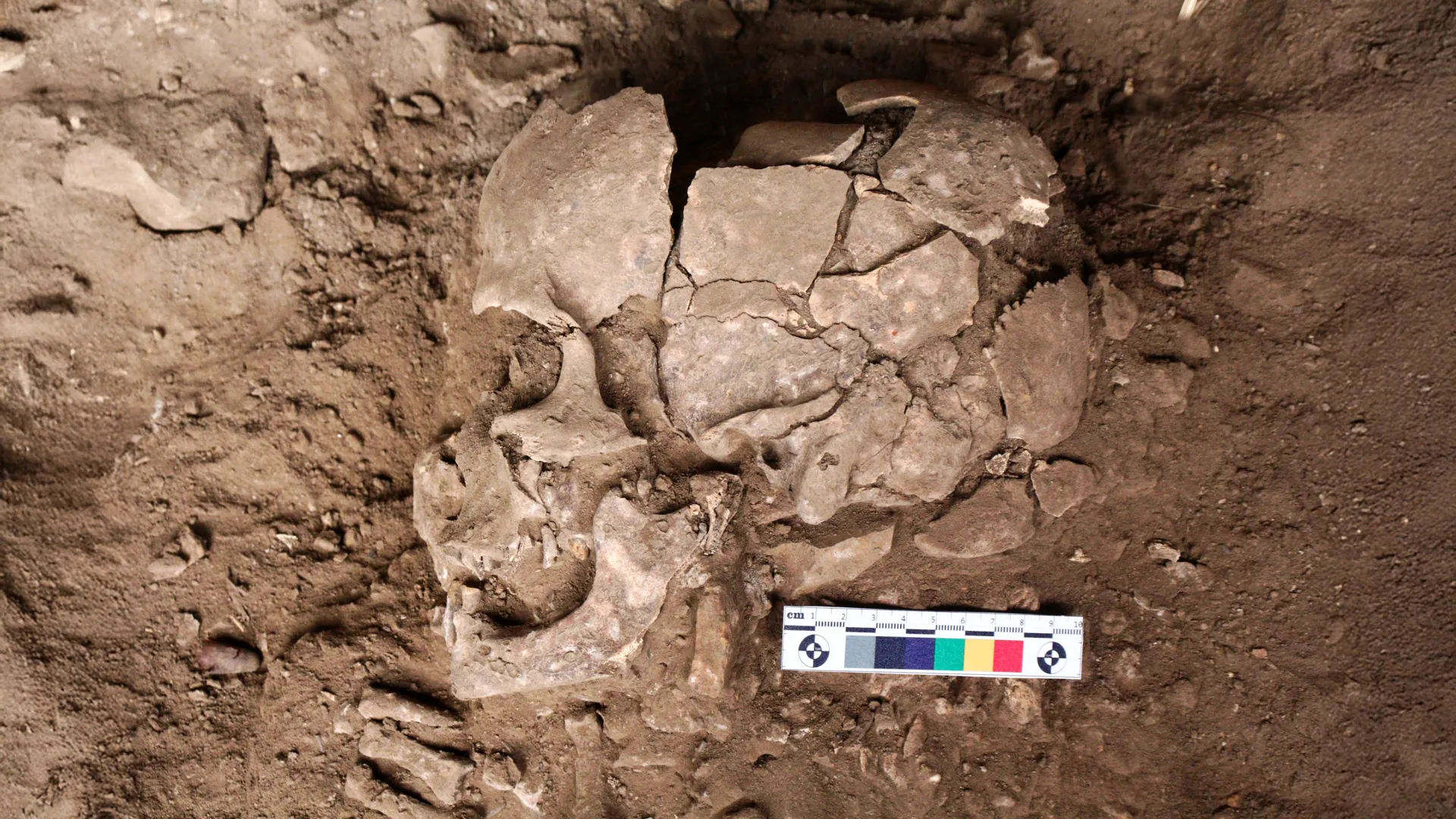
In the quiet, limestone caves of Sulawesi, Indonesia, archaeologists have unearthed evidence of a habit that bridges the chasm between the modern world and the deep, distant past. A team led by researchers from Griffith University’s Australian Research Centre for Human Evolution (ARCHE) has discovered that humans were consuming psychoactive substances as far back as 25,000 years ago—a finding that effectively shatters the long-held belief that drug use emerged only with the advent of agriculture.
For decades, the prevailing consensus in anthropology held that the human penchant for mind-altering substances was a byproduct of the Neolithic Revolution. Scholars argued that once humans began settling down, farming crops, and producing surplus, they turned to fermented beverages and other psychoactive agents to cope with the stresses of sedentary life or to facilitate social rituals. The new study, published in the journal Science Advances, pushes that timeline back by tens of thousands of years, suggesting that "getting high" is an ancient human tradition rooted in our hunter-gatherer ancestors.
A Global Habit with Deep Roots
The substance at the heart of this discovery is the "betel nut," the seed of the Areca catechu palm. While often overlooked by Western cultures, it remains the fourth most widely used psychoactive stimulant in the world today, trailing only alcohol, caffeine, and nicotine. Hundreds of millions of people across the Asia Pacific region, from the Indian subcontinent to the South Pacific, continue the tradition of chewing betel nut.
Modern users typically process the nut by combining it with slaked lime—often derived from crushed, burnt shells—and wrapping it in a betel leaf to create a "quid." This mixture triggers a chemical reaction that releases alkaloids into the bloodstream, providing a sense of euphoria and increased alertness. However, the Griffith University team, in collaboration with Indonesian researchers from the University of Hasanuddin and the National Research and Innovation Agency (BRIN), has found that this habit is a refined evolution of a much older, more primitive practice.
Chronology of a Habit: From Pleistocene Foragers to Modern Society
To understand the scope of this discovery, it is essential to look at the timeline of human behavior. Previous archaeological consensus placed the earliest evidence of drug use in the Neolithic or Bronze Age, roughly 3,500 years ago, with earlier examples such as barley beer in Israel dating back approximately 13,000 years.
The Sulawesi findings reset this clock entirely:
- 25,000 to 16,000 years ago: The era of the first individual studied by the Griffith team. These hunter-gatherers were already engaged in the regular, habitual practice of "sucking" raw betel nuts.
- 7,600 to 6,300 years ago: The era of the second individual, suggesting that the habit persisted across thousands of years of human cultural and environmental shifts.
- Post-Neolithic (~3,500 years ago): The period previously thought to be the dawn of psychoactive substance use, now revealed to be merely a point in a much longer, continuous tradition.
This chronology suggests that the human desire to alter brain chemistry is not a "civilizational" invention, but a behavioral trait that accompanied our ancestors as they navigated the complexities of the Ice Age.
Supporting Data: The Anatomy of an Ancient Addiction
The discovery was not made through the finding of ancient seeds—which are rarely preserved in the tropical climate of Indonesia—but through the biological signatures left behind on the human body itself.
Dental Wear and Bioarchaeological Markers
The researchers examined skeletal remains of two early foragers found in Sulawesi. Upon inspection, they identified a distinct, previously unrecognized pattern of dental wear: deep, rounded grooves on the teeth. By cross-referencing this physical damage with the habits of modern populations who consume betel nut without the addition of lime, the team concluded that these individuals were habitually sucking on intact, hard, fibrous seeds.
Biochemical Validation
To confirm that these teeth were indeed associated with the consumption of the psychoactive alkaloid arecoline, the team utilized two sophisticated methodologies:
- Cloned Receptor Testing: Researchers soaked betel nuts in artificial saliva to create a broth, which was then tested against a panel of cloned human receptors in frog egg cells. The experiment confirmed that merely sucking on an intact nut—without the aid of lime—is sufficient to release enough arecoline to affect neural activity.
- Chemical Residue Analysis: Led by Associate Professor Carney Matheson, the team performed biochemical testing on the dental tissues of the ancient foragers. The results were conclusive: traces of arecoline were found embedded within the teeth, serving as a direct "smoking gun" for the consumption of the plant.
Official Perspectives: Rethinking the Human Condition
Professor Adam Brumm, the lead researcher from Griffith University, believes this study changes our fundamental understanding of the human relationship with plants. "This theory fails to account for the possibility that very ancient drug-taking lies at the roots of our most commonly used psychoactive substances," Brumm stated.
The researchers emphasize that this behavior was likely driven by a combination of recreational desire and self-medication. The Sulawesi foragers lived in an environment where dental health was notoriously poor, and as the study indicates, arecoline acts as a natural analgesic.
"We suspect that some people may initially have sucked betel nuts to ease toothache," Brumm explained. "However, the very thing that provided relief ultimately accelerated the decay." The abrasive nature of the hard seeds caused the teeth to wear down significantly, eventually exposing the pulp chamber. This led to chronic infection and pain, which, in a tragic feedback loop, likely prompted the individual to suck more betel nut to numb the pain caused by the habit itself.
Implications for Future Research
The implications of the Sulawesi findings are profound. By demonstrating that drug use predates the transition to agriculture, the study forces historians and archaeologists to reassess what we consider to be the "defining characteristics" of human culture.
The Continuity of Human Behavior
The research implies that drug-taking is not an aberration or a result of modern societal pressures, but a persistent human tradition. The fact that this habit was practiced during the Late Pleistocene suggests that our ancestors were actively experimenting with their environment to alter their states of consciousness. It suggests that the drive to manage pain, enhance alertness, or simply experience a chemical "high" is deeply embedded in the human experience.
A New Lens for Archaeology
This discovery also highlights the importance of bioarchaeology. By focusing on the "silent" markers left on the human body—such as dental wear and microscopic chemical traces—researchers can now uncover aspects of human life that were previously thought to be lost to time. It opens the door to investigating other substances that may have been used by ancient populations, such as stimulants, hallucinogens, or relaxants, that do not leave behind recognizable physical remains.
Conclusion: The Long Shadow of the Past
As we reflect on these findings, it becomes clear that our modern habits are not as modern as we like to believe. The story of the Sulawesi foragers is a poignant reminder of the enduring nature of human behavior. Whether it was to survive the harsh realities of the Ice Age or to manage the chronic pain of a life without modern dentistry, our ancestors were, in their own way, seeking control over their internal world through the plants of their external one.
The study, “Betel nut sucking is the earliest recorded evidence for the habitual use of a neuroactive plant drug,” serves as a milestone in evolutionary science. It bridges the gap between the ancient forager and the modern individual, reminding us that while our tools and societies have evolved, our fundamental nature—and our complex, often paradoxical relationship with the natural world—has remained remarkably consistent for at least 25,000 years.