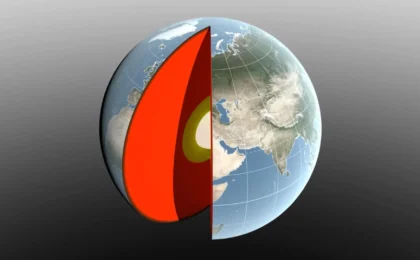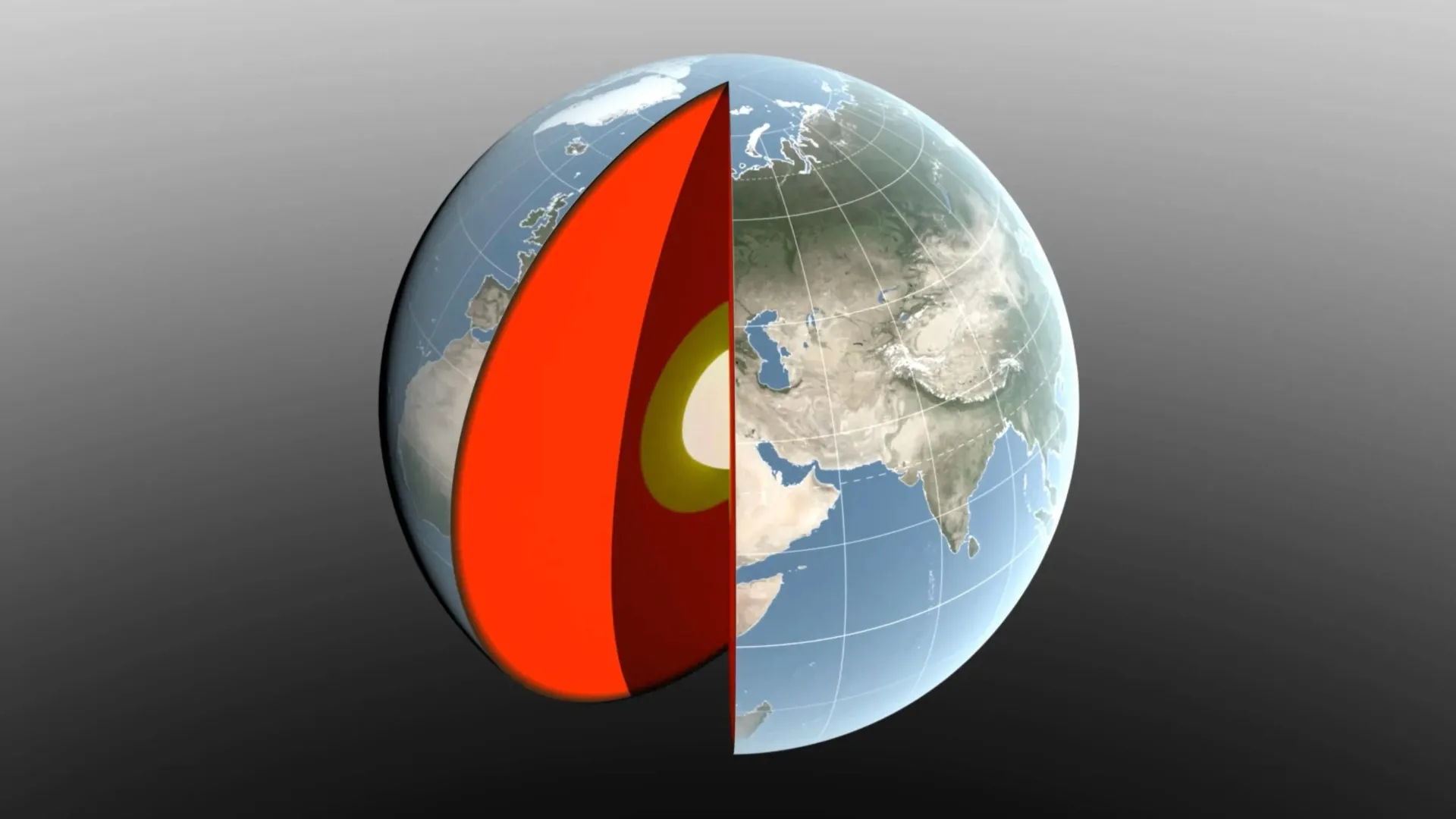
Earth is not the static, solid blue marble we often imagine. Beneath our feet, the planet is in a state of perpetual, rhythmic flux. As water migrates across oceans, ice sheets wax and wane, and the atmosphere swirls with seasonal weather patterns, the very weight distribution of our world shifts. This redistribution of mass is so profound that it physically pulls Earth’s center of mass—the "balance point" of the planet—back and forth, causing it to circle its geometric center by fractions of an inch.
For decades, scientists have grappled with the challenge of precisely measuring these subtle, seasonal oscillations. Now, a team led by NASA’s Jet Propulsion Laboratory (JPL) has unveiled a groundbreaking methodology that provides the most accurate assessment of these shifts to date. Published in the Geophysical Journal International, this study not only refines our understanding of Earth’s internal dynamics but also promises to enhance the precision of the satellite-based technologies that underpin modern global navigation and mapping.
The Mechanics of a Shifting Earth
Why the Center of Mass Moves
If Earth were a perfect, unchanging sphere of uniform density, its center of mass would coincide precisely with its geometric center. However, Earth is a dynamic system. The movement of massive amounts of water, ice, and air creates a "sloshing" effect that displaces the planet’s gravitational heart.
The magnitude of this movement is measured in mere millimeters, yet these tiny shifts have historically been difficult to quantify. In fact, the two most recent international estimates—conducted in 2017 and 2023—differed by 0.27 inches (7 millimeters). To put that into perspective, that margin of error is roughly equivalent to the thickness of three stacked nickels—a discrepancy nearly as large as the movement itself. Resolving this ambiguity was the primary driver for the new research led by JPL geoscientist Donald Argus.
The Methodology: A Multi-Satellite Approach
To narrow the margin of error, the research team adopted a sophisticated, multi-faceted approach. Historically, scientists relied on the Laser Geodynamics Satellites (LAGEOS 1 and 2), which have orbited the Earth since the 1970s. These 900-pound, prism-covered "disco balls" serve as targets for ground stations worldwide, which fire lasers at the satellites to track their positions with extreme accuracy.
However, the team recognized that the uneven global distribution of these laser-tracking stations limited the data’s precision. The new method overcomes this by:
- Integrating GPS Data: Combining laser measurements with GPS tracking and orbital information from various low-Earth-orbit satellites to create a more robust data set.
- Accounting for Crustal Deformation: Acknowledging that the Earth’s surface is elastic. As water and ice move, they exert pressure that bends the Earth’s crust, causing the tracking stations themselves to move. By calculating this crustal "flex," researchers achieved a much cleaner signal.
Chronology of Seasonal Flux
The study highlights that Earth’s center of mass follows a distinct, predictable, yet complex annual cycle driven by three primary factors: the oceans, the atmosphere, and continental water (including groundwater, soil moisture, and glaciers).
- March: The Northern Hemisphere’s Weight: As snow accumulates across the massive landmasses of North America and Eurasia, the sheer weight of this frozen water shifts Earth’s center of mass roughly 3 millimeters toward the North Pole.
- April: The Amazonian Pull: As the Amazon River basin experiences its seasonal peak, it holds approximately 2,400 gigatons of water. This concentration of mass exerts a gravitational pull that shifts the planet’s center toward South America by 2.2 millimeters.
- August–October: Oceanic Dominance: During these months, the Pacific Ocean becomes the primary driver. Meltwater and seasonal rainfall flow into the ocean basins, pushing the center of mass toward the South Pacific. Because the Pacific is the world’s largest ocean, its fluctuations often outweigh those of smaller basins like the Mediterranean or the Baltic Sea.
- November: The Monsoon Influence: In Southeast Asia, monsoon rains peak, adding roughly 600 gigatons of water to the landscape, providing a secondary, yet significant, shift in the annual cycle.
- December/June: Atmospheric Cycles: Atmospheric density plays a role as well. Cold, dense winter air settles over northern landmasses, pulling the center of mass toward Arabia, Asia, and Northern Africa in December. By June, this effect reverses, shifting toward South America and South Africa.
Supporting Data: Verification via GRACE-FO
To ensure the validity of their findings, the JPL team cross-referenced their results with data from the Gravity Recovery and Climate Experiment Follow-On (GRACE-FO) mission. Launched in 2018 as a partnership between NASA and the German Research Centre for Geosciences (GFZ), GRACE-FO uses two satellites flying in tandem to measure gravity anomalies across the planet.
As the satellites pass over areas of increased mass, such as a flooded river basin, the gravitational pull causes the leading satellite to speed up or slow down slightly, altering the distance between the two spacecraft. This "gravitational mapping" provides an independent, highly precise verification that the seasonal shifts identified by Argus’s team are indeed rooted in the movement of Earth’s surface water and atmospheric mass.
Official Responses and Implications
The findings represent a significant recalibration of our understanding of planetary physics. "We’re now estimating the size of the movement of Earth’s mass center back and forth each year to be about half of what we believed it to be eight years ago," said Donald Argus. "Our findings suggest that the mass of Earth’s water and air moving between the hemispheres is smaller than previously thought."
The implications of this research are far-reaching. While the shifts are microscopic, they are vital for the "reference frames" used by global navigation systems.
Why Precision Matters
Felix Landerer, a coauthor at JPL, emphasizes that modern society is built on a foundation of precision. "While these movements might appear tiny, our modern world relies on extremely accurate positioning measurements," Landerer noted. "By unraveling and understanding the mechanisms that change reference systems, we can build better reference systems that ultimately benefit mapping and navigation—from global shipping logistics to precision agriculture."
For industries that rely on high-precision GPS—such as self-driving vehicles, drone delivery services, and automated farming equipment—even a few millimeters of error can lead to significant real-world discrepancies. By refining these models, NASA is ensuring that our digital maps stay in sync with the physical reality of a shifting planet.
Looking to the Future: The GRACE-Continuity Mission
The work does not stop with the current study. The scientific community is already looking toward the next frontier of mass-tracking. Plans are currently underway for the GRACE-Continuity (GRACE-C) mission, tentatively scheduled for launch in late 2028.
GRACE-C is designed to carry on the nearly 25-year legacy of the GRACE series, providing a continuous, long-term record of how Earth’s mass is redistributed. As climate change accelerates the melting of ice sheets and alters global precipitation patterns, tracking these mass movements will become increasingly critical for understanding long-term environmental trends.
By combining the historical data of the original GRACE mission with the new, highly precise methodology developed by Argus’s team, scientists are building a comprehensive "weather report" for the entire planet. We are moving from a time where Earth’s wobble was a source of error in our measurements to a time where that wobble serves as a sophisticated diagnostic tool, allowing us to weigh the planet’s oceans, atmosphere, and ice in real-time.
In conclusion, the movement of Earth’s center of mass is a testament to the planet’s vibrant, interconnected nature. Every raindrop, every melting snowflake, and every shifting air current contributes to the rhythmic, invisible dance of our world. Thanks to the rigorous work of NASA’s researchers, we are finally learning the steps to that dance, ensuring that as our planet shifts, our technology remains as steady and reliable as ever.