In the vast, interconnected engine of Earth’s climate, few phenomena possess the transformative power of El Niño. This year, NASA’s high-precision orbital sentinels have detected a telltale buildup of thermal energy across the Pacific Ocean—a signature shift that signals the potential return of one of nature’s most influential weather drivers. As warm waters accumulate along the South American coast, meteorologists and climate scientists are bracing for the far-reaching atmospheric ripples that typically follow in the wake of this oceanic shift.
The Vanguard of Observation: Sentinel-6 Michael Freilich
At the heart of this discovery is the Sentinel-6 Michael Freilich satellite, a marvel of modern aerospace engineering launched in 2020. A collaborative masterpiece involving NASA, the European Space Agency (ESA), and the E.U. Copernicus Programme, the satellite serves as a guardian of our changing seas.
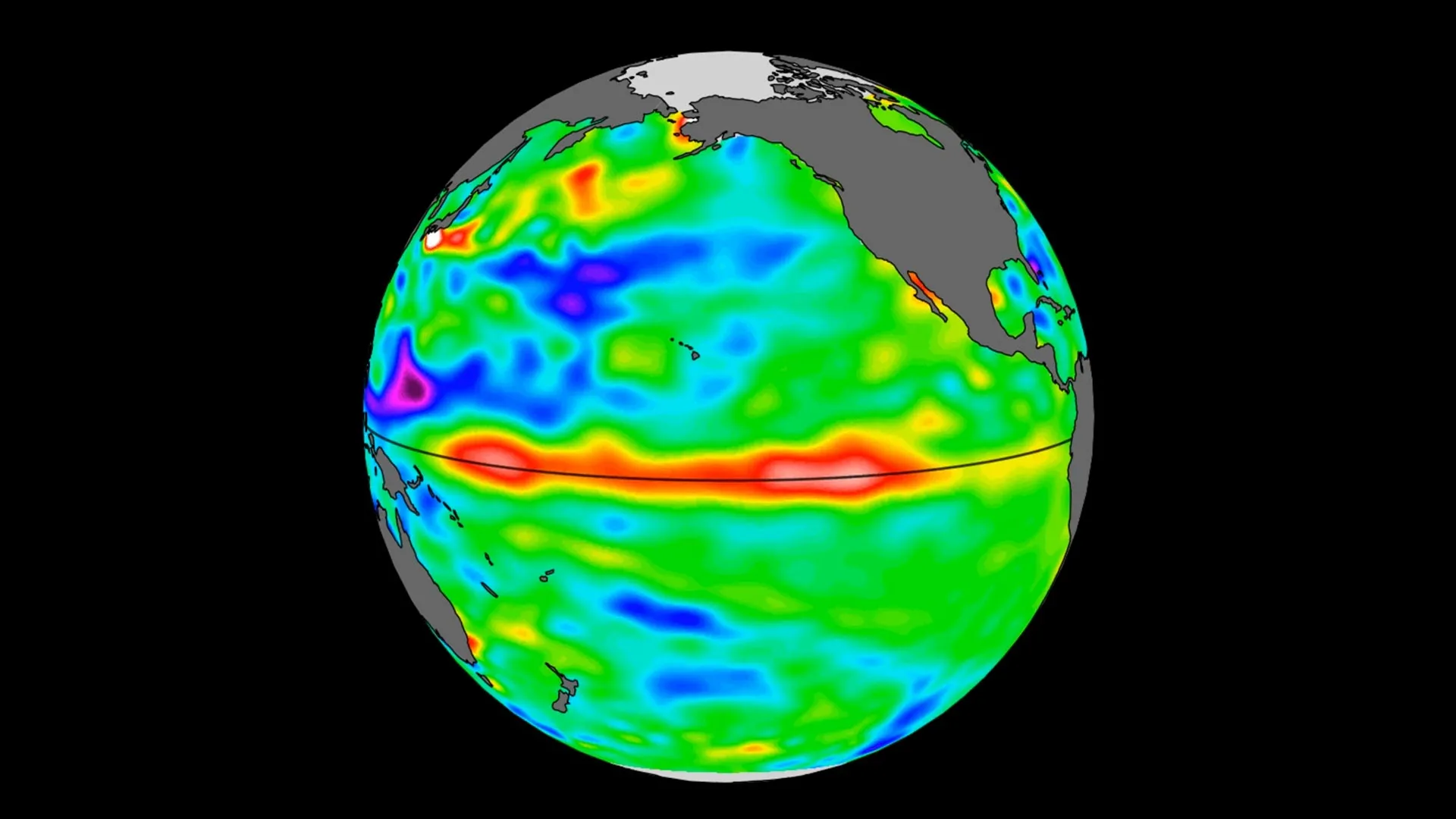
Orbiting high above the atmosphere, Sentinel-6 measures sea surface height with extraordinary precision, capable of detecting changes down to fractions of an inch every ten days. This is not merely a record of geography; it is a vital metric for thermodynamics. Because water expands as it warms, rising sea levels are the most reliable indicator of heat accumulation beneath the ocean surface. By monitoring these subtle "bulges" in the ocean, scientists can track the movement of massive thermal features known as Kelvin waves, the primary precursors to El Niño.
The Mechanics of an El Niño Event: A Chronology of Warmth
The development of an El Niño event is a complex dance between the atmosphere and the ocean. It typically begins with a disruption in the trade winds. Under normal conditions, strong easterly winds blow across the equatorial Pacific, pushing warm surface waters toward the western Pacific—a region near Indonesia and Australia.
However, in the lead-up to an El Niño, these trade winds undergo a dramatic reversal. Westerly winds take hold, effectively pushing the warm surface water back toward the east. This creates a "Kelvin wave"—a massive pulse of warm water that travels across the Pacific basin over several weeks.
A Timeline of the Current Buildup
The current observation cycle began in late January, when satellite telemetry captured the birth of a small Kelvin wave near Micronesia. While this initial wave dissipated by mid-February, it acted as a harbinger of things to come. By early March, a second, more robust wave formed, steadily migrating eastward.
As of mid-May, the impact of this movement became undeniably clear: sea levels near the coast of Peru were recorded at more than 5.9 inches (15 centimeters) above long-term averages. This accumulation of warm water along the coasts of Colombia, Ecuador, and Peru is the classic hallmark of a strengthening El Niño event. Researchers are currently comparing this trajectory to historic benchmarks, noting that while the current cycle began later than the catastrophic events of 1997 and 2015, the velocity of the current accumulation suggests it is rapidly gaining momentum.
Supporting Data: Why Sea Level Matters
The reliance on satellite altimetry is a necessity in an era of rapid climate fluctuation. Since the launch of the TOPEX/Poseidon mission in 1992, humanity has maintained a continuous, high-resolution record of global sea levels. This data has become the bedrock of climate science, allowing researchers to differentiate between long-term sea-level rise—driven by ice sheet melting and thermal expansion—and the transient, cyclical fluctuations of events like El Niño.
The Sentinel-6 mission is the current flagship of this effort, providing the "official reference" for sea level measurements. With the launch of Sentinel-6B in November 2025, this lineage of observation is secured, ensuring that future generations will have the data necessary to navigate the complexities of a warming planet. The technical contributions from NASA’s Jet Propulsion Laboratory (JPL)—including the Advanced Microwave Radiometer and the Laser Retroreflector Array—ensure that the data remains the gold standard for global climate modeling.
Official Perspectives: From Data to Decision-Making
The implications of these satellite observations extend far beyond academic research. According to Josh Willis, a sea level researcher at NASA’s Jet Propulsion Laboratory, the challenge lies in the unpredictability of the phenomenon. "While this year’s event started a bit later than the big El Niños of 2015 and 1997, it’s beginning to catch up," Willis noted. "We’ll see how big it gets."
The focus remains on the utility of this data for real-world resilience. Nadya Vinogradova Shiffer, lead program scientist at NASA Headquarters, emphasizes that the primary objective of these missions is the protection of society. "NASA’s observation of El Niño uses sea level satellites to track massive Kelvin waves as they cross the Pacific, capture changes in Earth’s ocean thermodynamics, improve forecasts of weather extremes, and help communities prepare for potential coastal hazards," she stated. "Stay tuned as more ocean stories continue to unfold."
The Global Reach: Implications for Weather and Economy
The term "El Niño" was coined in the 17th century by fishermen who observed that the warming of Pacific waters typically peaked around Christmas, often leading to a collapse in fish stocks. While the name—Spanish for "the boy" (a reference to the Christ child)—retains its historical charm, the modern understanding of the event is rooted in global atmospheric disruption.
Shifting the Jet Stream
When sea surface temperatures rise in the central and eastern Pacific, the ocean effectively acts as a massive heater, altering the distribution of energy in the atmosphere. This shift changes the position of the jet stream, which functions as a "highway" for storms. During an El Niño year, the jet stream is pushed and distorted, causing storms to divert from their usual paths.
The result is a global redistribution of precipitation:
- Droughts: Regions that rely on specific seasonal rainfall, such as parts of Africa, Southeast Asia, and Australia, may face severe drought, impacting agriculture and local economies.
- Flooding: Conversely, regions such as the U.S. West Coast and parts of South America may experience an influx of storm systems, leading to extreme rainfall, flash flooding, and landslides.
- Agricultural Volatility: The shift in weather patterns directly impacts global food security, affecting crop yields for staples like rice, wheat, and corn.
The severity of these impacts is dictated by the strength of the event. While moderate El Niños, like those seen in 2018, cause localized disturbances, a "super" El Niño can have cascading effects that disrupt global supply chains, transportation, and public water resources for months on end.
Preparing for the Months Ahead
As the world enters the second half of the year, the scientific community remains on high alert. El Niño events typically reach their peak intensity between November and January. This provides a narrow window for governments and emergency management agencies to prepare.
"Every El Niño is different," explains Severine Fournier, a sea level researcher and deputy project scientist at JPL. "But they almost always make for a hot year and big changes in rainfall in parts of the globe."
For the global community, the message from the Sentinel-6 mission is clear: the Pacific is stirring, and the data provides an essential early warning system. By monitoring the Kelvin waves as they traverse the ocean floor and observing the rise of the sea surface, NASA and its international partners are providing the necessary intelligence to mitigate the risks of the coming season. Whether this event evolves into a mild fluctuation or a significant global climate driver, the technology now in orbit ensures that the world will not be caught unaware. As the "ocean stories" continue to unfold, the collaborative efforts of NASA, ESA, and their partners remain our most reliable compass in an increasingly volatile climate landscape.