Introduction
The 1965 political upheaval in Indonesia remains one of the most complex and traumatic chapters in the nation’s modern history. While much of the historical discourse has focused on the sweeping geopolitical shifts and the broader national narrative, the personal cost of this era—specifically the fragmentation of families—is only now beginning to be fully examined through the lens of cinema.
At the heart of this exploration is Casparina, the second feature film from acclaimed Indonesian actor-turned-director Reza Rahadian. Currently being showcased at the Asian Project Market (APM) during the Busan International Film Festival’s Asian Contents & Film Market (ACFM), the film is a deeply personal endeavor, inspired by the true story of Rahadian’s grandmother, Francisca Casparina Fanggidaej. It is a narrative that weaves the political with the intimate, documenting a woman stripped of her citizenship and the three-decade-long chasm that opened up between her and the children she was forced to leave behind.
The Chronology of a Displaced Life
To understand the gravity of Casparina, one must look at the timeline of Francisca Casparina Fanggidaej’s life, which serves as the backbone of the film’s screenplay.
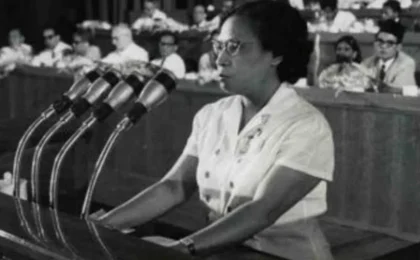
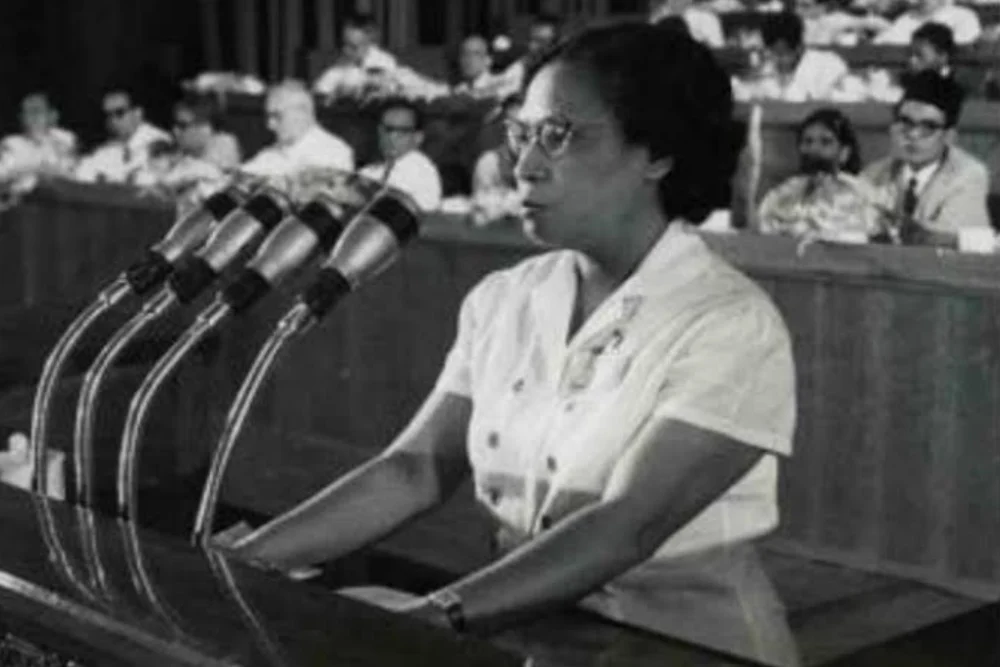
In the mid-1960s, Fanggidaej was a prominent journalist and a figure of intellectual influence. Her life took a permanent turn when she traveled to Beijing to represent Indonesia at an international forum. While she was abroad, the political landscape in Jakarta shifted violently. Her public opposition to the rising new regime rendered her a target. Without trial, notice, or recourse, her Indonesian citizenship was summarily revoked.
Stranded in a foreign land, she found herself in a state of indefinite exile. Behind her, in Indonesia, she left six children. The political climate in Indonesia at the time was so volatile that for those children, simply acknowledging their mother’s identity became a potential death sentence. They were forced to navigate a society that viewed their parentage with deep suspicion.
For 32 years, Fanggidaej lived in Beijing and later relocated to the Netherlands, unable to return to her homeland or reunite with her family. The film chronicles this span of time—a lifetime of missed birthdays, graduations, and quiet, daily struggles—until the collapse of the old regime finally opened the door for her return. The story picks up when a letter arrives, signaling that the exile is over, and an aging, weary woman returns to a country and a family that have both moved on without her.
Supporting Data: The Human Cost of Political Upheaval
The significance of Casparina lies in its commitment to the human experience of history. Producers Arya Ibrahim and Gita Fara emphasize that the film is not merely a biography; it is a broader commentary on the 1965 era.
“Casparina was a victim of an era,” the producers noted in a joint statement at the ACFM. Their research suggests that her experience was emblematic of a larger demographic of intellectuals, journalists, and activists who were rendered stateless by the regime. These individuals were essentially erased from the national identity, their voices silenced, and their personal lives dismantled.
The project aims to reconstruct this reality through the eyes of the children—Andi and Lila in the film—who grew up under the shadow of their mother’s absence. The data supporting this, while often found in oral histories and personal journals rather than state archives, points to a generation of "left-behind" children who suffered from a specific kind of trauma: the forced silence regarding their family lineage. The film explores the "price of hard choices," as Rahadian puts it, asking the audience to consider what a person loses when they are forced to choose between their ideological integrity and their maternal duties.
Official Responses and Creative Vision
Reza Rahadian, a household name in Indonesian cinema, has transitioned seamlessly into directing. His debut feature, On Your Lap, garnered significant critical acclaim, winning four prizes at the Busan International Film Festival’s Vision awards in 2025, including the prestigious Fipresci award and the Audience Award.
Speaking on his motivation for Casparina, Rahadian notes that the story is not just an act of family remembrance, but a moral imperative. "This is for me a very important story," Rahadian stated. "I am drawn to a story of motherhood told through children whose mother was missing from their lives. I want audiences to grasp what it means to be a mother who is absent for 32 years, and what it meant for her children to be unable to say openly who their mother was."
The creative team is currently in the early, intensive stages of scriptwriting. Their presence at the Busan International Film Festival is strategic; the producers are actively seeking international partners, co-production opportunities, and film funding to ensure that the scale and emotional weight of the project are fully realized. By positioning Casparina at the Asian Project Market, they are signaling a desire for a global dialogue on the universal themes of exile, reconciliation, and the endurance of family bonds.
Implications: A Mirror to Modern Identity
The implications of Casparina extend far beyond the Indonesian context. In an era where geopolitical instability frequently leads to displacement, refugees, and the stripping of rights, the story of Fanggidaej feels increasingly relevant.
Lessons for the Future
The producers have explicitly stated that they view the film as a reminder not to repeat the mistakes of the past. By bringing these suppressed narratives to the forefront, the film challenges the official versions of history that have long dominated the national discourse. It suggests that the history of a nation is not just written in the actions of its leaders, but in the experiences of its citizens who were forced to live in the margins.
The Complexity of Reconciliation
One of the most poignant aspects of the narrative is the reunion itself. The film does not offer a fairy-tale ending; it explores the "hurt and resentment" that accumulates over three decades. When Rina finally meets her adult children, she is a stranger to them, and they are strangers to her. The process of reconciliation—the slow, painful negotiation of forgiveness—is what the filmmakers believe will resonate most with contemporary viewers. It is a testament to the resilience of the human spirit when faced with the absolute destruction of one’s previous life.
The Role of Cinema in Historical Preservation
By choosing to tell this story through a feature film, Rahadian is participating in a growing movement of filmmakers who are reclaiming history through the arts. Cinema has the power to humanize statistics, transforming the abstract concept of "political exile" into the tangible, heartbreaking reality of a mother’s empty chair at a dinner table.
Conclusion: A Search for Partners
As Casparina moves forward, it faces the challenges inherent in any period piece—the need for authentic set design, nuanced performances, and a script that balances political gravity with emotional intimacy.
The producers remain optimistic. The early reception at the Asian Project Market has been positive, with many industry professionals recognizing the universality of the themes. For Rahadian, the project is a bridge between his own family history and the broader national consciousness.
As the production team looks toward the future, their focus remains fixed on the "hard choices" that define the human condition. Whether it is the mother who sacrifices her family for her country, or the children who struggle to forgive a woman they barely knew, Casparina promises to be a challenging, beautiful, and necessary film. It asks the audience to look into the past not to judge, but to understand—and in doing so, to ensure that the voices of those who were once silenced are finally, clearly, heard.