In an era defined by rapid technological shifts and increasing personal uncertainty, the human desire to find meaning in the chaos has never been more pronounced. For many, this search has manifested in the unexpected popularity of the A24 film Everything Everywhere All at Once, a genre-bending odyssey that serves as a profound meditation on nihilism, familial reconciliation, and the infinite possibilities of the human experience.
But is this "multiverse" concept merely a narrative device for science fiction, or is it a blueprint for intentional living? By pairing the philosophical questions posed by modern cinema with the practical, data-driven frameworks found in Stanford University’s "Designing Your Life" methodology, we can bridge the gap between existential dread and a coherent, actionable future.
The Cinematic Catalyst: Why the Multiverse Matters
Everything Everywhere All at Once follows Evelyn Wang, an overwhelmed laundromat owner grappling with a fracturing marriage, a strained relationship with her daughter, and the crushing weight of an IRS audit. When she is suddenly thrust into a multiversal conflict, she discovers that every choice she didn’t make has resulted in an alternate reality.
Critics and audiences alike have noted the film’s unique blend of action, absurdist humor, and deep-seated philosophy. The film is intentionally designed for repeat viewing, with layers of detail that reveal themselves only upon subsequent passes. Its central thesis—that even in a universe where nothing matters, we have the agency to choose kindness and create our own meaning—has resonated deeply with viewers navigating the post-pandemic landscape.
For those who find themselves paralyzed by the "what-ifs" of their own lives, the film serves as a mirror. The "villain," Jobu Tupaki, represents the ultimate nihilistic conclusion: if there are infinite versions of you, then your current reality is statistically insignificant. Yet, the film’s protagonist, Waymond Wang, offers the counter-argument: it is precisely because the universe is vast and meaningless that our small, deliberate acts of kindness become the most important things in existence.
Designing Your Life: A Framework for Coherence
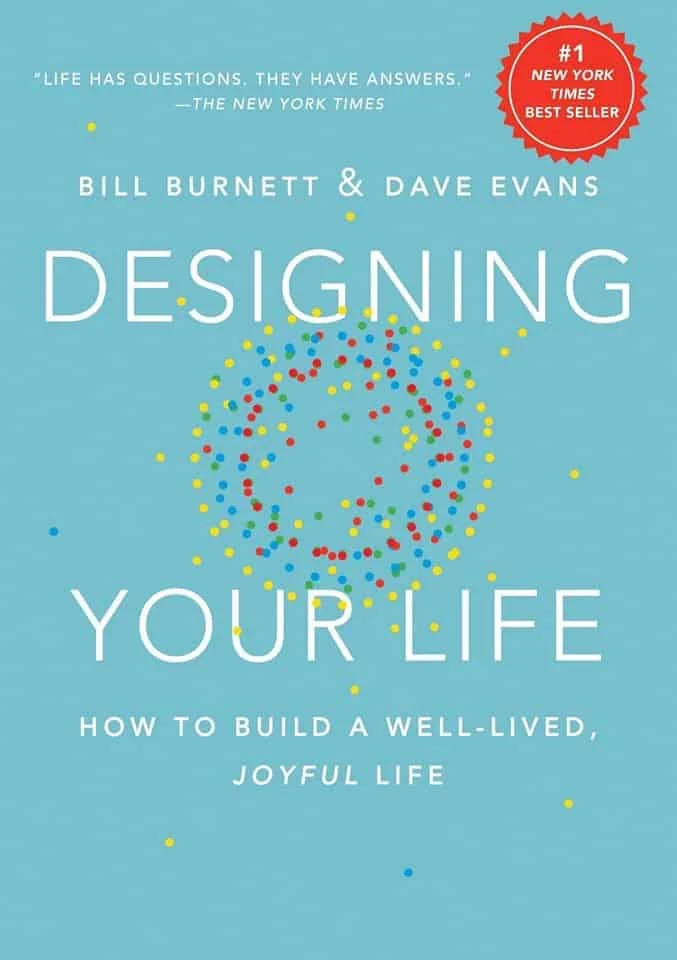
If the film provides the philosophical "why," the book Designing Your Life by Bill Burnett and Dave Evans provides the "how." Derived from a popular Stanford course, the book applies the principles of design thinking—typically used to create hardware and software—to the architecture of the human experience.
At the core of the authors’ approach is the concept of "coherence." A well-designed life is one where your values, your beliefs, and your actions are in perfect alignment. When these three pillars are out of sync, the result is the same sense of fragmentation and dissatisfaction that plagues Evelyn Wang at the start of her journey.
The Five Disciplines of Design
To achieve this alignment, Burnett and Evans advocate for five key habits:
- Curiosity: Be inquisitive about the world and your own potential.
- Bias to Action: Stop ruminating and start prototyping.
- Reframing: Shift your perspective on problems that feel unsolvable.
- Awareness: Recognize that your life is a process, not a destination.
- Radical Collaboration: Understand that you are not building your life in a vacuum; you need a network of support.
Chronology of a Life Design Shift
The implementation of these concepts is not an overnight occurrence. It is a systematic process that unfolds over several stages of personal audit and reflection.
Phase 1: The Audit (The "Workview" and "Lifeview")
The journey begins with a rigorous self-assessment. Readers are tasked with drafting a 250-word "Workview" and a 250-word "Lifeview." This exercise forces an individual to articulate what they believe work is for and what makes life worth living. The subsequent "clash and complement" analysis reveals where one’s current professional trajectory may be sabotaging one’s personal happiness.
Phase 2: The Odyssey Plans
The most transformative exercise in the book—and the one that most directly mirrors the multiverse concept—is the creation of three "Odyssey Plans." These are five-year roadmaps for three distinct versions of your future:
- Plan A: The life you are currently living, optimized and improved.
- Plan B: The path you would take if your current career path were suddenly removed or became obsolete.
- Plan C: The "wild card" path—the life you would lead if money and the opinions of others were no longer factors.
This exercise is designed to break the "trap of one reality." By mapping out these three futures, the individual realizes that they are not tethered to a single, inevitable outcome. They have the agency to "pivot" or borrow elements from their Plan C to enrich their Plan A.
Supporting Data: The Value of Prototyping
The efficacy of the Designing Your Life approach is supported by the academic success of the Stanford Life Design Lab. Since its inception, the program has helped thousands of students move from "stuck" to "moving" by emphasizing "prototyping."
In design, a prototype is a rough, low-cost version of a product created to test a hypothesis. In life design, a prototype is a conversation or a small experiment. Instead of quitting your job to become a painter, you might take one art class or interview a professional artist. This reduces the risk of failure and provides data on whether your "alternate reality" is actually something you enjoy, or if it was merely an idealized fantasy.
Official Perspectives and Expert Critique
While the Designing Your Life methodology has received widespread praise for its clarity and accessibility, it is not without its critics. Some organizational psychologists have argued that "designing your life" can inadvertently put the burden of structural economic issues solely on the individual.
Furthermore, the book has faced notable criticism regarding its structural utility. Readers and reviewers have pointed out the frustrating absence of an index. In a book that serves as a manual for personal transformation, the inability to quickly reference specific exercises or definitions acts as a barrier to long-term implementation. It is a paradoxical oversight for a book that champions "good design."
However, the consensus among career coaches and life-design practitioners remains positive. The book succeeds because it moves the reader away from abstract self-help fluff and toward a tangible, iterative process that respects the complexity of the modern human identity.
Implications for the Future
The intersection of cinematic existentialism and design thinking creates a powerful paradigm for the 21st century. We are living through a time of unprecedented choice, which leads to both infinite opportunity and crippling "choice paralysis."
By viewing our lives through the lens of the multiverse, we grant ourselves the grace to fail and the courage to experiment. If you are dissatisfied with your current timeline, the implication is clear: you are the architect. You can draft new Odyssey Plans, you can prototype new versions of yourself, and you can align your daily actions with your deepest values.
As the authors of Designing Your Life suggest, "This life you are living is one of many lives you will live." The goal is not to find the "perfect" life, but to design a life that is coherent, sustainable, and true to the person you are becoming. Whether you are a fan of high-concept science fiction or simply a person looking for a better way to navigate your career, the tools are at your disposal. The only requirement is the willingness to start the first draft.