The landscape of the global automotive industry is shifting, and at the epicenter of this seismic transformation stands the Volkswagen Group. Long celebrated for its sprawling portfolio of prestige brands and unmatched manufacturing scale, the German giant is currently undergoing a painful, systematic dismantling of its former self. As the company faces mounting economic pressures, stagnant growth in key markets, and the crushing costs of the transition to electric mobility, it has begun to shed its most iconic assets in a bid for survival.
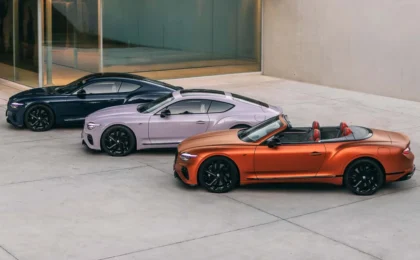
The recent exit of Porsche from the Bugatti-Rimac joint venture was not merely a corporate divestment; it was a symbolic end to an era. For the first time since 1998, the legendary marque of Ettore Bugatti stands outside the direct influence of the VW Group, signaling that in the new automotive order, sentimentality is a luxury the company can no longer afford.
The Shrinking Empire: A Chronology of Retrenchment
The Volkswagen Group’s current strategy is a marked departure from the aggressive "buy everything" philosophy championed by former executives like Ferdinand Piëch. Under the current leadership, headed by CEO Oliver Blume, the focus has shifted from expansion to surgical consolidation.
The timeline of this retreat is accelerating. The departure from the Bugatti Rimac partnership was the first domino to fall, effectively ending a long-standing chapter in the group’s history. This was quickly followed by the decision to offload a majority stake in Everllence, the group’s marine diesel engine division, a move that secured approximately €7.4 billion ($8.4 billion) in liquid capital.
Now, reports from The Financial Times and other credible outlets suggest that the restructuring plan is far more ambitious—and more disruptive—than previously believed. Internal advisers are reportedly pushing for the divestment of Ducati, the Italian motorcycle icon that has been a jewel in the VW crown since its acquisition by Audi. While the group has previously flirted with selling or spinning off Ducati, the current financial climate makes such a transaction appear increasingly inevitable.
The Lamborghini Paradox: Public Markets vs. Private Control
Perhaps the most intriguing element of the current restructuring plan is the proposed future of Lamborghini. Since being brought under the Volkswagen umbrella in 1998, the "Raging Bull" has enjoyed status as a privately held subsidiary, protected by the deep pockets of the parent company while benefiting from the engineering resources of Audi.
Advisers are now urging the VW Group to take Lamborghini public. The strategy is twofold: it would allow the Group to raise significant capital through an Initial Public Offering (IPO) while retaining operational and majority control through its subsidiary, Audi. This "Porsche-style" model—where the brand remains tethered to the group but functions as a transparent, publicly traded entity—is viewed by financial analysts as a way to unlock hidden shareholder value without losing the prestige and technical synergies that make Lamborghini a profitable powerhouse.
Official Responses: A "Profound Transformation"
When approached for comment regarding the potential sale of Ducati and the shifting status of its portfolio, the Volkswagen Group provided a response that was both calculated and ominous. Eschewing the standard "no comment" denial, a spokesperson noted that the entire organization must "transform profoundly."
The official stance acknowledges that the current "realignment" is not merely a reactionary measure but a fundamental pivot. The statement elaborated on the harsh reality that the group’s long-standing business model—developing premium vehicles in Germany and leveraging European manufacturing for export—is no longer viable.
This sentiment echoes the candid warnings delivered by Oliver Blume in mid-2025. In an internal communication that sent shockwaves through the industry, Blume stated that the business model that served the group for decades had reached its expiration date. The message was clear: the era of bloated, centralized production in high-cost regions is ending. The VW Group is moving toward a leaner, more agile, and more geographically diversified model, even if that means abandoning the manufacturing traditions that defined its history.
The Human Cost: Factories, Jobs, and Economic Stability
The most alarming aspect of this restructuring is the potential impact on the workforce. According to reports from Manager Magazin, the organizational overhaul could involve the closure of at least four major manufacturing facilities. This is coupled with the potential elimination of up to 100,000 jobs.
For a company that has historically acted as the backbone of the German economy, such a reduction is unprecedented. The group has already announced plans to shed 35,000 jobs in Germany by the end of the decade, but the suggestion that the total could reach 100,000 underscores the dire nature of the situation.
These cuts represent more than just a balance sheet correction; they signify a retreat from the "social contract" that has governed German manufacturing for years. Unions are already preparing for a protracted battle, but management remains firm: the financial reality of the transition to electric, software-defined vehicles necessitates a radical reduction in overhead.
The Software Struggle: CARIAD and Bosch
Beyond the tangible assets of luxury car brands and marine engines, the VW Group is also reassessing its ambitious, yet troubled, software initiatives. The partnership between the Group’s software arm, CARIAD, and Bosch—which saw a staggering €1.5 billion ($1.7 billion) investment—is reportedly on the chopping block.
CARIAD was envisioned as the future of the VW Group, a centralized software powerhouse capable of developing a unified operating system for all its brands. However, delays and technical hurdles have turned the division into a significant financial burden. The potential dissolution of the partnership with Bosch indicates that the Group is losing patience with its "do-it-yourself" software strategy, potentially signaling a move toward licensing third-party solutions to save time and capital.
Implications: A Smaller, More Focused Future
What does this mean for the future of the Volkswagen Group? The path forward suggests a company that will be significantly smaller in terms of headcount and brand count, but one that is theoretically more liquid and focused.
- Financial Resilience: By offloading non-core assets like marine engines and potentially Ducati, the Group is creating a cash buffer to fund the massive R&D required for next-generation EV platforms.
- Operational Efficiency: Closing factories and slashing the workforce is an attempt to align production capacity with shifting global demand, particularly in the critical Chinese market, where domestic competitors are rapidly gaining ground.
- Market Realignment: Moving brands like Lamborghini toward public listings allows the Group to tap into capital markets directly, providing the funds for electrification without further straining the parent company’s balance sheet.
The Road Ahead: Survival or Decline?
The VW Group is caught in a perfect storm. It is navigating the most significant technological disruption in the history of the automobile while simultaneously grappling with the fallout of an aging, high-cost business model. The departure of Bugatti, the potential sale of Ducati, and the rumors of mass layoffs are the symptoms of a titan attempting to shed its weight before the ice breaks beneath it.
For the enthusiast, the loss of these storied brands from the direct VW ecosystem is a source of melancholy. However, for the investor and the long-term observer, these moves are a cold, necessary calculation. The Volkswagen Group is no longer trying to be the largest automaker in the world; it is trying to be the most viable.
Whether this radical surgery will result in a rejuvenated, agile competitor or a hollowed-out shell of a once-great empire remains to be seen. What is certain is that the Volkswagen Group of 2030 will look nothing like the behemoth we knew in 2020. The transformation is underway, and in the world of high-stakes automotive manufacturing, there is no turning back.
The storm in Wolfsburg is not passing; it is the new climate. And as the company continues to cross names off its list, the industry watches with bated breath to see who—or what—will be next.