For millennia, the bond between Canis lupus familiaris and Homo sapiens has been defined by a silent, intuitive language. Dog owners have long anecdotal evidence that their companions possess an uncanny ability to "read" the room: a wagging tail during a joyous occasion or a gentle nuzzle when tears fall. While this connection has been observed for generations, the biological machinery driving this interspecies empathy has remained a scientific mystery.
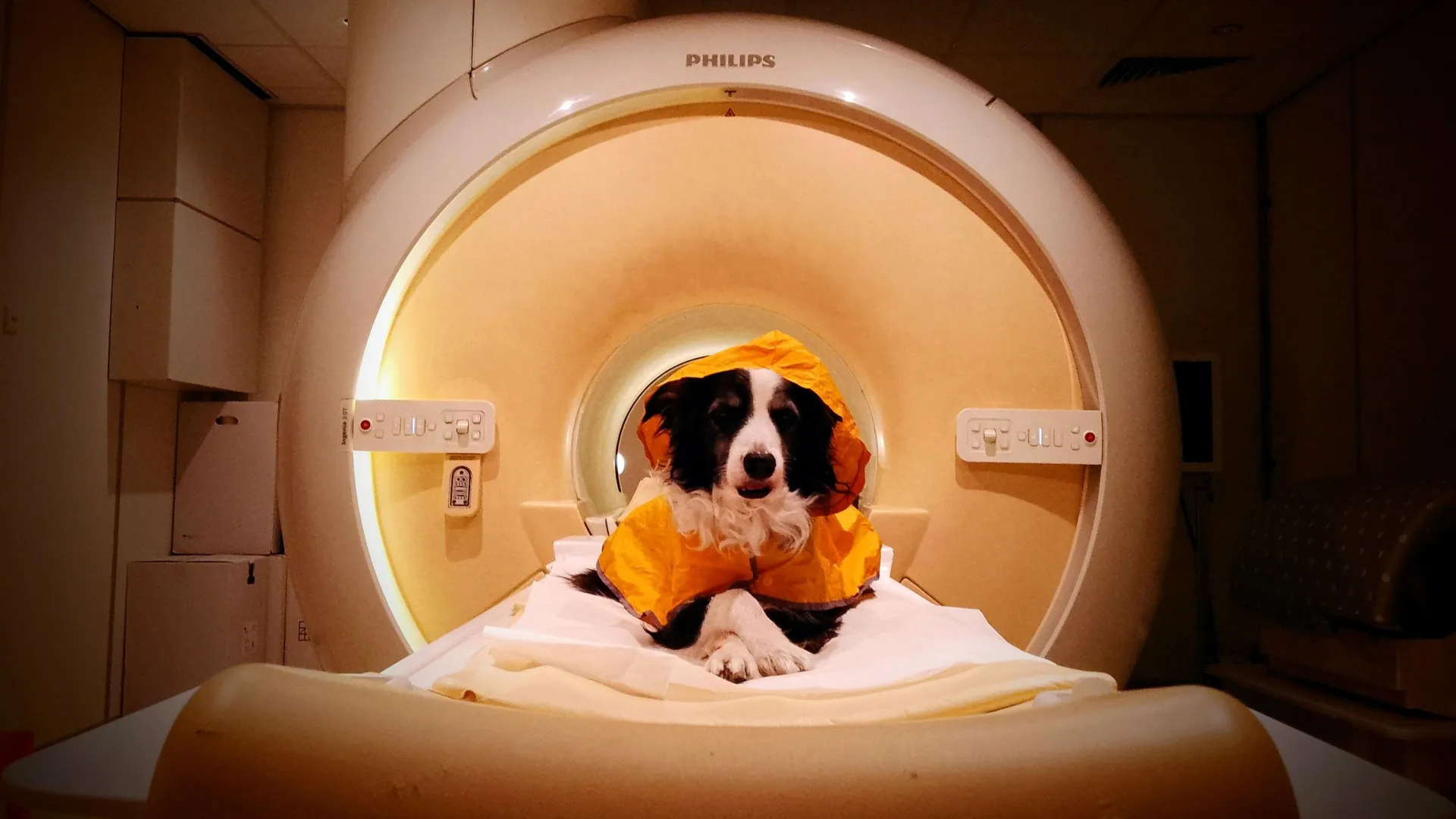
A groundbreaking study published August 7 in the journal iScience has finally begun to map the neural pathways that allow dogs to process human facial expressions. By peering into the canine brain using advanced neuroimaging, researchers have confirmed that dogs are not merely reacting to our presence; they are actively decoding our emotional states, distinguishing between joy, anger, fear, and sadness with surprising neurological precision.
The Biological Mechanism: Mapping the Canine Mind
The research, led by an international team primarily based at the University of Vienna, sought to move beyond behavioral observation to identify the specific brain activity associated with emotional recognition.
Chronology of the Research
The study was conducted in two distinct phases to isolate how dogs process different emotional stimuli.
- Phase One (The Happiness Trigger): Researchers scanned the brains of eight domestic dogs while showing them images of unfamiliar humans displaying either "happy" (smiling) or "neutral" expressions.
- Phase Two (The Negative Spectrum): A separate cohort of 12 dogs was shown a broader spectrum of imagery, including happiness, anger, fear, and sadness. Machine learning algorithms were then employed to categorize the unique neural patterns produced in response to each expression.
The results provide the first robust evidence that the canine brain possesses a sophisticated, hierarchical system for processing human facial signals.
Supporting Data: What Happens Inside the Brain?
The study’s findings center on two primary areas of the canine brain: the temporal cortex and the caudate nucleus.
The Reward Center Connection
When the dogs were exposed to happy, smiling faces, researchers observed a significant surge in activity within the caudate nucleus. In mammalian neurobiology, the caudate nucleus is fundamentally linked to the brain’s reward system. Its activation suggests that a human smile is not just a visual stimulus for a dog; it is an emotionally significant event—a "reward" that the dog finds inherently meaningful.
"The activity in the caudate nucleus is particularly interesting," explains Dr. Laura Cuaya, senior author of the study. "It suggests that happy human faces may have emotional significance for dogs, reinforcing the bond that has been cultivated through thousands of years of cohabitation."
Distinguishing the Negative
Perhaps most striking was the discovery that dogs do not merely lump all negative human emotions into a single "bad" category. Using machine learning to analyze brain activity, the researchers found distinct, identifiable patterns for fear, anger, and sadness. This indicates that dogs possess a level of emotional nuance previously attributed only to humans and perhaps our closest primate relatives.
Official Responses and Expert Insights
The research team, which includes lead author Raúl Hernández-Pérez, emphasizes that these findings provide a new lens through which to view the evolutionary history of dogs.
"Humans are really good at picking up small details on the face, and so are dogs," says Hernández-Pérez. "This makes dogs very interesting. By studying their brains, we can understand what adaptations have developed to support their remarkable social and emotional understanding of humans."
The team is quick to clarify that while these patterns exist, they do not necessarily mean dogs experience these emotions in the exact same subjective manner as humans. However, the neural consistency across the subject group suggests that these mechanisms are deeply embedded in the canine cognitive architecture.
"When we compare humans with primates, we are looking at abilities that may have come from a common ancestor," notes Dr. Cuaya. "With dogs, the story is totally different. They followed a very different evolutionary path, yet through domestication, they developed the social abilities needed to understand and cooperate with us."
Implications: The Evolutionary Path of Domestication
This research raises profound questions about the nature of domestication. Unlike primates, who share a common ancestor with humans, dogs diverged from wolves tens of thousands of years ago. The fact that they have evolved such sophisticated social cognition suggests that living alongside humans acted as a powerful evolutionary pressure.
The "Pet" Factor
It is important to note that all dogs participating in the study were household pets. The authors acknowledge that environmental exposure plays a massive role in brain development. Free-ranging or street dogs, which operate in vastly different social environments, may process human signals differently than a dog raised in a family home. This distinction highlights that the dog’s "emotional intelligence" is likely a synergistic result of both innate evolutionary adaptations and learned social experiences within human environments.
Changing the Human-Dog Dynamic
The implications for pet owners are significant. If dogs are genuinely processing our emotional states as distinct signals, it reinforces the need for mindful communication.
"I would like people to see dogs as emotional beings," says Dr. Cuaya. "They have evolved with us to understand our expressions and cooperate with us, and recognizing that can change how we communicate with and care for them."
Future Directions: A Dog-Centered Approach
The study published in iScience is far from the final word on the matter. The research team is already planning follow-up investigations that move toward a more "dog-centered" methodology.
Future research aims to:
- Multimodal Processing: Explore how dogs combine facial expressions with other inputs, such as vocal tone, body language, and scent, to form a complete "emotional picture" of a human.
- Comparative Neurobiology: Conduct direct comparative studies between human and canine brain scans to see how closely the neural pathways for emotional empathy mirror one another in real-time.
- Environmental Impact: Study whether different training methods or social environments alter the sensitivity of the caudate nucleus, providing insight into the long-term impact of human-canine training regimens.
A New Era of Understanding
As we look to the future, the integration of machine learning and neuroimaging in veterinary science promises to demystify the "silent" life of our pets. We are moving toward a scientific framework that validates what many dog owners have always felt: that our pets are not just observers of our lives, but active participants in our emotional world.
By mapping the neural architecture of the dog, we are not just learning more about an animal; we are learning more about the nature of empathy itself. The evolution of the dog-human relationship is a testament to the power of social adaptation, proving that even across the vast divide of different species, the human face remains the most important signal a dog will ever learn to read.
As we continue to peer deeper into the canine brain, one thing is becoming increasingly clear: when we look into a dog’s eyes, there is a complex, active process of interpretation occurring behind their gaze. They are not just watching us; they are feeling with us, and in doing so, they have become the most successful social partners humans have ever known.