By Gavin Lee
Updated: October 10, 2026
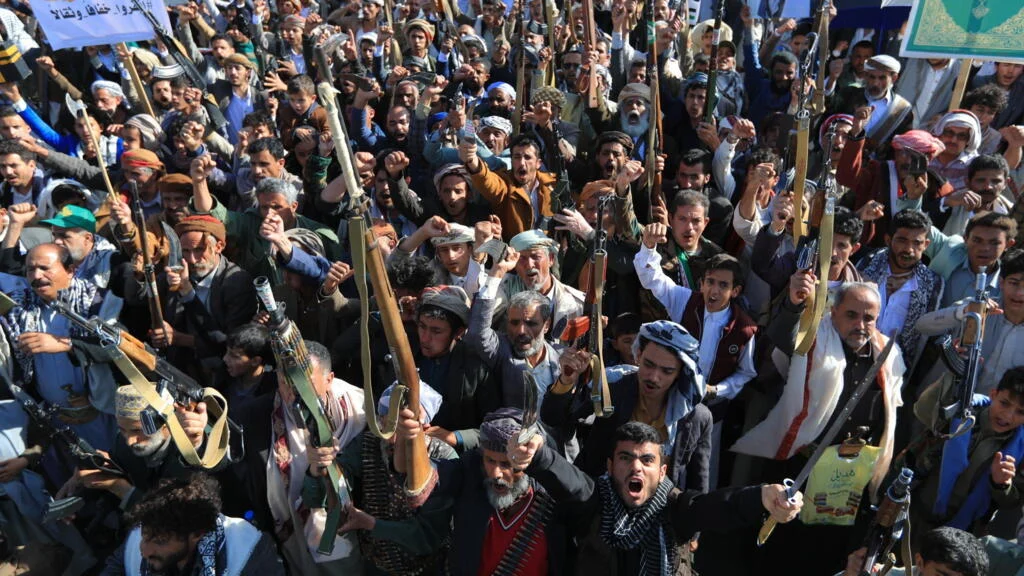
The conflict in Yemen has reached a harrowing new crescendo, as a sophisticated missile strike targeted Riyadh’s international airport, leading to mass evacuations, significant casualties, and a paralyzing effect on regional air travel. The assault, attributed to Yemeni Houthi forces, marks a dramatic escalation in the ongoing proxy war that has gripped the Arabian Peninsula for years.
The Incident: Chaos at the Gateway to Riyadh
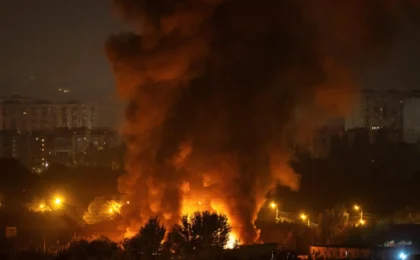
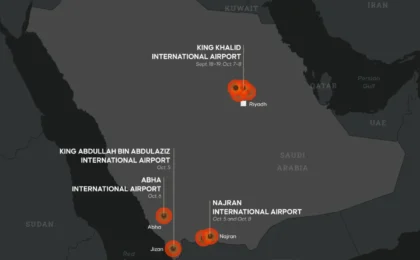
On October 10, 2026, the quiet of the Saudi capital was shattered by the sound of heavy explosions echoing from the vicinity of King Khalid International Airport. Diplomatic sources on the ground confirmed that the facility, one of the busiest aviation hubs in the Middle East, was struck by at least one ballistic missile.
The immediate aftermath was one of panic and confusion. Travelers reported a surge of security personnel swarming terminals, followed by the activation of emergency protocols. According to hospital sources, the strike resulted in at least five individuals sustaining critical, life-threatening injuries, while dozens of others were treated for shrapnel wounds, psychological trauma, and smoke inhalation.
As news of the attack rippled through the international community, airlines began a cascading series of cancellations, effectively isolating Riyadh from key international routes. The long-term impact on regional logistics remains to be seen, but the message from the Houthi movement is clear: no corner of the Saudi heartland is beyond their reach.
Chronology of Escalation
To understand the severity of this strike, one must examine the rapid deterioration of the security situation over the preceding months:
- Mid-2026: A period of relative, albeit fragile, de-escalation begins to fray as cross-border skirmishes intensify along the Saudi-Yemen frontier.
- Late September 2026: Houthi leadership issues public warnings, signaling a shift in tactics from defensive positions to "strategic offensive" capabilities.
- Early October 2026: Increased frequency of drone reconnaissance flights over Saudi border provinces, foreshadowing the eventual strike on the capital.
- October 10, 2026 (Morning): Multiple alerts are issued by local authorities regarding potential aerial threats.
- October 10, 2026 (Afternoon): The missile impact occurs at approximately 2:00 PM local time, followed by an immediate shutdown of airport operations and the deployment of civil defense units.
Supporting Data: The Anatomy of a Proxy War
Adam Barron, a renowned Middle East political analyst and specialist on Yemen, notes that this strike is not merely a tactical maneuver but a desperate display of technical evolution. "The Houthis have moved beyond simple insurgency tactics," Barron explains. "The sophistication required to bypass sophisticated air defense systems and reach the heart of Riyadh suggests either significant advancements in their indigenous engineering or a major breach in regional security protocols regarding missile technology transfers."

The conflict, which has been characterized by its asymmetric nature, now sees a clear shift in the theater of operations. Saudi Arabia, which has historically utilized its superior air force to maintain pressure on Houthi strongholds, is now facing a "home-front" reality that has previously been limited to its border territories.
Data from the region indicates that the Yemeni government, backed by a Saudi-led coalition, has been engaged in a brutal, grinding campaign to reclaim territory. However, the Houthi ability to launch long-range projectiles into the Saudi interior serves as a strategic spoiler, forcing the coalition to divert resources from the battlefield in Yemen to protect domestic infrastructure.
Official Responses and Diplomatic Silence
As of the evening of October 10, the Saudi government has maintained a conspicuous silence regarding the specifics of the damage. While state-affiliated media have confirmed the "interception of hostile objects," the visible smoke rising from the airport and the high volume of civilian casualties reported by medical staff suggest that the defense systems may not have been entirely effective.
International observers are calling for restraint. The United Nations has expressed "deep alarm" at the targeting of civilian infrastructure, labeling it a potential violation of international humanitarian law. However, diplomatic leverage is currently at an all-time low. With the Saudi-led coalition continuing its aerial bombardment of Houthi-held areas in Yemen—ostensibly to neutralize the launch sites—the cycle of violence appears to have no immediate exit ramp.
Regional Implications: A Fragile Peace Collapses
The implications of the Riyadh strike are profound, extending far beyond the borders of Yemen and Saudi Arabia:
1. The Vulnerability of Global Transit Hubs
Riyadh is a critical node in the global aviation network. The successful targeting of its airport demonstrates that critical infrastructure is increasingly vulnerable to low-cost, high-impact weaponry. This incident will likely force a global review of airport security and air defense integration in urban centers worldwide.
2. The Failure of Diplomatic Channels
For years, various international mediators have attempted to facilitate a ceasefire. The events of October 10 serve as a grim testament to the failure of these efforts. The polarization between the Houthi movement and the Saudi-backed government has hardened to the point where "total victory" seems to be the only objective for both sides.

3. Economic Instability
The disruption to air travel is the tip of the iceberg. Investors are watching the situation closely, and the risk of further strikes on energy infrastructure—the backbone of the Saudi economy—could trigger volatility in global oil markets. The "war premium" on oil prices is expected to rise as long as the conflict remains untethered from diplomatic oversight.
4. Humanitarian Toll
While the focus is currently on the airport, the humanitarian crisis within Yemen remains the most severe aspect of this conflict. As the Saudi-led coalition intensifies its strikes in retaliation, the civilian population in Yemen faces an even darker winter. The collapse of infrastructure and the disruption of aid corridors threaten to exacerbate a situation that is already widely regarded as the world’s worst humanitarian disaster.
Conclusion: The Long Road Ahead
The strike on Riyadh is a wake-up call for the international community. It signifies that the Yemeni conflict can no longer be contained within the borders of the Arabian Peninsula. The convergence of advanced missile technology and entrenched political hatreds has created a "new normal" that is as unpredictable as it is dangerous.
As Riyadh struggles to restore normalcy and the Saudi coalition prepares its next move, the world watches with bated breath. The events of October 10 have proven that the conflict in Yemen is not merely a regional dispute; it is a global security concern that demands a level of diplomatic engagement that has, until now, been woefully absent.
For the families of the injured and the displaced in Yemen, the outlook remains bleak. Unless there is a fundamental change in strategy—one that prioritizes a political settlement over the pursuit of military dominance—the echoes of explosions in Riyadh will likely be heard again, and the cost of this war will continue to climb to unbearable heights.