For decades, the standard approach to managing oral health has been one of "scorched earth." From aggressive brushing and flossing to the use of broad-spectrum antiseptic mouthwashes, the prevailing medical philosophy has been to eliminate as many oral bacteria as possible. However, as our understanding of the human microbiome deepens, scientists are realizing that bacteria are not merely biological adversaries to be eradicated. They are, in fact, integral partners in our physiological health.
A groundbreaking study published in 2025 in npj Biofilms and Microbiomes has introduced a radical shift in this paradigm. Rather than attempting to destroy the microbial inhabitants of the mouth, researchers are exploring the possibility of "editing" their behavior. By intercepting the chemical signals bacteria use to communicate, scientists have successfully steered the development of dental plaque toward a healthier, more stable state. This research, funded by the National Institutes of Health, suggests that we may be on the cusp of a new era in preventative medicine—one defined not by biological warfare, but by ecological management.
The Complexity of the Oral Ecosystem
The human mouth is a bustling, high-density metropolis home to approximately 700 distinct species of bacteria. This community, known as the oral microbiome, is far from a chaotic collection of organisms. It is a highly structured, self-organizing ecosystem that behaves much like a forest.
The process of plaque formation is sequential. It begins with "pioneer species"—typically Streptococcus and Actinomyces—which are generally harmless and associated with a healthy mouth. As the plaque matures, it becomes increasingly diverse, eventually inviting "late colonizers." Among these are the so-called "red complex" bacteria, such as Porphyromonas gingivalis, which are notoriously linked to the onset of periodontal disease.
For years, dentists have fought these late-stage invaders with mechanical removal and harsh chemicals. However, the study suggests that the secret to health lies in the "communication infrastructure" that allows these communities to mature into their more dangerous, disease-associated forms.
Quorum Sensing: The Bacterial Language
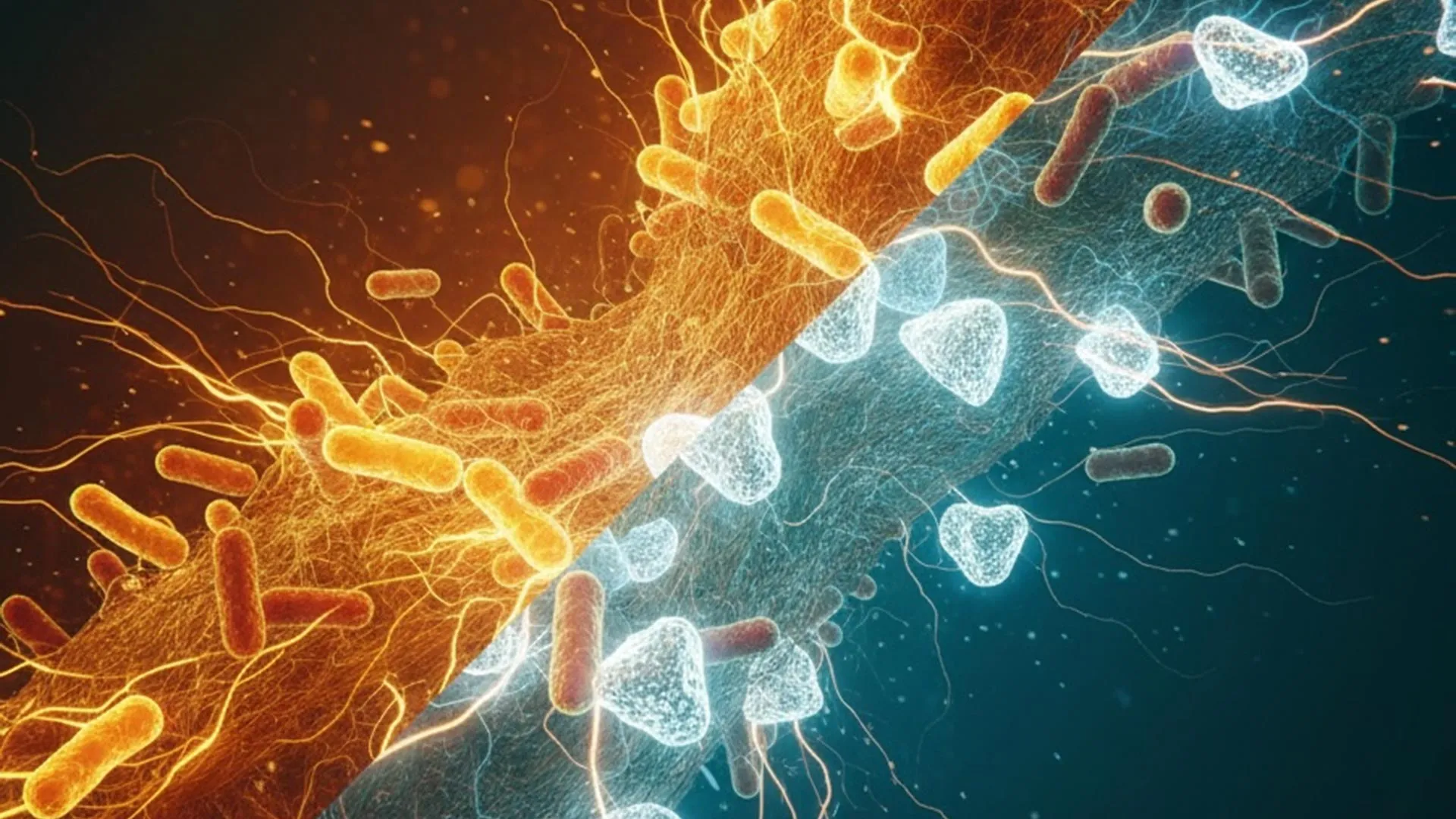
The core of this research revolves around a process called "quorum sensing." In the microbial world, bacteria are capable of detecting the density of their neighbors by releasing and receiving signaling molecules. One common class of these molecules is N-acyl homoserine lactones (AHLs).
When bacterial populations reach a specific threshold, or "quorum," these molecules trigger a coordinated shift in group behavior. They might activate genes for virulence, biofilm formation, or, in the case of the mouth, the transition from early, healthy colonization to the development of destructive plaque.
By identifying these chemical dialogues, the research team—led by scholars from the College of Biological Sciences and the School of Dentistry—sought to determine if they could act as "code-breakers." Their experiment utilized specialized enzymes known as lactonases. These enzymes act as biological scissors, slicing through the AHL molecules and effectively silencing the bacterial conversation.
Chronology of Discovery: From Lab Bench to Clinical Insight
The trajectory of this research represents a methodical evolution in microbiological study:
- Initial Observation: Scientists observed that dental plaque is not a random accumulation of bacteria but a chronologically developing ecosystem.
- The Signaling Hypothesis: The team hypothesized that if bacteria utilize AHLs to coordinate their growth and transition, then interfering with these signals could prevent the shift from healthy "pioneer" colonies to pathogenic "late-stage" communities.
- Environmental Sensitivity: A pivotal discovery occurred when the team tested these signals under varying oxygen levels. They found that bacteria above the gumline (aerobic) communicate differently than those in the oxygen-deprived (anaerobic) pockets beneath the gumline.
- Enzymatic Intervention: The introduction of lactonases in the laboratory setting proved that the signaling process could be disrupted, resulting in a measurable shift in the composition of the plaque toward health-associated species.
Supporting Data: Oxygen as a Regulatory Gatekeeper
One of the most striking findings of the study was the influence of oxygen on bacterial signaling. Lead author Rakesh Sikdar noted that oxygen availability acts as a regulatory switch for these chemical messages.
"When we blocked AHL signaling in aerobic conditions, we saw a distinct increase in health-associated bacteria," Sikdar explained. "However, when we introduced AHLs in anaerobic conditions, we saw the promotion of disease-associated late colonizers. This suggests that the same signaling molecule has entirely different effects depending on the environment."
This data provides a critical nuance to future treatments. It indicates that a "one-size-fits-all" approach to managing oral bacteria is doomed to fail because the microbiome’s response to external stimuli is spatially dependent. Beneath the gumline, where periodontal disease takes root, the bacteria are operating on a different "frequency" than those on the surface of the teeth.
Official Responses and Perspectives
Mikael Elias, an associate professor in the College of Biological Sciences and the senior author of the study, views these findings as a turning point in dentistry.
"Dental plaque develops in a sequence, much like a forest ecosystem," says Elias. "By disrupting the chemical signals bacteria use to communicate, one could manipulate the plaque community to remain or return to its health-associated stage. We are looking at a future where we don’t wage war on the mouth, but rather strategically maintain a healthy microbial balance."
The research team emphasizes that this is not about killing bacteria—which would only create a vacuum for other, potentially worse, opportunistic pathogens to fill—but about guiding the population toward a state of equilibrium.
Implications: Beyond the Mouth
While the immediate application of this research is in the treatment and prevention of periodontal disease, the implications are far-reaching. The human body is host to various microbial communities, many of which suffer from "dysbiosis"—a state where the balance of the microbiome is disrupted.
1. Chronic Disease Management
Periodontal disease is increasingly linked to systemic health issues, including cardiovascular disease and diabetes. By controlling the oral microbiome, clinicians may be able to lower systemic inflammation markers, potentially reducing the risk of these secondary health complications.
2. A New Class of Therapeutics
The use of enzymes like lactonases represents a move away from traditional antibiotics, which are currently losing their efficacy due to the rise of antibiotic-resistant "superbugs." Because these enzymes do not kill bacteria, they do not exert the same evolutionary pressure that leads to resistance. This makes them a sustainable long-term solution.
3. Precision Medicine
The research suggests a future of personalized oral healthcare. By mapping an individual’s specific bacterial communication patterns, dentists could create customized enzymatic treatments to "nudge" their microbiome back into a healthy state. This would mark a shift from reactive dentistry—filling cavities and performing deep cleanings—to proactive, precision-based ecological management.
The Path Forward
The path from a laboratory study to a clinical product is long, but the potential is clear. The researchers are now turning their attention to how these communication networks vary among different people and at different stages of gum disease.
As the medical community continues to grapple with the limitations of antibiotics and the rise of resistant pathogens, this research offers a compelling alternative. By respecting the intelligence of the microbial world and learning to communicate with it—or at least, to influence its discourse—we may finally move past the era of biological conflict and into a new age of harmonious coexistence with the trillions of bacteria that call the human body home.
Whether this technology will eventually extend to the gut microbiome, skin conditions, or even cancer therapies remains to be seen. However, one thing is certain: the conversation about our health is changing, and it is happening on a scale too small to see, yet too important to ignore.