For over a century, archaeologists working along the sun-drenched shores of Tampa Bay have been haunted by a stylistic anomaly. Amidst the local pottery sherds—simple, molded, and utilitarian—they repeatedly unearthed fragments that defied the regional narrative. These sherds bore intricate designs and sophisticated finishes that mirrored the aesthetic hallmarks of the Mississippian culture, a dominant societal force that flourished hundreds of miles to the north.
For decades, the presence of these "Mississippian-looking" fragments remained one of Florida’s most persistent archaeological enigmas. Were they the result of long-distance trade? Were local craftspeople attempting to mimic the prestige goods of a distant, more powerful civilization? Or did they signify something far more profound: a human migration that permanently altered the social landscape of the Gulf Coast?
A groundbreaking study led by researchers at the Florida Museum of Natural History has finally provided an answer, revealing that these fragments are not mere curiosities of trade, but the physical remnants of a deliberate migration of skilled artisans who brought the "heartland" to the coast.
The Mississippian Context: A Continental Shift
To understand the significance of the Tampa Bay discovery, one must look at the seismic cultural shifts that occurred across North America around 1000 A.D. During this period, the Mississippian culture emerged as a dominant, complex socio-political system centered in the Mississippi River Valley.
This civilization was defined by its scale: vast, centralized chiefdoms governed by elite leaders who resided atop monumental platform mounds. These societies were agricultural powerhouses, reliant on extensive maize cultivation, and they shared a distinct iconography that unified diverse communities across the Midwest and the American Southeast.
Tampa Bay, however, existed at the periphery of this world. The local societies, collectively identified by archaeologists as the "Safety Harbor" culture, shared some surface-level similarities with the Mississippian core, such as the construction of platform mounds and the existence of chiefdoms like the Tocobaga, Mocoso, Pohoy, and Uzita. Yet, the Safety Harbor people were fundamentally maritime. They eschewed the large-scale maize agriculture that defined the northern heartland, relying instead on the bountiful marine resources of the bay.
For years, the mismatch between these cultural similarities and the absence of northern staples led to a scholarly stalemate regarding the nature of the relationship between the two regions. The decorated pottery was the only tangible link—a whisper of the north in a southern sea—but without the ability to analyze the internal composition of these vessels, the mystery remained locked in museum storage.
A Chronology of Discovery and Analysis
The path to solving this mystery began with the meticulous collection of 58 pottery fragments from various Tampa Bay archaeological sites. The research team, spearheaded by Trevor Duke during his doctoral work at the University of Florida, sought to move beyond the aesthetic surface of the artifacts.
The Methodology of "Fingerprinting"
The investigation employed a two-tiered scientific approach to determine the origin of the vessels:
- Neutron Activation Analysis (NAA): The researchers first measured the chemical composition of the clay used in the sherds. By comparing this to the chemical signatures of raw clay deposits in the Tampa Bay area, they were able to confirm that the vessels were produced locally. This effectively ruled out the "trade" hypothesis; the pottery was not imported as finished goods from the north.
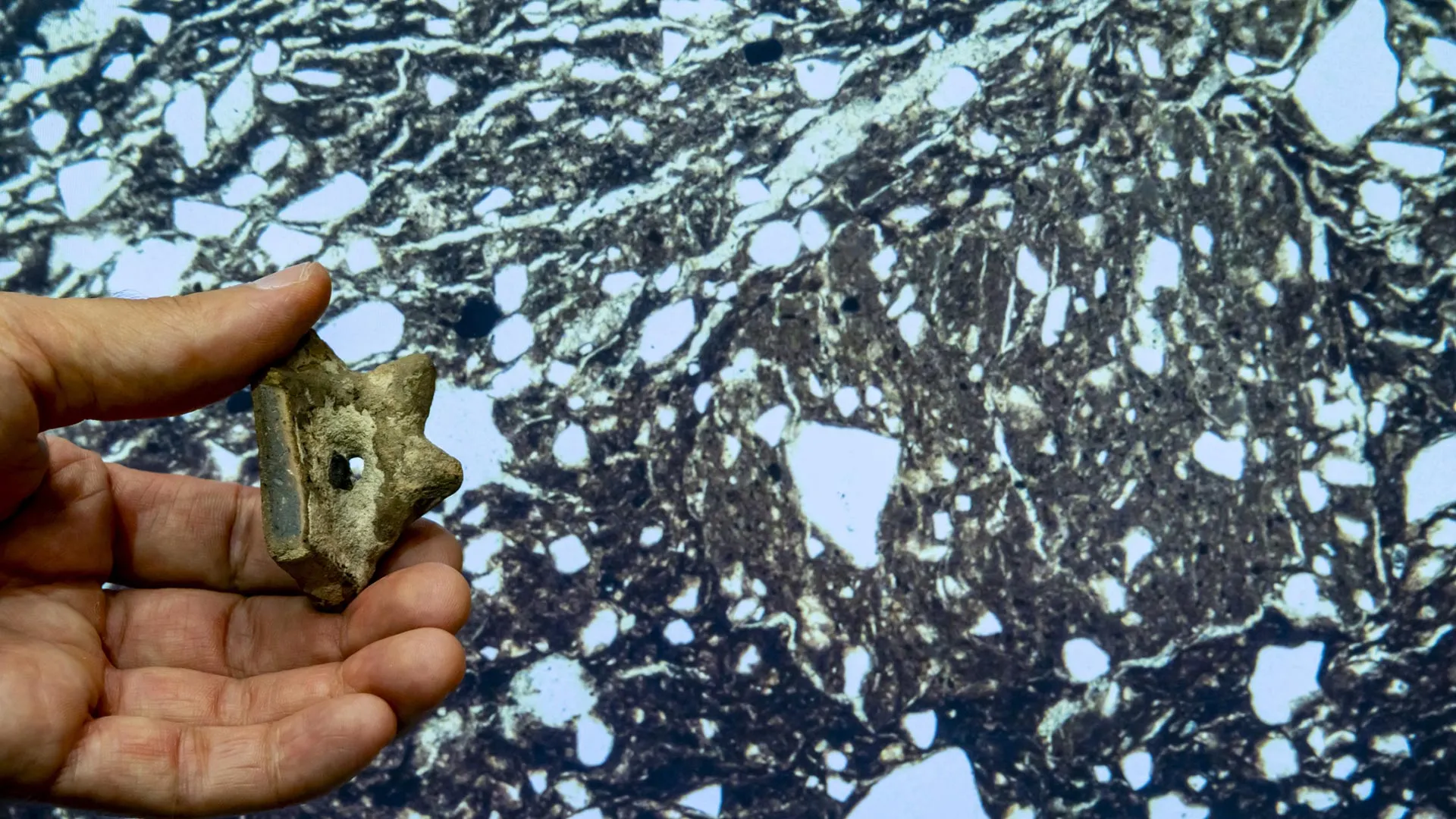
- Petrographic Analysis: This was the study’s "smoking gun." By slicing the pottery into sections thinner than a human hair and examining them under a polarizing microscope, the researchers could identify the minerals and additives—or "temper"—mixed into the clay.
The microscopic examination revealed a stark dichotomy. The plain, everyday pottery of the region utilized local materials, such as sand or dry clay, consistent with regional traditions spanning 3,000 years. The decorated, Mississippian-style pottery, however, utilized an entirely different recipe. These vessels were constructed using coiled clay techniques and, most tellingly, contained "grog"—crushed fragments of older pottery used as a tempering agent.
The Migrant Connection: Evidence in the Grog
The presence of grog was the catalyst for a startling realization. Petrographic analysis showed that the mica found within the grog was mineralogically consistent with the Florida Panhandle and the Mississippian heartland, not the Florida peninsula.
"The migrants didn’t just bring their skills; they brought their history," says Neill Wallis, curator of Florida archaeology at the Florida Museum. The team discovered that these potters were engaged in a process of "multigenerational enchainment." Within the grog, researchers found evidence of "grog within grog"—vessels crushed to make new vessels, which were then crushed again to make further generations of pottery.
These migrant artisans were, in essence, incorporating physical pieces of their ancestral homeland into every new pot they fired in Tampa Bay. This practice provided a tangible, ritualistic link to their heritage, ensuring that even while living hundreds of miles from the heartland, they remained connected to the material culture of their ancestors.
Official Responses and Scholarly Perspectives
The implications of the study, recently published in the journal American Antiquity, have sent ripples through the archaeological community. According to Dr. Andrea Torvinen, collections manager at the Ceramic Technology Lab, the findings offer a window into how migrant communities established their identity in a foreign land.
"Migrant communities often have to figure out their own niche in a new place," Torvinen explains. "By bringing a specialized knowledge of pottery production, these migrants were able to distinguish themselves and establish a role in the new area. Their techniques weren’t just a craft; they were a badge of identity and a form of social capital."
The researchers emphasize that the divide between the plain, molded local pottery and the specialized, coiled, grog-tempered migrant pottery persisted for centuries. This suggests that the knowledge was not broadly shared, but rather guarded within a tight-knit social network.
"The group of potters making the decorated vessels likely had some kind of special status," says Wallis. "By keeping these techniques within their circle, they maintained a sense of exclusivity and prestige that, even if not fully understood by their neighbors, was certainly recognized as distinct and valuable."
Broader Implications: Redrawing the Map
The study fundamentally reshapes our understanding of the Mississippian world. It confirms that the influence of this cultural system was not merely a matter of distant political influence or occasional trade, but the result of the physical movement of people.
The migration of these potters suggests that the Mississippian cultural system was far more fluid and mobile than once believed. People moved, settled in new regions, and successfully integrated their specialized skills into the local economy while maintaining their cultural identity through material practices.
Furthermore, the study highlights the sophistication of ancient craft networks. The fact that migrant potters were able to secure access to higher-quality clay and maintain their distinct production recipes for generations indicates that they were not an oppressed or marginalized group, but rather a valued cohort within the Safety Harbor society.
Conclusion: The Legacy of the Clay
The mystery of the Tampa Bay sherds has been resolved, but it has opened a new chapter in the study of human migration in pre-Columbian North America. These artifacts, once dismissed as mere decorative copies, are now understood as powerful symbols of human resilience and cultural continuity.
By looking deep into the microscopic structure of these pots, archaeologists have uncovered a story of a displaced people who carried their world with them, one handful of clay at a time. The "Russian nesting doll" nature of their pottery serves as a poignant reminder that history is rarely a static record—it is a living, evolving tradition, carried forward by the people who remember where they came from.